Every song we've checked
Each one puts a song's lyrics next to the Bible passage behind them: what the text says, what the song does with it, and whether you can sing it. We call one of these a Verse Proof. Searchable forever. What the badges mean → · Browse by artist → · Check a whole setlist →
262 proofs · 25 word-for-word verified · most-checked book: Psalm · most common finding: not a quote
✓ Word-for-word verified. Start here.
 ✓ VERIFIED
“Mark 10”
Streetlights
Play it freely. This is Mark 10 itself, read word for word in a named translation. The line about all things being possible arrives as the answer to a question about being saved.
✓ VERIFIED
“Mark 10”
Streetlights
Play it freely. This is Mark 10 itself, read word for word in a named translation. The line about all things being possible arrives as the answer to a question about being saved.✓ The whole chapter, in order, so verse 27 arrives after the rich man’s scene and after the disciples ask who can be saved, instead of standing on its own
⚠ “Word-for-word” here describes the reading, not the translation theory. Streetlights uses it for what is read. Tyndale uses the same phrase for a different thing
 ✓ VERIFIED
“Proverbs 4”
Streetlights
Play it freely. This is Proverbs 4 itself, read word for word in a named translation. “Guard your heart” arrives with the commands about the mouth, the eyes and the feet still attached.
✓ VERIFIED
“Proverbs 4”
Streetlights
Play it freely. This is Proverbs 4 itself, read word for word in a named translation. “Guard your heart” arrives with the commands about the mouth, the eyes and the feet still attached.✓ The whole chapter, in order, so “guard your heart” arrives with the commands about the mouth, the eyes and the feet, instead of standing alone as advice
⚠ “Word-for-word” here describes the reading, not the translation theory. Streetlights uses it for what is read. Tyndale uses the same phrase for a different thing
 ✓ VERIFIED
“Psalm 11 (English Standard Version)”
The Corner Room (Adam Wright)
Sing it straight through. It is all seven verses of Psalm 11, in order, in a version the track title names. A reviewer says one verse comes back as a refrain, and it is the psalm's own verse.
✓ VERIFIED
“Psalm 11 (English Standard Version)”
The Corner Room (Adam Wright)
Sing it straight through. It is all seven verses of Psalm 11, in order, in a version the track title names. A reviewer says one verse comes back as a refrain, and it is the psalm's own verse.✓ All seven verses, in order. We set the printed sung text beside an ESV and compared it word by word: 131 words, all matching, nothing added and nothing dropped
⚠ The printed text under the video lists each line once. It is not a map of the song. A review of the album says verse 4 comes back as a refrain
 ✓ VERIFIED
“Psalm 16”
The Corner Room (Adam Wright)
You can sing this one straight through. It is all eleven verses of Psalm 16, in order, in a named version. What you repeat is the psalm.
✓ VERIFIED
“Psalm 16”
The Corner Room (Adam Wright)
You can sing this one straight through. It is all eleven verses of Psalm 16, in order, in a named version. What you repeat is the psalm.✓ The printed sung text carries all eleven verses of Psalm 16, in order, with no line printed twice and no refrain added
⚠ The track title alone will not tell you which Bible you are singing. On Apple Music and Spotify it is just "Psalm 16". The version is named on the album page and in the video description.
 ✓ VERIFIED
“Psalm 53 (English Standard Version)”
The Corner Room (Adam Wright)
Yes, you can sing it. All six verses of Psalm 53 are here, in order, from a version the release names. The words you repeat are the psalm's own.
✓ VERIFIED
“Psalm 53 (English Standard Version)”
The Corner Room (Adam Wright)
Yes, you can sing it. All six verses of Psalm 53 are here, in order, from a version the release names. The words you repeat are the psalm's own.✓ The printed sung text carries all six verses of Psalm 53, in order, and every one of its 142 words matches an ESV of the psalm
⚠ The printed text is not a transcript. A review of the album calls the psalm's opening line the song's refrain. We did not listen through to count repeats, so that rests on the review
 ✓ VERIFIED
“Walk In Him (Colossians 2:6-7)”
Seeds Kids Worship (Seeds Family Worship)
Sing it, and teach it. The whole sentence arrives, in order, in the version Seeds names. Read verse 8 afterward, so a child knows what the walking is set against.
✓ VERIFIED
“Walk In Him (Colossians 2:6-7)”
Seeds Kids Worship (Seeds Family Worship)
Sing it, and teach it. The whole sentence arrives, in order, in the version Seeds names. Read verse 8 afterward, so a child knows what the walking is set against.✓ Every word the chord chart prints as lyric is a word of Colossians 2:6-7, in the passage's order, and no word of the passage is left out.
✓ no cautions: this is the standard
All 25 word-for-word verified →
Every proof, newest first
 NOT A QUOTE
“Battle Hymn of the Republic”
Julia Ward Howe (recorded by David Phelps)
Sing it knowing what it adds. Nothing in it is offered as scripture, and its pictures of judgment stay God's work. The sighting, a singer seeing that judgment happening now, is the hymn's own.
NOT A QUOTE
“Battle Hymn of the Republic”
Julia Ward Howe (recorded by David Phelps)
Sing it knowing what it adds. Nothing in it is offered as scripture, and its pictures of judgment stay God's work. The sighting, a singer seeing that judgment happening now, is the hymn's own.✓ The judgment stays God's work. The hymn's “He” is God throughout and no source disputes it; Gamble's objection is to the use the hymn makes of the images, not to who does the treading
⚠ The opening line reports a present sighting of God's glory arriving. Isaiah 63 speaks of a day of vengeance but pins it to no date, so the timing is the hymn's addition
 NOT A QUOTE
“Come Jesus Come”
Stephen McWhirter
Sing it. It is a prayer, not a quotation, and it asks for the same thing the Bible's last chapter asks for. Remember that in scripture the request answers Christ's own promise to come.
NOT A QUOTE
“Come Jesus Come”
Stephen McWhirter
Sing it. It is a prayer, not a quotation, and it asks for the same thing the Bible's last chapter asks for. Remember that in scripture the request answers Christ's own promise to come.✓ Nothing is presented as scripture. The words cite no book, chapter or verse, and no line is framed as a quotation, so nothing in them can be checked and found misquoted
⚠ The verse's prayer is a reply. Christ promises first and the amen follows. The song makes the same request without the promise it answers, so its ground sits outside the words
 NOT A QUOTE
“El Shaddai”
Amy Grant
Sing it. Nothing in it is offered as a quotation. Learn what the Hebrew names mean before you sing them, and know that one sung phrase is an altered form of Psalm 18:1.
NOT A QUOTE
“El Shaddai”
Amy Grant
Sing it. Nothing in it is offered as a quotation. Learn what the Hebrew names mean before you sing them, and know that one sung phrase is an altered form of Psalm 18:1.✓ The Hebrew titles are real Old Testament names for God, used as address and praise. God Almighty stands in Genesis 17:1 and Exodus 6:3. God Most High stands in Genesis 14
⚠ One sung Hebrew phrase is an adapted spelling. An Old Testament professor shows it does not match the Hebrew of Psalm 18:1, which is the verse behind it
 NOT A QUOTE
“God Only Knows”
for KING & COUNTRY
Sing it. It quotes no verse, so hold it as a true sentence about God rather than as scripture. What it says about God knowing you is true, and Psalm 139 is where you can see how far that knowing goes.
NOT A QUOTE
“God Only Knows”
for KING & COUNTRY
Sing it. It quotes no verse, so hold it as a true sentence about God rather than as scripture. What it says about God knowing you is true, and Psalm 139 is where you can see how far that knowing goes.✓ The song's central sentence about God is true and checkable. Psalm 139 says God knows the sitting and the rising, the thought from far off, and the word before it is spoken
⚠ The song stops where the comfort stops. Psalm 139 says the same knowing is inescapable, and the psalm ends by asking God to search the singer and lead him
 NOT A QUOTE
“Good God Almighty”
Crowder
Sing it as praise, not as a quotation. It names no verse and never presents itself as quoting one. Here the three words are a name, not an exclamation: address in one place, an answer about God in another.
NOT A QUOTE
“Good God Almighty”
Crowder
Sing it as praise, not as a quotation. It names no verse and never presents itself as quoting one. Here the three words are a name, not an exclamation: address in one place, an answer about God in another.✓ Every word of the title says something scripture says about God. He is good (Psalm 100:5). He is God Almighty (Genesis 17:1). It is a name here, not filler.
⚠ The same three words are a common exclamation in ordinary American speech. Not everyone in a room will hear them the same way, so say what they mean before singing them.
 NOT A QUOTE
“Gracefully Broken”
Tasha Cobbs Leonard
Sing it. Nothing here is offered as a quotation, and nothing it says about God is untrue. Just know the strong-when-weak line is Paul's conclusion about a trouble God would not take away.
NOT A QUOTE
“Gracefully Broken”
Tasha Cobbs Leonard
Sing it. Nothing here is offered as a quotation, and nothing it says about God is untrue. Just know the strong-when-weak line is Paul's conclusion about a trouble God would not take away.✓ The song is a prayer. It is addressed to God nearly all the way through, and its requests ask God to act rather than announcing what the singer will achieve.
⚠ The bridge states Paul's conclusion with none of Paul's occasion. He wrote it about a thorn God refused to remove. A singer with no trouble in view supplies the meaning.
 NOT A QUOTE
“Hills and Valleys”
Tauren Wells
Sing it as testimony, not as a quotation. The hills-and-valleys line is scripture’s first. There it settles how far God’s reach goes, not how to get through a hard season.
NOT A QUOTE
“Hills and Valleys”
Tauren Wells
Sing it as testimony, not as a quotation. The hills-and-valleys line is scripture’s first. There it settles how far God’s reach goes, not how to get through a hard season.✓ Nothing the song says about God is contradicted by 1 Kings 20. That chapter is where God answers the idea that His power is tied to terrain
⚠ The song’s hills and valleys are seasons of life. In 1 Kings 20 they are ground, and the line answers an army that thought God ruled only high country
✓ VERIFIED
“Mark 10”
Streetlights
Play it freely. This is Mark 10 itself, read word for word in a named translation. The line about all things being possible arrives as the answer to a question about being saved.✓ The whole chapter, in order, so verse 27 arrives after the rich man’s scene and after the disciples ask who can be saved, instead of standing on its own
⚠ “Word-for-word” here describes the reading, not the translation theory. Streetlights uses it for what is read. Tyndale uses the same phrase for a different thing
 NOT A QUOTE
“My Jesus”
Anne Wilson
Sing it as testimony, not as a quotation. Nothing in it is offered as a verse. If it sends you to Matthew 11, read the whole invitation. The rest Jesus offers there comes with a yoke.
NOT A QUOTE
“My Jesus”
Anne Wilson
Sing it as testimony, not as a quotation. Nothing in it is offered as a verse. If it sends you to Matthew 11, read the whole invitation. The rest Jesus offers there comes with a yoke.✓ Nothing in it is dressed as a quotation. No verse, no chapter, no translation, and no line where the song speaks as Jesus, in either published review
⚠ The invitation in Matthew 11 comes with terms. Take my yoke, learn from me. Neither review reports a yoke or an instruction to learn in the song
✓ VERIFIED
“Proverbs 4”
Streetlights
Play it freely. This is Proverbs 4 itself, read word for word in a named translation. “Guard your heart” arrives with the commands about the mouth, the eyes and the feet still attached.✓ The whole chapter, in order, so “guard your heart” arrives with the commands about the mouth, the eyes and the feet, instead of standing alone as advice
⚠ “Word-for-word” here describes the reading, not the translation theory. Streetlights uses it for what is read. Tyndale uses the same phrase for a different thing
✓ VERIFIED
“Psalm 11 (English Standard Version)”
The Corner Room (Adam Wright)
Sing it straight through. It is all seven verses of Psalm 11, in order, in a version the track title names. A reviewer says one verse comes back as a refrain, and it is the psalm's own verse.✓ All seven verses, in order. We set the printed sung text beside an ESV and compared it word by word: 131 words, all matching, nothing added and nothing dropped
⚠ The printed text under the video lists each line once. It is not a map of the song. A review of the album says verse 4 comes back as a refrain
 ~ FAITHFUL
“Psalm 137 (Babylon)”
Sons of Korah
Sing it. It is Psalm 137 in order, in singable English rather than a strict quotation. The transcriptions checked stop at verse 8, so read the psalm's last verse yourself.
~ FAITHFUL
“Psalm 137 (Babylon)”
Sons of Korah
Sing it. It is Psalm 137 in order, in singable English rather than a strict quotation. The transcriptions checked stop at verse 8, so read the psalm's last verse yourself.✓ The band's own upload carries a signed commentary that works through the whole psalm, including the last verse, so the hardest part is explained right beside the music
⚠ Three separate transcriptions of this setting carry the psalm through verse 8. None carries verse 9. Nothing the band itself publishes could be checked against, so this rests on the transcriptions
✓ VERIFIED
“Psalm 16”
The Corner Room (Adam Wright)
You can sing this one straight through. It is all eleven verses of Psalm 16, in order, in a named version. What you repeat is the psalm.✓ The printed sung text carries all eleven verses of Psalm 16, in order, with no line printed twice and no refrain added
⚠ The track title alone will not tell you which Bible you are singing. On Apple Music and Spotify it is just "Psalm 16". The version is named on the album page and in the video description.
✓ VERIFIED
“Psalm 53 (English Standard Version)”
The Corner Room (Adam Wright)
Yes, you can sing it. All six verses of Psalm 53 are here, in order, from a version the release names. The words you repeat are the psalm's own.✓ The printed sung text carries all six verses of Psalm 53, in order, and every one of its 142 words matches an ESV of the psalm
⚠ The printed text is not a transcript. A review of the album calls the psalm's opening line the song's refrain. We did not listen through to count repeats, so that rests on the review
 ~ FAITHFUL
“Psalm 95”
Poor Bishop Hooper
Sing it. It is Psalm 95's call to worship in the duo's own wording, with nothing added. Just know it stops early. The psalm ends with God speaking, and that part is not sung.
~ FAITHFUL
“Psalm 95”
Poor Bishop Hooper
Sing it. It is Psalm 95's call to worship in the duo's own wording, with nothing added. Just know it stops early. The psalm ends with God speaking, and that part is not sung.✓ Every line traces to Psalm 95, and the project's own posted text for this song carries nothing from outside the psalm
⚠ From verse 9 the psalm is God speaking. No line in the project's posted text speaks in His voice, so the sung warning carries no stated consequence
 NOT A QUOTE
“Refiner”
Maverick City Music & Chandler Moore (feat. Steffany Gretzinger)
Sing it. It is a prayer, not a quotation, and it uses the refining picture the way scripture uses it. Just know that Malachi's refining comes with a scene the song does not carry.
NOT A QUOTE
“Refiner”
Maverick City Music & Chandler Moore (feat. Steffany Gretzinger)
Sing it. It is a prayer, not a quotation, and it uses the refining picture the way scripture uses it. Just know that Malachi's refining comes with a scene the song does not carry.✓ God is the refiner and the singer is the metal. That is how the refining passages run, Malachi 3:3 and Zechariah 13:9 included
⚠ The song names no passage, so listeners supply one. The one named in the review checked here is Malachi 3, where the refining is God's coming and the text asks who can endure it
 NOT A QUOTE
“Rescue Story”
Zach Williams
Sing it. It quotes nothing and never says it is scripture, and it is one man's rescue sung to Jesus. Read 1 Timothy 1:16 beside it, where a rescue is told for other people's sake.
NOT A QUOTE
“Rescue Story”
Zach Williams
Sing it. It quotes nothing and never says it is scripture, and it is one man's rescue sung to Jesus. Read 1 Timothy 1:16 beside it, where a rescue is told for other people's sake.✓ Nothing in it is presented as scripture. No book, chapter or verse is named anywhere in the song, and nothing is framed as a quotation, so there is nothing here to mis-cite
⚠ Every passage tied to this song comes from outside it. The artist-partnered plan assigns three. A blog names Psalm 40:1-3. A podcast runs through Ruth and seven more. None of them is the song's own
 NOT A QUOTE
“Rise Up (Lazarus)”
CAIN
Sing it as a picture, not a quotation. The song never presents itself as quoting John 11. In the passage the command is to come out, and Jesus says it to a man dead four days.
NOT A QUOTE
“Rise Up (Lazarus)”
CAIN
Sing it as a picture, not a quotation. The song never presents itself as quoting John 11. In the passage the command is to come out, and Jesus says it to a man dead four days.✓ The song never presents its words as scripture. There is no chapter and verse and no quotation framing, so nothing in it is passed off as the text of John 11
⚠ The phrase the song repeats is not the command at the tomb. There Jesus says come out, or come forth in the KJV. He does say earlier that Lazarus will rise again (11:23)
 NOT A QUOTE
“Silent Night”
Joseph Mohr, tr. John Freeman Young (recorded live by The Petersens)
Sing it. The carol quotes nothing and never says it is scripture. Just know that the quiet, the calm and the light around the child are the carol's own. Luke reports an angel, a sign and a praising host.
NOT A QUOTE
“Silent Night”
Joseph Mohr, tr. John Freeman Young (recorded live by The Petersens)
Sing it. The carol quotes nothing and never says it is scripture. Just know that the quiet, the calm and the light around the child are the carol's own. Luke reports an angel, a sign and a praising host.✓ The carol presents nothing as scripture. It names no book, chapter or verse, and no line in it is offered as the words of Luke.
⚠ The quiet and the calm are the carol's own. Luke 2:8-14 says nothing about how the night sounded. What he reports is an angel, then a multitude.
 NOT A QUOTE
“Speak Life”
TobyMac
Sing it as encouragement, not as a quotation. Nothing in it asks to be taken as scripture. Read Proverbs 18:20-21 for yourself, because the proverb says more than the title does.
NOT A QUOTE
“Speak Life”
TobyMac
Sing it as encouragement, not as a quotation. Nothing in it asks to be taken as scripture. Read Proverbs 18:20-21 for yourself, because the proverb says more than the title does.✓ It never pretends to quote scripture. No verse appears in the lyric, and the official video’s description names none. Nothing here asks to be read as a citation.
⚠ The title is an instruction. Proverbs 18:21 is a statement about what the tongue can do. The instruction is the song’s, not the proverb’s.
 ✎ DEPARTS
“Take Captive Every Thought (2 Corinthians 10:3-5)”
Seeds Kids Worship (Seeds Family Worship)
You can sing it. It is 2 Corinthians 10:3-5 in the NIV's words. But the label says ESV. Check it against an NIV, and know one printed word is not the NIV's either.
✎ DEPARTS
“Take Captive Every Thought (2 Corinthians 10:3-5)”
Seeds Kids Worship (Seeds Family Worship)
You can sing it. It is 2 Corinthians 10:3-5 in the NIV's words. But the label says ESV. Check it against an NIV, and know one printed word is not the NIV's either.✓ Verses 3, 4 and 5 all arrive, in order, in the NIV's wording. No line is added, and none is explained or expanded.
⚠ The label names the ESV in four places. The words are the NIV's. Check the song against an NIV, not against the version the label sends you to.
 ✎ DEPARTS
“The Hope That Is In You (1 Peter 3:15 ESV)”
Seeds Kids Worship (Seeds Family Worship)
Sing it. The chart is 1 Peter 3:15 in the ESV, from the command about your heart through to gentleness and respect. Three words are missing. Read the verse beside it once and you have them.
✎ DEPARTS
“The Hope That Is In You (1 Peter 3:15 ESV)”
Seeds Kids Worship (Seeds Family Worship)
Sing it. The chart is 1 Peter 3:15 in the ESV, from the command about your heart through to gentleness and respect. Three words are missing. Read the verse beside it once and you have them.✓ Both ends of the verse are printed. The chart opens on the command about the heart and closes on gentleness and respect, where the ESV's verse 15 ends.
⚠ Three of the verse's words are missing from the chart. The ESV sends the defense to anyone who asks you. The chart drops who asks you.
 NOT A QUOTE
“This Is Our God”
Phil Wickham
Sing it. It is a declaration, not a quotation, and the review that recommends against it still says the song teaches nothing false. Worth knowing first: the title sentence stands in Isaiah 25:9, on a day still ahead.
NOT A QUOTE
“This Is Our God”
Phil Wickham
Sing it. It is a declaration, not a quotation, and the review that recommends against it still says the song teaches nothing false. Worth knowing first: the title sentence stands in Isaiah 25:9, on a day still ahead.✓ The title sentence has a real home in scripture. Isaiah 25:9 carries those four words, and the rescue it celebrates is the same rescue the song sings about
⚠ The song is not written as a citation, so it does not hand you the verse behind its title
 NOT A QUOTE
“To God Be the Glory”
Fanny Crosby (recorded by Reawaken Hymns)
Sing it. Nothing in it is offered as scripture. Stanza one restates John 3:16 in Crosby's own words, and the tie to that verse was made by hymn scholars, not by the song.
NOT A QUOTE
“To God Be the Glory”
Fanny Crosby (recorded by Reawaken Hymns)
Sing it. Nothing in it is offered as scripture. Stanza one restates John 3:16 in Crosby's own words, and the tie to that verse was made by hymn scholars, not by the song.✓ Nothing in the sung words is offered as a quotation. No verse is named, and no line is framed as scripture, so nobody is asked to take a paraphrase for the text
⚠ Stanza one restates John 3:16 without the two outcomes the verse ends on. Crosby's text never uses perish, eternal or everlasting, in the two sung stanzas or in the third
✓ VERIFIED
“Walk In Him (Colossians 2:6-7)”
Seeds Kids Worship (Seeds Family Worship)
Sing it, and teach it. The whole sentence arrives, in order, in the version Seeds names. Read verse 8 afterward, so a child knows what the walking is set against.✓ Every word the chord chart prints as lyric is a word of Colossians 2:6-7, in the passage's order, and no word of the passage is left out.
✓ no cautions: this is the standard
 NOT A QUOTE
“You Say”
Lauren Daigle
Yes, you can sing it. It is testimony, not a quotation. The things it reports God saying can be matched to scripture. The song names none of them, so read one alongside it.
NOT A QUOTE
“You Say”
Lauren Daigle
Yes, you can sing it. It is testimony, not a quotation. The things it reports God saying can be matched to scripture. The song names none of them, so read one alongside it.✓ The song's move is one this passage makes. God tells a hearer who he is in verse 9, and takes his right hand and says not to fear in verse 13
⚠ The “You” is identified just once. A published review says that single reference sets the whole song's context, and nothing else in the words points to God overtly or subtly
 NOT A QUOTE
“Your Way's Better”
Forrest Frank
Sing it. It is a prayer in the singer's own words, not a quotation, so there is nothing here to misquote. The song names no passage. This site pairs it with Isaiah 55:6-9, where God states the comparison.
NOT A QUOTE
“Your Way's Better”
Forrest Frank
Sing it. It is a prayer in the singer's own words, not a quotation, so there is nothing here to misquote. The song names no passage. This site pairs it with Isaiah 55:6-9, where God states the comparison.✓ Presents nothing as scripture. No verse reference, no translation named, no quotation framing, so nothing in it can be a misquote
⚠ The song names no passage. The verse you hear under it was chosen by whoever paired them. A study cited below picks four, and this entry picks a fifth
 ✓ VERIFIED
“The Victory (1 John 5:4-5 ESV)”
Seeds Kids Worship (Seeds Family Worship)
Sing it. It is 1 John 5:4-5 word for word in the ESV, with nothing added, and the chord chart names the version, so anyone can check it.
✓ VERIFIED
“The Victory (1 John 5:4-5 ESV)”
Seeds Kids Worship (Seeds Family Worship)
Sing it. It is 1 John 5:4-5 word for word in the ESV, with nothing added, and the chord chart names the version, so anyone can check it.✓ Both verses whole and in order. Counted in the ESV, all forty-two words are there, none skipped, and the chart carries nothing from outside the passage
✓ no cautions: this is the standard
 ✓ VERIFIED
“Far More Abundantly (Ephesians 3:20-21)”
Seeds Kids Worship (Seeds Family Worship)
Sing it. It is Ephesians 3:20-21 whole, in the ESV, and the publisher's free chord chart names the version and its text edition. The words can be checked against the exact text.
✓ VERIFIED
“Far More Abundantly (Ephesians 3:20-21)”
Seeds Kids Worship (Seeds Family Worship)
Sing it. It is Ephesians 3:20-21 whole, in the ESV, and the publisher's free chord chart names the version and its text edition. The words can be checked against the exact text.✓ Both verses whole and in order, in the ESV's wording. Every repeated line is the passage's own words coming round again
⚠ The YouTube upload names the reference but not the version. The ESV credit sits on the chord chart, the album page and the song list, so a viewer has to go looking
 ✓ VERIFIED
“Citizens Of Heaven (Philippians 3:20-21)”
Seeds Kids Worship (Seeds Family Worship)
Sing it. It is Philippians 3:20-21 whole and in order, in the ESV, and the publisher's free chord chart names that version on the same page as the words.
✓ VERIFIED
“Citizens Of Heaven (Philippians 3:20-21)”
Seeds Kids Worship (Seeds Family Worship)
Sing it. It is Philippians 3:20-21 whole and in order, in the ESV, and the publisher's free chord chart names that version on the same page as the words.✓ Both verses whole and in order. The only words that repeat are words the passage already gave, so nothing new gets memorized as scripture
⚠ The YouTube upload names the reference but not the version. The ESV credit sits on the chord chart, the album page and the song list, so a viewer has to go looking
 ✎ DEPARTS
“Every Word of God (Proverbs 30:5)”
Seeds Kids Worship (Seeds Family Worship)
Sing it. It is Proverbs 30:5, and the ESV it names is the version being sung. One word is swapped, all for those, and both words point at the same group.
✎ DEPARTS
“Every Word of God (Proverbs 30:5)”
Seeds Kids Worship (Seeds Family Worship)
Sing it. It is Proverbs 30:5, and the ESV it names is the version being sung. One word is swapped, all for those, and both words point at the same group.✓ Both halves of the verse are sung, in the order Proverbs 30:5 gives them. The song adds no sentence of its own.
⚠ One word is not the ESV's. In the shield line the song sings all, where the ESV at Proverbs 30:5 has those. Both words point at the same group.
 ✓ VERIFIED
“Psalm 146 (English Standard Version)”
The Corner Room (Adam Wright)
Sing it without a caveat. It is the whole of Psalm 146, in order, in a named version. What you repeat by singing it is the psalm, warning about princes included.
✓ VERIFIED
“Psalm 146 (English Standard Version)”
The Corner Room (Adam Wright)
Sing it without a caveat. It is the whole of Psalm 146, in order, in a named version. What you repeat by singing it is the psalm, warning about princes included.✓ All ten verses of Psalm 146, in order, with nothing added and no invented chorus
✓ no cautions: this is the standard
 ✓ VERIFIED
“Psalm 15 (English Standard Version)”
The Corner Room (Adam Wright)
Sing it without a caveat. It is all five verses of Psalm 15, in order, in a named version, so what you repeat is the psalm itself.
✓ VERIFIED
“Psalm 15 (English Standard Version)”
The Corner Room (Adam Wright)
Sing it without a caveat. It is all five verses of Psalm 15, in order, in a named version, so what you repeat is the psalm itself.✓ All five verses of Psalm 15, in order, in a named version, with nothing added to the printed text
⚠ The embedded player's own YouTube title names no translation. The version is in the release track title, which is what Apple Music and Spotify show
 ✓ VERIFIED
“We Hope In You (Psalm 33:20-22 ESV)”
Seeds Kids Worship (Seeds Family Worship)
Sing it, and teach it. All three verses arrive whole, in the version Seeds names. Read verses 16 to 19 first, so a child knows what the waiting is for.
✓ VERIFIED
“We Hope In You (Psalm 33:20-22 ESV)”
Seeds Kids Worship (Seeds Family Worship)
Sing it, and teach it. All three verses arrive whole, in the version Seeds names. Read verses 16 to 19 first, so a child knows what the waiting is for.✓ All three verses, in order, in the ESV. Every repeated line is built from words the passage already supplied, and nothing is added between them.
✓ no cautions: this is the standard
 ✓ VERIFIED
“God Is Wise (Romans 11:33-36)”
Seeds Family Worship (now Seeds Kids Worship)
Sing it, and teach it. Romans 11:33-36 arrives whole and in order, in the ESV the chord chart names. The only sounds outside the passage are the reference itself and a wordless syllable.
✓ VERIFIED
“God Is Wise (Romans 11:33-36)”
Seeds Family Worship (now Seeds Kids Worship)
Sing it, and teach it. Romans 11:33-36 arrives whole and in order, in the ESV the chord chart names. The only sounds outside the passage are the reference itself and a wordless syllable.✓ All four verses arrive whole and in order. The chord chart names the ESV, and its 2007 text edition, on the same page as the words.
✓ no cautions: this is the standard
 ✓ VERIFIED
“Abound In Hope (Romans 15:13 ESV)”
Seeds Kids Worship (Seeds Family Worship)
Sing it. Romans 15:13 arrives whole, in the ESV that Seeds names on the track, on the album page and on the chart. Read verses 9 to 12 first, so the word hope points where Paul pointed it.
✓ VERIFIED
“Abound In Hope (Romans 15:13 ESV)”
Seeds Kids Worship (Seeds Family Worship)
Sing it. Romans 15:13 arrives whole, in the ESV that Seeds names on the track, on the album page and on the chart. Read verses 9 to 12 first, so the word hope points where Paul pointed it.✓ The whole verse, in order, in the ESV. Every repeat in the verse, chorus and tag repeats a phrase the passage had already supplied.
⚠ The reference is never sung, only printed in three places. A child can learn the words here and still not learn where they live. Say the address out loud.
 NOT A QUOTE
“The Solid Rock (My Hope Is Built)”
Edward Mote (recorded by Reawaken Hymns)
Sing it. Nothing here is quoting. The refrain is two passages welded: the rock-and-sand picture is Matthew 7, the no-other-foundation line is Paul in 1 Corinthians 3.
NOT A QUOTE
“The Solid Rock (My Hope Is Built)”
Edward Mote (recorded by Reawaken Hymns)
Sing it. Nothing here is quoting. The refrain is two passages welded: the rock-and-sand picture is Matthew 7, the no-other-foundation line is Paul in 1 Corinthians 3.✓ Never says it is quoting: no reference, no verse framing, nothing presented as scripture
⚠ The refrain reads as one verse and is two. Matthew 7 never says there is only one possible foundation; Paul does, and the seam is invisible when sung
 NOT A QUOTE
“Trust and Obey”
John H. Sammis and Daniel B. Towner (recorded by Don Moen)
Sing it. Nothing here is offered as scripture, and nothing in it contradicts 1 John 1:7. Just know the verse printed beside it in some hymnals is an editor's suggestion, not the hymn's own citation.
NOT A QUOTE
“Trust and Obey”
John H. Sammis and Daniel B. Towner (recorded by Don Moen)
Sing it. Nothing here is offered as scripture, and nothing in it contradicts 1 John 1:7. Just know the verse printed beside it in some hymnals is an editor's suggestion, not the hymn's own citation.✓ Never says it is quoting at all. No verse is cited in the sung words, the official upload's description carries no reference either, and the hymn's own first printing named a different passage than the one hymnals now attach
⚠ The reference printed beside the hymn number is an editorial judgment, and the editors of one hymnal disagreed with each other about it in print
 NOT A QUOTE
“Scars in Heaven”
Casting Crowns
Sing it, at the funeral too. Nothing here is quoting. Just know that Paul's comfort in these two verses is the resurrection and the reunion at Christ's coming. The song reaches for a different comfort, also true.
NOT A QUOTE
“Scars in Heaven”
Casting Crowns
Sing it, at the funeral too. Nothing here is quoting. Just know that Paul's comfort in these two verses is the resurrection and the reunion at Christ's coming. The song reaches for a different comfort, also true.✓ The song grieves out loud. Paul does not forbid grief, he forbids grieving like people without hope, and a song that names the absence honestly is doing the first half of that
⚠ The song's comfort and this passage's comfort are not the same comfort. The song rests on a present condition, that the one who died is past pain and with Christ. Paul rests on a coming event, and verses 15 to 18 date the reunion to the Lord's descent
 NOT A QUOTE
“Turn Your Eyes Upon Jesus”
Helen H. Lemmel (recorded by Reawaken Hymns)
Sing it. It names no verse and nothing in it is false. Just hold the rest of the promise alongside it: scripture says looking at Christ changes the one who looks, not only the scenery.
NOT A QUOTE
“Turn Your Eyes Upon Jesus”
Helen H. Lemmel (recorded by Reawaken Hymns)
Sing it. It names no verse and nothing in it is false. Just hold the rest of the promise alongside it: scripture says looking at Christ changes the one who looks, not only the scenery.✓ Points the hearer's attention at Christ and holds it there, which is the direction 2 Corinthians 3:18 assumes before it says anything else
⚠ Paul's beholding produces transformation into Christ's image. The refrain's produces a fading of other things. Those are related and they are not the same promise, and the smaller one is the one that gets memorised
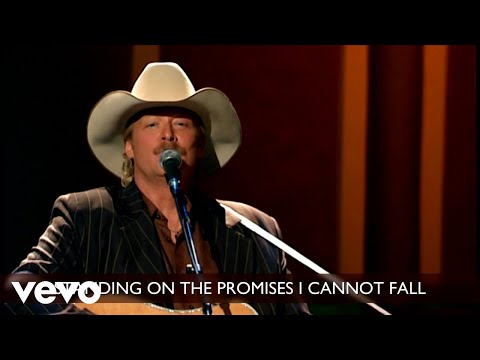 NOT A QUOTE
“Standing on the Promises”
R. Kelso Carter (recorded by Alan Jackson)
Sing it. It quotes nothing and presents nothing as scripture, and its confidence is warranted. Bring the content with you, because 2 Peter 1:4 names both what the promises come from and what they were given to do.
NOT A QUOTE
“Standing on the Promises”
R. Kelso Carter (recorded by Alan Jackson)
Sing it. It quotes nothing and presents nothing as scripture, and its confidence is warranted. Bring the content with you, because 2 Peter 1:4 names both what the promises come from and what they were given to do.✓ Never says it is quoting. No chapter, verse, or translation is named, and nothing in the text is presented as scripture
⚠ The word “promises” is the hymn's spine and is never filled in. No covenant, no passage, and no particular word of God is named in any stanza
 NOT A QUOTE
“Leaning on the Everlasting Arms”
Elisha A. Hoffman & Anthony J. Showalter (recorded by Sovereign Grace Music)
Sing it. It borrows a phrase from Moses' blessing on Israel and never says it is quoting. The verse says the arms are underneath. The leaning is the hymn's own word, and it is a fair one.
NOT A QUOTE
“Leaning on the Everlasting Arms”
Elisha A. Hoffman & Anthony J. Showalter (recorded by Sovereign Grace Music)
Sing it. It borrows a phrase from Moses' blessing on Israel and never says it is quoting. The verse says the arms are underneath. The leaning is the hymn's own word, and it is a fair one.✓ Never says it is quoting, cites no verse, and never presents its refrain as scripture
⚠ The second half of verse 27 is not in the hymn. Sung alone, the verse can be remembered as pure comfort, when the sentence it lives in is also about an enemy driven out
 NOT A QUOTE
“O Church, Arise”
Keith Getty & Stuart Townend
Sing it. It quotes nothing and never says it is scripture, and it gets the hardest part right: the enemy is the devil's lies, never people. Bring Ephesians 6 with it, because the hymn names a sword and never names the word.
NOT A QUOTE
“O Church, Arise”
Keith Getty & Stuart Townend
Sing it. It quotes nothing and never says it is scripture, and it gets the hardest part right: the enemy is the devil's lies, never people. Bring Ephesians 6 with it, because the hymn names a sword and never names the word.✓ The one thing a battle hymn most easily gets wrong, this one gets right. No human being, group, or institution is named as the enemy anywhere in the four stanzas. The named opponent is the devil, which is where Paul puts it in verse 12
⚠ The armour is partial. Three of Paul's six items appear, the belt of truth, the shield of faith, and a sword. The breastplate of righteousness, the feet fitted with the readiness of the gospel of peace, and the helmet of salvation are not in the hymn
 NOT A QUOTE
“Guide Me, O Thou Great Jehovah”
Jehovah Shalom Acapella
Sing it. It never says it is quoting scripture, and the pillar it borrows is used for what Exodus says the pillar was for. Just know you are praying Israel's story forward, not reciting it.
NOT A QUOTE
“Guide Me, O Thou Great Jehovah”
Jehovah Shalom Acapella
Sing it. It never says it is quoting scripture, and the pillar it borrows is used for what Exodus says the pillar was for. Just know you are praying Israel's story forward, not reciting it.✓ Never says it is quoting at any point: no verse reference in the text, and the official upload's description names only the Welsh author and cites no scripture
⚠ Nothing is cited, so the exodus arrives here as atmosphere. The pillar in Exodus 13 was given to one nation on one road, and treating it as a personal promise of visible direction is the hymn's application, not the chapter's statement
 NOT A QUOTE
“Yes I Will”
Vertical Worship
Sing it as a resolve, not as Habakkuk's verse. Nothing here is quoting. Just know that the prophet's vow is priced by six named losses, and the song leaves that column blank.
NOT A QUOTE
“Yes I Will”
Vertical Worship
Sing it as a resolve, not as Habakkuk's verse. Nothing here is quoting. Just know that the prophet's vow is priced by six named losses, and the song leaves that column blank.✓ Never says it is quoting: no verse cited, no scripture framing, nothing presented as the Bible's own words
⚠ The song names no loss. Habakkuk names six, and that list is what sets the weight of his vow
 NOT A QUOTE
“Come Thou Long Expected Jesus”
Keith & Kristyn Getty
Sing it. It quotes no verse and never says it is scripture. Just know that its best-known title for Christ follows the King James at Haggai 2:7, and that most modern Bibles render that verse about treasures, not a person.
NOT A QUOTE
“Come Thou Long Expected Jesus”
Keith & Kristyn Getty
Sing it. It quotes no verse and never says it is scripture. Just know that its best-known title for Christ follows the King James at Haggai 2:7, and that most modern Bibles render that verse about treasures, not a person.✓ One sustained prayer from the first word to the last, addressed to Christ by name and asking for release, rest, His kingdom and His rule; Hawn counts six imperatives across the two stanzas
⚠ The title the hymn gives Christ follows the King James at Haggai 2:7. Move the translation toggle above to WEB or BSB and no person appears in the verse
 NOT A QUOTE
“Take Me to the King”
Tamela Mann
Sing it as a prayer from the bottom, not as Hosea. It quotes nothing and never says it is scripture. The verse it resembles knows who tore, and says let us go. This song asks to be carried.
NOT A QUOTE
“Take Me to the King”
Tamela Mann
Sing it as a prayer from the bottom, not as Hosea. It quotes nothing and never says it is scripture. The verse it resembles knows who tore, and says let us go. This song asks to be carried.✓ Never says it is scripture, in any form: no reference, no verse framing, and the rights holder's own chord chart lists no passage behind the song
⚠ The song names no cause for its brokenness. Hosea 6:1 names one, and that naming is what makes the verse a return rather than only a cry
 NOT A QUOTE
“Jesus Paid It All”
Elvina M. Hall (recorded by Passion, feat. Kristian Stanfill)
Sing it. It quotes nothing and never says it is scripture. It borrows one image from Isaiah 1:18 and answers it with the cross. Read Isaiah 1:16-20 once and you will hear more in the refrain.
NOT A QUOTE
“Jesus Paid It All”
Elvina M. Hall (recorded by Passion, feat. Kristian Stanfill)
Sing it. It quotes nothing and never says it is scripture. It borrows one image from Isaiah 1:18 and answers it with the cross. Read Isaiah 1:16-20 once and you will hear more in the refrain.✓ The hymn does not say it is quoting Isaiah, so nothing in it can be a misquotation; the debt to the verse is an image, not a citation
⚠ Isaiah's scarlet and crimson are dye words, not stain words. Barnes describes the colour as fast and fixed, not removable by dew, rain, washing or long use. The refrain's picture of a mark left behind keeps the colour and softens the reason it could not come out
 NOT A QUOTE
“Held”
Natalie Grant
Sing it. It quotes no verse and never says it is scripture, and what it does say holds up. Scripture promises God's presence in trouble, not a way around it. John 11:35 is the scene where that is shown.
NOT A QUOTE
“Held”
Natalie Grant
Sing it. It quotes no verse and never says it is scripture, and what it does say holds up. Scripture promises God's presence in trouble, not a way around it. John 11:35 is the scene where that is shown.✓ The song's central statement is one scripture makes in as many words. Isaiah 43:2 promises company through the water and the fire, not a detour around them, and John 16:33 says the trouble is coming
⚠ The statement arrives with no address. Nothing in the song points at a verse, so a listener who wants to check it has to be told where to look
 NOT A QUOTE
“I Need Thee Every Hour”
Reawaken Hymns
Sing it. Nothing here is offered as a verse, and what it says at its centre is the verse's own. Just know that John 15:5 states that dependence as a fact about branches, not as a feeling you have to keep producing.
NOT A QUOTE
“I Need Thee Every Hour”
Reawaken Hymns
Sing it. Nothing here is offered as a verse, and what it says at its centre is the verse's own. Just know that John 15:5 states that dependence as a fact about branches, not as a feeling you have to keep producing.✓ Never says it is quoting at all: no verse number, no scripture framing, nothing offered as the Bible's own words, and the publisher's resource page for this recording cites no passage either
⚠ None of the verse's vocabulary is sung. Vine, branches, fruit and remain are all absent, so a singer looking for John 15 in the words will not find it there
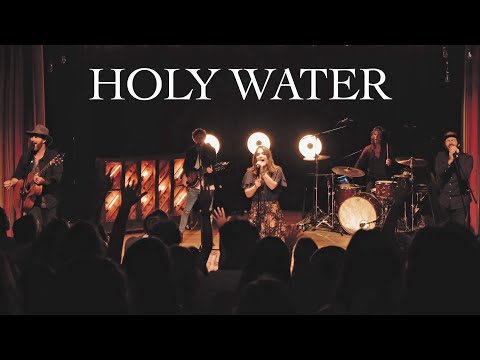 NOT A QUOTE
“Holy Water”
We The Kingdom
Sing it. It is a prayer for forgiveness and it names no verse. Just do not read it as John 4:13-14. That water is drunk once and never runs out. This water washes.
NOT A QUOTE
“Holy Water”
We The Kingdom
Sing it. It is a prayer for forgiveness and it names no verse. Just do not read it as John 4:13-14. That water is drunk once and never runs out. This water washes.✓ Never says it is quoting at all: no verse in the lyric, none in the official upload's description, and no scripture framing anywhere in the song
⚠ Nothing in the song points at John 4. The pairing is made by readers on the strength of one shared word, and the two waters do different things
 ~ FAITHFUL
“Just As I Am”
Charlotte Elliott (recorded by Reawaken Hymns)
Sing it. The clause it was printed under is quoted accurately, and the hymn answers that clause honestly. Read the whole verse once. The half the hymn leaves out is the half that makes the half it sings hold.
~ FAITHFUL
“Just As I Am”
Charlotte Elliott (recorded by Reawaken Hymns)
Sing it. The clause it was printed under is quoted accurately, and the hymn answers that clause honestly. Read the whole verse once. The half the hymn leaves out is the half that makes the half it sings hold.✓ The epigraph is a real citation, printed with the hymn at its first confirmed publication, and its clause is quoted word for word.
⚠ The epigraph names the address and not the version. Its wording is King James (KJV); a singer who looks the verse up in a modern Bible will find different words for the same clause.
 NOT A QUOTE
“Abide With Me”
Reawaken Hymns
Sing it. Nothing here is offered as a quotation. Just know that Luke 24:29 asks for one evening and the hymn asks for a lifetime. Other texts underwrite the larger request. This verse does not make it.
NOT A QUOTE
“Abide With Me”
Reawaken Hymns
Sing it. Nothing here is offered as a quotation. Just know that Luke 24:29 asks for one evening and the hymn asks for a lifetime. Other texts underwrite the larger request. This verse does not make it.✓ Never says it is quoting, anywhere: no verse number, no scripture framing, nothing presented as the Bible's own words
⚠ Luke 24:29 is a request for one night's lodging with a practical reason attached. The hymn's evening is a figure for the end of a life, which is Lyte's reading and not the verse's statement
 NOT A QUOTE
“Alabaster Box”
CeCe Winans
Sing it as testimony, not as a report. The scene is Luke 7 and the song has its details right, but Luke never names this woman, and the name the chorus gives her comes from a different anointing.
NOT A QUOTE
“Alabaster Box”
CeCe Winans
Sing it as testimony, not as a report. The scene is Luke 7 and the song has its details right, but Luke never names this woman, and the name the chorus gives her comes from a different anointing.✓ It leaves her sin unnamed, exactly as Luke does. The passage calls her a sinner and stops there, and so does the song.
⚠ The chorus names the jar Mary's. Luke does not name the woman at all, in this passage or anywhere else.
 NOT A QUOTE
“O Sacred Head Now Wounded”
Reawaken Hymns
Sing it. It is devotion built on Matthew's crucifixion scene, not a quotation of it. Know that its printed credit line names an author the manuscripts do not, and skips the two men whose words you sing.
NOT A QUOTE
“O Sacred Head Now Wounded”
Reawaken Hymns
Sing it. It is devotion built on Matthew's crucifixion scene, not a quotation of it. Know that its printed credit line names an author the manuscripts do not, and skips the two men whose words you sing.✓ Every physical detail in the opening stanza is in Matthew 27:29-30 itself. The thorns, the crown, the scorn, the blows to the head. The hymn describes the scene without adding to it.
⚠ The credit line on both the official upload and the publisher's resource page names Bernard of Clairvaux and the year 1153. The earliest manuscript of the Latin cycle names Arnulf of Leuven, and scholarship has not accepted the Bernard ascription for over a century.
 NOT A QUOTE
“Come, Ye Sinners, Poor and Needy”
Sovereign Grace Music, Bob Kauflin
Sing it. It quotes nothing and never says it is scripture, and its reasoning is the passage's own: the sick are who the doctor came for. Just know the refrain is not Hart's.
NOT A QUOTE
“Come, Ye Sinners, Poor and Needy”
Sovereign Grace Music, Bob Kauflin
Sing it. It quotes nothing and never says it is scripture, and its reasoning is the passage's own: the sick are who the doctor came for. Just know the refrain is not Hart's.✓ The hymn's central argument is the passage's. Matthew 9:12 says the sick are the ones who need a doctor, and the third verse says that waiting to be better first means never coming
⚠ The refrain is not Hart's and not from this passage. It came out of Caleb Jarvis Taylor's 1804 collection, where the lines belonged to another hymn's first stanza, and became a chorus in 1806. Its opening echoes Luke 15:18
 ~ FAITHFUL
“O Worship The King”
Passion (Chris Tomlin)
Sing it. It is a hymnal's versification of Psalm 104, and hymnals still print the psalm number next to the title. The 2004 arrangement adds a chorus of its own and drops that label.
~ FAITHFUL
“O Worship The King”
Passion (Chris Tomlin)
Sing it. It is a hymnal's versification of Psalm 104, and hymnals still print the psalm number next to the title. The 2004 arrangement adds a chorus of its own and drops that label.✓ The stanza that carries this passage tracks verse 3 closely: light as clothing, space overhead, clouds turned into a chariot, and the wind's wings as God's road are all the verse's own pictures in another meter
⚠ Verse 3 gives the clouds as a chariot with no anger attached. The hymn's chariots are chariots of wrath. The wrath is elsewhere in Psalm 104, at verses 7 and 35, and in Psalm 18's storm, but it is not in the verse the stanza is built on
 NOT A QUOTE
“All Creatures of Our God and King”
Sovereign Grace Music
Sing it. Nothing here is presented as scripture. Its resemblance to Psalm 148 comes from Draper's English, which turned Francis's praise of God for creation into a call addressed to creation.
NOT A QUOTE
“All Creatures of Our God and King”
Sovereign Grace Music
Sing it. Nothing here is presented as scripture. Its resemblance to Psalm 148 comes from Draper's English, which turned Francis's praise of God for creation into a call addressed to creation.✓ Says it is nothing but a song. No verse is cited on the recording, no translation is named, and the credit line points at the poem it came from rather than at a chapter of the Bible
⚠ The Psalm 148 resemblance belongs to the English. Francis's Italian praises God for the sun and moon and calls them brother and sister rather than ordering them to praise. A singer told this is Francis's Psalm 148 is being told two things, and only one of them is checkable
 NOT A QUOTE
“Never Would Have Made It”
Marvin Sapp
Sing it. It quotes no verse and never says it is scripture, and every rescue in it is credited to God. Psalm 30 has the same shape and then goes further, into a vow of thanks that does not go quiet.
NOT A QUOTE
“Never Would Have Made It”
Marvin Sapp
Sing it. It quotes no verse and never says it is scripture, and every rescue in it is credited to God. Psalm 30 has the same shape and then goes further, into a vow of thanks that does not go quiet.✓ Every act of rescue in the song belongs to God. The singer's survival is never credited to his own strength, which is exactly the grammar of Psalm 30:1-3
⚠ No scripture is cited anywhere. Psalm 30 is our comparison, not the song's source, and Sapp's own account points to a different psalm
 NOT A QUOTE
“Rescue”
Lauren Daigle
Sing it as comfort, not as a quotation. What it promises, Psalm 34 says God does. The psalm says it about Him. The song says it as Him, and never names its speaker.
NOT A QUOTE
“Rescue”
Lauren Daigle
Sing it as comfort, not as a quotation. What it promises, Psalm 34 says God does. The psalm says it about Him. The song says it as Him, and never names its speaker.✓ Every promise the song voices has a counterpart in this passage. Psalm 34:17-18 says the LORD hears the cry, delivers from all troubles, stays near the brokenhearted and saves the contrite in spirit
⚠ The song is sung in God's first person throughout, and Psalm 34:17-18 speaks about the LORD in the third person. The one first-person voice in the chapter is David's at verse 11, teaching the fear of the LORD
 NOT A QUOTE
“Nobody Greater”
VaShawn Mitchell
Sing it. It quotes nothing and says nothing untrue about God. Just know its ground: one person's search came up empty. Psalm 86 argues the same point from God's works and the nations.
NOT A QUOTE
“Nobody Greater”
VaShawn Mitchell
Sing it. It quotes nothing and says nothing untrue about God. Just know its ground: one person's search came up empty. Psalm 86 argues the same point from God's works and the nations.✓ The song's point is exactly the psalm's point. Psalm 86:8 says there is none like God among the gods, and the song says nothing larger than that
⚠ The song's warrant is a personal search. Psalm 86 grounds the same point in God's works and in every nation coming to bow, which reaches further than one person's looking
 NOT A QUOTE
“You Deserve It”
JJ Hairston & Youthful Praise
Sing it. It names no verse and quotes none, and the thing it says, that the glory belongs to God, is what Psalm 96:7-8 tells the nations to say. The psalm's reasons sit two verses earlier.
NOT A QUOTE
“You Deserve It”
JJ Hairston & Youthful Praise
Sing it. It names no verse and quotes none, and the thing it says, that the glory belongs to God, is what Psalm 96:7-8 tells the nations to say. The psalm's reasons sit two verses earlier.✓ The act the song performs is the act Psalm 96:7-8 commands, ascribing glory to God rather than describing the singer's experience of it
⚠ No reason is given inside the song for why the deserving holds. Psalm 96 gives one in verses 4 and 5, and a singer who does not know it is carrying a verdict without the evidence
 NOT A QUOTE
“Softly and Tenderly Jesus Is Calling”
Will L. Thompson (recorded live by Alan Jackson)
Sing it. It quotes nothing, and passing on Christ's invitation instead of speaking as Him is the role Revelation 22:17 hands to whoever hears. Its urgency is mortality, not His return.
NOT A QUOTE
“Softly and Tenderly Jesus Is Calling”
Will L. Thompson (recorded live by Alan Jackson)
Sing it. It quotes nothing, and passing on Christ's invitation instead of speaking as Him is the role Revelation 22:17 hands to whoever hears. Its urgency is mortality, not His return.✓ Jesus is in the third person from first line to last. The hymn reports the call and never puts words in His mouth
⚠ Coming home is the picture from Luke 15, not from this verse. Revelation invites a thirsty stranger to drink, which asks nothing about where they have been
 NOT A QUOTE
“Blessings”
Laura Story
Sing it. It names no verse and asks its questions honestly. Just know that Romans 5 answers them, and answers further than the song goes: hope holds because God's love is poured out by His Spirit.
NOT A QUOTE
“Blessings”
Laura Story
Sing it. It names no verse and asks its questions honestly. Just know that Romans 5 answers them, and answers further than the song goes: hope holds because God's love is poured out by His Spirit.✓ Never says it is scripture, in any form: no reference, no verse framing, nothing presented as quotation
⚠ Romans 5 names four links in order, perseverance, character and hope among them, and the song names none of the middle terms
 NOT A QUOTE
“There Is a Fountain Filled With Blood”
William Cowper (recorded live by Sovereign Grace Music)
Sing it. Nothing here says it is quoting Zechariah. The verse gives the fountain and the cleansing. The hymn supplies what fills it, and who may come, from other books.
NOT A QUOTE
“There Is a Fountain Filled With Blood”
William Cowper (recorded live by Sovereign Grace Music)
Sing it. Nothing here says it is quoting Zechariah. The verse gives the fountain and the cleansing. The hymn supplies what fills it, and who may come, from other books.✓ Never says it is quoting. The sung text quotes nothing, and the Olney Hymns heading cites the verse as a source rather than presenting the lines as scripture
⚠ The verse opens the fountain to the house of David and the people of Jerusalem on a named day. The hymn opens it to sinners generally. The widening may well be right, but nothing in this verse carries it, and the hymn does not say where the reason comes from
 NOT A QUOTE
“The Old Rugged Cross”
George Bennard (recorded by Carrie Underwood)
Sing it. Nothing here is quoting scripture. Paul's sentence is about the message of the cross; the hymn's love is for the cross itself. That figure has its own text, Galatians 6:14.
NOT A QUOTE
“The Old Rugged Cross”
George Bennard (recorded by Carrie Underwood)
Sing it. Nothing here is quoting scripture. Paul's sentence is about the message of the cross; the hymn's love is for the cross itself. That figure has its own text, Galatians 6:14.✓ The hymn never says it is quoting at all: no chapter and verse, no translation named, nothing framed as scripture
⚠ Paul's subject in verse 18 is the message of the cross, the thing preached. The hymn's subject is the cross as an object. Read the verse through the hymn and that swap is easy to miss
 NOT A QUOTE
“Come Behold the Wondrous Mystery”
Matt Boswell & Matt Papa
Sing it. Nothing is quoting, and the four stanzas walk the gospel in order: incarnation, obedient life, cross, resurrection. Paul's joining word, firstfruits, is not in it.
NOT A QUOTE
“Come Behold the Wondrous Mystery”
Matt Boswell & Matt Papa
Sing it. Nothing is quoting, and the four stanzas walk the gospel in order: incarnation, obedient life, cross, resurrection. Paul's joining word, firstfruits, is not in it.✓ Walks the gospel in order across four stanzas: incarnation, obedient life, cross, resurrection. Few congregational songs give Christ's obedient life a stanza of its own, and most go from manger to cross
⚠ Paul's joining word is firstfruits, and it appears nowhere in the hymn. The closing line makes the singers' future a likeness to the risen Christ, where verses 20 and 23 make it a harvest He has already begun
 NOT A QUOTE
“Victory in Jesus”
E. M. Bartlett (recorded by Carrie Underwood)
Sing it. Nothing is quoting. Just know that Paul's victory in this verse is over death, undone by resurrection, while the hymn's is redemption from sin and the hope of heaven.
NOT A QUOTE
“Victory in Jesus”
E. M. Bartlett (recorded by Carrie Underwood)
Sing it. Nothing is quoting. Just know that Paul's victory in this verse is over death, undone by resurrection, while the hymn's is redemption from sin and the hope of heaven.✓ Honest about what it is. The hymn is a first-person testimony, it never presents itself as scripture, and it cites no verse to be checked against
⚠ The refrain names where the victory is found, not what it is over. Careful readers fill the gap differently, which means the object is being supplied by the reader
 NOT A QUOTE
“I Can Only Imagine”
MercyMe
Sing it. It quotes nothing and never says it is scripture, and its questions sit exactly where the text says the answer has not yet been revealed. Just do not let it be everything you know about that day.
NOT A QUOTE
“I Can Only Imagine”
MercyMe
Sing it. It quotes nothing and never says it is scripture, and its questions sit exactly where the text says the answer has not yet been revealed. Just do not let it be everything you know about that day.✓ It announces its own uncertainty. The lines about the future are predominantly questions, and the repeated title phrase keeps saying that the answer is not known
⚠ The verse's two revealed facts are that we will see Him as He is and that we will be like Him. Singing this song teaches neither. The change in the singer is the part the song does not wonder about
 NOT A QUOTE
“Greater”
MercyMe
Sing it. The comparison is the verse's own, both halves intact. Just remember the letter says it to a church that has already overcome false teachers, not only to one person under discouragement.
NOT A QUOTE
“Greater”
MercyMe
Sing it. The comparison is the verse's own, both halves intact. Just remember the letter says it to a church that has already overcome false teachers, not only to one person under discouragement.✓ Both terms of the comparison survive. The One inside and the one in the world are each named, and neither is softened
⚠ No translation is named, and the sung wording matches none of them word for word, so the line has to be recognised rather than verified
 NOT A QUOTE
“Thank You Jesus for the Blood”
Charity Gayle
Sing it. Nothing in it is quoting scripture. It thanks Christ for a ransom, which is 1 Peter's picture too. The verse adds what you were ransomed from: an inherited empty way of life.
NOT A QUOTE
“Thank You Jesus for the Blood”
Charity Gayle
Sing it. Nothing in it is quoting scripture. It thanks Christ for a ransom, which is 1 Peter's picture too. The verse adds what you were ransomed from: an inherited empty way of life.✓ The blood in the song is a lamb's, and the writers have said the Passover was in mind. That is the same image 1 Peter 1:19 uses
⚠ Peter's verse works by saying what the ransom was not paid with, perishable things, silver or gold. The song has nothing that does that job, so the negation that drives the verse is not in the song
 NOT A QUOTE
“Raise a Hallelujah”
Bethel Music, Jonathan David Helser & Melissa Helser
Sing it as the prayer it was written as. It quotes nothing and never says it is scripture. The Jehoshaphat story belongs to the album's framing, not to this song, and in that chapter the LORD set the ambush.
NOT A QUOTE
“Raise a Hallelujah”
Bethel Music, Jonathan David Helser & Melissa Helser
Sing it as the prayer it was written as. It quotes nothing and never says it is scripture. The Jehoshaphat story belongs to the album's framing, not to this song, and in that chapter the LORD set the ambush.✓ Never says it is quoting: no reference, no verse framing, no translation named, nothing presented as scripture
⚠ The 2 Chronicles 20 link is the album's, not the song's. Bethel's press release attaches Jehoshaphat to the Victory project; the song itself cites nothing
 NOT A QUOTE
“Your Grace Is Enough”
Matt Maher
Sing it. Nothing here is quoting scripture, and nothing it says of God is untrue. Just know the verse behind it is God's answer to Paul, not a line Paul sang to God.
NOT A QUOTE
“Your Grace Is Enough”
Matt Maher
Sing it. Nothing here is quoting scripture, and nothing it says of God is untrue. Just know the verse behind it is God's answer to Paul, not a line Paul sang to God.✓ Never says it is quoting at all: no reference, no translation named, nothing framed or introduced as scripture
⚠ The direction of the sentence is reversed. God's word to Paul becomes the singer's word to God, which is true to say and is a different act from what the verse records
 NOT A QUOTE
“Give Thanks”
Henry Smith (recorded by Don Moen)
Sing it. It is quoting nothing, and the turn it makes is the verse's own. Just remember the half it leaves out: the riches cost Christ everything, and in Paul they are for giving away.
NOT A QUOTE
“Give Thanks”
Henry Smith (recorded by Don Moen)
Sing it. It is quoting nothing, and the turn it makes is the verse's own. Just remember the half it leaves out: the riches cost Christ everything, and in Paul they are for giving away.✓ Never says it is quoting: no verse reference, no translation named, nothing framed as scripture
⚠ The verse's first clause is absent. In 2 Corinthians 8:9 the enriching happens only through an impoverishing, and the song sings the outcome without the cost
 ✓ VERIFIED
“Breathed Out By God (2 Timothy 3:16-17)”
Seeds Kids Worship (Seeds Family Worship)
Sing it. It is 2 Timothy 3:16-17 whole, in the ESV, and the chord chart names not just the version but the edition, so anyone can check the words against the exact text.
✓ VERIFIED
“Breathed Out By God (2 Timothy 3:16-17)”
Seeds Kids Worship (Seeds Family Worship)
Sing it. It is 2 Timothy 3:16-17 whole, in the ESV, and the chord chart names not just the version but the edition, so anyone can check the words against the exact text.✓ Both verses whole and in order, in the ESV's wording, with every repeated line drawn from the passage itself
✓ no cautions: this is the standard
 NOT A QUOTE
“Holy Spirit”
Bryan & Katie Torwalt
Sing it as a prayer for awareness, not as a picture of Pentecost. It quotes nothing and never says it is scripture. Acts 2 records a public, once-for-all coming. This song asks for something quieter.
NOT A QUOTE
“Holy Spirit”
Bryan & Katie Torwalt
Sing it as a prayer for awareness, not as a picture of Pentecost. It quotes nothing and never says it is scripture. Acts 2 records a public, once-for-all coming. This song asks for something quieter.✓ Never says it is quoting: no verse cited, no words framed as scripture, no Bible reference anywhere in it
⚠ Acts 2's signs are external and public: a sound, fire-like tongues, languages a foreign crowd recognised. The song's picture of the Spirit is interior. A singer with only this song will not have the chapter's picture
 NOT A QUOTE
“O Praise the Name (Anástasis)”
Hillsong Worship
Sing it. It is quoting nothing and tells the resurrection story truly. Acts 2:24 adds two things the song does not: that God raised Him, and that death could never have held Him.
NOT A QUOTE
“O Praise the Name (Anástasis)”
Hillsong Worship
Sing it. It is quoting nothing and tells the resurrection story truly. Acts 2:24 adds two things the song does not: that God raised Him, and that death could never have held Him.✓ Gives the burial a full verse. Acts 2:31 says the point at issue was that His body did not see decay, and a song that stays in the tomb keeps that in view
⚠ Verse 24's reason, that death could not have kept Him, is not in the song. Repetition will plant the resurrection as a victory won, not as an outcome that was never in doubt
 NOT A QUOTE
“I Speak Jesus”
Charity Gayle (feat. Steven Musso)
Sing it. Nothing here is offered as scripture, and what it says of Jesus' name has warrant. It stays with what the name does for your circumstances, not what Acts 4:12 says it does for salvation.
NOT A QUOTE
“I Speak Jesus”
Charity Gayle (feat. Steven Musso)
Sing it. Nothing here is offered as scripture, and what it says of Jesus' name has warrant. It stays with what the name does for your circumstances, not what Acts 4:12 says it does for salvation.✓ Never says it is quoting: no verse cited in the song, none printed on the official chord chart, none in the official upload's description
⚠ Neither the song, the official chart, nor the official upload cites a verse, and the publisher's own devotional for it points to Philippians 2:9-11. The pairing on this page is a comparison, not a source
 NOT A QUOTE
“Break Every Chain”
Will Reagan & United Pursuit
Sing it. It quotes nothing and never says it is scripture, so there is no citation to check. Just know it is not Acts 16 set to music. The chains it names are the ones John 8 and Galatians 5 describe.
NOT A QUOTE
“Break Every Chain”
Will Reagan & United Pursuit
Sing it. It quotes nothing and never says it is scripture, so there is no citation to check. Just know it is not Acts 16 set to music. The chains it names are the ones John 8 and Galatians 5 describe.✓ Never says it is quoting: no verse, no reference, no scripture framing, so there is nothing here that can be mis-cited
⚠ The lyric names no passage, so the hearer supplies one. Acts 16 is the one usually supplied, and the song never points there
 NOT A QUOTE
“Chain Breaker”
Zach Williams
Sing it. It quotes nothing and never says it is scripture, and what it says God does is what Psalm 107 says God does. Read the psalm beside it, where the rescue starts with a cry.
NOT A QUOTE
“Chain Breaker”
Zach Williams
Sing it. It quotes nothing and never says it is scripture, and what it says God does is what Psalm 107 says God does. Read the psalm beside it, where the rescue starts with a cry.✓ Everything it says God does is something scripture says God does. Broken chains and an opened prison are Psalm 107's own images, and a shaken prison is Acts 16's
⚠ Three worship catalogues list three different scripture sets behind it, and the song supplies none of them. Anything you hear about "the verse" behind this song comes from a cataloguer, not the writers
 NOT A QUOTE
“Above All”
Paul Baloche & Lenny LeBlanc
Sing it, knowing the argument. Nothing here is offered as a verse. The verses say what Colossians 1:18 says. The last line of the chorus can be heard two ways, and the passage tells you which.
NOT A QUOTE
“Above All”
Paul Baloche & Lenny LeBlanc
Sing it, knowing the argument. Nothing here is offered as a verse. The verses say what Colossians 1:18 says. The last line of the chorus can be heard two ways, and the passage tells you which.✓ Never says it is quoting: no verse cited, no reference given, no translation named, nothing in the recording framed as scripture
⚠ The chorus's closing line is the subject of a documented, two-decade disagreement among worship leaders and pastors, with serious people on both sides. Read Kauflin and Theobald before leading it, not after someone asks
 NOT A QUOTE
“The Power of the Cross (Oh to See the Dawn)”
Keith Getty & Stuart Townend
Sing it. It promises nothing it does not deliver, and what it delivers is the Good Friday story told straight. It stops at what could be seen, so read Colossians 2:14-15 for what could not.
NOT A QUOTE
“The Power of the Cross (Oh to See the Dawn)”
Keith Getty & Stuart Townend
Sing it. It promises nothing it does not deliver, and what it delivers is the Good Friday story told straight. It stops at what could be seen, so read Colossians 2:14-15 for what could not.✓ Never says it is quoting: no verse cited, no scripture framing, nothing offered as the words of the text
⚠ Colossians 2:14 says a written record of debt was cancelled and nailed up. The hymn has nails and a cross and no document, so the passage's central image is not in the song
 NOT A QUOTE
“Awesome God”
Rich Mullins
Sing it, and sing the verses. Nothing here is quoting scripture, and nothing in it is false. The chorus states a conclusion. The verses are where the song shows its working.
NOT A QUOTE
“Awesome God”
Rich Mullins
Sing it, and sing the verses. Nothing here is quoting scripture, and nothing in it is false. The chorus states a conclusion. The verses are where the song shows its working.✓ Never says it is quoting: no chapter and verse, no translation, nothing framed as scripture
⚠ Sung as a chorus on its own, which is the common practice, the song keeps its conclusion and loses its grounds
 ~ FAITHFUL
“Turn! Turn! Turn! (To Everything There Is a Season)”
The Byrds
Sing it. Almost every word is Ecclesiastes 3:1-8 in King James English. Know that the order is the songwriter's, and that the last line is his own rather than the Preacher's.
~ FAITHFUL
“Turn! Turn! Turn! (To Everything There Is a Season)”
The Byrds
Sing it. Almost every word is Ecclesiastes 3:1-8 in King James English. Know that the order is the songwriter's, and that the last line is his own rather than the Preacher's.✓ Almost every sung word is Ecclesiastes 3:1-8 itself, in King James wording, with the pairs carried whole rather than paraphrased into something looser
⚠ The pairs are sung in a different order from the chapter's, and nothing in the song signals that the order changed
 NOT A QUOTE
“Open the Eyes of My Heart”
Paul Baloche
Sing it as a prayer. Nothing here is offered as a verse. It asks for the same opened eyes Ephesians 1:18 asks for, and asks them for something else. Read the rest of the sentence.
NOT A QUOTE
“Open the Eyes of My Heart”
Paul Baloche
Sing it as a prayer. Nothing here is offered as a verse. It asks for the same opened eyes Ephesians 1:18 asks for, and asks them for something else. Read the rest of the sentence.✓ Never says it is quoting, anywhere: no reference, no translation, nothing framed as scripture, in the recording, in the label's descriptions, or on the publisher's chart pages
⚠ The verse's purpose clause is not in the song. Paul asks for opened eyes so that three named things may be known, and none of the six key words from that list appears anywhere in the lyric
 ~ FAITHFUL
“Be Kind and Compassionate”
Slugs & Bugs (Randall Goodgame)
Sing it, and teach it to your children. It is Ephesians 4:32 whole, its reason included, in the current NIV's wording. No translation is named anywhere, so check the words against an NIV once.
~ FAITHFUL
“Be Kind and Compassionate”
Slugs & Bugs (Randall Goodgame)
Sing it, and teach it to your children. It is Ephesians 4:32 whole, its reason included, in the current NIV's wording. No translation is named anywhere, so check the words against an NIV once.✓ The verse survives whole, and so does the clause that gives the command its reason. A child learns the kindness and the ground for it in a single breath
⚠ No translation is named on the album page, the audio collection page, or the official video's description. The NIV wording has to be recognised rather than checked
 ✓ VERIFIED
“Ephesians 6”
Streetlights
Play it freely. It is Ephesians itself, read word for word in a named translation, so the armor passage arrives where Paul put it, at the end, after everything he said first.
✓ VERIFIED
“Ephesians 6”
Streetlights
Play it freely. It is Ephesians itself, read word for word in a named translation, so the armor passage arrives where Paul put it, at the end, after everything he said first.✓ The whole book, in order, so verses 10 to 13 arrive after the household instructions of 6:1-9 rather than as a passage on their own
✓ no cautions: this is the standard
 NOT A QUOTE
“RATTLE!”
Elevation Worship
Sing it. Nothing in it is quoting scripture, and the resurrection it celebrates is the Gospels'. Just know Ezekiel's valley states its own meaning a few verses on: the bones are Israel, brought home from exile.
NOT A QUOTE
“RATTLE!”
Elevation Worship
Sing it. Nothing in it is quoting scripture, and the resurrection it celebrates is the Gospels'. Just know Ezekiel's valley states its own meaning a few verses on: the bones are Israel, brought home from exile.✓ The three days it opens with are the Gospel accounts, and the song puts the resurrection rather than the singer at the centre of its first section
⚠ Ezekiel 37:11-14 states the vision's meaning: the bones are the whole house of Israel and the raising is a return from exile to their own land. That interpretation does not appear in the sung words
 NOT A QUOTE
“Same God”
Elevation Worship feat. Jonsal Barrientes
Sing it. Nothing here is quoting, and calling on God by what He has done is how scripture prays. Just read Genesis 28 to the end of the sentence, because that promise names its own finish.
NOT A QUOTE
“Same God”
Elevation Worship feat. Jonsal Barrientes
Sing it. Nothing here is quoting, and calling on God by what He has done is how scripture prays. Just read Genesis 28 to the end of the sentence, because that promise names its own finish.✓ The first name in the roll call has a real address. The promise behind the title God of Jacob is Genesis 28:13-15, and a published line-by-line review of this song sends readers to exactly that passage
⚠ Verse 15 closes by tying the keeping to a finish, until God has done what He promised, and Jacob's own vow in verses 20 and 21 reads it as cover for one journey and a safe return
 NOT A QUOTE
“Word of God Speak”
MercyMe
Sing it as a prayer for God to speak. It quotes nothing and never says it is scripture. Hebrews 4:12 describes the word as something that exposes a hearer, which is not what this chorus asks for.
NOT A QUOTE
“Word of God Speak”
MercyMe
Sing it as a prayer for God to speak. It quotes nothing and never says it is scripture. Hebrews 4:12 describes the word as something that exposes a hearer, which is not what this chorus asks for.✓ Never says it is quoting: no verse cited, no translation named, nothing framed as scripture
⚠ The title makes "word of God" someone to speak to. Hebrews 4:12 makes it the subject of a description. The two are not interchangeable, and only one of them is the verse
 NOT A QUOTE
“Lord, I Need You”
Matt Maher
Sing it. It is an honest confession of need, not a quotation, and nothing in it is false. Just know that the verse behind the credit says why you may come, and the song does not.
NOT A QUOTE
“Lord, I Need You”
Matt Maher
Sing it. It is an honest confession of need, not a quotation, and nothing in it is false. Just know that the verse behind the credit says why you may come, and the song does not.✓ Never says it is quoting: no reference in the lyric, no verse framing, nothing presented as scripture
⚠ The verse's terms for how God is approached, the throne, confidence and mercy, do not appear in the lyric. Only grace does
 NOT A QUOTE
“The Blood Will Never Lose Its Power”
Andraé Crouch and the Disciples
Sing it. Nothing here is quoting, and what the title says is Hebrews 9's own conclusion. Read the chapter alongside it for the reason the song has no room for: offered once, and once was enough.
NOT A QUOTE
“The Blood Will Never Lose Its Power”
Andraé Crouch and the Disciples
Sing it. Nothing here is quoting, and what the title says is Hebrews 9's own conclusion. Read the chapter alongside it for the reason the song has no room for: offered once, and once was enough.✓ What the title says is the conclusion Hebrews 9 argues for: verse 12 calls the redemption eternal, obtained once for all, and 10:14 says one offering perfected for all time
⚠ The verses printed beside this hymn are editors' choices, not the songwriter's, and across the hymnals they do not agree with each other
 NOT A QUOTE
“Only a Holy God”
CityAlight
Sing it. Nothing here is offered as a quotation. The questions are the songwriters' own, cast in Isaiah 40's shape, and every answer the song gives is one the chapter supports.
NOT A QUOTE
“Only a Holy God”
CityAlight
Sing it. Nothing here is offered as a quotation. The questions are the songwriters' own, cast in Isaiah 40's shape, and every answer the song gives is one the chapter supports.✓ Borrows Isaiah 40's method rather than its wording: repeated comparison questions whose only available answer is nobody
⚠ In Isaiah 40:25 the question is God's own, spoken in the first person. In the song it is ours, spoken about Him. The form survives the move; the force of it changes
 NOT A QUOTE
“Made a Way”
Travis Greene
Sing it as a testimony, which is what it is. Nothing here is quoting scripture, and the past-tense thanksgiving it offers is honest. Just do not read it as a promise attached to your own situation.
NOT A QUOTE
“Made a Way”
Travis Greene
Sing it as a testimony, which is what it is. Nothing here is quoting scripture, and the past-tense thanksgiving it offers is honest. Just do not read it as a promise attached to your own situation.✓ Never says it is quoting: no verse, no reference, nothing framed as scripture
⚠ Neither Travis Greene nor the publisher cites Isaiah 43:16. The connection came from listeners and devotional writers, and it is worth knowing which end it came from
 NOT A QUOTE
“Man of Sorrows”
Hillsong Worship
Sing it. Nothing here is quoting. Know that it carries the second half of Isaiah 53:6, where sin is laid on him, and not the first half, where we admit we strayed.
NOT A QUOTE
“Man of Sorrows”
Hillsong Worship
Sing it. Nothing here is quoting. Know that it carries the second half of Isaiah 53:6, where sin is laid on him, and not the first half, where we admit we strayed.✓ Carries the verse's actual construction, not just its subject: the sin is laid on him, which is what Isaiah 53:6 says the LORD did, rather than something the servant merely suffered
⚠ The first verse puts two things on Jesus. Isaiah 53:6 puts one. The wrath language comes from a reading of the chapter and of the New Testament, not from this verse, so sing it knowing which of the two words is Isaiah's
 NOT A QUOTE
“O Come, O Come, Emmanuel”
Sovereign Grace Music
Sing it. Nothing in it is offered as a quotation. It is a chain of Bible titles turned into prayers, and Isaiah 7:14 lends it a single word: the name.
NOT A QUOTE
“O Come, O Come, Emmanuel”
Sovereign Grace Music
Sing it. Nothing in it is offered as a quotation. It is a chain of Bible titles turned into prayers, and Isaiah 7:14 lends it a single word: the name.✓ Never says it is quoting at any point: no reference, no verse framing, nothing presented as scripture, and nothing that could be mistaken for a quoted sentence
⚠ The song gives no addresses. Every title in it comes from a specific verse, and you have to find all of them somewhere other than the song
 NOT A QUOTE
“What A Beautiful Name”
Hillsong Worship
Sing it. Nothing here is quoting scripture. The first section tracks what John 1 says at its opening about the Word, and the line people argue over is ambiguous rather than provably wrong.
NOT A QUOTE
“What A Beautiful Name”
Hillsong Worship
Sing it. Nothing here is quoting scripture. The first section tracks what John 1 says at its opening about the Word, and the line people argue over is ambiguous rather than provably wrong.✓ The first section carries the two hardest things John 1:1 says, in the right order, that the Word was with God and that the Word was God, and it does so before any mention of what He did for us
⚠ The second section contains a line that has been publicly disputed for years. Read John 1:1-3 and John 17:24 before you decide how you are singing it, rather than deciding from the tune
 NOT A QUOTE
“He Will Hold Me Fast”
Keith & Kristyn Getty
Sing it. It quotes nothing and never says it is scripture. It says what John 10:28 says, that the grip is His and not yours. Read verse 29 alongside it for the reason that grip holds.
NOT A QUOTE
“He Will Hold Me Fast”
Keith & Kristyn Getty
Sing it. It quotes nothing and never says it is scripture. It says what John 10:28 says, that the grip is His and not yours. Read verse 29 alongside it for the reason that grip holds.✓ Never says it is quoting. No verse is cited in the sung text, and nothing is presented as the words of scripture
⚠ The Father is not named in the song. John 10:29 supplies the reason the promise holds, that the Father who gave them is greater than all, and that clause has no counterpart in either version of the hymn
 NOT A QUOTE
“It Was Finished Upon That Cross”
CityAlight
Sing it. Nothing here is offered as a quotation, and the refrain's changed grammar makes that plain. What John 19:30 records Jesus saying, the song says about Him, and says it accurately.
NOT A QUOTE
“It Was Finished Upon That Cross”
CityAlight
Sing it. Nothing here is offered as a quotation, and the refrain's changed grammar makes that plain. What John 19:30 records Jesus saying, the song says about Him, and says it accurately.✓ Never says it is quoting, anywhere: no verse cited, no translation named, nothing framed as scripture on the recording, on the official chart, or on the publisher's listing
⚠ The refrain places the finishing at the cross. John 19:30 gives the word and the chapter puts the saying at the cross, but the sentence tying the two together is the song's, not the verse's
 NOT A QUOTE
“In the Garden”
Alan Jackson
Sing it as one man's picture of Mary's morning, not as a garden you can walk back into. Nothing here is quoting. Remember that John 20:17 ends that scene with an errand, not a stay.
NOT A QUOTE
“In the Garden”
Alan Jackson
Sing it as one man's picture of Mary's morning, not as a garden you can walk back into. Nothing here is quoting. Remember that John 20:17 ends that scene with an errand, not a stay.✓ Never says it is quoting. No verse is cited, no scripture framing is used, and nothing is presented as the Bible's own words
⚠ Written in the first person and the present tense, so the singer stands where Mary stands, in a scene John 20 records happening once
 NOT A QUOTE
“The Heart of Worship”
Matt Redman
Sing it. It is a confession, not a quotation, and nothing in it contradicts John 4:23-24. Do not read it as this verse's definition of worship, though. The verse is answering a different question.
NOT A QUOTE
“The Heart of Worship”
Matt Redman
Sing it. It is a confession, not a quotation, and nothing in it contradicts John 4:23-24. Do not read it as this verse's definition of worship, though. The verse is answering a different question.✓ Never says it is quoting: no verse is cited in the lyric, in the official upload's description, or on the publisher's song page
⚠ The song usually arrives with a story attached about how it came to be written. A story is background, not a reference, and nothing in the song points to a verse
 NOT A QUOTE
“Promises”
Maverick City Music feat. Joe L Barnes & Naomi Raine
Sing it. It quotes nothing, and what it says of God is true. Read Joshua 23:14 through 16 alongside it, because Joshua's version of the same words names the promises and comes with a warning attached.
NOT A QUOTE
“Promises”
Maverick City Music feat. Joe L Barnes & Naomi Raine
Sing it. It quotes nothing, and what it says of God is true. Read Joshua 23:14 through 16 alongside it, because Joshua's version of the same words names the promises and comes with a warning attached.✓ Never says it is quoting. No chapter, no verse, no translation named, nothing framed as scripture
⚠ The word "promises" is never filled in, and the song's central thesis is about God's record without naming what is on it. Joshua names his: the good promises about the land
 ~ FAITHFUL
“—the keeper (24-25)”
Psallos
Sing it. This is an honest adaptation, not a quotation. The last third tracks the doxology closely; the rest is the writer's own verse recalling the letter's earlier images. No translation is named.
~ FAITHFUL
“—the keeper (24-25)”
Psallos
Sing it. This is an honest adaptation, not a quotation. The last third tracks the doxology closely; the rest is the writer's own verse recalling the letter's earlier images. No translation is named.✓ All four terms of the ascription in verse 25 are present, in the passage's own order, and are given to God rather than described from a distance
⚠ No translation is named on the album page, the track page or the official upload, so the wording cannot be checked against a stated text. Psallos's own store sells ESV parallel booklets for the Romans and Hebrews albums, and there is no such booklet listed for Jude
 NOT A QUOTE
“Mary, Did You Know?”
Pentatonix
Sing it. It quotes nothing and says nothing false about Christ. Just know that Luke 1 records what Mary was told, and her answer to it is in the same chapter.
NOT A QUOTE
“Mary, Did You Know?”
Pentatonix
Sing it. It quotes nothing and says nothing false about Christ. Just know that Luke 1 records what Mary was told, and her answer to it is in the same chapter.✓ Never says it is quoting, anywhere: no verse cited, no scripture framing, nothing offered as the Bible's own words
⚠ The scene is Luke 1 and the content is not. Sung often enough, the questions can become the remembered tone of a chapter that Luke wrote as an announcement
 NOT A QUOTE
“New Name Written Down in Glory”
Charity Gayle
Sing it. Nothing here is quoting scripture, and what it celebrates is true. Just know the famous line is a 1910 hymn refrain, and the new name is Revelation's promise rather than Luke's sentence.
NOT A QUOTE
“New Name Written Down in Glory”
Charity Gayle
Sing it. Nothing here is quoting scripture, and what it celebrates is true. Just know the famous line is a 1910 hymn refrain, and the new name is Revelation's promise rather than Luke's sentence.✓ Never says it is quoting at any point: no reference in the song, none printed on the official chart, none in the publisher's song metadata
⚠ The title line is a hymn phrase, not a Bible phrase. No translation renders Luke 10:20, or Revelation 2:17, in those words
 NOT A QUOTE
“Hark! The Herald Angels Sing”
Choir of King's College, Cambridge
Sing it. It quotes nothing and never says it is scripture. Just know that the famous opening line is a later editor's, and that the words it puts in the angels' mouths are not the words Luke reports them saying.
NOT A QUOTE
“Hark! The Herald Angels Sing”
Choir of King's College, Cambridge
Sing it. It quotes nothing and never says it is scripture. Just know that the famous opening line is a later editor's, and that the words it puts in the angels' mouths are not the words Luke reports them saying.✓ Compresses more checkable doctrine into three stanzas than most Christmas songs manage: incarnation, virgin birth, deity in flesh, reconciliation, and new birth, each with an address in scripture
⚠ The opening reports the angels singing. Luke 2:13 has the host praising God and saying, in the BSB and the KJV alike, and Luke 2:14 gives the words. They begin with glory to God in the highest, not with glory to a newborn king
 NOT A QUOTE
“O Come All Ye Faithful”
Reawaken Hymns
Sing it. Nothing here is offered as a quotation. It puts the shepherds' errand in your mouth as an invitation to worship, which is a fair use of the scene rather than a report of it.
NOT A QUOTE
“O Come All Ye Faithful”
Reawaken Hymns
Sing it. Nothing here is offered as a quotation. It puts the shepherds' errand in your mouth as an invitation to worship, which is a fair use of the scene rather than a report of it.✓ Never says it is quoting at all: no verse number, no scripture framing, nothing presented as the Bible's own words
⚠ The stanza that actually tells the shepherds' story is missing twice over. It is not Wade's, and this recording does not include it
 NOT A QUOTE
“Go Tell It On The Mountain”
Keith & Kristyn Getty
Sing it. Nothing here is offered as a quotation, and the nativity it narrates is the one Luke reports. Just know that the refrain is older than the verses and came from somewhere else.
NOT A QUOTE
“Go Tell It On The Mountain”
Keith & Kristyn Getty
Sing it. Nothing here is offered as a quotation, and the nativity it narrates is the one Luke reports. Just know that the refrain is older than the verses and came from somewhere else.✓ Never says it is quoting, anywhere: no chapter and verse, no translation named, nothing framed as scripture
⚠ The refrain and the stanzas have separate origins, and hymnal credit lines that read only "traditional" or only "John W. Work Jr." collapse the two
 NOT A QUOTE
“Believe For It”
CeCe Winans
Sing it. It quotes nothing and misstates nothing about God's power. Just bring the other half of Mark 9 with you: the father who got his miracle said out loud that his faith was not enough.
NOT A QUOTE
“Believe For It”
CeCe Winans
Sing it. It quotes nothing and misstates nothing about God's power. Just bring the other half of Mark 9 with you: the father who got his miracle said out loud that his faith was not enough.✓ Never says it is quoting: no verse is cited, no words are framed as scripture, and the publisher's own chord chart lists no scripture reference field
⚠ What to believe for is never named. The object is left open for the singer to fill in, and the song supplies no test for what belongs there
 ~ FAITHFUL
“Jesus, Strong and Kind”
CityAlight feat. Colin Buchanan
Sing it, including with children. It says what Jesus said without pretending to be quoting him, and the invitation it reports is really his. It just never tells you where to look it up.
~ FAITHFUL
“Jesus, Strong and Kind”
CityAlight feat. Colin Buchanan
Sing it, including with children. It says what Jesus said without pretending to be quoting him, and the invitation it reports is really his. It just never tells you where to look it up.✓ The song never puts a sentence in Jesus' mouth. Every attribution is reported in the third person, so nothing is offered as a quotation that would then have to be checked against a translation
⚠ No reference and no translation anywhere: not on the recording, not on the official chord chart, and not on CityAlight's own page for the song. Four reports of what Jesus said, and no address for any of them
 NOT A QUOTE
“In Jesus Name (God of Possible)”
Katy Nichole
Sing it as a prayer, because that is what it is. Nothing in it is quoting scripture. Just know that Matthew 19:26, the verse the publisher credits, is Jesus answering who can be saved.
NOT A QUOTE
“In Jesus Name (God of Possible)”
Katy Nichole
Sing it as a prayer, because that is what it is. Nothing in it is quoting scripture. Just know that Matthew 19:26, the verse the publisher credits, is Jesus answering who can be saved.✓ Never says it is quoting: no verse cited, no scripture framing, nothing in the song presented as the Bible's words
⚠ Matthew 19:26 is an answer to a question about salvation. Sung over healing and circumstances, "all things" covers ground the verse was not answering
 NOT A QUOTE
“What Child Is This?”
Chris Tomlin (feat. All Sons & Daughters)
Sing it. Nothing here is quoting a verse. Just know the picture is assembled: Luke gives the shepherds at the manger, Matthew gives the magi at a house, and the carol holds both.
NOT A QUOTE
“What Child Is This?”
Chris Tomlin (feat. All Sons & Daughters)
Sing it. Nothing here is quoting a verse. Just know the picture is assembled: Luke gives the shepherds at the manger, Matthew gives the magi at a house, and the carol holds both.✓ Never says it is quoting, anywhere: no reference, no verse framing, nothing presented as scripture
⚠ Matthew 2:11 puts the magi at a house. The manger and the shepherds in the first stanza are Luke's, so the scene the carol paints belongs to neither Gospel on its own
 NOT A QUOTE
“Christ Arose (Low in the Grave He Lay)”
Robert Lowry (recorded live by First Baptist Atlanta)
Sing it. Nothing here is offered as a verse, and what it says about the risen Christ is what the gospels say. The tomb it opens in is Matthew's. The announcement it echoes is Luke's.
NOT A QUOTE
“Christ Arose (Low in the Grave He Lay)”
Robert Lowry (recorded live by First Baptist Atlanta)
Sing it. Nothing here is offered as a verse, and what it says about the risen Christ is what the gospels say. The tomb it opens in is Matthew's. The announcement it echoes is Luke's.✓ Never says it is quoting: no verse is cited in the sung words, and the publisher's own listing of the hymn cites none either, so nothing is offered as scripture
⚠ The sung words name no passage. Lowry's first printing carried a Luke heading, and hymnal editors have since attached at least four different texts to it, including Mark 16:6, Matthew 28:2, Acts 2:24 and Matthew 28:1-6. A singer looking for the verse behind it will not find one verse
 NOT A QUOTE
“Christ Be Magnified”
Cody Carnes
Sing it. Nothing here is quoting. Just know the verse behind the title is Paul in chains, pricing the magnifying at his own life or death, and that the song's bridges are where that price lands.
NOT A QUOTE
“Christ Be Magnified”
Cody Carnes
Sing it. Nothing here is quoting. Just know the verse behind the title is Paul in chains, pricing the magnifying at his own life or death, and that the song's bridges are where that price lands.✓ The song keeps the verse's cost instead of dropping it: the bridges put the singer's own life on the line, and the one mention of death sits there
⚠ Paul locates the magnifying in his body under a specific threat. The song's verses widen it to mountains, rivers and skies, which is a much larger and much lighter scale
 NOT A QUOTE
“Christ Is Mine Forevermore”
CityAlight
Sing it. It quotes nothing and never says it is scripture it cannot carry, and it is clear that your failures are settled by Christ. For the righteousness credited in their place, read Philippians 3:9 alongside it.
NOT A QUOTE
“Christ Is Mine Forevermore”
CityAlight
Sing it. It quotes nothing and never says it is scripture it cannot carry, and it is clear that your failures are settled by Christ. For the righteousness credited in their place, read Philippians 3:9 alongside it.✓ Never says it is quoting: no verse cited on the song page, on the chord charts, or in the official upload's own description
⚠ The song closes at a settled account. Philippians 3:9 goes one clause further, to a righteousness from God that the singer never owns, and the song does not state it
 ~ FAITHFUL
“Psalm 100”
Poor Bishop Hooper
Sing it. It is all five verses of Psalm 100 with nothing added. Just know the order has been rebuilt: the psalm ends on God's goodness and faithfulness, and the song ends on our belonging to Him.
~ FAITHFUL
“Psalm 100”
Poor Bishop Hooper
Sing it. It is all five verses of Psalm 100 with nothing added. Just know the order has been rebuilt: the psalm ends on God's goodness and faithfulness, and the song ends on our belonging to Him.✓ Every clause of all five verses is present, and no line in the song comes from outside Psalm 100
⚠ No translation is named anywhere on the release, the project pages, or the upload, so the wording cannot be checked against a source the listener is pointed to
 NOT A QUOTE
“My Tribute (To God Be the Glory)”
Andraé Crouch & The Disciples
Sing it. It quotes nothing and never says it is scripture it does not deliver. Just know the refrain is not Psalm 115:1. The psalm refuses glory before it gives it, and the song only gives it.
NOT A QUOTE
“My Tribute (To God Be the Glory)”
Andraé Crouch & The Disciples
Sing it. It quotes nothing and never says it is scripture it does not deliver. Just know the refrain is not Psalm 115:1. The psalm refuses glory before it gives it, and the song only gives it.✓ The refrain sends the credit away from the singer and toward God, and it is the part of the song that gets repeated most, so it is what a congregation actually carries out of the room
⚠ Psalm 115:1 says "not to us" twice before it says "to Your name." A refrain built on the affirmative half alone leaves out the move that makes the verse what it is
 ~ FAITHFUL
“Total Praise”
Richard Smallwood with Vision
Sing it. The opening carries Psalm 121:1-2 in King James English, turned into direct address. The question and the Maker title are not sung, and no translation is named, so treat it as paraphrase.
~ FAITHFUL
“Total Praise”
Richard Smallwood with Vision
Sing it. The opening carries Psalm 121:1-2 in King James English, turned into direct address. The question and the Maker title are not sung, and no translation is named, so treat it as paraphrase.✓ The song reaches the psalm's answer. Where the help comes from is settled in the opening lines, and it is settled on God rather than on the hills
⚠ No translation is named on the release, in the copyright line, or in Smallwood's own published account. The King James flavour of the opening has to be recognised, not verified. A hymnologist quoting the KJV alongside the song is citing the psalm, not the song's source
 NOT A QUOTE
“Doxology”
Reawaken Hymns
Sing it. Nothing here is quoting a verse. The stanza calls the same two ranks Psalm 148 calls, below and above, then names the Trinity, which the psalm does not.
NOT A QUOTE
“Doxology”
Reawaken Hymns
Sing it. Nothing here is quoting a verse. The stanza calls the same two ranks Psalm 148 calls, below and above, then names the Trinity, which the psalm does not.✓ Never says it is quoting: no verse is cited on the recording or on the publisher's page, so nothing is presented as scripture
⚠ The order is reversed. Psalm 148 calls the heavens first and the earth second, and that order is part of its argument, since it ends by saying His name alone is exalted above both
 NOT A QUOTE
“Trust In God”
Elevation Worship feat. Chris Brown
Sing it as testimony. It quotes nothing and never says it is scripture, and what it says about God is true. Just note that Psalm 20:7 names the thing it is refusing to trust, and the song never does.
NOT A QUOTE
“Trust In God”
Elevation Worship feat. Chris Brown
Sing it as testimony. It quotes nothing and never says it is scripture, and what it says about God is true. Just note that Psalm 20:7 names the thing it is refusing to trust, and the song never does.✓ Never says it is quoting: no verse reference, no translation named, nothing framed as scripture
⚠ The psalm's sentence has two halves and the song carries one. No alternative object of trust is named anywhere in the song, so the verse's act of refusal has no counterpart in it
 ~ FAITHFUL
“Psalm 3 (Lifter of My Head)”
The Psalms Project
Sing it. It works through all eight verses of Psalm 3 in order and adds almost nothing of its own. It is a close paraphrase rather than a quotation, and the project says so itself.
~ FAITHFUL
“Psalm 3 (Lifter of My Head)”
The Psalms Project
Sing it. It works through all eight verses of Psalm 3 in order and adds almost nothing of its own. It is a close paraphrase rather than a quotation, and the project says so itself.✓ All eight verses are represented, in the psalm's own order, and nothing is brought in from outside the psalm
⚠ No translation is named on the release. The project's FAQ names a working blend of five, which means no single Bible will match the lyric line for line
 ~ FAITHFUL
“Then At Last (Psalm 32)”
Wendell Kimbrough
Sing it. The title says Psalm 32 and the song is that psalm in a songwriter's words, including the parts about silence and a heavy hand that most settings drop. The welcome in the refrain is his addition.
~ FAITHFUL
“Then At Last (Psalm 32)”
Wendell Kimbrough
Sing it. The title says Psalm 32 and the song is that psalm in a songwriter's words, including the parts about silence and a heavy hand that most settings drop. The welcome in the refrain is his addition.✓ The song keeps the psalm's hardest material: the silence, the wasting body, the heavy hand, and the horse and mule of verse 9, all of which most congregational settings drop
⚠ Psalm 32 addresses God directly from verse 3 to verse 7. The song speaks about God instead, so the psalm's second-person prayer becomes a first-person report
 ✓ VERIFIED
“Psalm 4 (English Standard Version)”
The Corner Room (Adam Wright)
Sing it without a caveat. It is the whole of Psalm 4, in order, in a version named on the track itself, so what you repeat by singing it is the psalm.
✓ VERIFIED
“Psalm 4 (English Standard Version)”
The Corner Room (Adam Wright)
Sing it without a caveat. It is the whole of Psalm 4, in order, in a version named on the track itself, so what you repeat by singing it is the psalm.✓ All eight verses of Psalm 4, in order, with nothing added and nothing repeated that the psalm does not repeat
✓ no cautions: this is the standard
 NOT A QUOTE
“Million Little Miracles”
Elevation Worship & Maverick City Music (feat. Joe L. Barnes)
Sing it as testimony, not as a psalm. Nothing is quoted and nothing is misrepresented. Know only that the miracles counted here are one life's, not the deeds Psalm 40 counts for a whole people.
NOT A QUOTE
“Million Little Miracles”
Elevation Worship & Maverick City Music (feat. Joe L. Barnes)
Sing it as testimony, not as a psalm. Nothing is quoted and nothing is misrepresented. Know only that the miracles counted here are one life's, not the deeds Psalm 40 counts for a whole people.✓ Every item the song counts is credited to God rather than to the singer's own effort, which is the direction Psalm 40:5 runs
⚠ The publisher's page lists themes but no scripture reference, so any verse a listener hangs on this song is the listener's own. Psalm 40:5 is the nearest text, not a cited one
 NOT A QUOTE
“Great Is the Lord”
Michael W. Smith & Deborah D. Smith
Sing it. Nothing here is offered as a quotation, and every attribute it names of God is one the psalms affirm. It is a list of true things, not a verse set to music.
NOT A QUOTE
“Great Is the Lord”
Michael W. Smith & Deborah D. Smith
Sing it. Nothing here is offered as a quotation, and every attribute it names of God is one the psalms affirm. It is a list of true things, not a verse set to music.✓ Every attribute it names of God is affirmed in Psalm 48 itself: holy, just, merciful, powerful, faithful, worthy of praise
⚠ Hymnals index it under Psalm 48:1 among other verses, but the writers named Psalm 145:3. The two share an opening clause and then separate, so do not read the song as a setting of Psalm 48
 NOT A QUOTE
“Gratitude”
Brandon Lake
Sing it. It quotes nothing and never says it is scripture, so there is no citation to check. Psalm 51 is our pairing, not the song's, and the psalm's empty hands are empty over sin rather than over smallness.
NOT A QUOTE
“Gratitude”
Brandon Lake
Sing it. It quotes nothing and never says it is scripture, so there is no citation to check. Psalm 51 is our pairing, not the song's, and the psalm's empty hands are empty over sin rather than over smallness.✓ Never says it is quoting, anywhere: nothing is cited in the recording, in the rights holder's upload description, or on the publisher's chord chart
⚠ No passage is cited by the song, by the writers' published account of the session, or by the rights holder's chord chart. Every verse attached to it was attached downstream
 NOT A QUOTE
“Step by Step”
Rich Mullins
Sing it. It is a short prayer of resolve, not a quotation, and nothing in it contradicts Psalm 63. Just know the words are Beaker's, not Rich Mullins', and that the longer version is a different song.
NOT A QUOTE
“Step by Step”
Rich Mullins
Sing it. It is a short prayer of resolve, not a quotation, and nothing in it contradicts Psalm 63. Just know the words are Beaker's, not Rich Mullins', and that the longer version is a different song.✓ Never says it is quoting at all: no verse cited, no translation named, no scripture framing, and the publisher's own chart lists no reference
⚠ Psalm 63 puts its reason before its resolve. Verse 3 gives the ground, that God's loving devotion is better than life, and verse 4 gives the lifetime promise. The song has the resolve without stating a ground for it
 NOT A QUOTE
“Every Praise”
Hezekiah Walker
Sing it. It names no verse, and the few things it says about God are true ones. Its whole weight rests on one sentence, so it is worth knowing that sentence well.
NOT A QUOTE
“Every Praise”
Hezekiah Walker
Sing it. It names no verse, and the few things it says about God are true ones. Its whole weight rests on one sentence, so it is worth knowing that sentence well.✓ Never says it is quoting at any point: no verse cited, no scripture framing, nothing set up as the Bible's own words
⚠ No verse is cited, and the citations that do exist disagree. Worship Together lists Psalm 111:1-10, Lifeway Worship lists Psalm 86:12 and Psalm 150:6, and Walker pointed to Acts 17:28 in an interview. None is Psalm 66
 ~ FAITHFUL
“Psalm 90 (Satisfy Us With Your Love)”
Shane & Shane
Sing it, and read Psalm 90 whole alongside it. The song is a true paraphrase of the psalm's opening and its two best-known prayers. The psalm's hard middle, and its ending, are not in the song.
~ FAITHFUL
“Psalm 90 (Satisfy Us With Your Love)”
Shane & Shane
Sing it, and read Psalm 90 whole alongside it. The song is a true paraphrase of the psalm's opening and its two best-known prayers. The psalm's hard middle, and its ending, are not in the song.✓ The song keeps Moses' plural. Every petition is ours and us, never mine and me, which is how the psalm prays and how a congregation actually stands in it
⚠ Verses 7 to 11 are not sung. That is the psalm's reason for everything it asks, and without it the chorus's plea has no stated grounds
 NOT A QUOTE
“Days of Elijah”
Robin Mark
Sing it. Nothing here is offered as a quotation, and the hope in the refrain is the Bible's own. Just know the refrain is a composite of several passages, not a rendering of Revelation 1:7.
NOT A QUOTE
“Days of Elijah”
Robin Mark
Sing it. Nothing here is offered as a quotation, and the hope in the refrain is the Bible's own. Just know the refrain is a composite of several passages, not a rendering of Revelation 1:7.✓ Never says it is quoting, anywhere: no book, chapter or verse in the song, and the licensed chord chart carries themes only, with no scripture reference
⚠ Revelation 1:7 has four clauses and the refrain uses the first. The sight of the pierced one and the mourning of the tribes never arrive in the song
 NOT A QUOTE
“I Surrender All”
Judson W. Van DeVenter & Winfield S. Weeden (recorded by Carrie Underwood)
Sing it as a vow, not as a quotation. Nothing in it is offered as Romans 12:1. Let the chapter tell you what the word "all" contains, because Paul spells it out and the hymn does not.
NOT A QUOTE
“I Surrender All”
Judson W. Van DeVenter & Winfield S. Weeden (recorded by Carrie Underwood)
Sing it as a vow, not as a quotation. Nothing in it is offered as Romans 12:1. Let the chapter tell you what the word "all" contains, because Paul spells it out and the hymn does not.✓ Never says it is quoting. No verse is cited, no scripture framing is used, and nothing is presented as the Bible's own words
⚠ No verse is cited. Hymnary's index attaches this text to about thirty passages, Romans 12:1-2 among them, which is the indexers' reading rather than a link the hymn makes
 ✓ VERIFIED
“Genuine (Romans 12:9-10)”
Seeds Family Worship (now Seeds Kids Worship)
Sing it, and teach it. Romans 12:9 and 10 arrive whole, in the ESV the publisher names, and the wording itself proves the label. Read on to verse 21, where the chain lands.
✓ VERIFIED
“Genuine (Romans 12:9-10)”
Seeds Family Worship (now Seeds Kids Worship)
Sing it, and teach it. Romans 12:9 and 10 arrive whole, in the ESV the publisher names, and the wording itself proves the label. Read on to verse 21, where the chain lands.✓ Both verses whole and in order, with the verse, chorus, bridge and tag built only out of the passage's own clauses
✓ no cautions: this is the standard
 NOT A QUOTE
“Take My Life and Let It Be”
Frances Ridley Havergal (recorded by Reawaken Hymns)
Sing it. Nothing here is offered as a verse. It is a prayer of consecration that borrows Romans 6:13's part-by-part picture, and the recording checked leaves out the stanza about money and mind.
NOT A QUOTE
“Take My Life and Let It Be”
Frances Ridley Havergal (recorded by Reawaken Hymns)
Sing it. Nothing here is offered as a verse. It is a prayer of consecration that borrows Romans 6:13's part-by-part picture, and the recording checked leaves out the stanza about money and mind.✓ The offering is itemised rather than general: hands, feet, voice, lips, will and heart are named one at a time, so a singer can tell what was actually handed over
⚠ The recording checked sings five of the six original stanzas. The one left out is the silver, gold and intellect stanza, which is the only place money and the mind appear in the list
 NOT A QUOTE
“His Glory and My Good”
CityAlight
Sing it. It quotes nothing and cites nothing, but it reads Romans 8:28 the way the chapter reads it: the good is God's purpose worked out in you, not the trial being taken away.
NOT A QUOTE
“His Glory and My Good”
CityAlight
Sing it. It quotes nothing and cites nothing, but it reads Romans 8:28 the way the chapter reads it: the good is God's purpose worked out in you, not the trial being taken away.✓ The song keeps the definition Romans 8:29 gives to the word good. The second verse names a thorn that God helps the singer carry rather than remove, and the outcome it sings is a heart turned toward God, not a changed circumstance
⚠ The bounding clause is never sung. Romans 8:28 states the promise for those who love God and are called according to His purpose, and the song carries the promise without carrying the condition
 ✓ VERIFIED
“Movement II (V.4-10)”
The Corner Room (Adam Wright)
Sing it without a caveat. It is the middle of a whole chapter set word for word in a named translation, and it keeps the clause about prophecies and tongues that ties the love chapter to the letter around it.
✓ VERIFIED
“Movement II (V.4-10)”
The Corner Room (Adam Wright)
Sing it without a caveat. It is the middle of a whole chapter set word for word in a named translation, and it keeps the clause about prophecies and tongues that ties the love chapter to the letter around it.✓ Every word sung is the passage's own: verses 4-10 in order, with the repeats drawn from the text itself
⚠ The track title names the verses but not the version, so a streaming listener has to find the ESV credit on the album page or in the video description
 ~ FAITHFUL
“Christ the Lord Is Risen Today”
Reawaken Hymns
Sing it. The stanza that taunts death and the grave is Paul's own pair of questions, kept in the King James wording and reshaped only for meter. Nothing is added that the passage does not carry.
~ FAITHFUL
“Christ the Lord Is Risen Today”
Reawaken Hymns
Sing it. The stanza that taunts death and the grave is Paul's own pair of questions, kept in the King James wording and reshaped only for meter. Nothing is added that the passage does not carry.✓ The taunt stanza keeps both of Paul's questions whole: death asked about its sting, the grave asked about its victory, nothing softened
⚠ No translation is named. The grave-address tracks the King James specifically, so a singer checking the stanza against most modern Bibles will find both questions put to death and no grave addressed at all. The hymn did not err; its Bible was the KJV
 ~ FAITHFUL
“Immortal Invisible”
Reawaken Hymns
Sing it. It sets the doxology of 1 Timothy 1:17 in the King James's own words, honestly expanded. Just know the title's "wise" is a King James reading; most modern Bibles print "the only God" there.
~ FAITHFUL
“Immortal Invisible”
Reawaken Hymns
Sing it. It sets the doxology of 1 Timothy 1:17 in the King James's own words, honestly expanded. Just know the title's "wise" is a King James reading; most modern Bibles print "the only God" there.✓ The title and opening carry the verse's own King James vocabulary, resequenced but not altered, and Smith headed the hymn with the verse itself when he published it
⚠ No translation is named on the recording, so the King James wording has to be recognised rather than checked
 NOT A QUOTE
“Emmanuel (Every Promise Yes in Him)”
Caroline Cobb
Sing it. It is not quoting. It tells the promise-story the verse compresses into one clause, and the artist publishes the passages she worked from. Keep her list nearby and check the threads against it.
NOT A QUOTE
“Emmanuel (Every Promise Yes in Him)”
Caroline Cobb
Sing it. It is not quoting. It tells the promise-story the verse compresses into one clause, and the artist publishes the passages she worked from. Keep her list nearby and check the threads against it.✓ The artist publishes the scripture references for this song on her own site (Genesis 3:15; 12:1-3; 2 Samuel 7:12-16; Isaiah 53; Daniel 7:13-14; Hebrews 4 and 10; 2 Corinthians 1:20), a citation practice most worship writing never attempts
⚠ The subtitle and bridge track the clause of 2 Corinthians 1:20 closely enough that a listener may remember the song's wording as the verse's. No translation reads exactly that way; check the verse itself
 NOT A QUOTE
“Whom Shall I Fear (God of Angel Armies)”
Chris Tomlin
Sing it. Nothing here is presented as scripture. The question is Psalm 27's, the armies are the ones Elisha's servant saw with opened eyes, and the name that carries them comes from a paraphrase Bible's wording, not from this scene.
NOT A QUOTE
“Whom Shall I Fear (God of Angel Armies)”
Chris Tomlin
Sing it. Nothing here is presented as scripture. The question is Psalm 27's, the armies are the ones Elisha's servant saw with opened eyes, and the name that carries them comes from a paraphrase Bible's wording, not from this scene.✓ The scene behind the chorus is real and documented: the writers point to 2 Kings 6, and what the chorus says about presence, always at the singer's side, is verse 16's own point, those with us are more
⚠ No verse is cited and no translation is named, so the lyric gives a singer no road to Psalm 27, 2 Kings 6, or the title's own addresses. The links live in interviews and worship write-ups, not in the song
 NOT A QUOTE
“And Can It Be?”
Grace Community Church Congregation & Orchestra
Sing it. Nothing in it is offered as scripture, and the story it borrows is handled with care. One stanza retells Peter's prison rescue as the soul's release from sin; the parallel is real, so read Acts 12 and know both.
NOT A QUOTE
“And Can It Be?”
Grace Community Church Congregation & Orchestra
Sing it. Nothing in it is offered as scripture, and the story it borrows is handled with care. One stanza retells Peter's prison rescue as the soul's release from sin; the parallel is real, so read Acts 12 and know both.✓ The conversion stanza tracks Acts 12:6-9 in the chapter's own order: bound and sleeping, light in the cell, waking, the command to rise, chains falling, following out
⚠ No passage is named anywhere in the hymn, so a singer inherits the prison scene with no address and no way to know it belongs to a persecution narrative
 NOT A QUOTE
“Still”
Hillsong Worship
Sing it as a vow of trust, not as a quotation. It names no verse and misstates none. Its stillness is the kind Moses asked of Israel at the sea: stop panicking, God does the delivering.
NOT A QUOTE
“Still”
Hillsong Worship
Sing it as a vow of trust, not as a quotation. It names no verse and misstates none. Its stillness is the kind Moses asked of Israel at the sea: stop panicking, God does the delivering.✓ The resolve the chorus plants is a posture scripture actually commands: stillness in danger while the LORD does the delivering, which is Israel's whole assignment in Exodus 14:13-14
⚠ Nothing is cited, so the be-still line will settle into memory as the singer's sentence. In Psalm 46:10 it is God's, and He finishes it with His exaltation among the nations. Read the verse so the vow keeps the command behind it
 NOT A QUOTE
“Rock of Ages”
Chris Rice
Sing it. It quotes nothing and is quoting nothing; it is a prayer that reads the Bible's rock imagery through the cross. Just learn Exodus 33 itself, where the cleft shelters Moses from glory, not a sinner from judgment.
NOT A QUOTE
“Rock of Ages”
Chris Rice
Sing it. It quotes nothing and is quoting nothing; it is a prayer that reads the Bible's rock imagery through the cross. Just learn Exodus 33 itself, where the cleft shelters Moses from glory, not a sinner from judgment.✓ Never says it is quoting: four stanzas of prayer built from scripture's imagery and presented as prayer, nothing dressed up as a verse
⚠ The famous origin story, Toplady sheltering from a storm in Burrington Combe gorge, first surfaced in a letter to The Times in 1898, 122 years after publication, and most hymnologists do not believe it. The story does the work of a citation for many singers, and the hymn needs neither
 NOT A QUOTE
“How He Loves”
John Mark McMillan
Sing it. Nothing here is offered as a quotation. The startling word in the first line is the Bible's own: Exodus 34:14 says God's name is Jealous. Read the chapter around it.
NOT A QUOTE
“How He Loves”
John Mark McMillan
Sing it. Nothing here is offered as a quotation. The startling word in the first line is the Bible's own: Exodus 34:14 says God's name is Jealous. Read the chapter around it.✓ The opening word is the text's own. Exodus 34:14 gives Jealous as God's name, and the publisher's own scripture list for this song points to Joel 2:18, "Then the LORD became jealous for His land"
⚠ The jealousy in Exodus 34:14 has an object, and the object is undivided worship. The verse sits inside instructions to tear down rival altars and make no treaty with the land's inhabitants. The song's jealousy has a person as its object
 ~ FAITHFUL
“When I Survey the Wondrous Cross”
Keith & Kristyn Getty
Sing it. The second stanza is Galatians 6:14 turned into a prayer, and the page said so in 1707. The label never survived into modern singing, so bring the reference with you.
~ FAITHFUL
“When I Survey the Wondrous Cross”
Keith & Kristyn Getty
Sing it. The second stanza is Galatians 6:14 turned into a prayer, and the page said so in 1707. The label never survived into modern singing, so bring the reference with you.✓ The verse's boast-reversal survives intact: the sung text allows the singer no boast except the death of Christ, which is exactly the ground Galatians 6:14 stakes out
⚠ Nothing at the point of singing carries the label. The Galatians reference lives in a 1707 book, not in the recording, the lyric video or any hymnal page a singer is likely to hold
 NOT A QUOTE
“Blessed Assurance”
Carrie Underwood
Sing it as what it says it is, a testimony. It names no verse, and what it says of God is what scripture says. Just let Hebrews, not the feeling, define what holds assurance up.
NOT A QUOTE
“Blessed Assurance”
Carrie Underwood
Sing it as what it says it is, a testimony. It names no verse, and what it says of God is what scripture says. Just let Hebrews, not the feeling, define what holds assurance up.✓ The first stanza grounds its confidence in God's acts, purchase, new birth by the Spirit, washing in His blood, before any experience is described. The testimony rests on doctrine first
⚠ The later stanzas measure the assured life in experiences: completed surrender, visions, rest. Hebrews 10:22 asks for none of that, and a singer who lacks the visions has lost nothing the verse promises
 NOT A QUOTE
“By Faith”
Keith & Kristyn Getty
Sing it. The song is not quoting. It walks Hebrews 11's roll call, opening every verse the way the chapter opens its entries, and its extension to the church and the singer is a move the chapter itself makes.
NOT A QUOTE
“By Faith”
Keith & Kristyn Getty
Sing it. The song is not quoting. It walks Hebrews 11's roll call, opening every verse the way the chapter opens its entries, and its extension to the church and the singer is a move the chapter itself makes.✓ Opens all five verses with the chapter's own repeated formula, so the form of Hebrews 11, not just its stories, is the engine of the song
⚠ No reference is cited anywhere, so the song never sends a singer to the chapter whose shape it borrows
NOT A QUOTE
“Same God”
Elevation Worship feat. Jonsal Barrientes
Sing it. Nothing here is presented as scripture, and the roll call is accurate to the stories it names. Just know that Hebrews 13:8, the verse this song gets attached to, grounds imitable faith rather than scheduled miracles.✓ The roll call is accurate at every name: covenant to Jacob, a sea split before Moses, favor on Mary, courage for David, each a documented act at its own address
⚠ Hebrews 13:8 grounds the command next to it, imitate the faith of your former leaders. The song asks God's constancy to underwrite present repetitions of past rescues, a wider job than the sentence does in its paragraph
 ~ FAITHFUL
“Soar Like Eagles”
Seeds Family Worship (now Seeds Kids Worship)
Sing it. Three verses arrive whole and in order. Check the words against an NIV rather than the ESV the album page names, and read verse 28 once, so the singer knows why the strength renews.
~ FAITHFUL
“Soar Like Eagles”
Seeds Family Worship (now Seeds Kids Worship)
Sing it. Three verses arrive whole and in order. Check the words against an NIV rather than the ESV the album page names, and read verse 28 once, so the singer knows why the strength renews.✓ Three consecutive verses sung whole and in order, with a chorus built entirely from the passage's own clauses
⚠ The album page lists the scripture version as ESV while the song's own chart credits the NIV, and the sung wording is the NIV's. The label a listener sees first names the wrong text
 ✎ DEPARTS
“Wait on You”
Elevation Worship & Maverick City Music
Sing it. The vow to wait is one Isaiah 40 would recognize. Sing the closing refrain as an echo of the verse, not as the verse itself: the wording drifts where the sound does not.
✎ DEPARTS
“Wait on You”
Elevation Worship & Maverick City Music
Sing it. The vow to wait is one Isaiah 40 would recognize. Sing the closing refrain as an echo of the verse, not as the verse itself: the wording drifts where the sound does not.✓ The closing refrain plants the whole promise of Isaiah 40:31, waiting, renewed strength, wings, running and walking that do not give out, in the verse's own third person
⚠ The refrain sounds like the King James and is not quite it. Transcriptions of the recording show a soaring clause the verse does not have and the walking sung before the running. Check a KJV before quoting the refrain as the verse
 ~ FAITHFUL
“Holy, Holy, Holy”
Audrey Assad
Sing it. The threefold cry is the verse, kept exactly. The Trinity line is the church's reading of that cry, stated openly. Knowing which layer is Isaiah and which is doctrine is the whole assignment here.
~ FAITHFUL
“Holy, Holy, Holy”
Audrey Assad
Sing it. The threefold cry is the verse, kept exactly. The Trinity line is the church's reading of that cry, stated openly. Knowing which layer is Isaiah and which is doctrine is the whole assignment here.✓ The seraphim's threefold cry is carried exactly, and every name the hymn gives God is one scripture gives Him
⚠ In the Hebrew, the threefold repetition is emphasis, the superlative at full strength. Naming the three persons in it is the church's later reading, not the verse's own statement
 NOT A QUOTE
“Ever Be”
Bethel Music, Kalley Heiligenthal
Sing it. It names no verse, and what it says about God holds. Just notice that Isaiah 62 ends with God rejoicing over his people, and the only joy this song sings runs the other way.
NOT A QUOTE
“Ever Be”
Bethel Music, Kalley Heiligenthal
Sing it. It names no verse, and what it says about God holds. Just notice that Isaiah 62 ends with God rejoicing over his people, and the only joy this song sings runs the other way.✓ Its images come from one continuous stretch of scripture, Isaiah 61:3 through 62:5, rather than from verses scattered across the Bible: beauty for ashes and a garment in 61:3, the clothing in 61:10, the retired names in 62:4, the bride in 62:5
⚠ Isaiah 62:5 says God rejoices over his people. The song's only sung rejoicing is the singer's, aimed at God. Nothing in it is false, and the passage's own climax is absent
 NOT A QUOTE
“Friend of God”
Israel & New Breed
Sing it knowing where the title comes from. Friend of God is a real biblical name, given to Abraham for a stated reason and extended by Jesus on a stated condition. The song keeps the title and leaves the grounds behind.
NOT A QUOTE
“Friend of God”
Israel & New Breed
Sing it knowing where the title comes from. Friend of God is a real biblical name, given to Abraham for a stated reason and extended by Jesus on a stated condition. The song keeps the title and leaves the grounds behind.✓ The title is scripture's own, not the songwriter's invention: 2 Chronicles 20:7, Isaiah 41:8, James 2:23, with John 15:15 extending friendship to disciples
⚠ Scripture gives the title with grounds attached. James: faith completed by works. John 15:14: "You are My friends if you do what I command you." The song sings the status without the terms
 NOT A QUOTE
“Though You Slay Me”
Shane & Shane
Sing it as a sufferer's vow shaped by Job, not as Job's verse. Know two things: the famous line follows one of two ancient Hebrew readings, and Job's own next words argue his case rather than end the argument.
NOT A QUOTE
“Though You Slay Me”
Shane & Shane
Sing it as a sufferer's vow shaped by Job, not as Job's verse. Know two things: the famous line follows one of two ancient Hebrew readings, and Job's own next words argue his case rather than end the argument.✓ It never says it is quoting, anywhere in the lyric: the borrowing is announced by the title's echo, and the writers have pointed to Job 13:15 openly in interviews rather than presenting the words as the verse
⚠ The verse's second half is not sung. Job trusts and then defends his ways to God's face, and the book lets both stand. A singer who knows only the chorus gets a Job who worships and never argues
 ~ FAITHFUL
“Behold the Lamb of God”
Andrew Peterson
Sing it. The summons is the Baptist's own sentence, narrowed from the world's sin to ours and joined to other true titles of Christ. Read John 1 once, so you know the pointing began at the Jordan, not the manger.
~ FAITHFUL
“Behold the Lamb of God”
Andrew Peterson
Sing it. The summons is the Baptist's own sentence, narrowed from the world's sin to ours and joined to other true titles of Christ. Read John 1 once, so you know the pointing began at the Jordan, not the manger.✓ The refrain's summons is the Baptist's sentence in recognizable King James wording, and every stacked title is scripture's own: life and light of men, Son of God, Son of Man, Emmanuel
⚠ The world's sin becomes our sin. Nothing false enters, but the Baptist's clause is wider, and the width is the startling part of verse 29
 NOT A QUOTE
“Because He Lives”
Bill & Gloria Gaither
Sing it. It is not quoting. It takes the ground John 14:19 gives and draws courage from it, which is what that whole chapter tells troubled hearts to do. Just know the verse itself promises more: his life shared with yours.
NOT A QUOTE
“Because He Lives”
Bill & Gloria Gaither
Sing it. It is not quoting. It takes the ground John 14:19 gives and draws courage from it, which is what that whole chapter tells troubled hearts to do. Just know the verse itself promises more: his life shared with yours.✓ The ground comes before the conclusion: the first verse is about Christ's death and resurrection before the chorus says what follows from it
⚠ No reference is given, so the chorus can be remembered as John 14:19 itself. The verse's own conclusion is shared life, not only courage
 ~ FAITHFUL
“God So Loved”
We The Kingdom
Sing it. The chorus walks through John 3:16 clause by clause, lightly reworded and never labeled. The verse's own alternative, shall not perish, stays unsung, so read the whole sentence once for yourself.
~ FAITHFUL
“God So Loved”
We The Kingdom
Sing it. The chorus walks through John 3:16 clause by clause, lightly reworded and never labeled. The verse's own alternative, shall not perish, stays unsung, so read the whole sentence once for yourself.✓ The chorus keeps John 3:16's clauses in the verse's own order: love, gift, belief, life
⚠ No translation is named, so the near-quotation has to be recognized rather than checked
 ✓ VERIFIED
“Be Strong and Courageous (Joshua 1:9)”
Seeds Kids Worship (Seeds Family Worship)
Sing it, and hand it to your kids. It is Joshua 1:9 whole, in the ESV the publisher names, and the tag sings the address, so the verse and its reference get memorized together.
✓ VERIFIED
“Be Strong and Courageous (Joshua 1:9)”
Seeds Kids Worship (Seeds Family Worship)
Sing it, and hand it to your kids. It is Joshua 1:9 whole, in the ESV the publisher names, and the tag sings the address, so the verse and its reference get memorized together.✓ The whole verse, in order, with every repeated line drawn from the verse's own words
✓ no cautions: this is the standard
 NOT A QUOTE
“Do It Again”
Elevation Worship
Sing it. It quotes nothing and presents nothing as scripture, and its testimony is true. Just know that what it says about God's record is personal and still running, where Joshua 21:45 states a corporate one and closes it.
NOT A QUOTE
“Do It Again”
Elevation Worship
Sing it. It quotes nothing and presents nothing as scripture, and its testimony is true. Just know that what it says about God's record is personal and still running, where Joshua 21:45 states a corporate one and closes it.✓ Never says it is quoting: no reference, no verse framing, nothing presented as scripture
⚠ The song's opening image comes from Jericho, but it never names Joshua, Jericho, or a verse. A hearer who does not already know the sermon behind it will not find the story
 NOT A QUOTE
“Run to the Father”
Cody Carnes
Sing it. It names no verse and what it says is true. Just keep the parable it sounds like: there the son walks and the father runs, and that reversal is the whole point of the story.
NOT A QUOTE
“Run to the Father”
Cody Carnes
Sing it. It names no verse and what it says is true. Just keep the parable it sounds like: there the son walks and the father runs, and that reversal is the whole point of the story.✓ Never says it is quoting: no verse cited, no scripture framing, nothing presented as the words of the Bible
⚠ The parable's decisive verb is the father's. A song that repeats the singer's running can leave the father's running unrehearsed
 NOT A QUOTE
“Voice of Truth”
Casting Crowns
Sing it as a testimony about which voice you believe. Of the two sentences the song's voice of truth speaks, one is Jesus' own in Matthew 14:27 and one is the writers' own. Knowing which is which is the whole job.
NOT A QUOTE
“Voice of Truth”
Casting Crowns
Sing it as a testimony about which voice you believe. Of the two sentences the song's voice of truth speaks, one is Jesus' own in Matthew 14:27 and one is the writers' own. Knowing which is which is the whole job.✓ The sentence the voice repeats most is the one Jesus actually says in this passage: do not be afraid, Matthew 14:27's own words
⚠ The voice's script mixes a canonical sentence with a composed one, and nothing in the song marks the seam. What repetition files under "Jesus said" will include both
 NOT A QUOTE
“Hosanna”
Hillsong UNITED
Sing it. Nothing in it is offered as a verse. The chorus is the Palm Sunday cry in its long liturgical use, as praise. Hosanna began as a plea, save now, and the bridge prays that plea in English.
NOT A QUOTE
“Hosanna”
Hillsong UNITED
Sing it. Nothing in it is offered as a verse. The chorus is the Palm Sunday cry in its long liturgical use, as praise. Hosanna began as a plea, save now, and the bridge prays that plea in English.✓ The chorus keeps the crowd's own word and the passage's "in the highest" frame, praise the passage itself records
⚠ Nothing in the song translates hosanna, so a singer learns the word as a feeling rather than a request. The gloss is one sentence: save now
 NOT A QUOTE
“Build Your Kingdom Here”
Rend Collective
Sing it. It is a prayer, not a quotation, and every request in it is addressed to God rather than promised by the singers. Just carry the measure Matthew gives with you: on earth as it is in heaven.
NOT A QUOTE
“Build Your Kingdom Here”
Rend Collective
Sing it. It is a prayer, not a quotation, and every request in it is addressed to God rather than promised by the singers. Just carry the measure Matthew gives with you: on earth as it is in heaven.✓ Every request in the chorus is addressed to God. The song asks God to build his kingdom. It does not commit the singers to building it, which is the opposite of how the title is often read
⚠ The measure clause is not there. "As it is in heaven" appears zero times across four published texts of the lyric, including the rights holder's own licensed sheet. Heaven appears once in the whole song, and not as a standard
 NOT A QUOTE
“Good Good Father”
Housefires (feat. Pat Barrett)
Sing it. It quotes nothing, never says it is scripture, and its paired declarations are ones the text makes: a good Father who gives, children who are loved. Jesus reasons his way to that conclusion in Matthew 7. The song starts there.
NOT A QUOTE
“Good Good Father”
Housefires (feat. Pat Barrett)
Sing it. It quotes nothing, never says it is scripture, and its paired declarations are ones the text makes: a good Father who gives, children who are loved. Jesus reasons his way to that conclusion in Matthew 7. The song starts there.✓ Never says it is quoting, and both of its paired declarations are ones scripture makes: the Father gives good things to those who ask (Matthew 7:11), and believers are loved children of God (1 John 3:1, the publisher's own cross-reference)
⚠ The passage argues and the song declares. Jesus proves the Father's goodness from the giving of fathers who are evil, and the how-much-more is the persuasive part. The song carries the conclusion without the engine
 ~ FAITHFUL
“I Can Do All Things - Philippians 4:13”
Steve Green
Sing it, and let children memorize it. The words are the verse, exactly, with the address attached. Then read verse 12 with them once. It says which things the all things are, and the song does not.
~ FAITHFUL
“I Can Do All Things - Philippians 4:13”
Steve Green
Sing it, and let children memorize it. The words are the verse, exactly, with the address attached. Then read verse 12 with them once. It says which things the all things are, and the song does not.✓ The sung words are the verse itself, word for word, with the reference in the track title, so what a child memorizes is checkable scripture, address included
⚠ No translation is named at the track level. The wording is the New King James rendering, recognizable but nowhere stated on the packaging
 NOT A QUOTE
“What a Friend We Have in Jesus”
Alan Jackson
Sing it. It quotes nothing and never says it is scripture, and its one repeated instruction is Philippians 4:6's program in plain words. Just notice that singing about prayer is not yet praying. The hymn points at the door; walking through is the praying.
NOT A QUOTE
“What a Friend We Have in Jesus”
Alan Jackson
Sing it. It quotes nothing and never says it is scripture, and its one repeated instruction is Philippians 4:6's program in plain words. Just notice that singing about prayer is not yet praying. The hymn points at the door; walking through is the praying.✓ Its repeated instruction compresses Philippians 4:6 faithfully: everything, brought to God, by prayer, and the hymn calls that a privilege rather than a chore
⚠ The verse attaches thanksgiving to the asking. The sung stanzas bring sins, griefs, trials, and trouble to God, and never mention thanks
 NOT A QUOTE
“Trust In God”
Elevation Worship feat. Chris Brown
Sing it. It names no verse. Just know you are singing testimony rather than the proverb: this song reaches trust from answered prayer, while Proverbs 3:5-6 commands trust first and adds two commands the song does not carry.
NOT A QUOTE
“Trust In God”
Elevation Worship feat. Chris Brown
Sing it. It names no verse. Just know you are singing testimony rather than the proverb: this song reaches trust from answered prayer, while Proverbs 3:5-6 commands trust first and adds two commands the song does not carry.✓ The hymn borrowing is audible rather than hidden. Anyone who has sung "Blessed Assurance" recognizes the lines on the first listen, which makes the older layer findable without any research
⚠ Proverbs 3:5-6 is three commands and one conditional promise. The song carries the object of the first and none of the structure. If this passage is why the song is on your list, the passage is doing more than the song is
 NOT A QUOTE
“Praise to the Lord, the Almighty”
Sovereign Grace Music
Sing it. It quotes nothing, and every reason it hands your soul is one scripture supports. It is a sermon preached to the singer in the psalm's own shape. Read verse 6 for the turn outward the hymn does not take.
NOT A QUOTE
“Praise to the Lord, the Almighty”
Sovereign Grace Music
Sing it. It quotes nothing, and every reason it hands your soul is one scripture supports. It is a sermon preached to the singer in the psalm's own shape. Read verse 6 for the turn outward the hymn does not take.✓ Every reason it gives the soul is a checkable statement about God that scripture supports: He reigns, sustains, provides, defends
⚠ Hymnal indexes file it under Psalm 103, but the hymn cites nothing. The link is a resemblance editors catalogued, not something the hymn's words say
 NOT A QUOTE
“East to West”
Casting Crowns
Sing it as the struggle it is honest about. Nothing here is quoting. The psalm states the removal as fact; the song asks Jesus to make that fact felt, and it lands where the psalm lands.
NOT A QUOTE
“East to West”
Casting Crowns
Sing it as the struggle it is honest about. Nothing here is quoting. The psalm states the removal as fact; the song asks Jesus to make that fact felt, and it lands where the psalm lands.✓ Never says it is quoting: nothing in the lyric is framed as a verse, and the liner notes present Psalm 103 in a list of source passages, plainly labelled as sources
⚠ The chorus asks what the psalm declares. Psalm 103:12 is not a plea for reassurance; it is a settled report the psalmist tells his own soul not to forget. Sing the question knowing the answer is already on the page
 NOT A QUOTE
“How Great Is Our God”
Chris Tomlin
Sing it. It quotes nothing and never says it is scripture. Verse one carries Psalm 104's opening pictures honestly, the chorus is a true sentence with several scriptural homes, and the Trinity verse is the church's creed, knowingly added.
NOT A QUOTE
“How Great Is Our God”
Chris Tomlin
Sing it. It quotes nothing and never says it is scripture. Verse one carries Psalm 104's opening pictures honestly, the chorus is a true sentence with several scriptural homes, and the Trinity verse is the church's creed, knowingly added.✓ Verse one's pictures nearly all have addresses inside Psalm 104 itself: royal splendor and the garment of light (vv. 1-2), creation startled at His voice (v. 7), the trembling earth (v. 32)
⚠ The Trinity verse is the songwriters' creedal addition. Psalm 104 names no Trinity, so a listener sent to the psalm by the origin story will not find that verse in it
 ~ FAITHFUL
“Rejoice in All Your Works (Psalm 104)”
Wendell Kimbrough
Sing it. The title tells you it is Psalm 104 in a songwriter's words, and the words keep the psalm's most surprising move: God is the one asked to rejoice. The trinitarian ending is the church's addition, knowingly made.
~ FAITHFUL
“Rejoice in All Your Works (Psalm 104)”
Wendell Kimbrough
Sing it. The title tells you it is Psalm 104 in a songwriter's words, and the words keep the psalm's most surprising move: God is the one asked to rejoice. The trinitarian ending is the church's addition, knowingly made.✓ The chorus keeps Psalm 104:31's direction: God is asked to rejoice in His own works, and the congregation's rejoicing is a second, answering line
⚠ The bridge names the Son, whom Psalm 104 never mentions. Colossians 1:16 supports the theology, but the line is the New Testament's, not the psalm's
 ~ FAITHFUL
“Praise You in This Storm”
Casting Crowns
Sing it. The bridge is Psalm 121:1-2 whole, the question asked and answered, and the rest is the writers' own prayer from a storm. No translation is named, so treat the bridge as close wording, not exact quotation.
~ FAITHFUL
“Praise You in This Storm”
Casting Crowns
Sing it. The bridge is Psalm 121:1-2 whole, the question asked and answered, and the rest is the writers' own prayer from a storm. No translation is named, so treat the bridge as close wording, not exact quotation.✓ The bridge keeps Psalm 121's question attached to its answer: where help comes from is asked in one line and located in the next, in the Lord and not the hills
⚠ No translation is named, and the bridge matches none exactly. The opening phrase is the KJV's, the question and answer follow modern wording, so the sung text cannot be checked against any one Bible
 NOT A QUOTE
“House of the Lord”
Phil Wickham
Sing it. Nothing here is quoting, and the joy it names is real. Just know that Psalm 122's house of the Lord was a place with gates at the end of a road; the song sings that gladness of the gathered church.
NOT A QUOTE
“House of the Lord”
Phil Wickham
Sing it. Nothing here is quoting, and the joy it names is real. Just know that Psalm 122's house of the Lord was a place with gates at the end of a road; the song sings that gladness of the gathered church.✓ Both verses are built from checkable acts of God: a sea parted (Exodus 14), prison doors opened (Acts 16:26), the cross and the empty tomb, and nothing sung of God here is something the text will not support
⚠ Psalm 122's house is a place: one city, real gates, tribes going up by command. The song's house is the gathered people, and the song does not mark the transfer
 ~ FAITHFUL
“Psalm 13”
Shane & Shane
Sing it. The verses are Psalm 13 in the psalm's order, with the questions kept as questions. Just know the chorus, the line you will sing most, is the song's own vow of waiting, not a line of the psalm.
~ FAITHFUL
“Psalm 13”
Shane & Shane
Sing it. The verses are Psalm 13 in the psalm's order, with the questions kept as questions. Just know the chorus, the line you will sing most, is the song's own vow of waiting, not a line of the psalm.✓ The how-long questions are sung as questions, to God, in the psalm's own second person. A song that leads worship into honest lament is scarce, and this one leads with it
⚠ The chorus is the one part of the song that is not in Psalm 13. The vow to wait is sung more than any line of the psalm, and nothing in the song distinguishes it from the text
Psalm 131:1-3~ FAITHFUL “Psalm 131 (Stilled My Soul)” Sons of Korah Sing it. It is the whole of Psalm 131 in order, three verses in under two minutes, in singable English rather than a strict quotation. No translation is named, so treat the wording as the band's own.✓ All three verses are set, in order, with nothing skipped, nothing moved, and nothing added from outside the psalm
⚠ No translation is named on the release, on the track, or on the band's page for this psalm, so the wording cannot be checked against a version
 NOT A QUOTE
“Who Am I”
Casting Crowns
Sing it. It names no verse and quotes none. It asks the psalmist's question and answers it the psalmist's way, from who God is rather than who you are. Read Psalm 144:1-4 to see the same order.
NOT A QUOTE
“Who Am I”
Casting Crowns
Sing it. It names no verse and quotes none. It asks the psalmist's question and answers it the psalmist's way, from who God is rather than who you are. Read Psalm 144:1-4 to see the same order.✓ Asks the question Psalm 144:3 asks and grounds the answer where verses 1-2 ground the psalm: in who God is and what he has done, not in the singer
⚠ No verse is cited anywhere, so nobody learns Psalm 144 or any of the source texts by singing it. The allusions arrive unlabeled and have to be traced
 ~ FAITHFUL
“Praise (feat. Brandon Lake, Chris Brown & Chandler Moore)”
Elevation Worship
Sing it. The line at the door and the close is Psalm 150:6 intact, and the verses around it are the singers' own vow to obey it. Just know which line is the psalm's, and that the weapon idea is not from this psalm.
~ FAITHFUL
“Praise (feat. Brandon Lake, Chris Brown & Chandler Moore)”
Elevation Worship
Sing it. The line at the door and the close is Psalm 150:6 intact, and the verses around it are the singers' own vow to obey it. Just know which line is the psalm's, and that the weapon idea is not from this psalm.✓ The framing line is Psalm 150:6 intact, matching the BSB and most modern translations word for word
⚠ No translation is named, so the match has to be recognised rather than verified from the song itself
 NOT A QUOTE
“So Will I (100 Billion X)”
Hillsong UNITED
Sing it as a response to creation's witness, not as Psalm 19. The psalm's premise is genuinely here. But the songs creation sings are this song's own words, and the psalm says that witness has no words at all.
NOT A QUOTE
“So Will I (100 Billion X)”
Hillsong UNITED
Sing it as a response to creation's witness, not as Psalm 19. The psalm's premise is genuinely here. But the songs creation sings are this song's own words, and the psalm says that witness has no words at all.✓ The premise is truly the psalm's premise. The heavens are said to declare God's glory continuously, and the song builds on that claim rather than against it
⚠ Psalm 19:3 says the witness has no speech, words, or audible voice. The song gives creation songs and praises the singer can imitate, which is not this passage's move
 ~ FAITHFUL
“Psalm 23”
Poor Bishop Hooper
Sing it. It is Psalm 23 in order in the duo's own words, valley and enemies included. No translation is named, and verse 2's quiet waters, verse 3's restored soul, and verse 4's for-You-are-with-me are not in it.
~ FAITHFUL
“Psalm 23”
Poor Bishop Hooper
Sing it. It is Psalm 23 in order in the duo's own words, valley and enemies included. No translation is named, and verse 2's quiet waters, verse 3's restored soul, and verse 4's for-You-are-with-me are not in it.✓ All six verses in order: the valley, the enemies and the pursuit stay attached to the green-pasture comfort, so the psalm keeps its hard parts
⚠ No translation is named, and the free wording still has a source: at four points it follows the modern HCSB/CSB renderings rather than the King James tradition, so the song descends from a real Bible the listener is never pointed to
 ~ FAITHFUL
“You Never Let Go”
Matt Redman
Sing it. The first line is Psalm 23:4 word for word in modern-translation wording, and the rest is the Redmans' own writing. No translation is named, so the quotation has to be recognised rather than looked up.
~ FAITHFUL
“You Never Let Go”
Matt Redman
Sing it. The first line is Psalm 23:4 word for word in modern-translation wording, and the rest is the Redmans' own writing. No translation is named, so the quotation has to be recognised rather than looked up.✓ The opening clause is Psalm 23:4's own words, exactly as the BSB and the WEB render them, with nothing added or dropped inside it
⚠ No translation is named. The opening matches the BSB and the WEB exactly and does not match the KJV, which begins "Yea, though I walk", so whether the line registers as a quotation depends on which Bible the listener grew up with
 NOT A QUOTE
“Surrounded (Fight My Battles)”
UPPERROOM (feat. Elyssa Smith)
Sing it. Nothing is quoted, and nothing it repeats contradicts the texts behind it. The writer says what fights the battle is the table God set. Sing it knowing what it points to.
NOT A QUOTE
“Surrounded (Fight My Battles)”
UPPERROOM (feat. Elyssa Smith)
Sing it. Nothing is quoted, and nothing it repeats contradicts the texts behind it. The writer says what fights the battle is the table God set. Sing it knowing what it points to.✓ The paradox it loops is really in the text: the table of Psalm 23:5 is set in the presence of enemies, not after their removal
⚠ The You is never named inside the lyric. Reviewers have criticised exactly this; the singer supplies the referent, so supply it deliberately
 NOT A QUOTE
“The Lord Is My Salvation”
Keith & Kristyn Getty
Sing it. Nothing in it is offered as scripture. Its title sentence is one the Bible sings in four of its own songs, and the hymn's fear-and-refuge verses stay close to what Psalm 27 actually says.
NOT A QUOTE
“The Lord Is My Salvation”
Keith & Kristyn Getty
Sing it. Nothing in it is offered as scripture. Its title sentence is one the Bible sings in four of its own songs, and the hymn's fear-and-refuge verses stay close to what Psalm 27 actually says.✓ The song repeats Psalm 27's actual argument: a remembered rescue first, then refusal to fear what is coming. The order is the psalm's own, memory before courage
⚠ No verse is cited and no translation named; the links to Psalm 27 and the rest sit in the writers' materials and hymnal catalogs, not in the lyric a singer sees
 ~ FAITHFUL
“Your Love Oh Lord (Psalm 36)”
Third Day
Sing it. The verse is Psalm 36:5-6 sung nearly as written, and the chorus is your reply built from verse 7. The title names the psalm; just know the vow in the chorus is yours, not David's.
~ FAITHFUL
“Your Love Oh Lord (Psalm 36)”
Third Day
Sing it. The verse is Psalm 36:5-6 sung nearly as written, and the chorus is your reply built from verse 7. The title names the psalm; just know the vow in the chorus is yours, not David's.✓ The verse tracks Psalm 36:5-6 nearly line by line, and the track title cites the psalm by name
⚠ No translation is named, so the near-quotation has to be recognised rather than checked
 ~ FAITHFUL
“A Mighty Fortress Is Our God”
Sovereign Grace Music
Sing it. It is an honest free paraphrase five centuries old: Psalm 46's opening confidence rebuilt in Luther's own images. Just know the label names the psalm's theme, not its words, and most of the psalm is not in it.
~ FAITHFUL
“A Mighty Fortress Is Our God”
Sovereign Grace Music
Sing it. It is an honest free paraphrase five centuries old: Psalm 46's opening confidence rebuilt in Luther's own images. Just know the label names the psalm's theme, not its words, and most of the psalm is not in it.✓ The opening line does verse 1's own work, God as stronghold and present help, stated before the threat, which is the psalm's order
⚠ Most of Psalm 46 is not here. The river and the city, the raging nations, the earth melting at God's voice, the ended wars, and the be-still command all drop away. Julian's dictionary says the psalm "is used only as a motto"
 ~ FAITHFUL
“Psalm 46 (Lord of Hosts)”
Shane & Shane
Sing it. It is a real setting of Psalm 46's back half, addressed to God throughout. Just know that verse 10, the one place God Himself speaks, is not sung, and its famous phrase appears only as your quieted heart.
~ FAITHFUL
“Psalm 46 (Lord of Hosts)”
Shane & Shane
Sing it. It is a real setting of Psalm 46's back half, addressed to God throughout. Just know that verse 10, the one place God Himself speaks, is not sung, and its famous phrase appears only as your quieted heart.✓ The chorus is the psalm's own refrain doing the psalm's own job: the presence of the LORD of Hosts held up as the answer to fire, storm and battle, with the catastrophe kept in the song rather than trimmed out
⚠ Verse 10 is not sung. Its phrase appears once, as God making the singer's heart be still. Nothing false is said, but a command God addresses to a warring world returns as a comfort applied to one heart, which is a smaller thing than the psalm says
 NOT A QUOTE
“King of My Heart”
John Mark & Sarah McMillan
Sing it. It names no verse, and what it says of God has scriptural footing. Just hear the bridge the way scripture states it. God does not fail you, which is not the same as nothing going wrong.
NOT A QUOTE
“King of My Heart”
John Mark & Sarah McMillan
Sing it. It names no verse, and what it says of God has scriptural footing. Just hear the bridge the way scripture states it. God does not fail you, which is not the same as nothing going wrong.✓ The chorus states one thing about God and states it plainly, and it is the thing the psalter states most often: the LORD is good. The publisher's own page lists Psalm 100:5 and Psalm 136:1 as the song's references
⚠ Not one of Psalm 62's words appears in the song. If someone tells you this song is Psalm 62, take that as our pairing and their impression, not as a citation
 NOT A QUOTE
“O, For A Thousand Tongues To Sing”
David Crowder Band
Sing it. It quotes nothing and misstates nothing, and most of its lines are about Christ, not the singer. Just know the famous wish came from a friend's saying, not a verse, and that the psalm's version vows the one tongue you have.
NOT A QUOTE
“O, For A Thousand Tongues To Sing”
David Crowder Band
Sing it. It quotes nothing and misstates nothing, and most of its lines are about Christ, not the singer. Just know the famous wish came from a friend's saying, not a verse, and that the psalm's version vows the one tongue you have.✓ Six of Wesley's stanzas are kept, and they dwell on Christ's name and works: fear calmed, cancelled sin's power broken, life spoken to the dead. Each image has scripture standing behind it
⚠ The opening line is often assumed to be scriptural. Its documented source is Peter Böhler's saying, itself echoing Johann Mentzer's German hymn, so it should be loved as hymnody, not quoted as a verse
 NOT A QUOTE
“Be Thou My Vision”
Audrey Assad
Sing it as a prayer, because that is what it is. Nothing here is offered as a verse. The hymn asks God to be your portion; Psalm 73 declares He already is. The asking rests on the declaring.
NOT A QUOTE
“Be Thou My Vision”
Audrey Assad
Sing it as a prayer, because that is what it is. Nothing here is offered as a verse. The hymn asks God to be your portion; Psalm 73 declares He already is. The asking rests on the declaring.✓ Nearly every line looks at God: the hymn is one long address asking Him to be everything, and one stanza sets riches and human praise below Him in so many words
⚠ No passage is cited, so the connection to Psalm 73 is a hymnal index's pairing and ours, not one the hymn makes
 NOT A QUOTE
“Honey in the Rock”
Brooke Ligertwood (with Brandon Lake)
Sing it. It quotes nothing and is quoting nothing. Just know the verse behind the title: in Psalm 81 the honey is what God says He would have given. Deuteronomy 32:13 is where He gives it.
NOT A QUOTE
“Honey in the Rock”
Brooke Ligertwood (with Brandon Lake)
Sing it. It quotes nothing and is quoting nothing. Just know the verse behind the title: in Psalm 81 the honey is what God says He would have given. Deuteronomy 32:13 is where He gives it.✓ Never says it is quoting: no reference in the words, no verse framing, no translation named, nothing presented as scripture
⚠ Psalm 81:16 is a withheld blessing, not a standing promise. In the BSB and the KJV both halves of the verse stay conditional, and verse 13 tells you why
 ~ FAITHFUL
“Joy to the World”
Pentatonix
Sing it. It is the second half of Psalm 98 in Watts’ own words, and it said so at publication in 1719. Know two things the words never say: which psalm this is, and anything about Christmas.
~ FAITHFUL
“Joy to the World”
Pentatonix
Sing it. It is the second half of Psalm 98 in Watts’ own words, and it said so at publication in 1719. Know two things the words never say: which psalm this is, and anything about Christmas.✓ Published from the first as a rendering of Psalm 98, in a collection whose own title announces the method
⚠ The paraphrase label is real but remote. It sits in a 1719 book title and heading, and nothing at the point of singing repeats it
 NOT A QUOTE
“Crown Him with Many Crowns”
Grace Community Church Congregation & Orchestra
Sing it. Nothing here is offered as a verse, and the crowns it names are defensible titles of Christ. Just read verse 12 afterward: the text leaves the crowns uncounted, and keeps one of his names known only to himself.
NOT A QUOTE
“Crown Him with Many Crowns”
Grace Community Church Congregation & Orchestra
Sing it. Nothing here is offered as a verse, and the crowns it names are defensible titles of Christ. Just read verse 12 afterward: the text leaves the crowns uncounted, and keeps one of his names known only to himself.✓ Dwells on Christ from its first word to its last; the singer appears only as a soul summoned to sing
⚠ The four named crowns are the hymn's arrangement. In Revelation 19:12 the crowns are uncounted and unnamed, and sit beside a name no one knows but himself. A singer can come away assuming the passage lists them
 ~ FAITHFUL
“Agnus Dei”
Michael W. Smith
Sing it. Every sung phrase traces to a Revelation acclamation, and the small shifts are moves the book itself makes. Just know the title names a Mass prayer with different words: the liturgy asks the Lamb for mercy, this song acclaims him.
~ FAITHFUL
“Agnus Dei”
Michael W. Smith
Sing it. Every sung phrase traces to a Revelation acclamation, and the small shifts are moves the book itself makes. Just know the title names a Mass prayer with different words: the liturgy asks the Lamb for mercy, this song acclaims him.✓ Every sung phrase has a checkable Revelation address: the reigning in 19:6, the holy in 4:8, the worthy in 5:12, the amen in 19:4 and 5:14
⚠ The wording is a blend no single Bible prints: the KJV's Alleluia spelling and our-less frame with the modern translations' Almighty. Each piece is a real rendering of 19:6, but no one translation can verify the whole clause, and none is named
 NOT A QUOTE
“Hymn of Heaven”
Phil Wickham
Sing it. Nothing here is quoting, and what it borrows from Revelation 21 it keeps straight: God wipes the tears Himself. Just read verses 3 and 5 alongside it, which the song leaves out.
NOT A QUOTE
“Hymn of Heaven”
Phil Wickham
Sing it. Nothing here is quoting, and what it borrows from Revelation 21 it keeps straight: God wipes the tears Himself. Just read verses 3 and 5 alongside it, which the song leaves out.✓ Keeps the agent of Revelation 21:4. The tear-wiping stays something God performs, with He as the grammatical subject on both published lyric sheets, rather than a condition that arrives by itself
⚠ The passage leads with presence, not absence. Verse 3 says God's dwelling place is with man and that He will be with them as their God. The song's presence is a face-to-face meeting, a moment rather than a residence
 NOT A QUOTE
“Our God”
Chris Tomlin
Sing it. Nothing it says of God outruns scripture, and the bridge keeps Paul's question in question form. Just remember what the next verse grounds the "for us" in: God gave His own Son. That is the proof the song leaves out.
NOT A QUOTE
“Our God”
Chris Tomlin
Sing it. Nothing it says of God outruns scripture, and the bridge keeps Paul's question in question form. Just remember what the next verse grounds the "for us" in: God gave His own Son. That is the proof the song leaves out.✓ The bridge keeps Paul's question as a question. It asks rather than asserts, which is the verse's own rhetorical mode, and it planted a Romans 8 conditional in one of the most-sung choruses of its decade
⚠ In Romans the "if" concludes verses 28 to 30. "These things" have a referent, and the "us" is the people God called and justified. The song sings the conditional without the chain it rests on
 ✓ VERIFIED
“Romans 8”
Streetlights
Play it freely. It is Romans 8 itself, read whole and word for word in a named translation, so the closing questions arrive as Paul asked them, with the answer attached.
✓ VERIFIED
“Romans 8”
Streetlights
Play it freely. It is Romans 8 itself, read whole and word for word in a named translation, so the closing questions arrive as Paul asked them, with the answer attached.✓ The whole chapter, in order, including verse 36's sheep-to-be-slaughtered quotation, which songs drawn from this passage almost never keep
✓ no cautions: this is the standard
 NOT A QUOTE
“Amazing Grace (My Chains Are Gone)”
Chris Tomlin
Sing it. Nothing here is offered as scripture. It is Newton's hymn with a 2006 chorus added. If you want the text behind it, read 1 Chronicles 17:16-17 alongside the song rather than expecting to find it inside.
NOT A QUOTE
“Amazing Grace (My Chains Are Gone)”
Chris Tomlin
Sing it. Nothing here is offered as scripture. It is Newton's hymn with a 2006 chorus added. If you want the text behind it, read 1 Chronicles 17:16-17 alongside the song rather than expecting to find it inside.✓ Never says it is quoting, anywhere: no verse cited, no translation named, nothing framed as scripture
⚠ The chorus is Tomlin and Giglio's, written in 2006. Many people now sing it as part of "Amazing Grace" without knowing it is not part of "Amazing Grace"
NOT A QUOTE
“O Praise the Name (Anástasis)”
Hillsong Worship
Sing it. Nothing is quoting, and the story runs in the creed's order: died for our sins, buried, raised on the third day. What it does not carry is Paul's twice-repeated according to the Scriptures.✓ Walks the creed's own sequence, death for sins, burial, rising on the third day, each event in its place
⚠ Paul says according to the Scriptures twice in two verses. The song sings the events without singing that they were foretold, and repetition will plant the story without the promise
 NOT A QUOTE
“Come Thou Fount of Every Blessing”
Chris Rice
Sing it. Nothing here is quoting. But Ebenezer is not a mood word; it is the name of a stone raised after a battle the LORD won. Know the event, and the line gets its meaning back.
NOT A QUOTE
“Come Thou Fount of Every Blessing”
Chris Rice
Sing it. Nothing here is quoting. But Ebenezer is not a mood word; it is the name of a stone raised after a battle the LORD won. Know the event, and the line gets its meaning back.✓ Nothing is presented as scripture: no verse cited, no quotation framing, a biblical name borrowed and used the way the text uses it, for remembered help
⚠ The word only works if you know it. Sung without 1 Samuel 7, the stanza's key noun is opaque, which is why several hymnals have replaced or removed it. The better fix is reading the chapter
 NOT A QUOTE
“King of Kings”
Hillsong Worship
Sing it. Nothing here is quoting, and the story it tells runs in the right order: incarnation, cross, resurrection, then the church. It stops before the ascension, which the confession keeps.
NOT A QUOTE
“King of Kings”
Hillsong Worship
Sing it. Nothing here is quoting, and the story it tells runs in the right order: incarnation, cross, resurrection, then the church. It stops before the ascension, which the confession keeps.✓ Narrates in order: incarnation, cross, resurrection, Pentecost, the church. Each event sits where the New Testament puts it
⚠ No reference is cited anywhere, so the song offers nothing to check itself against. The sequence has to be tested against the Gospels and Acts rather than against the song
 NOT A QUOTE
“It Is Well With My Soul”
Audrey Assad
Sing it. The hymn quotes nothing and never says it is scripture, and what it says about the cross holds up. Just do not carry the refrain as a line from 2 Kings.
NOT A QUOTE
“It Is Well With My Soul”
Audrey Assad
Sing it. The hymn quotes nothing and never says it is scripture, and what it says about the cross holds up. Just do not carry the refrain as a line from 2 Kings.✓ Never says it is quoting, anywhere: no verse reference, no translation named, nothing framed as scripture
⚠ The refrain's phrase matches 2 Kings 4:26 in the King James and World English wording and is widely repeated as coming from there, but no documented account of the hymn's origin connects them
 NOT A QUOTE
“Build My Life”
Pat Barrett
Sing it. Nothing here is offered as a verse. What it says at the start about God's worth is what Colossians 1:16-17 grounds. Just notice where the song stops looking outward and starts looking at your own life.
NOT A QUOTE
“Build My Life”
Pat Barrett
Sing it. Nothing here is offered as a verse. What it says at the start about God's worth is what Colossians 1:16-17 grounds. Just notice where the song stops looking outward and starts looking at your own life.✓ Never says it is quoting: no verse cited, no reference given, nothing in the recording framed as scripture
⚠ Colossians puts the holding-together in a person: in Him all things hold together. The song's bridge names God's love as the foundation, which is true, though the text's own answer to what holds is Him
 NOT A QUOTE
“Ancient of Days”
CityAlight
Sing it. It names no verse, and the title it sings is one scripture itself uses for God. Read Daniel 7 once so the name carries its scene: a court where an empire ends and the kingdom that cannot fall is given.
NOT A QUOTE
“Ancient of Days”
CityAlight
Sing it. It names no verse, and the title it sings is one scripture itself uses for God. Read Daniel 7 once so the name carries its scene: a court where an empire ends and the kingdom that cannot fall is given.✓ The title is scripture's own, used in the sense the text gives it: the eternal God whose throne outlasts every kingdom
⚠ The vision never appears and no reference is given, so the song will not send anyone to Daniel 7, and the title can be heard as songwriter poetry when it is the opposite
 NOT A QUOTE
“Cornerstone”
Hillsong Worship
Sing it. Nothing here is offered as scripture. Just know that what the song quotes is a hymn, and that Ephesians' cornerstone holds up a building made of people rather than one person's house.
NOT A QUOTE
“Cornerstone”
Hillsong Worship
Sing it. Nothing here is offered as scripture. Just know that what the song quotes is a hymn, and that Ephesians' cornerstone holds up a building made of people rather than one person's house.✓ Never says it is quoting, anywhere: no verse cited, no scripture framing, nothing presented as the Bible's words
⚠ The title word is Ephesians' word, but the rock imagery underneath it descends from Matthew 7's parable, where the picture is one man's house. Two different buildings share one song
 NOT A QUOTE
“Death Was Arrested”
North Point Worship
Sing it. Nothing here is offered as a verse, and the movement it describes, dead and then made alive by mercy, is the movement Ephesians 2 describes. The title phrase is the writers' image, not the Bible's.
NOT A QUOTE
“Death Was Arrested”
North Point Worship
Sing it. Nothing here is offered as a verse, and the movement it describes, dead and then made alive by mercy, is the movement Ephesians 2 describes. The title phrase is the writers' image, not the Bible's.✓ Never says it is quoting, anywhere: no verse reference, no scripture framing, nothing presented as the Bible's own words
⚠ The title phrase is not in scripture. By the group's own account it came from a tombstone inscription, and a listener who assumes it is a verse will not find it
 NOT A QUOTE
“Turn Your Eyes”
Sovereign Grace Music
Sing it. Nothing in it is offered as scripture and nothing in it misstates the passage. Just know that Hebrews harnesses this gaze to a race run with endurance, and the song keeps the gaze while the race stays in the text.
NOT A QUOTE
“Turn Your Eyes”
Sovereign Grace Music
Sing it. Nothing in it is offered as scripture and nothing in it misstates the passage. Just know that Hebrews harnesses this gaze to a race run with endurance, and the song keeps the gaze while the race stays in the text.✓ The 2019 verses point the eyes at the cross endured and the King enthroned and returning, which is what Hebrews 12:2 itself says of Jesus after the clause about looking
⚠ The lyric cites nothing. The Hebrews connection lives on the publisher's page and in hymnal indexes, not in anything a singer hears
 NOT A QUOTE
“Before the Throne of God Above”
Sovereign Grace Music feat. Kristyn Getty
Sing it. Nothing here is quoting. The first verse is Hebrews 7:24-25 turned into rhyme: a priest who always lives to intercede. Just know that other lines have other addresses, and a few are the hymn's own conclusions.
NOT A QUOTE
“Before the Throne of God Above”
Sovereign Grace Music feat. Kristyn Getty
Sing it. Nothing here is quoting. The first verse is Hebrews 7:24-25 turned into rhyme: a priest who always lives to intercede. Just know that other lines have other addresses, and a few are the hymn's own conclusions.✓ The first stanza tracks Hebrews 7:24-25 point for point: a priest whose term never ends, alive right now to intercede, and a singer who may draw near because of Him
⚠ No reference is cited and no translation is named, so every resemblance has to be recognised rather than verified
 NOT A QUOTE
“Nothing But the Blood of Jesus”
Carrie Underwood
Sing it. Nothing in it is quoting. The question-and-answer refrain compresses Hebrews 9 and 10 in the direction the chapters themselves run, from the law's rule about blood to the blood of Jesus alone.
NOT A QUOTE
“Nothing But the Blood of Jesus”
Carrie Underwood
Sing it. Nothing in it is quoting. The question-and-answer refrain compresses Hebrews 9 and 10 in the direction the chapters themselves run, from the law's rule about blood to the blood of Jesus alone.✓ The 1876 publication printed its source text underneath the title, Hebrews 9:22, which is the citation habit this site exists to encourage
⚠ The blood in Hebrews 9:22 is the law's animal blood. The step to Jesus' blood alone is the argument of the surrounding chapters, not of the verse under the title
 ~ FAITHFUL
“How Firm a Foundation”
Sovereign Grace Music
Sing it. When this hymn speaks as God, it repeats what he has said: the fear-not stanza is Isaiah 41:10 in close King James wording, and the first stanza announces that plan out loud.
~ FAITHFUL
“How Firm a Foundation”
Sovereign Grace Music
Sing it. When this hymn speaks as God, it repeats what he has said: the fear-not stanza is Isaiah 41:10 in close King James wording, and the first stanza announces that plan out loud.✓ The first stanza announces the method: everything sung in God's voice afterward is presented as what he has already said in his word
⚠ No translation is named, so the King James wording has to be recognised rather than checked. In 1787 that went without saying; in 2026 it does not
 NOT A QUOTE
“Man of Sorrows”
Reawaken Hymns
Sing it. Nothing here is quoting. The hymn takes three King James words spoken in contempt and sings them as a title of honor, and that reversal is the one Isaiah's chapter itself makes.
NOT A QUOTE
“Man of Sorrows”
Reawaken Hymns
Sing it. Nothing here is quoting. The hymn takes three King James words spoken in contempt and sings them as a title of honor, and that reversal is the one Isaiah's chapter itself makes.✓ The opening phrase is Isaiah 53:3 in the King James wording, and the hymn treats it as shocking, which is what the verse's own context makes it
⚠ In the verse the phrase is a report, not a name. The first stanza's marvel depends on knowing that, and heard cold, "man of sorrows" can register as one more honorific instead of an insult the text records
 NOT A QUOTE
“How Deep the Father's Love for Us”
Stuart Townend
Sing it. Nothing here is offered as a quotation, and the substitution it rests on is what Isaiah 53 says. Know that one line, about the Father turning away, is an interpretation drawn from other passages, not from Isaiah.
NOT A QUOTE
“How Deep the Father's Love for Us”
Stuart Townend
Sing it. Nothing here is offered as a quotation, and the substitution it rests on is what Isaiah 53 says. Know that one line, about the Father turning away, is an interpretation drawn from other passages, not from Isaiah.✓ Never says it is quoting: no verse reference inside the song, no scripture framing, nothing presented as a quotation
⚠ The passage is plural throughout and the song is mostly singular. Isaiah 53's confession is made by a group about itself; two of the song's three stanzas are a private meditation
 NOT A QUOTE
“Speak, O Lord”
Keith Getty & Stuart Townend
Sing it. It is a prayer, not a quotation. It asks God to do exactly what Isaiah 55 says his word does, and since it quotes nothing, the confidence it leans on lives in a passage it never names. Bring the passage.
NOT A QUOTE
“Speak, O Lord”
Keith Getty & Stuart Townend
Sing it. It is a prayer, not a quotation. It asks God to do exactly what Isaiah 55 says his word does, and since it quotes nothing, the confidence it leans on lives in a passage it never names. Bring the passage.✓ Addressed to God from first line to last, and everything it asks is what Isaiah 55:11 says his word does: accomplish his purpose in the people it reaches
⚠ Nothing is quoted or cited anywhere in the lyric, and the writers' own page, Hymnary's index, and two reviews give four different reference lists. You cannot work backward from this hymn to a chapter
 NOT A QUOTE
“Great Are You Lord”
All Sons & Daughters
Sing it. The song quotes nothing and never says it is scripture, so there is no wording to check, and what it says about God holds. Just do not hear it as Isaiah 61 set to music.
NOT A QUOTE
“Great Are You Lord”
All Sons & Daughters
Sing it. The song quotes nothing and never says it is scripture, so there is no wording to check, and what it says about God holds. Just do not hear it as Isaiah 61 set to music.✓ Never says it is quoting at all: no verse reference, no translation named, nothing framed as scripture
⚠ The works are real and the sending is missing. Isaiah 61's point is that someone was anointed and sent to do them
 NOT A QUOTE
“In Christ Alone”
Keith Getty & Stuart Townend
Sing it. Nothing here is offered as a quotation. The last verse is John 10:28 in a hymn's clothes, minus the second half: the Father's hand, and the reason nobody gets past it.
NOT A QUOTE
“In Christ Alone”
Keith Getty & Stuart Townend
Sing it. Nothing here is offered as a quotation. The last verse is John 10:28 in a hymn's clothes, minus the second half: the Father's hand, and the reason nobody gets past it.✓ Never says it is quoting: no verse cited, no scripture framing, nothing offered as the words of the text
⚠ The passage names two hands. The hymn names one. John 10:29 adds the Father's hand and the reason it holds: "My Father who has given them to Me is greater than all"
 NOT A QUOTE
“Raise a Hallelujah”
Bethel Music, Jonathan David & Melissa Helser
Sing it. It quotes nothing and never says it is scripture, and its own chorus rests on a victory already finished. Just don't hear the singing as the thing that wins. In Joshua 6 the city was given before anyone shouted.
NOT A QUOTE
“Raise a Hallelujah”
Bethel Music, Jonathan David & Melissa Helser
Sing it. It quotes nothing and never says it is scripture, and its own chorus rests on a victory already finished. Just don't hear the singing as the thing that wins. In Joshua 6 the city was given before anyone shouted.✓ Never says it is quoting: no reference, no verse framing, nothing offered as scripture
⚠ The song never mentions Jericho or walls, but the idea of a shout that brings them down gets attached to it in devotional writing. That reading is worth checking against the passage rather than assumed from the song
 NOT A QUOTE
“Great Is Thy Faithfulness”
CeCe Winans
Sing it. It never says it is quoting, though the refrain is verse 23's King James wording. What it does not carry is the ruin the verse is recalled from. Read Lamentations 3:17-24 alongside it.
NOT A QUOTE
“Great Is Thy Faithfulness”
CeCe Winans
Sing it. It never says it is quoting, though the refrain is verse 23's King James wording. What it does not carry is the ruin the verse is recalled from. Read Lamentations 3:17-24 alongside it.✓ Never says it is quoting: no chapter or verse cited, nothing framed as scripture, no appeal to what the Bible says
⚠ No translation is named, so a listener who recognises the phrase has nothing to check it against
 ~ FAITHFUL
“The Lord's Prayer”
JJ Heller
Sing it. It is the Lord's Prayer in King James English, unaltered. The closing line about the kingdom and the power is in the King James and footnoted in most modern Bibles, for reasons older than either.
~ FAITHFUL
“The Lord's Prayer”
JJ Heller
Sing it. It is the Lord's Prayer in King James English, unaltered. The closing line about the kingdom and the power is in the King James and footnoted in most modern Bibles, for reasons older than either.✓ The words are the prayer and only the prayer, with no verses of the songwriter's own attached and nothing inserted between the petitions
⚠ No translation is named on the recording or in its description, so the King James has to be recognised rather than verified
 ~ FAITHFUL
“Micah 6:8”
Slugs & Bugs (Randall Goodgame)
Sing it, and hand it to your kids. It is Micah 6:8 whole, in the current NIV's wording, with the reference sung into the chorus. No translation is named anywhere, so check the words against an NIV yourself.
~ FAITHFUL
“Micah 6:8”
Slugs & Bugs (Randall Goodgame)
Sing it, and hand it to your kids. It is Micah 6:8 whole, in the current NIV's wording, with the reference sung into the chorus. No translation is named anywhere, so check the words against an NIV yourself.✓ The verse is sung whole and in order, and every added line is a phrase the verse already supplied
⚠ No translation is named on the album page, the songbook, the sheet music listing, or the video description, so the NIV wording has to be recognised rather than checked
 NOT A QUOTE
“His Mercy Is More”
Matt Boswell & Matt Papa
Sing it. It never says it is quoting. What it says of God, Micah 7:18-19 says first: pardon, mercy delighted in, sins thrown where they cannot be retrieved. And it never says “sea of forgetfulness,” because no Bible does.
NOT A QUOTE
“His Mercy Is More”
Matt Boswell & Matt Papa
Sing it. It never says it is quoting. What it says of God, Micah 7:18-19 says first: pardon, mercy delighted in, sins thrown where they cannot be retrieved. And it never says “sea of forgetfulness,” because no Bible does.✓ Every verse is a question about who God is, which is Micah 7:18's own move and the prophet's own name
⚠ No reference or translation is given, so a listener has nothing in the song to check the sea image against
NOT A QUOTE
“Promises”
Maverick City Music feat. Joe L Barnes & Naomi Raine
Sing it. Nothing is presented as scripture, and what it says of God, scripture says first. Just know which promises you mean when you sing the word, because the song leaves that blank for the singer to fill.✓ Anchors its promise language in covenant history, opening with the God of Abraham, which is where scripture itself grounds God's promise-keeping (the publisher's catalog lists Hebrews 6:13-20)
⚠ The word "promises" is never filled in. The verse's confidence is tied to what God actually said, and the song leaves that content to the singer
 NOT A QUOTE
“Here I Am to Worship”
Tim Hughes
Sing it. It is quoting nothing, and what it says of Christ's descent is what the passage says. Then read verse 5, where Paul introduces the descent as a mind you are told to have.
NOT A QUOTE
“Here I Am to Worship”
Tim Hughes
Sing it. It is quoting nothing, and what it says of Christ's descent is what the passage says. Then read verse 5, where Paul introduces the descent as a mind you are told to have.✓ The second verse keeps the passage's direction and order: exalted and glorious first, then humbly to earth, then poor
⚠ The passage's descent ends at death on a cross in one sentence. The song's descent ends at poverty, and the cross appears separately in the bridge, so the single downward line is split
 ~ FAITHFUL
“Think About It”
Seeds Family Worship (now Seeds Kids Worship)
Sing it. The verse arrives whole, in the NIV's wording, with nothing cut. Just know the album page names the ESV, so check the words against an NIV rather than the version the label sends you to.
~ FAITHFUL
“Think About It”
Seeds Family Worship (now Seeds Kids Worship)
Sing it. The verse arrives whole, in the NIV's wording, with nothing cut. Just know the album page names the ESV, so check the words against an NIV rather than the version the label sends you to.✓ The verse is sung complete and in order, and the chorus and bridge are built from the verse's own words rather than new ones
⚠ The album's product page lists the scripture version as ESV while the album's own chord charts credit the NIV. The label does not identify what is sung
 ~ FAITHFUL
“I Have Hidden Your Word - Psalm 119:11 & 9”
Steve Green
Sing it, and let children memorize it. The words are the verses and the reference is attached, in the order the title states, verse 11 then 9. Only the translation goes unnamed at the track level.
~ FAITHFUL
“I Have Hidden Your Word - Psalm 119:11 & 9”
Steve Green
Sing it, and let children memorize it. The words are the verses and the reference is attached, in the order the title states, verse 11 then 9. Only the translation goes unnamed at the track level.✓ The sung words are the two verses, with the reference attached to the song itself, which is where a memory verse's address belongs
⚠ No translation is named on the track. The album credits three across its packaging, so a listener cannot tell from there which one this song follows. The wording is the NIV's
Psalm 121:1-8~ FAITHFUL “Psalm 121 (He Watches Over You)” Sons of Korah Sing it. It is the whole of Psalm 121, all eight verses in order, in singable English rather than a strict quotation. No translation is named, so treat the wording as the band's own.✓ All eight verses are set, in order, with nothing skipped and nothing moved
⚠ No translation is named on the release, on the track, or on the band's page for this psalm, so the wording cannot be checked against a version
 ~ FAITHFUL
“Forever”
Chris Tomlin
Sing it, and answer the way the psalm does. The answering line is the psalm's refrain and the call-and-answer shape is the psalm's own liturgy. The verses are summaries, so let the psalm's named deeds fill them back in.
~ FAITHFUL
“Forever”
Chris Tomlin
Sing it, and answer the way the psalm does. The answering line is the psalm's refrain and the call-and-answer shape is the psalm's own liturgy. The verses are summaries, so let the psalm's named deeds fill them back in.✓ The answering line the room repeats is this psalm's actual refrain, and the call-then-answer form is the psalm's own; Ezra 3:11 shows the same refrain sung responsively by a whole people
⚠ No verse is cited and no translation is named; the refrain matches the NIV's wording, which a listener has to recognize rather than check
 NOT A QUOTE
“Shout to the Lord”
Darlene Zschech (Hillsong Worship)
Sing it. It names no verse, and nothing it says of God lacks a scriptural home. Its images are gathered from several psalms at once, which matters only when you go looking for the one it came from.
NOT A QUOTE
“Shout to the Lord”
Darlene Zschech (Hillsong Worship)
Sing it. It names no verse, and nothing it says of God lacks a scriptural home. Its images are gathered from several psalms at once, which matters only when you go looking for the one it came from.✓ Every image of creation answering God has a scriptural home: the call for all the earth to make a joyful noise is Psalm 98:4's, the resounding sea is Psalm 96:11's, and the joy at the works of His hands is Psalm 92:4's
⚠ The origin account, that Zschech turned to Psalm 96 at the piano in 1993, is third person in every source we checked. Treat it as a story about the writer, not a citation by the song
 ~ FAITHFUL
“Psalm 34 (Taste and See)”
Shane & Shane
Sing it. It follows Psalm 34 closely and in order. Just know that the psalm says the angel of the LORD where the song says the Son of God, and no translation is named.
~ FAITHFUL
“Psalm 34 (Taste and See)”
Shane & Shane
Sing it. It follows Psalm 34 closely and in order. Just know that the psalm says the angel of the LORD where the song says the Son of God, and no translation is named.✓ Follows Psalm 34 in the psalm's own order, verses 4 through 9, rather than lifting one memorable line out of it
⚠ Verse 7 says the angel of the LORD; the song says the Son of God. The reading has a long history, and 1 Peter 2:3 does apply this psalm to Christ, but the identification is the song's and not the psalm's
 ~ FAITHFUL
“Psalm 46”
Poor Bishop Hooper
Sing it. It is Psalm 46 in the duo's own compressed wording, and it keeps the earthquake attached to the comfort. It names no translation, and four of the psalm's eleven verses are not in it.
~ FAITHFUL
“Psalm 46”
Poor Bishop Hooper
Sing it. It is Psalm 46 in the duo's own compressed wording, and it keeps the earthquake attached to the comfort. It names no translation, and four of the psalm's eleven verses are not in it.✓ The song keeps verse 1's refuge claim attached to verse 2's collapsing earth, which is the context most often stripped when this verse is quoted alone
⚠ No translation is named anywhere on the release. The phrase about a very present help in trouble follows the King James wording, where the BSB shown here reads "an ever-present help in times of trouble," so a listener has nothing to check the song against
 ~ FAITHFUL
“Create in Me a Clean Heart”
Keith Green
Sing it. What it sings is Psalm 51 in King James English, with one address to God added and one petition left out: verse 12's last request, to be upheld with God's free spirit.
~ FAITHFUL
“Create in Me a Clean Heart”
Keith Green
Sing it. What it sings is Psalm 51 in King James English, with one address to God added and one petition left out: verse 12's last request, to be upheld with God's free spirit.✓ Every phrase in it is Psalm 51 in the King James wording, with no paraphrase and nothing spliced in from elsewhere
⚠ Verse 12's closing petition, to be upheld with God's free spirit, is never sung. The chorus repeats verse 10's second line in its place
 NOT A QUOTE
“How Great Thou Art”
Carrie Underwood
Sing it. It quotes nothing and never says it is scripture it cannot support. It is a hymn of praise that starts where Psalm 8 starts. Read verses 4 to 6 for the question the hymn does not ask.
NOT A QUOTE
“How Great Thou Art”
Carrie Underwood
Sing it. It quotes nothing and never says it is scripture it cannot support. It is a hymn of praise that starts where Psalm 8 starts. Read verses 4 to 6 for the question the hymn does not ask.✓ Never says it is quoting, anywhere. No verse cited, no scripture framing, nothing presented as the Bible's words
⚠ Hymnal indexes list it under Psalm 8, but the hymn never cites the psalm. The link is a resemblance someone else noticed, not something the hymn says
 ✓ VERIFIED
“Psalm 88:1-7 / Psalm 88:8-18 (English Standard Version)”
The Corner Room (Adam Wright)
Sing it, both halves. It is the whole psalm in order, in a translation the release track titles name. It ends in the dark because the psalm does.
✓ VERIFIED
“Psalm 88:1-7 / Psalm 88:8-18 (English Standard Version)”
The Corner Room (Adam Wright)
Sing it, both halves. It is the whole psalm in order, in a translation the release track titles name. It ends in the dark because the psalm does.✓ All eighteen verses, in order, across two tracks: the split preserves exactly the verses a trim would have taken
✓ no cautions: this is the standard
 ~ FAITHFUL
“This Is Amazing Grace”
Phil Wickham
Sing it. The bridge's first line is Revelation 5:12 as far as it goes, and what the song adds is true from other texts. Know that the verse itself keeps going, into seven things the Lamb is worthy to receive.
~ FAITHFUL
“This Is Amazing Grace”
Phil Wickham
Sing it. The bridge's first line is Revelation 5:12 as far as it goes, and what the song adds is true from other texts. Know that the verse itself keeps going, into seven things the Lamb is worthy to receive.✓ The bridge's first line carries the acclamation of Revelation 5:12 unaltered as far as it goes, in the wording most modern translations share
⚠ The verse's own ending never appears. Revelation 5:12 gives the Lamb seven things, power, riches, wisdom, strength, honor, glory, blessing, and the song keeps none of them
 ~ FAITHFUL
“Is He Worthy?”
Andrew Peterson
Sing it. The questions are the chapter's own, and the answer keeps what worthiness songs usually drop: why the Lamb is worthy and what his blood bought. It names no translation, so check the two verses yourself.
~ FAITHFUL
“Is He Worthy?”
Andrew Peterson
Sing it. The questions are the chapter's own, and the answer keeps what worthiness songs usually drop: why the Lamb is worthy and what his blood bought. It names no translation, so check the two verses yourself.✓ Keeps the reason: the Lamb is worthy because he was slain and his blood paid a price, not worthy as a free-floating compliment
⚠ No translation is named and no verse is cited. Reworked into question and answer, the wording matches no translation word for word, so there is no stated text to check it against
 NOT A QUOTE
“Christ Our Hope in Life and Death”
Keith & Kristyn Getty, Matt Papa
Sing it. Nothing in it is offered as scripture. It sets a catechism answer from 1563, and the belonging it confesses is what Romans 14:8 states. The words changed twice on the way; what it says did not.
NOT A QUOTE
“Christ Our Hope in Life and Death”
Keith & Kristyn Getty, Matt Papa
Sing it. Nothing in it is offered as scripture. It sets a catechism answer from 1563, and the belonging it confesses is what Romans 14:8 states. The words changed twice on the way; what it says did not.✓ Every question the verses raise is answered with Christ, which is why the dwelling tag reads God rather than mixed
⚠ The lyric itself names no verse, no translation, and no catechism. A singer learns the source chain from interviews and the publisher's page, not from the song
 NOT A QUOTE
“No Longer Slaves”
Bethel Music, Jonathan David & Melissa Helser
Sing it. Nothing here is quoting a verse, and nothing it says is false. Just know that Romans 8:15 puts fear one step downstream of the slavery it names, and the song sings the symptom.
NOT A QUOTE
“No Longer Slaves”
Bethel Music, Jonathan David & Melissa Helser
Sing it. Nothing here is quoting a verse, and nothing it says is false. Just know that Romans 8:15 puts fear one step downstream of the slavery it names, and the song sings the symptom.✓ Never says it is quoting, anywhere: no verse cited, no reference, nothing framed as scripture
⚠ Fear is the passage's result, not its master. Romans 6:16-18 and 8:2 name slavery to sin and to the law of sin and death
 NOT A QUOTE
“Mighty to Save”
Hillsong Worship
Sing it. Nothing here is quoting scripture. Just know the title phrase is one translation's wording of Zephaniah 3:17, and that a King James reader will find those words in Isaiah 63:1 instead.
NOT A QUOTE
“Mighty to Save”
Hillsong Worship
Sing it. Nothing here is quoting scripture. Just know the title phrase is one translation's wording of Zephaniah 3:17, and that a King James reader will find those words in Isaiah 63:1 instead.✓ Never says it is quoting, anywhere: no reference, no verse framing, no translation named, nothing presented as scripture
⚠ The title phrase reads like a fixed biblical title and is not one. It is one clause of Zephaniah 3:17 as some translations render it, and the phrase's stable home is Isaiah 63:1
 NOT A QUOTE
“Living Hope”
Phil Wickham
Sing it. It quotes nothing, and the phrase it borrows for its title carries the same meaning Peter gives it, hope anchored in the resurrection rather than in how the singer feels.
NOT A QUOTE
“Living Hope”
Phil Wickham
Sing it. It quotes nothing, and the phrase it borrows for its title carries the same meaning Peter gives it, hope anchored in the resurrection rather than in how the singer feels.✓ Uses "living hope" in the sense 1 Peter 1:3 gives it, grounded in the resurrection rather than in the singer's feelings
⚠ No reference is given, so a listener may not know the title is a phrase from a specific verse
 NOT A QUOTE
“Battle Belongs”
Phil Wickham
Sing it. The line is 2 Chronicles 20:15 in plain English and the singing comes from the same chapter. Just remember the promise there was given for one battle, and Judah still had to show up and stand.
NOT A QUOTE
“Battle Belongs”
Phil Wickham
Sing it. The line is 2 Chronicles 20:15 in plain English and the singing comes from the same chapter. Just remember the promise there was given for one battle, and Judah still had to show up and stand.✓ The refrain restates 2 Chronicles 20:15 accurately: the battle is God's, not the singer's
⚠ The promise in the chapter is specific: one prophet, one king, one invasion, one day. The song makes it a general posture
 NOT A QUOTE
“Even If”
MercyMe
Sing it. It quotes nothing, but it keeps the hard half of Daniel 3:18, the half that says trust holds even if the rescue does not come. That is the part most songs drop.
NOT A QUOTE
“Even If”
MercyMe
Sing it. It quotes nothing, but it keeps the hard half of Daniel 3:18, the half that says trust holds even if the rescue does not come. That is the part most songs drop.✓ Keeps the hard half of Daniel 3:18, that trust does not depend on the rescue arriving
⚠ No reference is given, so a listener may not know the sentence has a source at all
 NOT A QUOTE
“Graves Into Gardens”
Elevation Worship (feat. Brandon Lake)
Sing it. Nothing here is quoting, and every image it stacks has real scripture behind it. Just know they come from three different books, and Ezekiel's bones are a nation, not a person.
NOT A QUOTE
“Graves Into Gardens”
Elevation Worship (feat. Brandon Lake)
Sing it. Nothing here is quoting, and every image it stacks has real scripture behind it. Just know they come from three different books, and Ezekiel's bones are a nation, not a person.✓ Every reversal it names has real scripture behind it: Ezekiel 37, Exodus 14, and the pattern of death reversed at the tomb
⚠ Ezekiel 37's bones are explicitly the whole house of Israel, and the chapter says so in verse 11. Sung as a personal promise, the image shrinks
 NOT A QUOTE
“Yet Not I But Through Christ In Me”
CityAlight
Sing it. It quotes nothing, and it does not need to: what it says is what Galatians 2:20 says, and the song keeps returning the credit to Christ rather than to the singer.
NOT A QUOTE
“Yet Not I But Through Christ In Me”
CityAlight
Sing it. It quotes nothing, and it does not need to: what it says is what Galatians 2:20 says, and the song keeps returning the credit to Christ rather than to the singer.✓ Never says it is quoting, and needs none: the doctrine is carried in the songwriters' own words
⚠ No reference is given anywhere in the lyric, so a listener will not be sent to Galatians 2 by the song itself
 NOT A QUOTE
“Behold Our God”
Sovereign Grace Music
Sing it. Nothing here is offered as a quotation. It borrows Isaiah 40's way of arguing rather than its words, and the verse about the nails is the song's own addition, not Isaiah's.
NOT A QUOTE
“Behold Our God”
Sovereign Grace Music
Sing it. Nothing here is offered as a quotation. It borrows Isaiah 40's way of arguing rather than its words, and the verse about the nails is the song's own addition, not Isaiah's.✓ Borrows Isaiah 40's rhetorical method, unanswerable questions answered by God alone, rather than only its imagery
⚠ Isaiah 40's greatness argument exists to comfort exiles who think God has forgotten them. Sung as majesty alone, the consolation the chapter is arguing for can go missing
 NOT A QUOTE
“Way Maker”
Sinach
Sing it. Nothing here is offered as a quotation, and the titles it gives God are fair summaries of what He does in the text. Just do not go looking for "way maker" as a verse, because it is not one.
NOT A QUOTE
“Way Maker”
Sinach
Sing it. Nothing here is offered as a quotation, and the titles it gives God are fair summaries of what He does in the text. Just do not go looking for "way maker" as a verse, because it is not one.✓ Never says it is quoting: no reference is given and nothing is framed as scripture
⚠ "Way maker" is not a title scripture uses. It is the song's noun for a verb in Isaiah 43:19
 NOT A QUOTE
“Blessed Be Your Name”
Matt Redman
Sing it, and know whose sentence you are singing. These are Job's words on the ground after losing his children, not a general promise, and that is exactly what makes them worth singing in the dark.
NOT A QUOTE
“Blessed Be Your Name”
Matt Redman
Sing it, and know whose sentence you are singing. These are Job's words on the ground after losing his children, not a general promise, and that is exactly what makes them worth singing in the dark.✓ Keeps Job's line in Job's mouth: a worshipper speaking in loss, not a promise God makes about outcomes
⚠ The most famous line is a bereaved man's confession. Said to a grieving person rather than by one, it becomes a rebuke
 NOT A QUOTE
“Who You Say I Am”
Hillsong Worship
Sing it. It quotes nothing, and what it says at its centre is what John 8:36 says. Read the whole exchange, though, because the passage says what we were freed from, and the song mostly does not.
NOT A QUOTE
“Who You Say I Am”
Hillsong Worship
Sing it. It quotes nothing, and what it says at its centre is what John 8:36 says. Read the whole exchange, though, because the passage says what we were freed from, and the song mostly does not.✓ What the song says at its centre matches John 8:36: the believer's freedom is the Son's doing, not the singer's
⚠ John 8's freedom is freedom from slavery to sin, established over five verses against people who denied being slaves. The song states the freedom without the diagnosis
 NOT A QUOTE
“O Come to the Altar”
Elevation Worship
Sing it. Nothing here is quoting, and the invitation it extends is real. Just notice that Jesus' invitation in Matthew 11 is to Himself, and it comes with a yoke attached.
NOT A QUOTE
“O Come to the Altar”
Elevation Worship
Sing it. Nothing here is quoting, and the invitation it extends is real. Just notice that Jesus' invitation in Matthew 11 is to Himself, and it comes with a yoke attached.✓ The invitation is real and the need it names is the one Matthew 11:28 names: weariness and burden
⚠ In Matthew 11 the destination is Jesus Himself. The song's destination is an altar, a place of response
 NOT A QUOTE
“Oceans (Where Feet May Fail)”
Hillsong UNITED
Sing it as a prayer, not as the story. Nothing here is quoting, and the request it makes is fair. Just remember the passage ends with Peter sinking and being caught, not with Peter walking well.
NOT A QUOTE
“Oceans (Where Feet May Fail)”
Hillsong UNITED
Sing it as a prayer, not as the story. Nothing here is quoting, and the request it makes is fair. Just remember the passage ends with Peter sinking and being caught, not with Peter walking well.✓ Never says it is quoting: no reference, no verse framing, nothing presented as scripture
⚠ The passage ends in sinking and rescue, with a question about doubt. A song about going deeper can leave that ending out of the picture
 ~ FAITHFUL
“Seek Ye First”
Karen Lafferty
Sing it. Stanza one is Matthew 6:33 almost exactly, in King James wording. Just know that the later stanzas were added by other people from other chapters, and no translation is ever named.
~ FAITHFUL
“Seek Ye First”
Karen Lafferty
Sing it. Stanza one is Matthew 6:33 almost exactly, in King James wording. Just know that the later stanzas were added by other people from other chapters, and no translation is ever named.✓ Stanza one follows Matthew 6:33 in the King James wording, with nothing altered or reordered
⚠ No translation is named, so the King James wording has to be recognised rather than checked
 NOT A QUOTE
“Firm Foundation (He Won't)”
Cody Carnes
Sing it. Nothing here is quoting, and the trust it expresses is well founded. Just know Matthew 7's rock is obedience to Jesus' words, which is a different point from the one the song is making.
NOT A QUOTE
“Firm Foundation (He Won't)”
Cody Carnes
Sing it. Nothing here is quoting, and the trust it expresses is well founded. Just know Matthew 7's rock is obedience to Jesus' words, which is a different point from the one the song is making.✓ Never says it is quoting: no reference, no verse framing, nothing presented as scripture
⚠ Matthew 7's rock is acting on Jesus' words. The song's rock is Christ's faithfulness, which is a different fill for the same picture
 ~ FAITHFUL
“The Blessing”
Kari Jobe, Cody Carnes & Elevation Worship
Sing it. The blessing itself is the passage, unaltered, and the added lines are the song's own rather than smuggled in. Just know it never names a translation, so there is nothing to check the wording against.
~ FAITHFUL
“The Blessing”
Kari Jobe, Cody Carnes & Elevation Worship
Sing it. The blessing itself is the passage, unaltered, and the added lines are the song's own rather than smuggled in. Just know it never names a translation, so there is nothing to check the wording against.✓ The priestly blessing is sung without alteration: nothing in the passage is changed, dropped, or reordered
⚠ No translation is named in the song or its materials, so the wording cannot be checked against a stated text. That is the one thing standing between this and Word-for-Word Verified
NOT A QUOTE
“What A Beautiful Name”
Hillsong Worship
Sing it. Nothing here is quoting, and its shape follows Philippians 2 in the right order: down to the cross first, then the name above every name.✓ Follows Philippians 2's own sequence: pre-existence, cross, resurrection, then the name above every name
⚠ Philippians 2's hymn is quoted by Paul as an argument for humility among Christians who were quarrelling. The song keeps the Christology and leaves the purpose
 ✓ VERIFIED
“Psalm Chapter 1 (Oh The Joy)”
Streetlights
Play it freely. It is Psalm 1 entire, word for word in a named translation, so what you take in is the chapter and not a favourite line from it.
✓ VERIFIED
“Psalm Chapter 1 (Oh The Joy)”
Streetlights
Play it freely. It is Psalm 1 entire, word for word in a named translation, so what you take in is the chapter and not a favourite line from it.✓ The whole chapter, word for word, in order, with both ways kept: the tree and the chaff
✓ no cautions: this is the standard
 NOT A QUOTE
“10,000 Reasons (Bless the Lord)”
Matt Redman
Sing it as a psalm-shaped song, not as a quotation. It never says it is quoting, its one borrowed line keeps the psalm's meaning, and everything else is the songwriters' own list of reasons.
NOT A QUOTE
“10,000 Reasons (Bless the Lord)”
Matt Redman
Sing it as a psalm-shaped song, not as a quotation. It never says it is quoting, its one borrowed line keeps the psalm's meaning, and everything else is the songwriters' own list of reasons.✓ Never says it is quoting, so nothing is presented as scripture that is not
⚠ Many people now know Psalm 103:1 from this song rather than from the psalm. Read the next four verses, which name the specific reasons the song only gestures at
 ~ FAITHFUL
“Thy Word”
Amy Grant & Michael W. Smith
Sing it. The chorus is Psalm 119:105 word for word in King James English; the verses are the songwriter's own testimony. Knowing which is which is the whole job here.
~ FAITHFUL
“Thy Word”
Amy Grant & Michael W. Smith
Sing it. The chorus is Psalm 119:105 word for word in King James English; the verses are the songwriter's own testimony. Knowing which is which is the whole job here.✓ The chorus holds Psalm 119:105 intact in the King James wording, nothing added or dropped
⚠ No translation is named, so the King James (KJV) wording has to be recognised rather than verified
 ✓ VERIFIED
“Wonderful”
Seeds Kids Worship (Seeds Family Worship)
Sing it, and hand it to your kids. It is one verse of Psalm 139, word for word in a translation named on the label, so what they memorize is the verse.
✓ VERIFIED
“Wonderful”
Seeds Kids Worship (Seeds Family Worship)
Sing it, and hand it to your kids. It is one verse of Psalm 139, word for word in a translation named on the label, so what they memorize is the verse.✓ One verse, word for word: nothing added, dropped, or reordered
✓ no cautions: this is the standard
 NOT A QUOTE
“Goodness of God”
Bethel Music (Jenn Johnson)
Sing it. Nothing here is quoting, and the pursuing-goodness image is genuinely Psalm 23:6. Read the whole psalm, though, because that line is spoken by someone who has just come through the valley.
NOT A QUOTE
“Goodness of God”
Bethel Music (Jenn Johnson)
Sing it. Nothing here is quoting, and the pursuing-goodness image is genuinely Psalm 23:6. Read the whole psalm, though, because that line is spoken by someone who has just come through the valley.✓ The pursuit image is genuinely Psalm 23:6, and rendering it as active chase is closer to the Hebrew verb than the usual English "follow"
⚠ Psalm 23:6 is the conclusion of a psalm that includes the valley of the shadow of death and a table set in front of enemies. The song's evidence is a remembered life of faithfulness instead
 ~ FAITHFUL
“As the Deer”
Martin Nystrom
Sing it. The first line is Psalm 42:1 and the rest is honest devotion built from other psalms. Just do not expect to find the chorus in Psalm 42, because it is not there.
~ FAITHFUL
“As the Deer”
Martin Nystrom
Sing it. The first line is Psalm 42:1 and the rest is honest devotion built from other psalms. Just do not expect to find the chorus in Psalm 42, because it is not there.✓ The opening follows Psalm 42:1 closely, keeping the image and the direction of the longing
⚠ The chorus is not in Psalm 42. Its strength-and-shield language belongs to Psalm 28:7
 ✎ DEPARTS
“On Eagle's Wings”
Michael Joncas
Sing it as a paraphrase, not as Psalm 91. The verses follow the psalm closely, but the refrain everyone knows imports Exodus 19:4, God's words at Sinai, retold about Him. The memorable part is a different book.
✎ DEPARTS
“On Eagle's Wings”
Michael Joncas
Sing it as a paraphrase, not as Psalm 91. The verses follow the psalm closely, but the refrain everyone knows imports Exodus 19:4, God's words at Sinai, retold about Him. The memorable part is a different book.✓ The verses follow Psalm 91 closely, keeping the shelter, the fowler's snare, the wings, and the angels
⚠ The refrain, the part that gets memorised, is not Psalm 91. The eagle comes from Exodus 19:4
 ~ FAITHFUL
“Revelation Song”
Jennie Lee Riddle (recorded by Kari Jobe)
Sing it. The chorus is the creatures' song, kept intact, and the images around it come from the same chapter. It just never names a translation, so there is nothing to check the wording against.
~ FAITHFUL
“Revelation Song”
Jennie Lee Riddle (recorded by Kari Jobe)
Sing it. The chorus is the creatures' song, kept intact, and the images around it come from the same chapter. It just never names a translation, so there is nothing to check the wording against.✓ The chorus follows Revelation 4:8 without altering what it says about God
⚠ No translation is named, so the near-verbatim chorus cannot be checked against a stated text. That is the only thing separating this from Word-for-Word Verified
 NOT A QUOTE
“Holy Forever”
Chris Tomlin
Sing it. It is a song about the holiness Revelation 4:8 describes, not a quotation of the verse. The threefold holy is there; the verse's title and its closing clause are not.
NOT A QUOTE
“Holy Forever”
Chris Tomlin
Sing it. It is a song about the holiness Revelation 4:8 describes, not a quotation of the verse. The threefold holy is there; the verse's title and its closing clause are not.✓ The threefold holy keeps the shape of the creatures' cry, and the title phrase carries the verse's point that the cry does not end
⚠ The song never quotes the verse. Its title, Lord God Almighty, and its closing clause about the One who was and is and is to come are not sung, so a singer who wants Revelation 4:8 by heart will not get it here
 NOT A QUOTE
“The Lion and The Lamb”
Big Daddy Weave
Sing it. Both titles are from the same passage and belong to the same person. Read Revelation 5, though, because there the Lion is announced and a slain Lamb is what appears, which is sharper than a pairing.
NOT A QUOTE
“The Lion and The Lamb”
Big Daddy Weave
Sing it. Both titles are from the same passage and belong to the same person. Read Revelation 5, though, because there the Lion is announced and a slain Lamb is what appears, which is sharper than a pairing.✓ Both titles come from the same passage and are used of the same person, which is what Revelation 5 does
⚠ Revelation 5 stages a substitution: the Lion is announced, and a slain Lamb is what John sees. The song presents the two as a balanced pair
 NOT A QUOTE
“Jireh”
Elevation Worship & Maverick City Music (Chandler Moore, Naomi Raine)
Sing it with the meaning in mind. The name and the theology are sound, and no verse is being quoted. Just keep hold of who the repeated sufficiency line is addressed to.
NOT A QUOTE
“Jireh”
Elevation Worship & Maverick City Music (Chandler Moore, Naomi Raine)
Sing it with the meaning in mind. The name and the theology are sound, and no verse is being quoted. Just keep hold of who the repeated sufficiency line is addressed to.✓ The divine name Jireh is used accurately and reverently, in line with its Genesis 22 meaning
⚠ The repeated sufficiency line is addressed to God; clipped free of that address it travels as self-affirmation, nearly the opposite of the song's point
 ✓ VERIFIED
“Psalm 23”
The Corner Room (Adam Wright)
Sing it without a caveat. It is the whole psalm, in order, in a named translation, so what you memorize by repeating it is the text itself.
✓ VERIFIED
“Psalm 23”
The Corner Room (Adam Wright)
Sing it without a caveat. It is the whole psalm, in order, in a named translation, so what you memorize by repeating it is the text itself.✓ Every word of the psalm, in order: nothing added, dropped, or reordered
✓ no cautions: this is the standard
 NOT A QUOTE
“Reckless Love”
Cory Asbury (Bethel Music)
Sing it as poetry, not as a quotation. The ninety-nine image fits Luke 15. “Reckless” is the songwriter's word and not the text's, so say that out loud before a congregation sings it.
NOT A QUOTE
“Reckless Love”
Cory Asbury (Bethel Music)
Sing it as poetry, not as a quotation. The ninety-nine image fits Luke 15. “Reckless” is the songwriter's word and not the text's, so say that out loud before a congregation sings it.✓ The ninety-nine image is used in keeping with Luke 15's actual point: heaven's joy over the lost being found
⚠ "Reckless" is nowhere in the text and its plain meaning doesn't fit an omniscient God; the word rests on the songwriter's distinction between God's character and God's manner of loving
Nothing matches. Clear a filter, or tell us a song to proof.