Revelation 19:6-7 vs. “Agnus Dei”
Michael W. Smith · checked 2026-08-02
What we checked
Graded against the standard
Quotation criteria this song presents words as scripture, so these apply
Applies to every song the Name held holy · God shown holy · true of God · the standard
✓ What's good
- Every sung phrase has a checkable Revelation address: the reigning in 19:6, the holy in 4:8, the worthy in 5:12, the amen in 19:4 and 5:14
- Its one real grammatical change is native to the book: Revelation addresses "O Lord God Almighty" directly in 11:17 and 15:3, so the chorus's turn from report to address stays inside Revelation's own speech
- Dwells entirely on God. There is no first-person pronoun in the song, and the singer never appears
- The vocabulary is closed: nothing in the lyric is original except the arrangement, which is the design
⚠ Cautions
- The wording is a blend no single Bible prints: the KJV's Alleluia spelling and our-less frame with the modern translations' Almighty. Each piece is a real rendering of 19:6, but no one translation can verify the whole clause, and none is named
- Verse 7 never appears. The multitude's stated reason for the loudest hallelujah is the marriage of the Lamb and a bride made ready, and the song stops before the reason
- The threefold holy of 4:8 does not survive as three, and the creatures' unceasing day-and-night report becomes a congregation's address
- A listener who knows the Mass will expect the mercy petition the title names, and it never comes. The song's words are Revelation's, not the liturgy's
Verse Proof
Revelation 19:6-7The text in BSB (Berean Standard Bible)
“And I heard a sound like the roar of a great multitude, like the rushing of many waters, and like a mighty rumbling of thunder, crying out: “Hallelujah! For the Lord our God the Almighty reigns. Let us rejoice and be glad and give Him the glory. For the marriage of the Lamb has come, and His bride has made herself ready.”
Revelation 19 opens with heaven answering the fall of Babylon, and its first six verses hold the New Testament's only hallelujahs, four of them. The voice in verse 6 is the last and loudest: a great multitude, loud as rushing waters and rumbling thunder, announcing that the Lord God Almighty reigns. Verse 7 gives the reason for the joy, and it is a wedding. The marriage of the Lamb has come, and his bride has made herself ready. The multitude speaks about God in the third person; this is proclamation, not petition.
What the song says, described not quoted
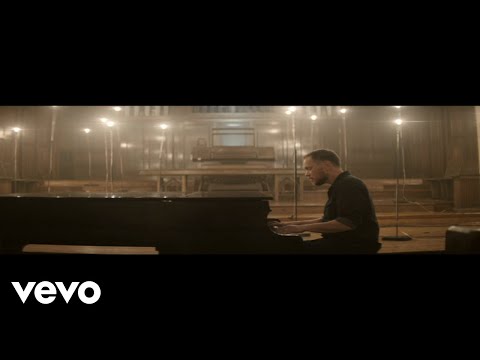
The whole lyric is a closed handful of words, nearly all of them Revelation's. The verse is the Latin-spelled alleluia sung over and over, with one clause set inside the repetitions: that the Lord God Almighty reigns. The chorus changes direction and speaks to God rather than about him, telling him he is holy under the title Lord God Almighty, and declaring, back in the third person, that the Lamb is worthy. A single amen closes it. There is no other vocabulary, no verse citation, no named translation, and no first-person singer anywhere in the song. On the 1990 recording the words are sung by the American Boychoir over Smith's piano; the congregational version most churches know is the same words from the 2001 live album Worship.
Three acclamations from three chapters, and a title from a prayer book. The verse's clause is Revelation 19:6 in a wording no single Bible prints: the opening word is spelled the KJV's Latin way, Alleluia, where modern translations write Hallelujah, and the clause follows the KJV's frame, which has no "our," while using the modern renderings' "Almighty" where the KJV reads "omnipotent." The chorus's holy belongs to Revelation 4:8, where the living creatures say it three times of the Lord; the song sings it to him directly, an address Revelation itself uses in 11:17 and 15:3, "O Lord God Almighty," and the printed lyric does not keep the creatures' threefold run. The worthy line is the opening of the angels' acclamation in 5:12, kept in the third person and stopped before the verse's sevenfold list. Even the amen has an address in this book: the elders' "Amen, Hallelujah!" of 19:4. The title is the one borrowing not from Revelation. Agnus Dei is Latin for Lamb of God, John the Baptist's words in John 1:29, and since the seventh century the name of a fixed prayer of the Mass: Lamb of God, who takes away the sins of the world, have mercy on us, grant us peace. The song takes the prayer's name and none of its words. The liturgy's Agnus Dei petitions the Lamb for mercy; this one acclaims him.
▸ Official upload. Now listen with the proof in mind.
Every phrase checks out at its own chapter. The title's address is a prayer book, not a verse.
Why it matters
A lyric this small gets planted whole. Whatever a congregation sings for six minutes on maybe a dozen words, it will keep, so the check matters more here, not less. The finding is that the check holds at every address: the reigning is 19:6, the holy is 4:8, the worthy is 5:12, and even the grammar of speaking to the Lord God Almighty is the book's own. What the check also turns up is the one thing nobody hears sung, the title. A name from the liturgy still says something about what the song is, and this song's words and its name point at two different texts.
Is it safe to dwell on?
Sung on repeat, this song fixes your attention on God.
What the loop plants is a short list of acclamations, reigns, holy, worthy, all pointed at God and none at the singer, which is about the cleanest outcome the repeat test can return. The words that repetition drills in here are heaven's own, in nearly heaven's wording. Two things are worth adding by hand. Read verse 7, so the loudest hallelujah keeps its reason, the wedding. And read the little prayer the title names, because the petition and the acclamation belong together: the Lamb this song declares worthy is the Lamb the liturgy asks for mercy, and John 1:29 is where both learned his name.
Helpful comparison
Elsewhere in this archive a song gathered the language of many psalms and no single chapter could verify it, and the lesson there was that an echo of many texts is a quotation of none. This song is the reverse case, and it is worth naming as one: a mosaic in which every tile is a traceable acclamation, so the verification succeeds piecewise, one seam at a time. The difference is not effort but material. Revelation's worship scenes are built from short, complete sentences, and a song that takes them whole can be checked whole. The song's history shows the mosaic travelling: written by Smith alone for the 1990 album Go West Young Man and sung there by the American Boychoir, it became congregational through Third Day's Offerings medley in 2000 and Smith's own live Worship album, recorded in June 2001 and released on September 11, 2001, where it sits as track 9.
Sources
- Michael W. Smith — Agnus Dei (Go West Young Man) · (the recording checked for this proof; provided to YouTube by Reunion Records from Go West Young Man, ℗ 1990 Reunion Records)
- Wikipedia — Go West Young Man · (album released October 1, 1990 on Reunion Records; track 9 written by Michael W. Smith, arranged by Ronn Huff, sung by the American Boychoir with soloist Nathan Wadley; US platinum)
- PraiseCharts — Agnus Dei · (writer Michael W. Smith; © 1990 Milene Music; CCLI song 626713)
- Jesusfreakhideout — Agnus Dei lyrics, Worship album · (the printed lyric's shape checked: the second-person holy, the counts, the closing amen; the song as track 9 of Worship)
- Wikipedia — Worship (Michael W. Smith album) · (live album recorded June 1, 2001 at Carpenter's Home Church, released September 11, 2001; Agnus Dei track 9; 2× platinum)
- Wikipedia — Offerings: A Worship Album · (Third Day's live Agnus Dei/Worthy medley, July 2000, Agnus Dei credited to Michael W. Smith)
- Wikipedia — Agnus Dei (liturgy) · (the fixed text of the Mass's Agnus Dei, its basis in John 1:29, and its introduction to the Roman rite under Pope Sergius I, 687-701)
- Song Scoops — Agnus Dei, Michael W. Smith · (discussion of the song's Revelation sources and its Latin title's liturgical background)
Corrections
No corrections to this proof yet.
Think we got something wrong? Tell us what and where, and we will check it against the text. Real errors get fixed here, dated, in public. Every correction on the site →
Where the text survives the song
 ~ FAITHFUL
“This Is Amazing Grace”
Phil Wickham
Sing it. The bridge's first line is Revelation 5:12 as far as it goes, and what the song adds is true from other texts. Know that the verse itself keeps going, into seven things the Lamb is worthy to receive.
~ FAITHFUL
“This Is Amazing Grace”
Phil Wickham
Sing it. The bridge's first line is Revelation 5:12 as far as it goes, and what the song adds is true from other texts. Know that the verse itself keeps going, into seven things the Lamb is worthy to receive.✓ The bridge's first line carries the acclamation of Revelation 5:12 unaltered as far as it goes, in the wording most modern translations share
⚠ The verse's own ending never appears. Revelation 5:12 gives the Lamb seven things, power, riches, wisdom, strength, honor, glory, blessing, and the song keeps none of them
 ~ FAITHFUL
“Is He Worthy?”
Andrew Peterson
Sing it. The questions are the chapter's own, and the answer keeps what worthiness songs usually drop: why the Lamb is worthy and what his blood bought. It names no translation, so check the two verses yourself.
~ FAITHFUL
“Is He Worthy?”
Andrew Peterson
Sing it. The questions are the chapter's own, and the answer keeps what worthiness songs usually drop: why the Lamb is worthy and what his blood bought. It names no translation, so check the two verses yourself.✓ Keeps the reason: the Lamb is worthy because he was slain and his blood paid a price, not worthy as a free-floating compliment
⚠ No translation is named and no verse is cited. Reworked into question and answer, the wording matches no translation word for word, so there is no stated text to check it against
 ~ FAITHFUL
“Revelation Song”
Jennie Lee Riddle (recorded by Kari Jobe)
Sing it. The chorus is the creatures' song, kept intact, and the images around it come from the same chapter. It just never names a translation, so there is nothing to check the wording against.
~ FAITHFUL
“Revelation Song”
Jennie Lee Riddle (recorded by Kari Jobe)
Sing it. The chorus is the creatures' song, kept intact, and the images around it come from the same chapter. It just never names a translation, so there is nothing to check the wording against.✓ The chorus follows Revelation 4:8 without altering what it says about God
⚠ No translation is named, so the near-verbatim chorus cannot be checked against a stated text. That is the only thing separating this from Word-for-Word Verified
More songs like this
~ FAITHFUL
“This Is Amazing Grace”
Phil Wickham
Sing it. The bridge's first line is Revelation 5:12 as far as it goes, and what the song adds is true from other texts. Know that the verse itself keeps going, into seven things the Lamb is worthy to receive.✓ The bridge's first line carries the acclamation of Revelation 5:12 unaltered as far as it goes, in the wording most modern translations share
⚠ The verse's own ending never appears. Revelation 5:12 gives the Lamb seven things, power, riches, wisdom, strength, honor, glory, blessing, and the song keeps none of them
~ FAITHFUL
“Is He Worthy?”
Andrew Peterson
Sing it. The questions are the chapter's own, and the answer keeps what worthiness songs usually drop: why the Lamb is worthy and what his blood bought. It names no translation, so check the two verses yourself.✓ Keeps the reason: the Lamb is worthy because he was slain and his blood paid a price, not worthy as a free-floating compliment
⚠ No translation is named and no verse is cited. Reworked into question and answer, the wording matches no translation word for word, so there is no stated text to check it against
~ FAITHFUL
“Revelation Song”
Jennie Lee Riddle (recorded by Kari Jobe)
Sing it. The chorus is the creatures' song, kept intact, and the images around it come from the same chapter. It just never names a translation, so there is nothing to check the wording against.✓ The chorus follows Revelation 4:8 without altering what it says about God
⚠ No translation is named, so the near-verbatim chorus cannot be checked against a stated text. That is the only thing separating this from Word-for-Word Verified