Hebrews 9:22 vs. “Nothing But the Blood of Jesus”
Carrie Underwood · checked 2026-08-01
What we checked
Graded against the standard
Quotation criteria not graded: this song never presents its words as scripture
Applies to every song the Name held holy · God shown holy · true of God · the standard
✓ What's good
- The 1876 publication printed its source text underneath the title, Hebrews 9:22, which is the citation habit this site exists to encourage
- The compression runs the same direction as Hebrews itself: 9:12 and 10:4 move from animal blood to Christ's own blood, offered once
- The hymn's traditional stanzas rule out the singer's own works as a way to deal with sin, which is where the letter's argument also lands
- The question-and-answer form means what repetition plants is an answer already fastened to its question
- Underwood's recording keeps Lowry's text as congregations sing it, without modern additions
⚠ Cautions
- The blood in Hebrews 9:22 is the law's animal blood. The step to Jesus' blood alone is the argument of the surrounding chapters, not of the verse under the title
- The washing image is not this verse's. Hebrews 9:22 speaks of purification and forgiveness; the cleansing is 1 John 1:7 and Revelation 7:14, and the snow is Isaiah 1:18
- Even the premise is stated with a care the refrain has no room for: the verse says "nearly everything" was purified with blood
Verse Proof
Hebrews 9:22The text in BSB (Berean Standard Bible)
“According to the law, in fact, nearly everything must be purified with blood, and without the shedding of blood there is no forgiveness.”
The letter to the Hebrews, writer unnamed, addressed to Jewish believers under pressure to drift back from Christ toward the sacrificial system they grew up in. Chapter 9 walks through that system on its own terms: the tabernacle's two rooms, the high priest's once-a-year entry, and Moses inaugurating the first covenant by sprinkling blood on the scroll and the people. Verse 22 states the principle the whole system ran on. Under the law, nearly everything was purified with blood, and without the shedding of blood there is no forgiveness. The blood in that sentence is the blood of the law's animals. The chapter's own argument then takes the next step: Christ entered the true sanctuary by His own blood, once for all, and 10:4 says outright that the blood of bulls and goats could never take away sins. Verse 22 is the premise of that argument, not its conclusion.
What the song says, described not quoted
A question-and-answer hymn, written by the Baptist minister Robert Lowry in 1876 and sung here by Carrie Underwood. Each stanza asks what can deal with the singer's sin, where cleansing and pardon come from, and answers every question the same way, with the phrase that is the song's title. The hymn's traditional stanzas also rule the alternatives out: nothing else erases sin, the singer's own good deeds included, and the blood is called the singer's whole hope, peace and righteousness. The refrain calls the flow precious and says it leaves the singer white as snow, which is Isaiah's image. Underwood's recording keeps Lowry's traditional text as congregations sing it, with Bear Rinehart of NEEDTOBREATHE singing harmony, and adds no modern lyric.
When the hymn was first published in 1876, Hebrews 9:22 was quoted underneath the title, in the wording "Without the shedding of blood there is no remission of sin." So the hymn names its source text, which is rarer than it should be. What it never does is set the verse's words to music. What it does instead is compress. The verse states a requirement that held under the law: no forgiveness without shed blood, and the blood in view belonged to calves and goats. The hymn's refrain hands the singer a verdict: nothing but the blood of Jesus. Getting from the one to the other takes the rest of Hebrews 9 and 10, where the writer argues that the animal blood could never take away sins and that Christ's blood, offered once, does. The hymn sings the argument's endpoint and trusts the citation to mark where it started. The washing itself is borrowed from elsewhere. Hebrews 9:22 speaks of purifying and forgiveness, not washing. The bath is 1 John 1:7, where the blood of Jesus cleanses from all sin, and Revelation 7:14, where robes are washed white in the blood of the Lamb. The snow is Isaiah 1:18.
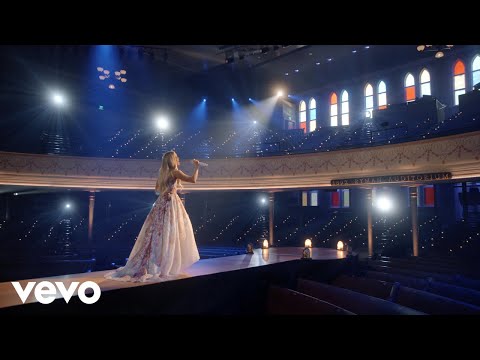
▸ Official upload. Now listen with the proof in mind.
The verse under the title is the premise. The refrain sings the verdict, and Hebrews spends two chapters getting from one to the other.
Why it matters
A hundred and fifty years of congregations have learned their doctrine of atonement from this refrain, and it is worth saying plainly that the compression holds. But it is a compression. Hebrews 9:22 on its own is a statement about how the law worked, made about animal sacrifices, with a careful "nearly" in it. The exclusive statement about Jesus' blood is the conclusion the writer spends two chapters earning. A singer who thinks the refrain is the verse will read the verse wrong. A singer who knows the argument gets a bigger hymn.
Is it safe to dwell on?
Sung on repeat, this song moves between God and the singer.
This hymn is a catechism set to music, the same question asked stanza after stanza and answered one way every time. What repetition plants is not a mood but a reflex. Ask the singer, years later, what can wash sin away, and the answer arrives before thought does. That is the mechanism Colossians 3:16 describes, the word dwelling in you through song, put to work on a single question. The tag is mixed because the words alternate honestly: every question is about the singer, their sin, their pardon, their peace, and every answer is about Jesus, and the answer gets the last word each time. Looped, the hymn forms someone who takes their sin seriously and their own record unseriously, in that order. And the texts behind the refrain are worth reading with it: the blood that cleanses from all sin is 1 John 1:7's sentence, and the snow is Isaiah 1:18's.
Helpful comparison
The two sentences are close enough to be mistaken for each other and different enough to be worth separating. "No forgiveness without shed blood" makes blood necessary, and on its own it promises nothing; a requirement can stand forever without being met. The refrain names one blood and says it works. Hebrews supplies both halves, the requirement in 9:22 and the meeting of it in 9:12-14 and 10:14, and the hymn could not fit that argument into a refrain, so it cited the argument and sang the result. As compressions go, that is the honest way to do it. The line the hymn actually sings sits closest to 1 John 1:7 in the BSB: "the blood of Jesus His Son cleanses us from all sin."
Sources
- Carrie Underwood — Nothing But The Blood Of Jesus (Official Audio Video) · (the recording checked for this proof; oEmbed confirms the uploading channel is carrieunderwoodVEVO)
- Hymnary.org — Nothing But the Blood of Jesus · (Robert Lowry, 1876; six original stanzas, four commonly sung; the note that Hebrews 9:22 was quoted underneath the title when first published; scripture references including Isaiah 1:18, 1 John 1:7 and Revelation 7:14)
- Hymnology Archive — Nothing but the Blood of Jesus · (the hymn's earliest printings in Lowry's gospel-song collections of the mid-1870s; the interlinear and full refrain structure; the tune PLAINFIELD)
- Wikipedia — Nothing but the Blood of Jesus · (written in 1876 by Baptist minister Robert Lowry; first popularized at a camp meeting in Ocean Grove, New Jersey; later recordings including Underwood's)
- Wikipedia — My Savior (album) · (released 26 March 2021 on Capitol Records Nashville, produced by Underwood and David Garcia; this hymn is track 2 with Bear Rinehart on background vocals; the album won the 2022 Grammy for Best Roots Gospel Album)
- carrieunderwoodofficial.com — Carrie releases third song from "My Savior" · (the track released 10 March 2021 ahead of the album, with Bear Rinehart of NEEDTOBREATHE singing harmony)
- GospelMinds — Carrie Underwood, Nothing But The Blood Of Jesus · (transcription of the recording, checked to confirm the arrangement keeps the hymn's traditional stanzas and refrain with no added modern lyric)
Corrections
No corrections to this proof yet.
Think we got something wrong? Tell us what and where, and we will check it against the text. Real errors get fixed here, dated, in public. Every correction on the site →
Where the text survives the song
 ✓ VERIFIED
“Psalm 53 (English Standard Version)”
The Corner Room (Adam Wright)
Yes, you can sing it. All six verses of Psalm 53 are here, in order, from a version the release names. The words you repeat are the psalm's own.
✓ VERIFIED
“Psalm 53 (English Standard Version)”
The Corner Room (Adam Wright)
Yes, you can sing it. All six verses of Psalm 53 are here, in order, from a version the release names. The words you repeat are the psalm's own.✓ The printed sung text carries all six verses of Psalm 53, in order, and every one of its 142 words matches an ESV of the psalm
⚠ The printed text is not a transcript. A review of the album calls the psalm's opening line the song's refrain. We did not listen through to count repeats, so that rests on the review
 ✓ VERIFIED
“The Victory (1 John 5:4-5 ESV)”
Seeds Kids Worship (Seeds Family Worship)
Sing it. It is 1 John 5:4-5 word for word in the ESV, with nothing added, and the chord chart names the version, so anyone can check it.
✓ VERIFIED
“The Victory (1 John 5:4-5 ESV)”
Seeds Kids Worship (Seeds Family Worship)
Sing it. It is 1 John 5:4-5 word for word in the ESV, with nothing added, and the chord chart names the version, so anyone can check it.✓ Both verses whole and in order. Counted in the ESV, all forty-two words are there, none skipped, and the chart carries nothing from outside the passage
✓ no cautions: this is the standard
 ✓ VERIFIED
“Psalm 23”
The Corner Room (Adam Wright)
Sing it without a caveat. It is the whole psalm, in order, in a named translation, so what you memorize by repeating it is the text itself.
✓ VERIFIED
“Psalm 23”
The Corner Room (Adam Wright)
Sing it without a caveat. It is the whole psalm, in order, in a named translation, so what you memorize by repeating it is the text itself.✓ Every word of the psalm, in order: nothing added, dropped, or reordered
✓ no cautions: this is the standard
More songs like this
 NOT A QUOTE
“Blessed Assurance”
Carrie Underwood
Sing it as what it says it is, a testimony. It names no verse, and what it says of God is what scripture says. Just let Hebrews, not the feeling, define what holds assurance up.
NOT A QUOTE
“Blessed Assurance”
Carrie Underwood
Sing it as what it says it is, a testimony. It names no verse, and what it says of God is what scripture says. Just let Hebrews, not the feeling, define what holds assurance up.✓ The first stanza grounds its confidence in God's acts, purchase, new birth by the Spirit, washing in His blood, before any experience is described. The testimony rests on doctrine first
⚠ The later stanzas measure the assured life in experiences: completed surrender, visions, rest. Hebrews 10:22 asks for none of that, and a singer who lacks the visions has lost nothing the verse promises
 NOT A QUOTE
“How Great Thou Art”
Carrie Underwood
Sing it. It quotes nothing and never says it is scripture it cannot support. It is a hymn of praise that starts where Psalm 8 starts. Read verses 4 to 6 for the question the hymn does not ask.
NOT A QUOTE
“How Great Thou Art”
Carrie Underwood
Sing it. It quotes nothing and never says it is scripture it cannot support. It is a hymn of praise that starts where Psalm 8 starts. Read verses 4 to 6 for the question the hymn does not ask.✓ Never says it is quoting, anywhere. No verse cited, no scripture framing, nothing presented as the Bible's words
⚠ Hymnal indexes list it under Psalm 8, but the hymn never cites the psalm. The link is a resemblance someone else noticed, not something the hymn says
 NOT A QUOTE
“Word of God Speak”
MercyMe
Sing it as a prayer for God to speak. It quotes nothing and never says it is scripture. Hebrews 4:12 describes the word as something that exposes a hearer, which is not what this chorus asks for.
NOT A QUOTE
“Word of God Speak”
MercyMe
Sing it as a prayer for God to speak. It quotes nothing and never says it is scripture. Hebrews 4:12 describes the word as something that exposes a hearer, which is not what this chorus asks for.✓ Never says it is quoting: no verse cited, no translation named, nothing framed as scripture
⚠ The title makes "word of God" someone to speak to. Hebrews 4:12 makes it the subject of a description. The two are not interchangeable, and only one of them is the verse