Psalm 48:1 vs. “Great Is the Lord”
Michael W. Smith & Deborah D. Smith · checked 2026-08-21
What we checked
Graded against the standard
Quotation criteria not graded: this song never presents its words as scripture
Applies to every song the Name held holy · God shown holy · true of God · the standard
✓ What's good
- Every attribute it names of God is affirmed in Psalm 48 itself: holy, just, merciful, powerful, faithful, worthy of praise
- Never says it is quoting. No verse is cited, no translation is named, and nothing is framed as scripture
- The publisher's page and the writers' own account agree on the passage behind it, so the song's source is checkable rather than assumed
- Deborah D. Smith wrote the lyric, and she is named on the copyright line, on CCLI song 1149 and on the publisher's page, even where the billing shortens to one name
- The words are about God almost from end to end. The singers appear in roughly one line
⚠ Cautions
- Hymnals index it under Psalm 48:1 among other verses, but the writers named Psalm 145:3. The two share an opening clause and then separate, so do not read the song as a setting of Psalm 48
- Psalm 48 grounds its praise in a place and an event you could walk around and count. The song's praise is a list of adjectives with no scene attached. Both are biblical, and only one of them hands you something to look at
- The song is widely billed to Michael W. Smith alone. The lyric was written with Deborah D. Smith and the copyright line names them both
Verse Proof
Psalm 48:1The text in BSB (Berean Standard Bible)
“Great is the LORD, and greatly to be praised in the city of our God, His holy mountain.”
Psalm 48 is about a city. The opening line praises God "in the city of our God, His holy mountain," and the thirteen verses after it stay there: Mount Zion, the citadels, the ramparts, the towers. The singers speak as a congregation, and in the middle of the psalm they report an event. Kings assembled and advanced, then saw something, were astounded, and fled in terror (v4-5). The congregation's line about it is that they had heard, and then they saw (v8). The psalm closes with an instruction: walk around Zion, count her towers, look at her ramparts, so you can tell the next generation (v12-13). Praise here is fastened to a place and to something that happened there.
What the song says, described not quoted
The song is a list of things that are true of God, sung through twice and then once more in direct address. It calls God holy and just, faithful and true, and worthy of glory, and it names His mercy, His power and His love. The singers appear in about one line: they trust that love, and they are told to lift up their voice. No verse is cited and no translation is named. The first two passes speak about God in the third person. The closing section turns and speaks to Him.
The title is a clause that opens more than one psalm. Psalm 48:1, Psalm 96:4 and Psalm 145:3 all start the same way and then travel in different directions. The writers have said which one they had open. The publisher's own song page and Deborah Smith's account of writing the lyric both give Psalm 145:3, and Psalm 145:3 in the BSB continues "His greatness is unsearchable." So the city in Psalm 48:1 is not something the song took out. It belongs to a different verse that happens to begin the same way, and hymnal indexes that file the song under Psalm 48:1 are matching a phrase rather than a thought. What the song does with the clause is expand it into a list of attributes. Each item on that list is something Psalm 48 also says of God: holy (v1), just, with a right hand full of righteousness (v10-11), unfailing in loving devotion (v9), a fortress whose enemies fled (v3-7), and faithful without end, since this God will establish the city forever and be our guide even till death (v8, v14).
▸ Official upload. Now listen with the proof in mind.
A run of six adjectives is six separate statements, and one melodic phrase carries all of them at once.
Why it matters
An attribute list is the most common way a worship song says something about God, and it is also the easiest place for a wrong word to pass unnoticed. Adjectives arrive in a run, carried by one melodic phrase, and a singer checks the run rather than the items in it. This one holds up item by item, and saying so is only worth anything if the check was actually done.
The second thing worth noticing is what a shared opening clause does to a reference. Three psalms begin alike and finish in three different places. A song that borrows the opening inherits the phrase, not the destination, so the passage a listener assigns it to may not be the passage the writers were reading.
Is it safe to dwell on?
Sung on repeat, this song fixes your attention on God.
What repetition plants here is a vocabulary for God: holy, just, faithful, merciful, powerful, worthy. That is a good set of words to have within reach, and having them within reach is most of what a person needs on a day when they cannot build a sentence about God from scratch. The attention stays on God rather than on the singer, which is the plainest thing a word count shows.
What the song does not plant is a scene. Psalm 48 hands you something to look at and count, and this hands you a list to say. If you loop it, read Psalm 48 next to it and let the psalm supply the ground the adjectives are standing on.
Helpful comparison
The two candidate verses are worth setting side by side, because the whole question turns on nine words they share. Psalm 145:3 in the BSB goes on to say God's greatness is unsearchable, which points away from anything you could measure. Psalm 48:1 goes on to name a location with a mountain and a wall around it. Same opening, then opposite roads: one toward what cannot be counted, the other toward what can, and Psalm 48 means the counting literally at v12.
The song follows the first road, and the writers have said so. What is worth noting is that the second road still bears the song's weight. Psalm 48 spends its remaining verses producing evidence for precisely the attributes the song lists, which is why an entry that could have been a mismatch is not one.
Sources
- Worship Together — Great Is The Lord (MWS) · (platform-side song page: writers listed as Deborah D. Smith and Michael W. Smith, CCLI 1149, scripture reference Psalm 145:3)
- PraiseCharts — Great Is the Lord chord chart · (copyright line "© 1982 Meadowgreen Music Company, admin. by Capitol CMG Publishing", CCLI 1149, both writers)
- Integrity Worship — Great Is The Lord · (independent licensing listing: both writers, CCLI 1149, Psalm 145:3)
- Word to Worship — Great Is The Lord · (writers, 1982 Meadowgreen copyright, Psalm 145:3 as the primary reference; lyric checked here for the absence of Zion, city, mountain and temple)
- Hymnary.org — Great Is the Lord (text authority) · (Debbie Smith and Michael W. Smith, 1982, 29 hymnals; the scripture references hymnal editors have assigned, which include Psalm 48:1, 96:4 and 145:3)
- Songfacts — Great Is the Lord · (Deborah Smith's own account of writing the lyric in 1982 while reading scripture, and her identification of Psalm 145:3)
- Wikipedia — Great Is the Lord · (release on the 1983 debut album Michael W. Smith Project, first single, number one on the US Christian AC and CHR charts)
- Michael W. Smith — Great Is The Lord (Live), GaitherVEVO · (the recording checked for this proof; official label VEVO upload)
Corrections
No corrections to this proof yet.
Think we got something wrong? Tell us what and where, and we will check it against the text. Real errors get fixed here, dated, in public. Every correction on the site →
Where the text survives the song
 ✓ VERIFIED
“Psalm 11 (English Standard Version)”
The Corner Room (Adam Wright)
Sing it straight through. It is all seven verses of Psalm 11, in order, in a version the track title names. A reviewer says one verse comes back as a refrain, and it is the psalm's own verse.
✓ VERIFIED
“Psalm 11 (English Standard Version)”
The Corner Room (Adam Wright)
Sing it straight through. It is all seven verses of Psalm 11, in order, in a version the track title names. A reviewer says one verse comes back as a refrain, and it is the psalm's own verse.✓ All seven verses, in order. We set the printed sung text beside an ESV and compared it word by word: 131 words, all matching, nothing added and nothing dropped
⚠ The printed text under the video lists each line once. It is not a map of the song. A review of the album says verse 4 comes back as a refrain
 ✓ VERIFIED
“Psalm 16”
The Corner Room (Adam Wright)
You can sing this one straight through. It is all eleven verses of Psalm 16, in order, in a named version. What you repeat is the psalm.
✓ VERIFIED
“Psalm 16”
The Corner Room (Adam Wright)
You can sing this one straight through. It is all eleven verses of Psalm 16, in order, in a named version. What you repeat is the psalm.✓ The printed sung text carries all eleven verses of Psalm 16, in order, with no line printed twice and no refrain added
⚠ The track title alone will not tell you which Bible you are singing. On Apple Music and Spotify it is just "Psalm 16". The version is named on the album page and in the video description.
 ✓ VERIFIED
“Psalm 53 (English Standard Version)”
The Corner Room (Adam Wright)
Yes, you can sing it. All six verses of Psalm 53 are here, in order, from a version the release names. The words you repeat are the psalm's own.
✓ VERIFIED
“Psalm 53 (English Standard Version)”
The Corner Room (Adam Wright)
Yes, you can sing it. All six verses of Psalm 53 are here, in order, from a version the release names. The words you repeat are the psalm's own.✓ The printed sung text carries all six verses of Psalm 53, in order, and every one of its 142 words matches an ESV of the psalm
⚠ The printed text is not a transcript. A review of the album calls the psalm's opening line the song's refrain. We did not listen through to count repeats, so that rests on the review
More songs like this
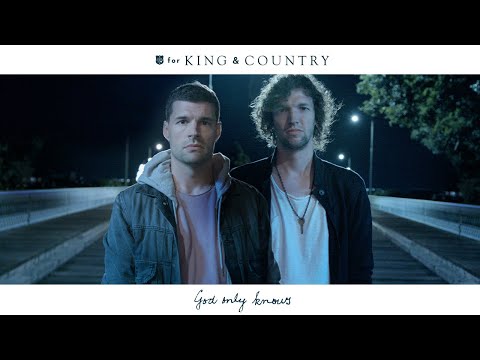 NOT A QUOTE
“God Only Knows”
for KING & COUNTRY
Sing it. It quotes no verse, so hold it as a true sentence about God rather than as scripture. What it says about God knowing you is true, and Psalm 139 is where you can see how far that knowing goes.
NOT A QUOTE
“God Only Knows”
for KING & COUNTRY
Sing it. It quotes no verse, so hold it as a true sentence about God rather than as scripture. What it says about God knowing you is true, and Psalm 139 is where you can see how far that knowing goes.✓ The song's central sentence about God is true and checkable. Psalm 139 says God knows the sitting and the rising, the thought from far off, and the word before it is spoken
⚠ The song stops where the comfort stops. Psalm 139 says the same knowing is inescapable, and the psalm ends by asking God to search the singer and lead him
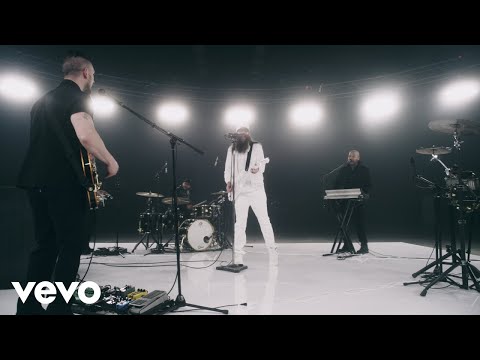 NOT A QUOTE
“Good God Almighty”
Crowder
Sing it as praise, not as a quotation. It names no verse and never presents itself as quoting one. Here the three words are a name, not an exclamation: address in one place, an answer about God in another.
NOT A QUOTE
“Good God Almighty”
Crowder
Sing it as praise, not as a quotation. It names no verse and never presents itself as quoting one. Here the three words are a name, not an exclamation: address in one place, an answer about God in another.✓ Every word of the title says something scripture says about God. He is good (Psalm 100:5). He is God Almighty (Genesis 17:1). It is a name here, not filler.
⚠ The same three words are a common exclamation in ordinary American speech. Not everyone in a room will hear them the same way, so say what they mean before singing them.
 NOT A QUOTE
“Rescue”
Lauren Daigle
Sing it as comfort, not as a quotation. What it promises, Psalm 34 says God does. The psalm says it about Him. The song says it as Him, and never names its speaker.
NOT A QUOTE
“Rescue”
Lauren Daigle
Sing it as comfort, not as a quotation. What it promises, Psalm 34 says God does. The psalm says it about Him. The song says it as Him, and never names its speaker.✓ Every promise the song voices has a counterpart in this passage. Psalm 34:17-18 says the LORD hears the cry, delivers from all troubles, stays near the brokenhearted and saves the contrite in spirit
⚠ The song is sung in God's first person throughout, and Psalm 34:17-18 speaks about the LORD in the third person. The one first-person voice in the chapter is David's at verse 11, teaching the fear of the LORD