Psalm 59:16-17 vs. “Good God Almighty”
Crowder · checked 2026-09-06
What we checked
Graded against the standard
Quotation criteria not graded: this song never presents its words as scripture
Applies to every song the Name held holy · God shown holy · true of God · the standard
✓ What's good
- Every word of the title says something scripture says about God. He is good (Psalm 100:5). He is God Almighty (Genesis 17:1). It is a name here, not filler.
- The song names no verse and never presents itself as quoting one. There is no verse reference and no chapter-and-verse framing anywhere in it.
- Worship Together's page for the song lists a scripture reference, Psalm 59:16, so a leader can check the connection rather than guess at it.
- The praise comes after trouble has been named, which is the order Psalm 59 uses. The declaration stands on ground the psalm stands on too.
⚠ Cautions
- The same three words are a common exclamation in ordinary American speech. Not everyone in a room will hear them the same way, so say what they mean before singing them.
- The song names no passage. If you want the text behind it you have to go looking, and the nearest published pointer sits on the publisher's own worship-resource site rather than in the song.
- The verses speak in absolutes about God answering and not failing. One published review flagged that, then raised its score in an October 2022 update. Read those lines slowly.
- The bridge is a borrowed gospel chorus, not scripture. Songfacts names it as the anonymously penned "Praise Him, Praise Him," popularized by Carman.
Verse Proof
Psalm 59:16-17The text in BSB (Berean Standard Bible)
“But I will sing of Your strength and proclaim Your loving devotion in the morning. For You are my fortress, my refuge in times of trouble. To You, O my strength, I sing praises, for You, O God, are my fortress, my God of loving devotion.”
David is speaking to God. The psalm's heading in the BSB names the occasion: when Saul sent men to watch David's house in order to kill him. The opening verses ask God for rescue from men who lie in wait. Verses 16 and 17 come at the end, after the danger has been named out loud, not in place of naming it.
What the song says, described not quoted
The song is testimony and declaration. It is not an exposition of a passage, and it names no verse anywhere in it.
The verses speak to God in the second person. They recall calling on Him in hard moments and being answered, and they admit the singer forgets that record. Then they say in absolute terms that God will not fail him. The title phrase carries the chorus, and each of its three words says something about God: good, God, Almighty. In one place the sentence does not stop at the phrase. It runs on, still addressed to God, into a stated hope that praise will be what God finds the singer doing, whatever his circumstances. In the chorus's call and response the same three words come back as a statement about God rather than to Him, and a closing section names Jesus in the third person.
The bridge works differently. It borrows a traditional gospel chorus calling for praise in the morning, at midday, and at sundown, and there the words speak about God rather than to Him. Songfacts identifies that borrowed section as the anonymously penned gospel hymn "Praise Him, Praise Him," popularized by Carman.
Nothing is attributed to scripture here, because the song cites nothing. The nearest published pointer sits outside the song. Worship Together's page for it carries the line "Scripture Reference: Psalm 59:16; Psalm 46:1–3." We did not find a statement from Crowder himself naming a passage for this song. The title uses a name scripture gives God. "I am God Almighty" (Genesis 17:1). "Holy, Holy, Holy, is the Lord God Almighty" (Revelation 4:8). The song sets "good" in front of that name, and Psalm 100:5 says the same thing of Him.
▸ Official upload. Now listen with the proof in mind.
A name is either used or it is filler, and the sentence around it tells you which.
Why it matters
The third commandment is about how God's name gets used. "You shall not take the name of the LORD your God in vain" (Exodus 20:7). Three of this song's words are a phrase ordinary American speech has worn thin, and that is documented rather than our impression. Jason Houtsma of Worship Artistry writes that the song "reclaims an expression that's lost its meaning," and describes the common use of the phrase as "a meaningless curse when we twist our ankle or jubilant shout when our quarterback makes a great play."
So the useful question is not what those words do on a street corner. It is what this song's sentences do with them. In the song they work as a name, used as address in one place and as an answer about God in another, and each of the three words says something scripture says about Him. That is a name being used, not a gap being filled. The reverence check passes here, and it passes on what the words do rather than on how the phrase sounds.
Is it safe to dwell on?
Sung on repeat, this song fixes your attention on God.
What repeats here is a statement about God, spoken to God. Sung again and again, that is what it plants: He is good, He is God, He is Almighty. The first-person lines mostly report what God did, which is why this one is graded God rather than mixed.
Repetition does a second thing in this case. Because these three words also live in ordinary speech, singing them on purpose puts a different habit in the same spot. A listener who has only ever heard the phrase as a shout of surprise may need a while for that to settle. Colossians 3:16 sets the standard: the word of Christ dwelling in you as you sing. Sing this one slowly enough to mean each of the three words.
Helpful comparison
The psalm and the song arrive at praise by the same road. David names the danger first. Men lie in wait, and he asks to be delivered. Only then does verse 16 sing. The song's verses work the same way in a smaller frame. A hard moment is recalled, an answer is recalled, and the declaration comes after. Neither one sings instead of naming trouble.
They differ in one way worth knowing. Psalm 59 carries a heading that names the occasion it belongs to. The song is general, and a general song is not a faulty one. It does mean the singer supplies the occasion.
One published review has changed its mind about the song's opening. The Berean Test first read it as claiming a perfect success rate in prayer, and objected that "This doesn't represent reality, where often God chooses not to answer our prayer." The same page now carries a dated note: "10/20/2022 – Updated review based on current thinking on 'all' statements. This significantly raised this song's score from 7.5/10 to 10/10." Both readings are still on the page, so a reader can weigh them. Our own reading is narrower. The absolutes we can see are about God being present and not failing the singer, which is a promise scripture also makes (Deuteronomy 31:6). We did not find a line promising that every request gets what it asks for.
Sources
- Worship Together — Good God Almighty (Crowder) · (carries "Scripture Reference: Psalm 59:16; Psalm 46:1–3"; writers Ben Glover, David Crowder, Jeff Sojka; CCLI 7168602. Capitol CMG Publishing's About page calls Worship Together “Capitol CMG Publishing's outreach to the global church”, and the page carries the official lyrics)
- Songfacts — Good God Almighty by Crowder · (the song began as an idea for the phrase itself; the bridge interpolates the anonymously penned gospel hymn "Praise Him, Praise Him," popularized by Carman)
- Wikipedia — Good God Almighty (Crowder song) · (released 15 January 2021 as the lead single from Milk & Honey, Sparrow Records / Capitol CMG)
- Worship Artistry — Jason Houtsma, "Thoughts on Good God Almighty by Crowder" · (the phrase "reclaims an expression that's lost its meaning"; its common use as "a meaningless curse")
- The Berean Test — Crowder, Good God Almighty · (the flagged opening, and the dated 10/20/2022 score update)
- Bible Hub — Psalm 59, Berean Standard Bible · (the psalm's heading: Saul sent men to watch David's house in order to kill him)
Corrections
No corrections to this proof yet.
Think we got something wrong? Tell us what and where, and we will check it against the text. Real errors get fixed here, dated, in public. Every correction on the site →
Where the text survives the song
 ✓ VERIFIED
“Psalm 11 (English Standard Version)”
The Corner Room (Adam Wright)
Sing it straight through. It is all seven verses of Psalm 11, in order, in a version the track title names. A reviewer says one verse comes back as a refrain, and it is the psalm's own verse.
✓ VERIFIED
“Psalm 11 (English Standard Version)”
The Corner Room (Adam Wright)
Sing it straight through. It is all seven verses of Psalm 11, in order, in a version the track title names. A reviewer says one verse comes back as a refrain, and it is the psalm's own verse.✓ All seven verses, in order. We set the printed sung text beside an ESV and compared it word by word: 131 words, all matching, nothing added and nothing dropped
⚠ The printed text under the video lists each line once. It is not a map of the song. A review of the album says verse 4 comes back as a refrain
 ✓ VERIFIED
“Psalm 16”
The Corner Room (Adam Wright)
You can sing this one straight through. It is all eleven verses of Psalm 16, in order, in a named version. What you repeat is the psalm.
✓ VERIFIED
“Psalm 16”
The Corner Room (Adam Wright)
You can sing this one straight through. It is all eleven verses of Psalm 16, in order, in a named version. What you repeat is the psalm.✓ The printed sung text carries all eleven verses of Psalm 16, in order, with no line printed twice and no refrain added
⚠ The track title alone will not tell you which Bible you are singing. On Apple Music and Spotify it is just "Psalm 16". The version is named on the album page and in the video description.
 ✓ VERIFIED
“Psalm 53 (English Standard Version)”
The Corner Room (Adam Wright)
Yes, you can sing it. All six verses of Psalm 53 are here, in order, from a version the release names. The words you repeat are the psalm's own.
✓ VERIFIED
“Psalm 53 (English Standard Version)”
The Corner Room (Adam Wright)
Yes, you can sing it. All six verses of Psalm 53 are here, in order, from a version the release names. The words you repeat are the psalm's own.✓ The printed sung text carries all six verses of Psalm 53, in order, and every one of its 142 words matches an ESV of the psalm
⚠ The printed text is not a transcript. A review of the album calls the psalm's opening line the song's refrain. We did not listen through to count repeats, so that rests on the review
More songs like this
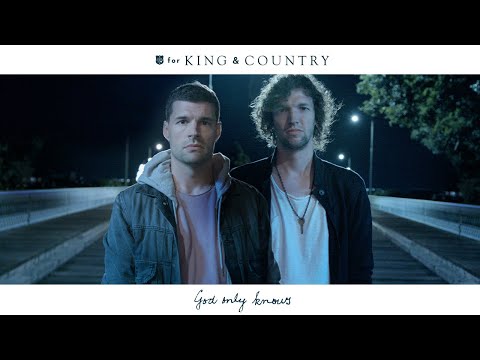 NOT A QUOTE
“God Only Knows”
for KING & COUNTRY
Sing it. It quotes no verse, so hold it as a true sentence about God rather than as scripture. What it says about God knowing you is true, and Psalm 139 is where you can see how far that knowing goes.
NOT A QUOTE
“God Only Knows”
for KING & COUNTRY
Sing it. It quotes no verse, so hold it as a true sentence about God rather than as scripture. What it says about God knowing you is true, and Psalm 139 is where you can see how far that knowing goes.✓ The song's central sentence about God is true and checkable. Psalm 139 says God knows the sitting and the rising, the thought from far off, and the word before it is spoken
⚠ The song stops where the comfort stops. Psalm 139 says the same knowing is inescapable, and the psalm ends by asking God to search the singer and lead him
 NOT A QUOTE
“Rescue”
Lauren Daigle
Sing it as comfort, not as a quotation. What it promises, Psalm 34 says God does. The psalm says it about Him. The song says it as Him, and never names its speaker.
NOT A QUOTE
“Rescue”
Lauren Daigle
Sing it as comfort, not as a quotation. What it promises, Psalm 34 says God does. The psalm says it about Him. The song says it as Him, and never names its speaker.✓ Every promise the song voices has a counterpart in this passage. Psalm 34:17-18 says the LORD hears the cry, delivers from all troubles, stays near the brokenhearted and saves the contrite in spirit
⚠ The song is sung in God's first person throughout, and Psalm 34:17-18 speaks about the LORD in the third person. The one first-person voice in the chapter is David's at verse 11, teaching the fear of the LORD
 NOT A QUOTE
“Great Is the Lord”
Michael W. Smith & Deborah D. Smith
Sing it. Nothing here is offered as a quotation, and every attribute it names of God is one the psalms affirm. It is a list of true things, not a verse set to music.
NOT A QUOTE
“Great Is the Lord”
Michael W. Smith & Deborah D. Smith
Sing it. Nothing here is offered as a quotation, and every attribute it names of God is one the psalms affirm. It is a list of true things, not a verse set to music.✓ Every attribute it names of God is affirmed in Psalm 48 itself: holy, just, merciful, powerful, faithful, worthy of praise
⚠ Hymnals index it under Psalm 48:1 among other verses, but the writers named Psalm 145:3. The two share an opening clause and then separate, so do not read the song as a setting of Psalm 48