Lamentations 3:22-24 vs. “Great Is Thy Faithfulness”
CeCe Winans · checked 2026-08-01
What we checked
Graded against the standard
Quotation criteria not graded: this song never presents its words as scripture
Applies to every song the Name held holy · God shown holy · true of God · the standard
✓ What's good
- Never says it is quoting: no chapter or verse cited, nothing framed as scripture, no appeal to what the Bible says
- The refrain's title phrase is verse 23's King James wording, carried without alteration
- Addressed to God in the second person throughout, which is the posture verse 23 itself takes, since "great is thy faithfulness" is said to God rather than about Him
- Stanza two's seasons and stars are plainly the hymn's own material, and they are never presented as the text
- Nothing it says about God is denied by the passage: verse 22 grounds the not-consuming in God's mercies, and verse 23 says those mercies are new every morning
- Chisholm's own documented account is that no special circumstances prompted the writing, only his experience and Bible truth, which is a modest claim and a checkable one
⚠ Cautions
- No translation is named, so a listener who recognises the phrase has nothing to check it against
- The passage's frame is a destroyed city and a man whose hope had just perished (3:17-18). The hymn's frame is seasons, harvest and stars, and a singer who has only the hymn will never hear the first
- Verse 24 is a decision made against despair, not a settled mood. Sung at rest, it can sound like a feeling rather than a choice
- Verse 22's "we are not consumed" is said of a surviving people. The refrain's last line lands the faithfulness on the singer alone
Verse Proof
Lamentations 3:22-24The text in KJV (public domain)
“It is of the LORD’S mercies that we are not consumed, because his compassions fail not. They are new every morning: great is thy faithfulness. The LORD is my portion, saith my soul; therefore will I hope in him.”
Lamentations is five poems over the fall of Jerusalem, written after the city was destroyed and its people carried off. Chapter 3 is one speaker's account of that loss in the first person. Four verses before the ones sung here he says God has "removed my soul far off from peace," and then, "My strength and my hope is perished from the LORD" (3:17-18, KJV). Verse 21 is the hinge: "This I recall to my mind, therefore have I hope." Verses 22-24 are what he recalls. Verse 24 turns the recollection into a decision, the LORD is his portion, therefore he will hope in Him. The three verses are not a description of a good season. They are a man arguing himself back to hope over a ruined city.
What the song says, described not quoted
Thomas Chisholm's hymn has three stanzas and a refrain, and it is addressed to God throughout. The first stanza calls God an unchanging Father with no shadow of turning, whose compassions do not fail and who will forever be what He has been. The second turns to the created order: the four seasons, and the sun, moon and stars in their courses, are named as witnesses to God's faithfulness, mercy and love. The third names what the singer has received, pardon for sin, a peace that lasts, God's own presence, strength for today and hope for tomorrow, and blessings beyond counting. The refrain repeats the title phrase, says the singer sees new mercies each morning, credits God's hand with everything needed, and closes by applying that faithfulness to the singer personally. No chapter or verse is cited anywhere in the hymn, nothing is introduced as a quotation, and no translation is named.
The refrain's title phrase is verse 23's own wording in the King James, and the line about mercies seen each morning tracks the same verse closely. Stanza one's statement that God's compassions do not fail tracks verse 22. What shifts is not the wording but the setting. In Lamentations the three verses are recalled deliberately, in the middle of a poem about a destroyed city, by a man who has just said his hope had perished. In the hymn they sit among summer and winter, springtime and harvest, sun, moon and stars. Both are true things to say about God. They are said from different places. The hymn also moves verse 22's "we are not consumed," said of a surviving people, onto the singer alone in the refrain's closing line.
▸ Official upload. Now listen with the proof in mind.
Verse 22 is not a sunrise. It is what a man recalls to his mind after saying his hope had perished.
Why it matters
Most people meet Lamentations 3:22-24 through this hymn rather than through the book. The phrase became famous here, which means the hymn is doing the work of framing the passage for a lot of readers. That matters because the text's force comes partly from where it sits. "His compassions fail not" is one thing said from a settled life and another thing said by a man over a burnt city, and the second is what Lamentations records. The hymn does not deny that. It simply does not supply it, and a singer who has only the hymn has no reason to go looking.
Is it safe to dwell on?
Sung on repeat, this song fixes your attention on God.
The dwelling tag here is God, and it is not close. The subject of nearly every line is God, and even the third stanza's list of gifts is a list of things God gives. What repetition plants is one thing about God's constancy said three ways: that God does not change, that the created order keeps testifying to it, and that what has been needed has been supplied. That is a good thing to have memorised, and it is the kind of thing that will still be there on a day when nothing feels like it.
What repetition does not plant is the motion the passage makes. Lamentations 3 arrives at verse 22 by recalling it on purpose, out of a place the hymn never describes. If this is a song you sing often, read 3:17-24 with it sometimes, so the words you have memorised keep the road they came from.
Helpful comparison
The refrain phrase is worth being precise about. "Great is thy faithfulness" is the King James rendering of the second half of verse 23, and the same words stand in the Revised Standard Version. Most modern translations read "your" rather than "thy," so the hymn's title is recognisably one translation's wording even though the hymn never says which. Hymnals print Lamentations 3:22-23 under the title, but that is the editors' apparatus around the hymn rather than something the hymn says. It is also worth noticing where those printed references stop. They stop at verse 23. Verse 24, where the speaker chooses the LORD as his portion and decides to hope, is the part the hymn's serene frame has least room for, and it is the verse that makes the other two a resolution rather than a mood.
Sources
- CeCe Winans — Great Is Thy Faithfulness (Official Music Video) · (the recording checked for this proof; channel CeCeWinansVEVO, published 19 June 2026)
- CCM Encyclopedia — The Hymns (2026) · (album released 5 June 2026 on PureSpring Gospel/Fair Trade Services; "Great Is Thy Faithfulness" is track 14, credited to Chisholm and Runyan)
- A Step FWD — CeCe Winans releases official music video for "Great Is Thy Faithfulness" · (video release date and the voice-and-piano arrangement)
- Hymnology Archive — Great is Thy faithfulness · (Chisholm's letter to hymnologist William Reynolds; the text sent to Runyan in 1923 from Vineland, New Jersey, and first printed in Runyan's Songs of Salvation and Service, 1923)
- Cyber Hymnal — Great Is Thy Faithfulness · (Chisholm's statement that there were no special circumstances behind the writing, only his experience and Bible truth; the three stanzas and refrain as written; Runyan's letter about the tune)
- Hymnary.org — Great Is Thy Faithfulness · (Chisholm 1923, Runyan's tune FAITHFULNESS 1923, public domain; hymnals index the hymn to Lamentations 3:22-23)
- UMC Discipleship Ministries — History of Hymns · (Chisholm's biography and Runyan writing the tune in Baldwin, Kansas, in 1923)
- Wikipedia — Great Is Thy Faithfulness · (the refrain's exact wording occurs in the King James and Revised Standard Versions; the hymn's spread through Moody Bible Institute and the Billy Graham crusades)
Corrections
No corrections to this proof yet.
Think we got something wrong? Tell us what and where, and we will check it against the text. Real errors get fixed here, dated, in public. Every correction on the site →
Where the text survives the song
 ✓ VERIFIED
“Psalm 16”
The Corner Room (Adam Wright)
You can sing this one straight through. It is all eleven verses of Psalm 16, in order, in a named version. What you repeat is the psalm.
✓ VERIFIED
“Psalm 16”
The Corner Room (Adam Wright)
You can sing this one straight through. It is all eleven verses of Psalm 16, in order, in a named version. What you repeat is the psalm.✓ The printed sung text carries all eleven verses of Psalm 16, in order, with no line printed twice and no refrain added
⚠ The track title alone will not tell you which Bible you are singing. On Apple Music and Spotify it is just "Psalm 16". The version is named on the album page and in the video description.
 ✓ VERIFIED
“Be Strong and Courageous (Joshua 1:9)”
Seeds Kids Worship (Seeds Family Worship)
Sing it, and hand it to your kids. It is Joshua 1:9 whole, in the ESV the publisher names, and the tag sings the address, so the verse and its reference get memorized together.
✓ VERIFIED
“Be Strong and Courageous (Joshua 1:9)”
Seeds Kids Worship (Seeds Family Worship)
Sing it, and hand it to your kids. It is Joshua 1:9 whole, in the ESV the publisher names, and the tag sings the address, so the verse and its reference get memorized together.✓ The whole verse, in order, with every repeated line drawn from the verse's own words
✓ no cautions: this is the standard
 ✓ VERIFIED
“Mark 10”
Streetlights
Play it freely. This is Mark 10 itself, read word for word in a named translation. The line about all things being possible arrives as the answer to a question about being saved.
✓ VERIFIED
“Mark 10”
Streetlights
Play it freely. This is Mark 10 itself, read word for word in a named translation. The line about all things being possible arrives as the answer to a question about being saved.✓ The whole chapter, in order, so verse 27 arrives after the rich man’s scene and after the disciples ask who can be saved, instead of standing on its own
⚠ “Word-for-word” here describes the reading, not the translation theory. Streetlights uses it for what is read. Tyndale uses the same phrase for a different thing
More songs like this
 NOT A QUOTE
“Alabaster Box”
CeCe Winans
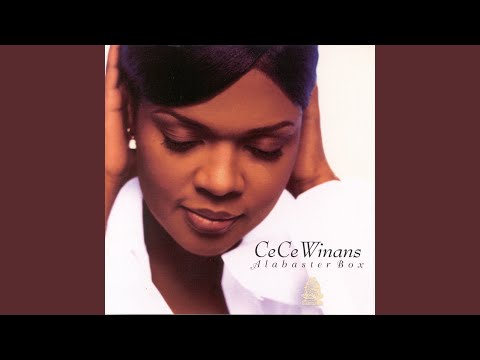
Sing it as testimony, not as a report. The scene is Luke 7 and the song has its details right, but Luke never names this woman, and the name the chorus gives her comes from a different anointing.
NOT A QUOTE
“Alabaster Box”
CeCe Winans
Sing it as testimony, not as a report. The scene is Luke 7 and the song has its details right, but Luke never names this woman, and the name the chorus gives her comes from a different anointing.✓ It leaves her sin unnamed, exactly as Luke does. The passage calls her a sinner and stops there, and so does the song.
⚠ The chorus names the jar Mary's. Luke does not name the woman at all, in this passage or anywhere else.
 NOT A QUOTE
“Believe For It”
CeCe Winans
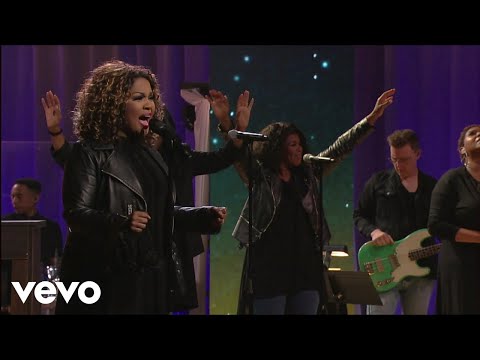
Sing it. It quotes nothing and misstates nothing about God's power. Just bring the other half of Mark 9 with you: the father who got his miracle said out loud that his faith was not enough.
NOT A QUOTE
“Believe For It”
CeCe Winans
Sing it. It quotes nothing and misstates nothing about God's power. Just bring the other half of Mark 9 with you: the father who got his miracle said out loud that his faith was not enough.✓ Never says it is quoting: no verse is cited, no words are framed as scripture, and the publisher's own chord chart lists no scripture reference field
⚠ What to believe for is never named. The object is left open for the singer to fill in, and the song supplies no test for what belongs there
 NOT A QUOTE
“Battle Hymn of the Republic”
Julia Ward Howe (recorded by David Phelps)
Sing it knowing what it adds. Nothing in it is offered as scripture, and its pictures of judgment stay God's work. The sighting, a singer seeing that judgment happening now, is the hymn's own.
NOT A QUOTE
“Battle Hymn of the Republic”
Julia Ward Howe (recorded by David Phelps)
Sing it knowing what it adds. Nothing in it is offered as scripture, and its pictures of judgment stay God's work. The sighting, a singer seeing that judgment happening now, is the hymn's own.✓ The judgment stays God's work. The hymn's “He” is God throughout and no source disputes it; Gamble's objection is to the use the hymn makes of the images, not to who does the treading
⚠ The opening line reports a present sighting of God's glory arriving. Isaiah 63 speaks of a day of vengeance but pins it to no date, so the timing is the hymn's addition