Joshua 6:15-20 vs. “Raise a Hallelujah”
Bethel Music, Jonathan David & Melissa Helser · checked 2026-08-01
What we checked
Graded against the standard
Quotation criteria not graded: this song never presents its words as scripture
Applies to every song the Name held holy · God shown holy · true of God · the standard
✓ What's good
- Never says it is quoting: no reference, no verse framing, nothing offered as scripture
- The chorus names a finished victory as the ground for the singing, with death defeated and the King alive. That is the same order verse 16 uses, where the shout answers a city already given
- Its opening image has a psalm behind it. “You prepare a table before me in the presence of my enemies” (Psalm 23:5, BSB), where the host is God and the enemies are still in the room
- The origin is documented and modest: written for one sick child, sent to one family, played over one hospital bed
⚠ Cautions
- The song never mentions Jericho or walls, but the idea of a shout that brings them down gets attached to it in devotional writing. That reading is worth checking against the passage rather than assumed from the song
- Joshua 6 reports the shout and the collapse in sequence without saying the shout caused it. The reason it gives for the city being Israel's is the LORD's giving, in verse 16
- The shout was commanded and timed. Joshua had ordered silence until the day he named, so it was obedience on one occasion rather than a method anyone can pick up
- Most of the lines are about what the singer is doing. God is the reason and the object of the praise, but rarely the grammatical subject
- The passage does not stop at the wall. Verses 17 to 19 are a devotion to destruction, the sparing of Rahab, and a warning to the camp. The famous image comes out of a sober text
- One published review argues the song is a testimony about the believer's experience rather than a song addressed to God, and that the difference matters when it is used in corporate worship
Verse Proof
Joshua 6:15-20The text in BSB (Berean Standard Bible)
“Then on the seventh day, they got up at dawn and marched around the city seven times in the same manner. That was the only day they circled the city seven times. After the seventh time around, the priests blew the horns, and Joshua commanded the people, “Shout! For the LORD has given you the city! Now the city and everything in it must be devoted to the LORD for destruction. Only Rahab the prostitute and all those with her in her house will live, because she hid the spies we sent. But keep away from the things devoted to destruction, lest you yourself be set apart for destruction. If you take any of these, you will set apart the camp of Israel for destruction and bring disaster upon it. For all the silver and gold and all the articles of bronze and iron are holy to the LORD; they must go into His treasury.” So when the rams’ horns sounded, the people shouted. When they heard the blast of the horn, the people gave a great shout, and the wall collapsed. Then all the people charged straight into the city and captured it.”
This is the taking of Jericho, the first walled city Israel comes to after crossing the Jordan. The instructions were given in advance and were specific: march around the city once a day for six days with priests carrying horns, then seven times on the seventh day. Joshua had also ordered silence, telling the people not to give a battle cry or let one word out of their mouths until the day he told them to shout (Joshua 6:10, BSB). Verses 15 to 20 are that day. The shout comes after the horns and on Joshua's command, and the command carries its own reason: the LORD has given you the city. What follows the collapse is not a celebration. The city is devoted to destruction, Rahab and her household are spared because she hid the spies, and Israel is warned that taking any of the devoted things will bring disaster on the camp.
What the song says, described not quoted
The song is a first-person declaration made in hard circumstances. The singer says they will raise a hallelujah in front of their enemies and louder than unbelief, calls their melody a weapon, and says heaven comes to fight on their behalf. The chorus commits to singing in the middle of a storm until the praise grows loud, then names its ground: hope rising out of ashes, death defeated, the King alive. A second verse repeats the same first-person praise and expects darkness to flee and fear to lose its hold. A long bridge is a single instruction to sing louder. No verse is cited, no reference is given, and Jericho and its walls are never mentioned.
Nothing here is presented as scripture, so nothing has shifted inside a quotation. What has travelled is an idea rather than a text: that a shout is a weapon, and that raising it is what changes the situation. That idea is usually traced to Jericho, and devotional writing about this song makes the link out loud, pointing readers to walls falling while the people marched and blew horns. Joshua 6:15-20 is where the picture comes from, so it is the fair place to check it. What the passage adds that the picture tends to drop is the order of events. The shout is commanded, and the command states its own reason: the LORD has given you the city. The giving is spoken of as already done, before anyone raises their voice.
▸ Official upload. Now listen with the proof in mind.
Joshua 6 gives a reason for the city falling, and the reason it gives is the LORD, not the volume.
Why it matters
This song was written for one specific two-year-old in a hospital bed, and his father played it over him through nights when the doctors were not sure he would live. That is the setting a lot of people bring to it, and it deserves care. The question is not whether singing in the dark is right. It plainly is. The question is whether the singing gets heard as the mechanism, because if volume is what moves God, then a night that ends badly turns into a verdict on how loudly someone sang. Joshua 6 does not set it up that way. The order to shout arrives with the reason attached, and the reason is what the LORD has already done.
Is it safe to dwell on?
Sung on repeat, this song moves between God and the singer.
What repetition plants here is a posture: keep singing while the outcome is still unsettled. That is a good thing to have worn into you, and the people who love this song usually love it because it carried them through something real. The dwelling tag is mixed because the sentences are mostly about the singer's action while the chorus turns and names the King, so a loop rehearses both. The thing worth setting alongside it is verse 16, where the shout is answered before it is raised. Sung with that in mind, the song stops being an effort and becomes a response, which takes the weight off the singer on the nights when singing is the hardest thing available.
Helpful comparison
Two details in the passage are worth holding next to the picture. First, the shout was not a tactic Israel selected. Joshua had ordered silence until the day he named (Joshua 6:10, BSB), and the shout in verse 20 comes after the horns and on his word. Second, the text reports the shout and the collapse side by side without saying that one produced the other. The reason the city is Israel's is stated in verse 16, and it is the LORD's giving. The New Testament summary keeps the same shape: “By faith the walls of Jericho fell, after the people had marched around them for seven days” (Hebrews 11:30, BSB). By faith, and after. Neither text makes the volume the variable.
Sources
- Bethel Music — Raise A Hallelujah, official lyric video · (the recording checked for this proof; oEmbed confirms the upload is Bethel Music's own channel)
- Wikipedia — Raise a Hallelujah · (writers Jake Stevens, Jonathan David Helser, Melissa Helser and Molly Skaggs; the Victory album; the January and March 2019 releases; chart placings)
- CBN News — 2-year-old healed on the brink of death sparks Bethel worship anthem · (Jaxon Taylor's E. coli infection, the Helsers writing and sending the song, the father playing it in the hospital room)
- Songfacts — Raise a Hallelujah · (release date, the same origin account, the Christian Airplay number one)
- Word to Worship — Raise a Hallelujah · (the scripture references congregations commonly attach to the song, none of which is Joshua 6)
- Lyli Dunbar — When You Need to Raise a Hallelujah · (devotional writing that links the song to the walls of Jericho falling as the people marched and blew horns)
- The Berean Test — Is 'Raise a Hallelujah' Biblical? · (section-by-section list of the passages behind each image, and the note that the song's focus is on the singer's actions)
- Center for Pastor Theologians — What Is and Is Not a Worship Song, by Matt Ward · (the published argument that the song is a testimony rather than a song addressed to God)
Corrections
No corrections to this proof yet.
Think we got something wrong? Tell us what and where, and we will check it against the text. Real errors get fixed here, dated, in public. Every correction on the site →
Where the text survives the song
 ✓ VERIFIED
“Be Strong and Courageous (Joshua 1:9)”
Seeds Kids Worship (Seeds Family Worship)
Sing it, and hand it to your kids. It is Joshua 1:9 whole, in the ESV the publisher names, and the tag sings the address, so the verse and its reference get memorized together.
✓ VERIFIED
“Be Strong and Courageous (Joshua 1:9)”
Seeds Kids Worship (Seeds Family Worship)
Sing it, and hand it to your kids. It is Joshua 1:9 whole, in the ESV the publisher names, and the tag sings the address, so the verse and its reference get memorized together.✓ The whole verse, in order, with every repeated line drawn from the verse's own words
✓ no cautions: this is the standard
 ✓ VERIFIED
“Proverbs 4”
Streetlights
Play it freely. This is Proverbs 4 itself, read word for word in a named translation. “Guard your heart” arrives with the commands about the mouth, the eyes and the feet still attached.
✓ VERIFIED
“Proverbs 4”
Streetlights
Play it freely. This is Proverbs 4 itself, read word for word in a named translation. “Guard your heart” arrives with the commands about the mouth, the eyes and the feet still attached.✓ The whole chapter, in order, so “guard your heart” arrives with the commands about the mouth, the eyes and the feet, instead of standing alone as advice
⚠ “Word-for-word” here describes the reading, not the translation theory. Streetlights uses it for what is read. Tyndale uses the same phrase for a different thing
 ✓ VERIFIED
“Psalm 11 (English Standard Version)”
The Corner Room (Adam Wright)
Sing it straight through. It is all seven verses of Psalm 11, in order, in a version the track title names. A reviewer says one verse comes back as a refrain, and it is the psalm's own verse.
✓ VERIFIED
“Psalm 11 (English Standard Version)”
The Corner Room (Adam Wright)
Sing it straight through. It is all seven verses of Psalm 11, in order, in a version the track title names. A reviewer says one verse comes back as a refrain, and it is the psalm's own verse.✓ All seven verses, in order. We set the printed sung text beside an ESV and compared it word by word: 131 words, all matching, nothing added and nothing dropped
⚠ The printed text under the video lists each line once. It is not a map of the song. A review of the album says verse 4 comes back as a refrain
More songs like this
 NOT A QUOTE
“No Longer Slaves”
Bethel Music, Jonathan David & Melissa Helser
Sing it. Nothing here is quoting a verse, and nothing it says is false. Just know that Romans 8:15 puts fear one step downstream of the slavery it names, and the song sings the symptom.
NOT A QUOTE
“No Longer Slaves”
Bethel Music, Jonathan David & Melissa Helser
Sing it. Nothing here is quoting a verse, and nothing it says is false. Just know that Romans 8:15 puts fear one step downstream of the slavery it names, and the song sings the symptom.✓ Never says it is quoting, anywhere: no verse cited, no reference, nothing framed as scripture
⚠ Fear is the passage's result, not its master. Romans 6:16-18 and 8:2 name slavery to sin and to the law of sin and death
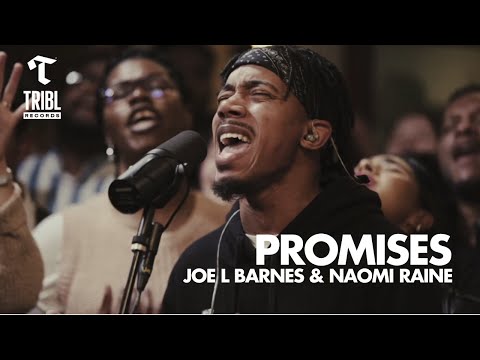 NOT A QUOTE
“Promises”
Maverick City Music feat. Joe L Barnes & Naomi Raine
Sing it. It quotes nothing, and what it says of God is true. Read Joshua 23:14 through 16 alongside it, because Joshua's version of the same words names the promises and comes with a warning attached.
NOT A QUOTE
“Promises”
Maverick City Music feat. Joe L Barnes & Naomi Raine
Sing it. It quotes nothing, and what it says of God is true. Read Joshua 23:14 through 16 alongside it, because Joshua's version of the same words names the promises and comes with a warning attached.✓ Never says it is quoting. No chapter, no verse, no translation named, nothing framed as scripture
⚠ The word "promises" is never filled in, and the song's central thesis is about God's record without naming what is on it. Joshua names his: the good promises about the land
 NOT A QUOTE
“Do It Again”
Elevation Worship
Sing it. It quotes nothing and presents nothing as scripture, and its testimony is true. Just know that what it says about God's record is personal and still running, where Joshua 21:45 states a corporate one and closes it.
NOT A QUOTE
“Do It Again”
Elevation Worship
Sing it. It quotes nothing and presents nothing as scripture, and its testimony is true. Just know that what it says about God's record is personal and still running, where Joshua 21:45 states a corporate one and closes it.✓ Never says it is quoting: no reference, no verse framing, nothing presented as scripture
⚠ The song's opening image comes from Jericho, but it never names Joshua, Jericho, or a verse. A hearer who does not already know the sermon behind it will not find the story