John 10:27-29 vs. “In Christ Alone”
Keith Getty & Stuart Townend · checked 2026-08-01
What we checked
Graded against the standard
Quotation criteria not graded: this song never presents its words as scripture
Applies to every song the Name held holy · God shown holy · true of God · the standard
✓ What's good
- Never says it is quoting: no verse cited, no scripture framing, nothing offered as the words of the text
- The final stanza's picture is the passage's own picture, a hand no power can open, and the promise it makes is a promise John 10:28 makes
- Across four stanzas the subject of nearly every clause is Christ. The singer appears mostly as the one being held
- The security is grounded in Christ's work rather than in the singer's performance, which is the direction John 10:29 points
- The authorised text is stable and documented, because the writers declined a hymnal committee's request to alter a line, so a reader can find out what was actually written
⚠ Cautions
- The passage names two hands. The hymn names one. John 10:29 adds the Father's hand and the reason it holds: "My Father who has given them to Me is greater than all"
- John 10:27 describes the sheep before verse 28 secures them, by listening and following. The stanza states the security without that description
- "Pluck" is King James wording, but no translation is named anywhere in the hymn, so the resemblance has to be recognised rather than verified
- The words are not identical in every book. A 2010 hymnal printed an altered version of a second-verse line without the writers' permission and the publisher later restored the original wording. What is on the screen in front of a congregation is not automatically what was written
Verse Proof
John 10:27-29The text in BSB (Berean Standard Bible)
“My sheep listen to My voice; I know them, and they follow Me. I give them eternal life, and they will never perish. No one can snatch them out of My hand. My Father who has given them to Me is greater than all. No one can snatch them out of My Father’s hand.”
Jesus is speaking in Jerusalem at the Feast of Dedication, in winter, walking in Solomon's Colonnade, to people who have surrounded Him and demanded that He say plainly whether He is the Christ. He answers that He has already told them and they did not believe, and that they do not believe because they are not His sheep. Verses 27 to 29 are His description of the ones who are: they hear His voice, He knows them, they follow. Two sentences later He says that He and the Father are one, and His hearers pick up stones. The security promised here is spoken in the middle of an argument about who Jesus is, and it is offered as evidence for that, not as a standalone comfort.
What the song says, described not quoted
Four stanzas walking through Christ's person and work. The first names Christ as the singer's whole basis for hope, and as the ground underneath everything, using building language. The second covers the incarnation and the crucifixion, and contains the one line in this hymn that has been publicly disputed, a statement about what the cross accomplished toward God. That dispute runs between people who hold different readings of the atonement, and this proof does not weigh it. The passage on the table here is John 10. The third covers burial and resurrection, and ends on the singer's belonging to Christ. The fourth is where John 10 surfaces. It says the singer carries neither guilt while alive nor dread of dying, and gives Christ's power in them as the reason; it puts the whole span of the singer's life, start to finish, under Jesus' direction; and it states that nothing hell can bring and no human plotting is able to take the singer out of His hand. The stanza ends with the singer holding that position until Christ returns or calls them home. No verse is cited anywhere in the hymn, and nothing in it is framed as a quotation.
Two things are carried over from John 10, an image and a verb. The image is a hand that cannot be prised open. The verb is "pluck," which is how the King James renders verses 28 and 29: "neither shall any man pluck them out of my hand." The BSB and the WEB both read "snatch." Since the hymn names no translation and never says it is quoting, the older verb reads as inheritance rather than citation, and it is the clearest sign of where the line came from. What shifts is the count. John 10 makes the promise twice, and the second time is the ground of the first. No one can snatch them out of My hand, and no one can snatch them out of My Father's hand, because the Father who gave them is greater than all. The hymn holds one hand. What falls out is not the comfort but the reason the comfort holds, which in the passage is a statement about the Father rather than about the singer. A second shift is where the stanza starts. In verse 27 the sheep are described before they are secured: they listen, He knows them, they follow. The stanza asserts the security without that description. The three stanzas before it spend their entire length on the Christ who does the holding, which is a different route to the same ground, and it is worth saying that the hymn does not leave that assurance floating.
▸ Official upload. Now listen with the proof in mind.
John 10 says "hand" twice. The second time it is the Father's, and the repetition is the argument.
Why it matters
This is one of the most-sung hymns in English-speaking churches, so for a lot of people its final stanza is the version of John 10 they carry. The passage builds its assurance by saying the same thing twice, and the second saying is where the weight is: the Father is greater than all, so His hand is the one being described. Compress that to a single hand and the sentence still comforts, but it now leans on the singer's confidence in Christ's grip rather than on the reason the text supplies. This is a note about what to read alongside the hymn, not a fault in it. The stanza says something John 10:28 says. It just stops before John 10:29.
Is it safe to dwell on?
Sung on repeat, this song fixes your attention on God.
What this one plants is a subject. Over four stanzas the grammatical subject is almost always Christ: He took on flesh, He died, He rose, He commands, He holds. The singer turns up mainly at the receiving end of those verbs, which is why the dwelling tag here is God rather than mixed. Sung on repeat, that arrangement does something specific. It rehearses a sequence of events rather than a state of feeling, and it trains the singer to arrive at their own security last, after the reasons for it. The fourth stanza is where the first person gets loudest, and it is also where John 10 is closest, so it is the one worth taking the whole passage into. Verse 29 does for a singer what the stanza cannot do alone. It names whose hand is underneath the hand.
Helpful comparison
The finding does not depend on which translation you read, which is worth checking rather than assuming. The King James has "pluck them out of my hand" and then "pluck them out of my Father's hand." The WEB has "snatch them out of my hand" and then "snatch them out of my Father's hand." The BSB has the same doubling in modern wording. Three translations, three different verbs or phrasings, and the same structure every time: the promise, then the promise again with the Father named and a reason attached. A repetition that survives every translation is not decoration. It is how the sentence argues.
Sources
- Keith & Kristyn Getty with Alison Krauss — In Christ Alone, official lyric video · (the recording checked for this proof; oEmbed author_name "KeithandKristyn Getty")
- Stuart Townend — In Christ alone · (the lyricist's own account: written with Keith Getty in 2001 around the life, death and resurrection of Christ, with the fourth verse written about the believer's security in Him)
- Hymnology Archive — In Christ alone · (writing begun autumn 2000 and finished January 2001; premiered at Spring Harvest April 2001; the New Irish Hymns studio recording; and the 2013 PCUSA episode including the Celebrating Grace Hymnal's 2010 alteration and the publisher's later restoration of the original wording)
- Hymnary.org — In Christ Alone (My Hope Is Found) · (author and composer credits, Thankyou Music copyright, and John 10:25-30 / John 10:28 indexed to the final stanza)
- Wikipedia — New Irish Hymns · (the 2001 Kingsway album on which the song was first recorded, with Máire Brennan, Margaret Becker and Joanne Hogg)
- Baptist Press, 31 July 2013 — God's wrath taboo subject for PCUSA hymnal · (the Committee on Congregational Song's vote, the specific wording change requested, and the writers' refusal)
- The Gospel Coalition, 9 December 2013 — Keith Getty on what makes "In Christ Alone" beloved and contested · (Getty's own account of writing the hymn and of declining the requested alteration)
Corrections
No corrections to this proof yet.
Think we got something wrong? Tell us what and where, and we will check it against the text. Real errors get fixed here, dated, in public. Every correction on the site →
Where the text survives the song
 ~ FAITHFUL
“Just As I Am”
Charlotte Elliott (recorded by Reawaken Hymns)
Sing it. The clause it was printed under is quoted accurately, and the hymn answers that clause honestly. Read the whole verse once. The half the hymn leaves out is the half that makes the half it sings hold.
~ FAITHFUL
“Just As I Am”
Charlotte Elliott (recorded by Reawaken Hymns)
Sing it. The clause it was printed under is quoted accurately, and the hymn answers that clause honestly. Read the whole verse once. The half the hymn leaves out is the half that makes the half it sings hold.✓ The epigraph is a real citation, printed with the hymn at its first confirmed publication, and its clause is quoted word for word.
⚠ The epigraph names the address and not the version. Its wording is King James (KJV); a singer who looks the verse up in a modern Bible will find different words for the same clause.
 ~ FAITHFUL
“Behold the Lamb of God”
Andrew Peterson
Sing it. The summons is the Baptist's own sentence, narrowed from the world's sin to ours and joined to other true titles of Christ. Read John 1 once, so you know the pointing began at the Jordan, not the manger.
~ FAITHFUL
“Behold the Lamb of God”
Andrew Peterson
Sing it. The summons is the Baptist's own sentence, narrowed from the world's sin to ours and joined to other true titles of Christ. Read John 1 once, so you know the pointing began at the Jordan, not the manger.✓ The refrain's summons is the Baptist's sentence in recognizable King James wording, and every stacked title is scripture's own: life and light of men, Son of God, Son of Man, Emmanuel
⚠ The world's sin becomes our sin. Nothing false enters, but the Baptist's clause is wider, and the width is the startling part of verse 29
 ~ FAITHFUL
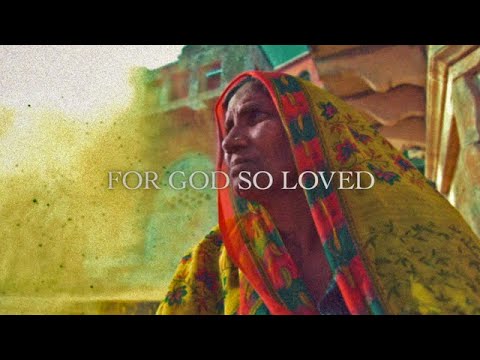
“God So Loved”
We The Kingdom
Sing it. The chorus walks through John 3:16 clause by clause, lightly reworded and never labeled. The verse's own alternative, shall not perish, stays unsung, so read the whole sentence once for yourself.
~ FAITHFUL
“God So Loved”
We The Kingdom
Sing it. The chorus walks through John 3:16 clause by clause, lightly reworded and never labeled. The verse's own alternative, shall not perish, stays unsung, so read the whole sentence once for yourself.✓ The chorus keeps John 3:16's clauses in the verse's own order: love, gift, belief, life
⚠ No translation is named, so the near-quotation has to be recognized rather than checked
More songs like this
 NOT A QUOTE
“O Church, Arise”
Keith Getty & Stuart Townend
Sing it. It quotes nothing and never says it is scripture, and it gets the hardest part right: the enemy is the devil's lies, never people. Bring Ephesians 6 with it, because the hymn names a sword and never names the word.
NOT A QUOTE
“O Church, Arise”
Keith Getty & Stuart Townend
Sing it. It quotes nothing and never says it is scripture, and it gets the hardest part right: the enemy is the devil's lies, never people. Bring Ephesians 6 with it, because the hymn names a sword and never names the word.✓ The one thing a battle hymn most easily gets wrong, this one gets right. No human being, group, or institution is named as the enemy anywhere in the four stanzas. The named opponent is the devil, which is where Paul puts it in verse 12
⚠ The armour is partial. Three of Paul's six items appear, the belt of truth, the shield of faith, and a sword. The breastplate of righteousness, the feet fitted with the readiness of the gospel of peace, and the helmet of salvation are not in the hymn
 NOT A QUOTE
“The Power of the Cross (Oh to See the Dawn)”
Keith Getty & Stuart Townend
Sing it. It promises nothing it does not deliver, and what it delivers is the Good Friday story told straight. It stops at what could be seen, so read Colossians 2:14-15 for what could not.
NOT A QUOTE
“The Power of the Cross (Oh to See the Dawn)”
Keith Getty & Stuart Townend
Sing it. It promises nothing it does not deliver, and what it delivers is the Good Friday story told straight. It stops at what could be seen, so read Colossians 2:14-15 for what could not.✓ Never says it is quoting: no verse cited, no scripture framing, nothing offered as the words of the text
⚠ Colossians 2:14 says a written record of debt was cancelled and nailed up. The hymn has nails and a cross and no document, so the passage's central image is not in the song
 NOT A QUOTE
“Speak, O Lord”
Keith Getty & Stuart Townend
Sing it. It is a prayer, not a quotation. It asks God to do exactly what Isaiah 55 says his word does, and since it quotes nothing, the confidence it leans on lives in a passage it never names. Bring the passage.
NOT A QUOTE
“Speak, O Lord”
Keith Getty & Stuart Townend
Sing it. It is a prayer, not a quotation. It asks God to do exactly what Isaiah 55 says his word does, and since it quotes nothing, the confidence it leans on lives in a passage it never names. Bring the passage.✓ Addressed to God from first line to last, and everything it asks is what Isaiah 55:11 says his word does: accomplish his purpose in the people it reaches
⚠ Nothing is quoted or cited anywhere in the lyric, and the writers' own page, Hymnary's index, and two reviews give four different reference lists. You cannot work backward from this hymn to a chapter