Luke 7:37-38 vs. “Alabaster Box”
CeCe Winans · checked 2026-08-22
What we checked
Graded against the standard
Quotation criteria not graded: this song never presents its words as scripture
Applies to every song the Name held holy · God shown holy · true of God · the standard
✓ What's good
- It leaves her sin unnamed, exactly as Luke does. The passage calls her a sinner and stops there, and so does the song.
- The physical details are accurate to Luke 7:37-38 and in the right order: the tears, the hair, the kissing of the feet, the jar.
- The second verse puts the worship on the ground Luke puts it on, a life that was bound and then found, before the singing turns to what she brings.
- Jesus is honoured throughout, and nothing is said about Him that Luke 7 does not support.
⚠ Cautions
- The chorus names the jar Mary's. Luke does not name the woman at all, in this passage or anywhere else.
- Writing about the song commonly describes it as sung in Mary Magdalene's voice. No gospel connects Mary Magdalene with any anointing.
- The argument the song makes to the onlookers is about what the offering cost. That argument is at Bethany (Mark 14:5, John 12:5). Nobody prices the perfume in Luke 7.
- The song gives the room a voice. In Luke the objection is silent, and it comes from the host rather than from a crowd.
Verse Proof
Luke 7:37-38The text in BSB (Berean Standard Bible)
“When a sinful woman from that town learned that Jesus was dining there, she brought an alabaster jar of perfume. As she stood behind Him at His feet weeping, she began to wet His feet with her tears and wipe them with her hair. Then she kissed His feet and anointed them with the perfume.”
Luke 7, in Galilee, long before the last week. A Pharisee named Simon has invited Jesus to a meal (7:36, 7:40). A woman the town knows as a sinner comes in with an alabaster jar, stands behind Jesus at His feet, weeps on them, wipes them with her hair, kisses them, and anoints them. Luke tells us three things about her and withholds the rest. He never gives her a name. He never says what her sins were. And he never records anyone speaking against her: the host's objection is made silently, to himself (7:39). Jesus answers that unspoken thought with a parable about two debtors, points out that Simon gave Him no water, no kiss and no oil while she gave all three (7:44-46), says her many sins have been forgiven, for she has loved much (7:47), and then tells her directly that her sins are forgiven (7:48). This is not the meal at Bethany. Six days before the Passover, in Bethany, Mary the sister of Lazarus anoints Jesus' feet with pure nard and wipes them with her hair (John 12:1-3), and in Mark 14:3-5 an unnamed woman breaks an alabaster jar over His head in the house of Simon the Leper while the people at the table price the perfume at three hundred denarii.
What the song says, described not quoted
The song opens with a quiet third-person account of the scene: a woman making her way to Jesus across a still room, blind with tears, met by anger and by whispering that people like her do not belong there, kneeling at His feet without saying anything. From the chorus onward the words are in the first person and the present tense. The singer says she has come to pour her praise out like oil, and she calls that oil Mary's alabaster box. She asks the people watching not to take offence if she washes His feet with her tears and dries them with her hair, and she tells them they do not know what the oil in her box cost. The second verse is her own testimony: what her life was, being held by sin, being found. No particular sin is named. At the end the same point widens from the cost of the oil to the cost of her praise. Jesus is spoken about all the way through and never spoken to. The "you" of the chorus is the room. No chapter or verse is cited anywhere, no words are introduced as scripture, and no translation is named. The publisher's own chart page lists five themes for the song and no scripture reference at all.
The picture is Luke's and the name is not. Tears on the feet, hair used as a towel, the kisses, the alabaster jar: all of that is Luke 7:37-38, and the song has it right. The name Mary belongs to a different meal. Luke's woman is unnamed. The only Mary who anoints Jesus anywhere in the gospels is Mary of Bethany in John 12, at another table in another town, days before the crucifixion, and John never calls her jar alabaster. Mark 14 and Matthew 26 have the alabaster jar and the argument over what the perfume was worth, at Bethany, poured over His head, and that woman is unnamed too. So both of the things the song adds to Luke's scene, the name and the reckoning of what the oil cost, come from the Bethany accounts rather than from this one. One more shift is smaller and worth naming. In Luke the room says nothing. Simon's objection is a thought (7:39), and the only spoken reaction comes afterward and is about Jesus, not about her (7:49).
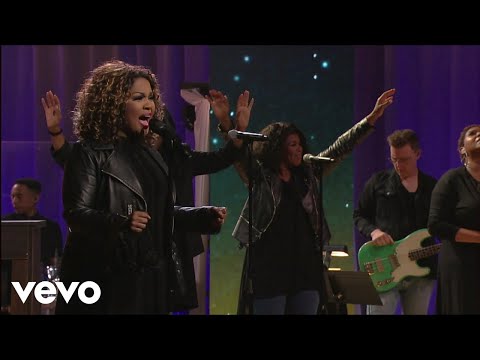
▸ Official upload. Now listen with the proof in mind.
Luke leaves her without a name, and the song gives her one from another gospel.
Why it matters
Luke's silence about her name is doing work. He tells us only what the town thought of her, so the account turns on what Jesus says about forgiveness rather than on who she was. A name borrowed from another gospel fills in the one blank the passage deliberately kept. And once the two anointings are heard as one, the answer to the critics changes hands: at Bethany the argument is about what the perfume was worth, while in Luke the answer Jesus gives is about a debt cancelled and a love that followed.
Is it safe to dwell on?
Sung on repeat, this song moves between God and the singer.
What this plants first is a posture. Coming anyway, across a room that has already decided about you, and kneeling. That is Luke's picture, and singing it often makes it easier to do. It also plants two things the passage did not give: a name on a woman scripture leaves nameless, and a defence of worship that rests on what the worship cost the worshiper. The words divide roughly between Him and her, which is why this one reads mixed rather than God-centred. Sung on a loop it forms a person who will worship in front of people who disapprove, and who traces that freedom back to having been found. Read Luke 7:36-50 next to it now and then, and the ground stays where Jesus put it, on the debt He cancelled.
Helpful comparison
Four accounts, at least two occasions. Luke 7:36-50: Galilee, a Pharisee's house, an unnamed woman known in town as a sinner, an alabaster jar, tears, hair, feet, a silent objection, forgiveness declared. Mark 14:3-9 and Matthew 26:6-13: Bethany, the house of Simon the Leper, an unnamed woman, an alabaster jar, the head anointed, the perfume priced at three hundred denarii, the burial named. John 12:1-8: Bethany, six days before Passover, Mary the sister of Lazarus, pure nard, feet, hair, Judas pricing it at three hundred denarii. The song's details come from the first and the fourth. Whether Bethany in Mark and Matthew is the same evening as Bethany in John is an old and reasonable question. Whether Luke 7 is that evening is not: different town, different host, different point in the ministry.
Luke introduces Mary Magdalene a chapter later as a woman delivered of seven demons (8:2). The merger of the three women goes back to a homily of Gregory the Great in 591, not to the text.
Sources
- Alabaster Box chord chart (PraiseCharts) · (rights-holder page: writer Janice Sjostrand, © Little Pooky's Music admin. by Pure Psalms Music, CCLI 2825962; lists five themes and no scripture reference)
- CeCe Winans – Alabaster Box, official label-delivered upload · (delivery line: ℗ 1999 PureSprings Gospel, released 1999, producer Christopher Harris, composer/lyricist credit; the description also carries the full lyric)
- Alabaster Box (album), Wikipedia · (album released 19 October 1999 on WellSpring Gospel; track 4 credited to Janice Sjostrand, produced by Christopher Harris)
- Song copyright record, Easy Song · (independent confirmation of writer and publisher, BMI work 4965790)
- Alabaster Box, Word to Worship · (second lyric source: the chorus refers to Mary's alabaster box; no sin or occupation is named for the woman)
- "Where Did that Song Come From": Alabaster Box · (the writer's account: written at a service after a sermon on the woman with the alabaster box, copyright dated 1997)
- CeCe Winans, Alabaster Box review, GospelFlava · (1999 review: label and year, and the reference it gives for the title track, John 12:3 and Luke 7:37-38)
- CeCe Winans, "Alabaster Box" · (example of the song being described as sung from Mary Magdalene's perspective)
- Who framed Mary Magdalene?, Heidi Schlumpf, U.S. Catholic · (the identification of Mary Magdalene with Luke 7's unnamed sinner and with Mary of Bethany dates to a homily of Gregory the Great, 14 September 591, and has no basis in the gospels)
Corrections
No corrections to this proof yet.
Think we got something wrong? Tell us what and where, and we will check it against the text. Real errors get fixed here, dated, in public. Every correction on the site →
Where the text survives the song
 ✓ VERIFIED
“Psalm 16”
The Corner Room (Adam Wright)
You can sing this one straight through. It is all eleven verses of Psalm 16, in order, in a named version. What you repeat is the psalm.
✓ VERIFIED
“Psalm 16”
The Corner Room (Adam Wright)
You can sing this one straight through. It is all eleven verses of Psalm 16, in order, in a named version. What you repeat is the psalm.✓ The printed sung text carries all eleven verses of Psalm 16, in order, with no line printed twice and no refrain added
⚠ The track title alone will not tell you which Bible you are singing. On Apple Music and Spotify it is just "Psalm 16". The version is named on the album page and in the video description.
 ✓ VERIFIED
“Be Strong and Courageous (Joshua 1:9)”
Seeds Kids Worship (Seeds Family Worship)
Sing it, and hand it to your kids. It is Joshua 1:9 whole, in the ESV the publisher names, and the tag sings the address, so the verse and its reference get memorized together.
✓ VERIFIED
“Be Strong and Courageous (Joshua 1:9)”
Seeds Kids Worship (Seeds Family Worship)
Sing it, and hand it to your kids. It is Joshua 1:9 whole, in the ESV the publisher names, and the tag sings the address, so the verse and its reference get memorized together.✓ The whole verse, in order, with every repeated line drawn from the verse's own words
✓ no cautions: this is the standard
 ✓ VERIFIED
“Mark 10”
Streetlights
Play it freely. This is Mark 10 itself, read word for word in a named translation. The line about all things being possible arrives as the answer to a question about being saved.
✓ VERIFIED
“Mark 10”
Streetlights
Play it freely. This is Mark 10 itself, read word for word in a named translation. The line about all things being possible arrives as the answer to a question about being saved.✓ The whole chapter, in order, so verse 27 arrives after the rich man’s scene and after the disciples ask who can be saved, instead of standing on its own
⚠ “Word-for-word” here describes the reading, not the translation theory. Streetlights uses it for what is read. Tyndale uses the same phrase for a different thing
More songs like this
 NOT A QUOTE
“Believe For It”
CeCe Winans
Sing it. It quotes nothing and misstates nothing about God's power. Just bring the other half of Mark 9 with you: the father who got his miracle said out loud that his faith was not enough.
NOT A QUOTE
“Believe For It”
CeCe Winans
Sing it. It quotes nothing and misstates nothing about God's power. Just bring the other half of Mark 9 with you: the father who got his miracle said out loud that his faith was not enough.✓ Never says it is quoting: no verse is cited, no words are framed as scripture, and the publisher's own chord chart lists no scripture reference field
⚠ What to believe for is never named. The object is left open for the singer to fill in, and the song supplies no test for what belongs there
 NOT A QUOTE
“Great Is Thy Faithfulness”
CeCe Winans
Sing it. It never says it is quoting, though the refrain is verse 23's King James wording. What it does not carry is the ruin the verse is recalled from. Read Lamentations 3:17-24 alongside it.
NOT A QUOTE
“Great Is Thy Faithfulness”
CeCe Winans
Sing it. It never says it is quoting, though the refrain is verse 23's King James wording. What it does not carry is the ruin the verse is recalled from. Read Lamentations 3:17-24 alongside it.✓ Never says it is quoting: no chapter or verse cited, nothing framed as scripture, no appeal to what the Bible says
⚠ No translation is named, so a listener who recognises the phrase has nothing to check it against
 NOT A QUOTE
“Silent Night”
Joseph Mohr, tr. John Freeman Young (recorded live by The Petersens)
Sing it. The carol quotes nothing and never says it is scripture. Just know that the quiet, the calm and the light around the child are the carol's own. Luke reports an angel, a sign and a praising host.
NOT A QUOTE
“Silent Night”
Joseph Mohr, tr. John Freeman Young (recorded live by The Petersens)
Sing it. The carol quotes nothing and never says it is scripture. Just know that the quiet, the calm and the light around the child are the carol's own. Luke reports an angel, a sign and a praising host.✓ The carol presents nothing as scripture. It names no book, chapter or verse, and no line in it is offered as the words of Luke.
⚠ The quiet and the calm are the carol's own. Luke 2:8-14 says nothing about how the night sounded. What he reports is an angel, then a multitude.