Psalm 23:4 vs. “You Never Let Go”
Matt Redman · checked 2026-08-02
What we checked
Graded against the standard
Quotation criteria this song presents words as scripture, so these apply
Applies to every song the Name held holy · God shown holy · true of God · the standard
✓ What's good
- The opening clause is Psalm 23:4's own words, exactly as the BSB and the WEB render them, with nothing added or dropped inside it
- The verse's own reason for fearlessness, God's presence, is kept rather than replaced. It arrives one stanza later
- The borrowed texts are real texts saying what the song says they say: 1 John 4:18 on love and fear, and Psalm 27:1's question
- The valley stays a place walked through. The song does not promise the trouble is gone
- The rights holder's own song page names Psalm 23:4 as a scripture reference, so the source is on the record even though the recording cites nothing
⚠ Cautions
- No translation is named. The opening matches the BSB and the WEB exactly and does not match the KJV, which begins "Yea, though I walk", so whether the line registers as a quotation depends on which Bible the listener grew up with
- The verse's second clause is sung as a report about God rather than as the address to God that the psalm makes at exactly that point
- A line from 1 John 4:18 sits between the two halves of the verse. Sung as one thought, two books' answers to fear are easy to remember as one verse
- The most repeated words in the song are the title line, which is nearer Deuteronomy 31:6 and Hebrews 13:5 than to Psalm 23. The publisher's page cites Deuteronomy 31:6 alongside Psalm 23:4, which is the honest accounting
Verse Proof
Psalm 23:4The text in BSB (Berean Standard Bible)
“Even though I walk through the valley of the shadow of death, I will fear no evil, for You are with me; Your rod and Your staff, they comfort me.”
David's shepherd psalm, at the verse where it turns. Through verses 1 to 3 the psalm speaks about the LORD in the third person: He makes me lie down, He leads me, He restores. At verse 4 the words stop describing Him and start speaking to Him, and they do it in the darkest place the psalm goes. The verse is built as a claim with a reason attached. The claim is that no evil is feared. The reason is presence, stated as direct address: You are with me. The valley is not removed, it is walked through, and the rod and the staff are a shepherd's working tools rather than symbols of escape. The comfort psalm has the hard part inside it.
What the song says, described not quoted
The song opens on the first clause of the passage above, sung as the passage has it, and then supplies a reason for not being afraid that is not the one this verse gives. That reason is 1 John 4:18, where perfect love drives out fear. The rest of the opening stanza is the songwriters' own: the singer will not turn back when trouble closes in, because God is near.
The second stanza returns to Psalm 23:4 and finishes it. The resolve not to fear evil is sung, and the verse's own reason, God's presence, arrives here. It arrives changed: the psalm addresses God at this point, and the song reports the same fact about God instead. A rhetorical question follows it, sung twice. That question is the one Psalm 27:1 asks, not one Psalm 23 asks.
The chorus is the title line, three times a pass, paired with opposite conditions, settled and rough, top and bottom, and its last line makes the singer the one held. A bridge looks ahead to light arriving and to trouble ending. Nothing anywhere in the recording is cited, and no translation is named.
Two things moved, and both are small enough to miss. First, the verse's reason is not the first reason the song gives. Psalm 23:4 fears no evil because God is present. The song's opening puts a different book's answer in that slot, 1 John 4:18, which reads in the BSB: "There is no fear in love, but perfect love drives out fear, because fear involves punishment." Both are true, and they are not the same argument. The psalm's reason is not dropped. It is delayed by one stanza. Second, when the psalm's reason does arrive, its grammar has changed. Verse 4 is where the psalm turns from speaking about the shepherd to speaking to Him, and the sung line reports the fact about God rather than saying it to Him. The song then asks Psalm 27:1's question. What the song says about God is what all three texts say. It is the seam between the texts that has moved.
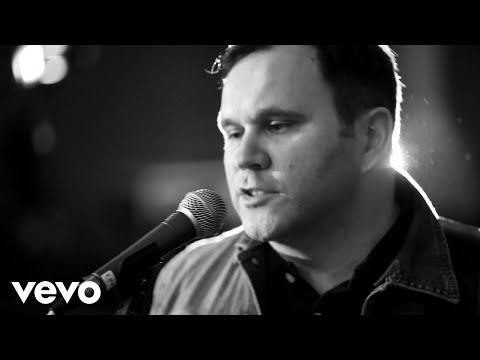
▸ Official upload. Now listen with the proof in mind.
Psalm 23:4 answers fear with presence. This song sings another book's answer first, then the psalm's.
Why it matters
An unmarked quotation is still a quotation. The song's opening clause is the verse's opening clause, word for word, in two translations this site can name, so a listener who knows the psalm hears scripture, and a listener who does not hears a good opening line. Nothing is misrepresented either way, but only one of those listeners can check anything.
The second thing worth noticing is what sits in the gap. A verse split across two stanzas, with a sentence from another book between the halves, gets remembered as one sentence. Psalm 23:4 and 1 John 4:18 both answer fear, and they answer it differently: one with presence, one with love. Holding them apart is not pedantry. It is how you keep either one from being quoted as the other.
Is it safe to dwell on?
Sung on repeat, this song moves between God and the singer.
Count the repetitions and the finding writes itself. Psalm 23:4 is sung across two stanzas, once each. The chorus, with the title line, comes round many times and closes every pass with the singer as the one held. So what repetition plants here is not the psalm. It is the promise that God does not let go, which is the promise of Deuteronomy 31:6, and it plants it as something done to the singer rather than something the singer does.
That is why the dwelling tag is mixed. God is the actor in nearly every main clause, and the singer is where the action lands. A person who sings this on a loop is being formed to expect God's grip to hold in the dark, which is a true thing to expect, and to picture themselves inside that grip, which is where the attention settles. The valley material is what makes the difference: because it stays, the comfort is being planted as comfort for trouble rather than comfort instead of trouble. Sing the second stanza slowly if you want the psalm's own reason to be the part that sticks.
Helpful comparison
This entry completes something. The site has now checked Psalm 23 verse by verse: 23:1-3 in Poor Bishop Hooper's EveryPsalm setting, 23:4 here, 23:5 in "Surrounded (Fight My Battles)", 23:6 in "Goodness of God", with The Corner Room's whole-psalm setting running underneath all of them. Five proofs, one psalm, and the passage hub at `/passages/psalm-23.html` now holds the lot.
Read together they are the clearest demonstration on the site of what a hub is for. Six verses produced a verbatim setting with the translation named, a compressed paraphrase that keeps the psalm's order, an unmarked but accurate quotation of one clause, and two songs that make no statement that it is quoting at all and are none the worse for it. Same psalm, four different relationships to the text, and only one of them is a failure of any kind, which is none of them. The five entries also land on four different lesson shelves, so nobody walking the hub is taught the same habit twice.
Sources
- Worship Together — You Never Let Go · (Worship Together's own song page: writers Beth Redman and Matt Redman, CCLI 4674166, ThankYou Music, and the scripture references it lists for the song, Psalm 23:4 and Deuteronomy 31:6)
- Word to Worship — You Never Let Go · (independent confirmation of CCLI 4674166 and the copyright line, 2005 Thankyou Music admin. by Capitol CMG, plus a scripture list including Psalm 23:4, 1 John 4:18 and Psalm 27:1)
- Matt Redman — You Never Let Go (label-delivered upload) · (the recording checked for this proof; the auto-generated description carries the delivery line, the ℗ 2006 Survivor Records line, the album Beautiful News, and composer credits for both Matt Redman and Beth Redman)
- JesusFreakHideout — Beautiful News, You Never Let Go · (first of two independent transcriptions consulted for the sung wording)
- eLyrics — You Never Let Go · (second independent transcription; the two agree on the opening clause and on which stanza carries the rest of the verse)
- The Berean Test — Is "You Never Let Go" biblical? · (a third-party review that maps stanza 1 to Psalm 23:4 with 1 John 4:18 and stanza 2 to Psalm 23:4 with Psalm 27:1, matching the ordering found in both transcriptions)
- Song Scoops — You Never Let Go · (the writing circumstances: Psalm 23:4 as the starting point, written after a miscarriage and a London bombing)
- Wikipedia — Beautiful News · (album release date, 26 December 2006, sixsteps. Note: this page credits the song to Matt Redman alone, which the publisher page, the CCLI copyright line and the label-delivered upload all contradict by naming Beth Redman as co-writer)
Corrections
No corrections to this proof yet.
Think we got something wrong? Tell us what and where, and we will check it against the text. Real errors get fixed here, dated, in public. Every correction on the site →
Where the text survives the song
 ✓ VERIFIED
“Psalm 11 (English Standard Version)”
The Corner Room (Adam Wright)
Sing it straight through. It is all seven verses of Psalm 11, in order, in a version the track title names. A reviewer says one verse comes back as a refrain, and it is the psalm's own verse.
✓ VERIFIED
“Psalm 11 (English Standard Version)”
The Corner Room (Adam Wright)
Sing it straight through. It is all seven verses of Psalm 11, in order, in a version the track title names. A reviewer says one verse comes back as a refrain, and it is the psalm's own verse.✓ All seven verses, in order. We set the printed sung text beside an ESV and compared it word by word: 131 words, all matching, nothing added and nothing dropped
⚠ The printed text under the video lists each line once. It is not a map of the song. A review of the album says verse 4 comes back as a refrain
 ✓ VERIFIED
“Psalm 16”
The Corner Room (Adam Wright)
You can sing this one straight through. It is all eleven verses of Psalm 16, in order, in a named version. What you repeat is the psalm.
✓ VERIFIED
“Psalm 16”
The Corner Room (Adam Wright)
You can sing this one straight through. It is all eleven verses of Psalm 16, in order, in a named version. What you repeat is the psalm.✓ The printed sung text carries all eleven verses of Psalm 16, in order, with no line printed twice and no refrain added
⚠ The track title alone will not tell you which Bible you are singing. On Apple Music and Spotify it is just "Psalm 16". The version is named on the album page and in the video description.
 ✓ VERIFIED
“Psalm 53 (English Standard Version)”
The Corner Room (Adam Wright)
Yes, you can sing it. All six verses of Psalm 53 are here, in order, from a version the release names. The words you repeat are the psalm's own.
✓ VERIFIED
“Psalm 53 (English Standard Version)”
The Corner Room (Adam Wright)
Yes, you can sing it. All six verses of Psalm 53 are here, in order, from a version the release names. The words you repeat are the psalm's own.✓ The printed sung text carries all six verses of Psalm 53, in order, and every one of its 142 words matches an ESV of the psalm
⚠ The printed text is not a transcript. A review of the album calls the psalm's opening line the song's refrain. We did not listen through to count repeats, so that rests on the review
More songs like this
 NOT A QUOTE
“10,000 Reasons (Bless the Lord)”
Matt Redman
Sing it as a psalm-shaped song, not as a quotation. It never says it is quoting, its one borrowed line keeps the psalm's meaning, and everything else is the songwriters' own list of reasons.
NOT A QUOTE
“10,000 Reasons (Bless the Lord)”
Matt Redman
Sing it as a psalm-shaped song, not as a quotation. It never says it is quoting, its one borrowed line keeps the psalm's meaning, and everything else is the songwriters' own list of reasons.✓ Never says it is quoting, so nothing is presented as scripture that is not
⚠ Many people now know Psalm 103:1 from this song rather than from the psalm. Read the next four verses, which name the specific reasons the song only gestures at
 ~ FAITHFUL
“O Worship The King”
Passion (Chris Tomlin)
Sing it. It is a hymnal's versification of Psalm 104, and hymnals still print the psalm number next to the title. The 2004 arrangement adds a chorus of its own and drops that label.
~ FAITHFUL
“O Worship The King”
Passion (Chris Tomlin)
Sing it. It is a hymnal's versification of Psalm 104, and hymnals still print the psalm number next to the title. The 2004 arrangement adds a chorus of its own and drops that label.✓ The stanza that carries this passage tracks verse 3 closely: light as clothing, space overhead, clouds turned into a chariot, and the wind's wings as God's road are all the verse's own pictures in another meter
⚠ Verse 3 gives the clouds as a chariot with no anger attached. The hymn's chariots are chariots of wrath. The wrath is elsewhere in Psalm 104, at verses 7 and 35, and in Psalm 18's storm, but it is not in the verse the stanza is built on
 ~ FAITHFUL
“A Mighty Fortress Is Our God”
Sovereign Grace Music
Sing it. It is an honest free paraphrase five centuries old: Psalm 46's opening confidence rebuilt in Luther's own images. Just know the label names the psalm's theme, not its words, and most of the psalm is not in it.
~ FAITHFUL
“A Mighty Fortress Is Our God”
Sovereign Grace Music
Sing it. It is an honest free paraphrase five centuries old: Psalm 46's opening confidence rebuilt in Luther's own images. Just know the label names the psalm's theme, not its words, and most of the psalm is not in it.✓ The opening line does verse 1's own work, God as stronghold and present help, stated before the threat, which is the psalm's order
⚠ Most of Psalm 46 is not here. The river and the city, the raging nations, the earth melting at God's voice, the ended wars, and the be-still command all drop away. Julian's dictionary says the psalm "is used only as a motto"