Isaiah 25:6-9 vs. “This Is Our God”
Phil Wickham · checked 2026-09-06
What we checked
Graded against the standard
Quotation criteria not graded: this song never presents its words as scripture
Applies to every song the Name held holy · God shown holy · true of God · the standard
✓ What's good
- The title sentence has a real home in scripture. Isaiah 25:9 carries those four words, and the rescue it celebrates is the same rescue the song sings about
- Wickham states his own grounds in public. He told Billboard the song is a declaration of who Jesus is and what He has done for us
- It never presents itself as a quotation, so no word-for-word standard applies
- Two published reviews disagree sharply about recommending it. The one that says avoid it still says the song contains no false teaching. They differ on how clear its words are
⚠ Cautions
- The song is not written as a citation, so it does not hand you the verse behind its title
- Worship Together's index files it under 1 John 4:9-10 and 1 Peter 2:24, and The Berean Test lands on the same two. An index entry is somebody's reading, not a reference the song gives
- Notice the word “our.” In Isaiah it belongs to people who waited for God and were saved. Singing the title says you are among them
- Isaiah's declaration is dated. It is spoken in that day, after death is swallowed and every tear is wiped. Sung now, it stands earlier in the story than Isaiah puts it
Verse Proof
Isaiah 25:6-9The text in BSB (Berean Standard Bible)
“On this mountain the LORD of Hosts will prepare a lavish banquet for all the peoples, a feast of aged wine, of choice meat, of finely aged wine. On this mountain He will swallow up the shroud that enfolds all peoples, the sheet that covers all nations; He will swallow up death forever. The Lord GOD will wipe away the tears from every face and remove the disgrace of His people from the whole earth. For the LORD has spoken. And in that day it will be said, “Surely this is our God; we have waited for Him, and He has saved us. This is the LORD for whom we have waited. Let us rejoice and be glad in His salvation.”
Isaiah is describing a day that had not yet come. God spreads a feast on His mountain for all peoples. He pulls off the covering that lies over the nations. He swallows death. He wipes the tears off every face. Only after all of that does the declaration come. The sentence in verse 9 is not the prophet's own line. It is put in the mouth of people standing on that future day, and twice they say they had waited.
What the song says, described not quoted
The song is a proclamation, not a study of a passage. Wickham told Billboard it is “a declaration of who Jesus is and what He's done for us.” Before he played it on tour he called it a “line in the sand” and a “manifesto.” He said singing it is like “preaching to my own soul.” Both reviews below describe the same content. Jesus pays for sin. Jesus beats death. So the words look back at a rescue already made. The title is a sentence about God, and it says our. The bridge answers one of its questions with the divine name: Worship Together prints it in the Bridge 2 lyrics, and The Berean Test's review discusses it as the English pronunciation of the tetragrammaton. Neither review below reports the song citing a verse.
Nothing here is offered as a quotation, so nothing is misquoted. What moved is the setting of one sentence. The title's four words, this is our God, stand inside Isaiah 25:9 in the BSB, the WEB and the KJV. In Isaiah they are dated to a day still ahead and handed to people who had waited for it. The song makes the same declaration now, resting it on work already finished.
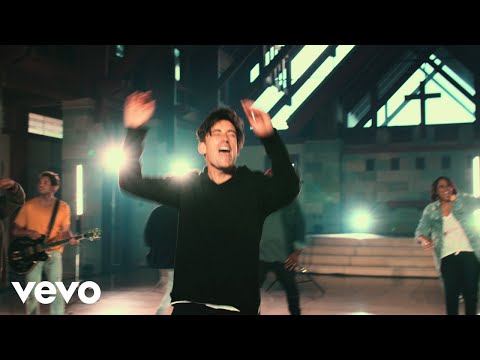
▸ Official upload. Now listen with the proof in mind.
Isaiah 25 lets nobody say “this is our God” until the tears are already wiped away.
Why it matters
A declaration is only as strong as what stands in front of it. Isaiah puts three verses in front of his. A feast. A shroud pulled off the nations. Death swallowed. Tears wiped away. Then the sentence lands. The song supplies grounds too, and its writer names them in public: the cross and the empty grave. Those are not a rival rescue. Verse 8's clause about death is the one Paul reaches for in 1 Corinthians 15:54, and its clause about tears turns up again in Revelation 21:4.
Is it safe to dwell on?
Sung on repeat, this song fixes your attention on God.
Count who the words are about and the answer is God. Both reviews below describe the song as pointing at Jesus and what He has done, and that is what repetition plants here. Sung enough times, its answer to “who is God” becomes the one you reach for first, and that answer is a paid debt and an empty grave. That is a good thing to have ready. The second thing it plants is one small word. Every time you sing “our” you say you are inside the group the sentence describes. Isaiah 25:9 says what that group did. Five of its words are we, us and our, and twice over they are people who waited. So let the song plant the declaration. Then let Isaiah tell you what waiting looks like, because the last of what verse 8 promises has not arrived yet.
Helpful comparison
Toggle this page to the WEB and the same divine name the song's bridge uses stands four times in the passage itself. Nothing about that fails the reverence checks. It is sung as an answer to a question about who rescued the singer, which is ascription, not filler.
Verse 9 is a place the translations part. The BSB reads the saving as done, “He has saved us.” The WEB and the KJV read it as still coming, “he will save us.” The translation toggle on this page will show you the swap. What does not move is the frame around it. All three keep the frame. The BSB has “in that day it will be said”; the WEB and the KJV have “it shall be said in that day.” So in every version the sentence is quoted speech, assigned to people on a day the prophet had not reached.
That matters for where the song sits. The song looks back. Isaiah's speakers are looking back too, but from further down the road, after the clause in verse 8 has come true. Paul treats that clause as still future in 1 Corinthians 15:54, and its neighbour about tears reappears in Revelation 21:4. So the rescue is one rescue, told at three points on the clock.
On what other people file under this song: Worship Together, which describes itself as “a song discovery and resource platform,” lists “1 John 4:9–10; 1 Peter 2:24” in its Scripture Reference field. Neither is Isaiah. An index entry is a reading by whoever filed it, not a reference the song gives. The tie to Isaiah 25:9 here rests on the sentence itself, which anyone can look up.
The two published reviews disagree about whether to sing it, and the disagreement is worth reading plainly. The Berean Test scores it 9.5/10 and calls it appropriate for corporate worship. Protestia says the song “contains no false teaching, but it does have some clarity issues,” then declines to recommend it on grounds about the people who wrote it rather than about the words. This page checks the words.
Sources
- Wikipedia — “This Is Our God” (song) · (released January 13, 2023 on Fair Trade Services; lead single from *I Believe*; writers Brandon Lake, Pat Barrett, Phil Wickham, Steven Furtick; producer Jonathan Smith)
- Worship Together — This Is Our God · (the same four writers; CCLI #7211413; “Scripture Reference: 1 John 4:9–10; 1 Peter 2:24”; the site describes itself as “a song discovery and resource platform”)
- Songfacts — This Is Our God · (Wickham to Billboard: “This song is a declaration of who Jesus is and what He's done for us”; the late-2021 two-day writing retreat at Elevation Church in Charlotte)
- Air1 — Faith Behind The Song: “This is Our God” · (Wickham calls it a “line in the sand” and a “manifesto,” and says singing it is like “preaching to my own soul”)
- The Berean Test — Phil Wickham, This Is Our God · (final score 9.5/10; “This song is appropriate for corporate worship”)
- Protestia — Theological Song Review: This Is Our God · (“The song contains no false teaching, but it does have some clarity issues”; the closing recommendation turns on the writers, not the lyrics)
- Phil Wickham — This Is Our God (Official Music Video) · (the embedded upload; YouTube oEmbed gives author_name “PhilWickhamVEVO”)
Corrections
No corrections to this proof yet.
Think we got something wrong? Tell us what and where, and we will check it against the text. Real errors get fixed here, dated, in public. Every correction on the site →
Where the text survives the song
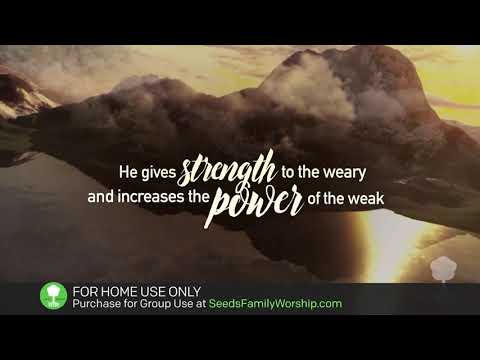 ~ FAITHFUL
“Soar Like Eagles”
Seeds Family Worship (now Seeds Kids Worship)
Sing it. Three verses arrive whole and in order. Check the words against an NIV rather than the ESV the album page names, and read verse 28 once, so the singer knows why the strength renews.
~ FAITHFUL
“Soar Like Eagles”
Seeds Family Worship (now Seeds Kids Worship)
Sing it. Three verses arrive whole and in order. Check the words against an NIV rather than the ESV the album page names, and read verse 28 once, so the singer knows why the strength renews.✓ Three consecutive verses sung whole and in order, with a chorus built entirely from the passage's own clauses
⚠ The album page lists the scripture version as ESV while the song's own chart credits the NIV, and the sung wording is the NIV's. The label a listener sees first names the wrong text
 ~ FAITHFUL
“Holy, Holy, Holy”
Audrey Assad
Sing it. The threefold cry is the verse, kept exactly. The Trinity line is the church's reading of that cry, stated openly. Knowing which layer is Isaiah and which is doctrine is the whole assignment here.
~ FAITHFUL
“Holy, Holy, Holy”
Audrey Assad
Sing it. The threefold cry is the verse, kept exactly. The Trinity line is the church's reading of that cry, stated openly. Knowing which layer is Isaiah and which is doctrine is the whole assignment here.✓ The seraphim's threefold cry is carried exactly, and every name the hymn gives God is one scripture gives Him
⚠ In the Hebrew, the threefold repetition is emphasis, the superlative at full strength. Naming the three persons in it is the church's later reading, not the verse's own statement
 ~ FAITHFUL
“How Firm a Foundation”
Sovereign Grace Music
Sing it. When this hymn speaks as God, it repeats what he has said: the fear-not stanza is Isaiah 41:10 in close King James wording, and the first stanza announces that plan out loud.
~ FAITHFUL
“How Firm a Foundation”
Sovereign Grace Music
Sing it. When this hymn speaks as God, it repeats what he has said: the fear-not stanza is Isaiah 41:10 in close King James wording, and the first stanza announces that plan out loud.✓ The first stanza announces the method: everything sung in God's voice afterward is presented as what he has already said in his word
⚠ No translation is named, so the King James wording has to be recognised rather than checked. In 1787 that went without saying; in 2026 it does not
More songs like this
 NOT A QUOTE
“House of the Lord”
Phil Wickham
Sing it. Nothing here is quoting, and the joy it names is real. Just know that Psalm 122's house of the Lord was a place with gates at the end of a road; the song sings that gladness of the gathered church.
NOT A QUOTE
“House of the Lord”
Phil Wickham
Sing it. Nothing here is quoting, and the joy it names is real. Just know that Psalm 122's house of the Lord was a place with gates at the end of a road; the song sings that gladness of the gathered church.✓ Both verses are built from checkable acts of God: a sea parted (Exodus 14), prison doors opened (Acts 16:26), the cross and the empty tomb, and nothing sung of God here is something the text will not support
⚠ Psalm 122's house is a place: one city, real gates, tribes going up by command. The song's house is the gathered people, and the song does not mark the transfer
 NOT A QUOTE
“Hymn of Heaven”
Phil Wickham
Sing it. Nothing here is quoting, and what it borrows from Revelation 21 it keeps straight: God wipes the tears Himself. Just read verses 3 and 5 alongside it, which the song leaves out.
NOT A QUOTE
“Hymn of Heaven”
Phil Wickham
Sing it. Nothing here is quoting, and what it borrows from Revelation 21 it keeps straight: God wipes the tears Himself. Just read verses 3 and 5 alongside it, which the song leaves out.✓ Keeps the agent of Revelation 21:4. The tear-wiping stays something God performs, with He as the grammatical subject on both published lyric sheets, rather than a condition that arrives by itself
⚠ The passage leads with presence, not absence. Verse 3 says God's dwelling place is with man and that He will be with them as their God. The song's presence is a face-to-face meeting, a moment rather than a residence
 NOT A QUOTE
“How Deep the Father's Love for Us”
Stuart Townend
Sing it. Nothing here is offered as a quotation, and the substitution it rests on is what Isaiah 53 says. Know that one line, about the Father turning away, is an interpretation drawn from other passages, not from Isaiah.
NOT A QUOTE
“How Deep the Father's Love for Us”
Stuart Townend
Sing it. Nothing here is offered as a quotation, and the substitution it rests on is what Isaiah 53 says. Know that one line, about the Father turning away, is an interpretation drawn from other passages, not from Isaiah.✓ Never says it is quoting: no verse reference inside the song, no scripture framing, nothing presented as a quotation
⚠ The passage is plural throughout and the song is mostly singular. Isaiah 53's confession is made by a group about itself; two of the song's three stanzas are a private meditation