Psalm 86:8-10 vs. “Nobody Greater”
VaShawn Mitchell · checked 2026-08-22
What we checked
Graded against the standard
Quotation criteria not graded: this song never presents its words as scripture
Applies to every song the Name held holy · God shown holy · true of God · the standard
✓ What's good
- The song's point is exactly the psalm's point. Psalm 86:8 says there is none like God among the gods, and the song says nothing larger than that
- It never says it is quoting, anywhere. No reference, no translation, nothing framed as scripture, so there is nothing to misattribute
- The bridge moves from the singer's search to God's own acts, which is a move toward the psalm's kind of ground rather than away from it
- Nothing said of God here goes past what scripture attests: grace, mercy, healing, redemption and holiness are all named in the text
- The writer credit is documented and public. Mitchell has said in interview that the song is Darius Paulk's, not his, and named how he came to record it
⚠ Cautions
- The song's warrant is a personal search. Psalm 86 grounds the same point in God's works and in every nation coming to bow, which reaches further than one person's looking
- Psalm 86:9's horizon has no counterpart in the song. The psalm's “no one like You” arrives with all nations bowing attached to it, and the song's arrives alone
- No scripture reference is offered by the artist, and none could be verified from the publisher, so a listener who hears this as a psalm set to music is supplying that connection themselves
Verse Proof
Psalm 86:8-10The text in BSB (Berean Standard Bible)
“O Lord, there is none like You among the gods, nor any works like Yours. All the nations You have made will come and bow before You, O Lord, and they will glorify Your name. For You are great and perform wonders; You alone are God.”
Psalm 86 carries the superscription “A Prayer of David,” and it is the only psalm attributed to David in Book Three of the Psalter, where the neighbouring psalms belong to the sons of Korah. It is a prayer made under pressure: the opening verses ask God to hear, to guard a life, to be merciful, and the closing verses return to the same trouble with violent men in view. Verses 8 to 13 sit in the middle as a hymn inside the prayer, and they are the ground David prays on rather than a separate song of praise. The reasoning runs in one direction. There is none like God among the gods, and no works like His. Because of that, every nation He made will come and bow and glorify His name. He is great, He does wonders, and He alone is God. Verse 11, the next line and the centre of the psalm's structure, asks for an undivided heart. The incomparability is not the destination. It is what David stands on to ask for something.
What the song says, described not quoted
The song is built as a search. The verse reports a journey to the highest and lowest and furthest places a person could go, and the finding is that nothing encountered anywhere on that journey stands comparison with God's grace, love and mercy. The chorus is the conclusion drawn from the search, repeated: there is nobody greater. The bridge turns to what God does, naming healing, redemption and holiness. The address is to God as “You,” with no name or title that identifies a person of the Trinity, and the search lines are narrated in the first person before the song settles into direct address. No chapter and verse is cited anywhere in the song, and no translation is named.
Nothing is borrowed at the level of words. The song cites no passage, and no source found for this proof connects it to Psalm 86. What the two share is a sentence: no one is greater, nothing compares. Psalm 86 is simply where scripture argues that sentence most directly, which is why it is the text worth setting beside the song. The difference is the ground each one stands on. Psalm 86 argues from two things outside the psalmist. First, God's works: there are no works like His, He is great and performs wonders. Second, the future response of everyone else: all the nations He has made will come and bow and glorify His name. Neither of those depends on David. The song argues from one thing inside the singer: a search was made, it was exhaustive, and it turned up nothing comparable. That is a testimony, and it is honestly offered as one. It is simply a different kind of evidence for the same sentence.
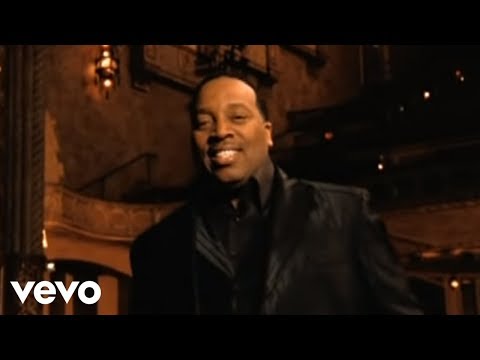
▸ Official upload. Now listen with the proof in mind.
Psalm 86 grounds “there is none like You” in what God has done. The song grounds it in what one person could not find.
Why it matters
A line about God being beyond compare is one of the largest sentences a song can ask a room to sing. Saying nobody is greater is a statement about everybody, and a statement that size needs something under it. Psalm 86 supplies two supports that any reader can go and check, God's recorded works and a promised response from every nation He made. A testimony supplies one support that nobody else can walk: the singer looked, and did not find. Both are true and neither is a defect, but they do different work. The first can be handed to someone who has not looked yet. The second can only be reported to them.
Is it safe to dwell on?
Sung on repeat, this song fixes your attention on God.
What repetition plants here is the conclusion, not the search. The verse is sung once and the chorus is sung many times, and the chorus is entirely about God, so the sentence that gets memorised is a true one and it is aimed outward. That is why the dwelling tag is God even though the song opens in the first person. The thing worth watching is subtler. Sung often enough, the song teaches not only that nobody is greater but also how you know it, and the how it teaches is that you looked and came up empty. On a week when your own looking has not turned up much, that ground can feel thin. Psalm 86 is the steadier footing for exactly those weeks, because its reasons sit outside the person praying, and David reached for them while he was in trouble rather than after it lifted. Sing the song and read the psalm with it, and the same sentence gains a floor.
Sources
- VaShawn Mitchell — Nobody Greater (official video) · (the recording checked for this proof; oEmbed returns VaShawnMitchellVEVO)
- Cross Rhythms — VaShawn Mitchell: The Stellar Award winning gospel worship man · (Mitchell's own account: Darius Paulk wrote the song, Mitchell asked permission to record it, and Mitchell's stated intent for the arrangement)
- GOSPELflava — 27th Annual Stellar Awards results, 2012 · (Darius Paulk credited as songwriter for “Nobody Greater” in the Song of the Year category; second, independent confirmation of the writer credit)
- Journal of Gospel Music — VaShawn Mitchell, Triumphant · (album on EMI Gospel, 2010, with “Nobody Greater” as its single)
- MultiTracks.com — Nobody Greater · (album Triumphant, original master is a live recording, and the section list: intro, verse, pre-chorus, chorus, bridge, instrumental, ending)
- Wikipedia — VaShawn Mitchell · (Triumphant released 2010; the single held the Billboard Gospel Songs chart top spot for nine weeks, was Billboard's most-played gospel single of 2011, was Grammy-nominated, and certified Gold in 2019)
- Wikipedia — Psalm 86 · (the “A Prayer of David” superscription, the psalm as the only Davidic psalm in Book Three, and the three-part structure with verses 8 to 13 as a hymn set inside the prayer)
- NewReleaseToday — lyric listing for Nobody Greater · (first of two independent transcriptions consulted for structure only: no verse cited, second-person address, the claim grounded in a search)
- WorshipTabs — Nobody Greater chord page · (second independent transcription, agreeing on the section order and on the search-then-conclusion shape)
Corrections
- The bottom line was ungrammatical and had been since 2026-08-25. A sweep retiring the word "claim" replaced "claims nothing" inside "claims nothing untrue about God", leaving "never says it is scripture untrue about God", which says nothing at all. It now reads "says nothing untrue about God", the sentence's original meaning. No finding changed.
Think we got something wrong? Tell us what and where, and we will check it against the text. Real errors get fixed here, dated, in public. Every correction on the site →
Where the text survives the song
 ✓ VERIFIED
“Psalm 11 (English Standard Version)”
The Corner Room (Adam Wright)
Sing it straight through. It is all seven verses of Psalm 11, in order, in a version the track title names. A reviewer says one verse comes back as a refrain, and it is the psalm's own verse.
✓ VERIFIED
“Psalm 11 (English Standard Version)”
The Corner Room (Adam Wright)
Sing it straight through. It is all seven verses of Psalm 11, in order, in a version the track title names. A reviewer says one verse comes back as a refrain, and it is the psalm's own verse.✓ All seven verses, in order. We set the printed sung text beside an ESV and compared it word by word: 131 words, all matching, nothing added and nothing dropped
⚠ The printed text under the video lists each line once. It is not a map of the song. A review of the album says verse 4 comes back as a refrain
 ✓ VERIFIED
“We Hope In You (Psalm 33:20-22 ESV)”
Seeds Kids Worship (Seeds Family Worship)
Sing it, and teach it. All three verses arrive whole, in the version Seeds names. Read verses 16 to 19 first, so a child knows what the waiting is for.
✓ VERIFIED
“We Hope In You (Psalm 33:20-22 ESV)”
Seeds Kids Worship (Seeds Family Worship)
Sing it, and teach it. All three verses arrive whole, in the version Seeds names. Read verses 16 to 19 first, so a child knows what the waiting is for.✓ All three verses, in order, in the ESV. Every repeated line is built from words the passage already supplied, and nothing is added between them.
✓ no cautions: this is the standard
 ✓ VERIFIED
“Psalm 4 (English Standard Version)”
The Corner Room (Adam Wright)
Sing it without a caveat. It is the whole of Psalm 4, in order, in a version named on the track itself, so what you repeat by singing it is the psalm.
✓ VERIFIED
“Psalm 4 (English Standard Version)”
The Corner Room (Adam Wright)
Sing it without a caveat. It is the whole of Psalm 4, in order, in a version named on the track itself, so what you repeat by singing it is the psalm.✓ All eight verses of Psalm 4, in order, with nothing added and nothing repeated that the psalm does not repeat
✓ no cautions: this is the standard
More songs like this
 NOT A QUOTE
“Never Would Have Made It”
Marvin Sapp
Sing it. It quotes no verse and never says it is scripture, and every rescue in it is credited to God. Psalm 30 has the same shape and then goes further, into a vow of thanks that does not go quiet.
NOT A QUOTE
“Never Would Have Made It”
Marvin Sapp
Sing it. It quotes no verse and never says it is scripture, and every rescue in it is credited to God. Psalm 30 has the same shape and then goes further, into a vow of thanks that does not go quiet.✓ Every act of rescue in the song belongs to God. The singer's survival is never credited to his own strength, which is exactly the grammar of Psalm 30:1-3
⚠ No scripture is cited anywhere. Psalm 30 is our comparison, not the song's source, and Sapp's own account points to a different psalm
 NOT A QUOTE
“You Deserve It”
JJ Hairston & Youthful Praise
Sing it. It names no verse and quotes none, and the thing it says, that the glory belongs to God, is what Psalm 96:7-8 tells the nations to say. The psalm's reasons sit two verses earlier.
NOT A QUOTE
“You Deserve It”
JJ Hairston & Youthful Praise
Sing it. It names no verse and quotes none, and the thing it says, that the glory belongs to God, is what Psalm 96:7-8 tells the nations to say. The psalm's reasons sit two verses earlier.✓ The act the song performs is the act Psalm 96:7-8 commands, ascribing glory to God rather than describing the singer's experience of it
⚠ No reason is given inside the song for why the deserving holds. Psalm 96 gives one in verses 4 and 5, and a singer who does not know it is carrying a verdict without the evidence
 NOT A QUOTE
“My Tribute (To God Be the Glory)”
Andraé Crouch & The Disciples
Sing it. It quotes nothing and never says it is scripture it does not deliver. Just know the refrain is not Psalm 115:1. The psalm refuses glory before it gives it, and the song only gives it.
NOT A QUOTE
“My Tribute (To God Be the Glory)”
Andraé Crouch & The Disciples
Sing it. It quotes nothing and never says it is scripture it does not deliver. Just know the refrain is not Psalm 115:1. The psalm refuses glory before it gives it, and the song only gives it.✓ The refrain sends the credit away from the singer and toward God, and it is the part of the song that gets repeated most, so it is what a congregation actually carries out of the room
⚠ Psalm 115:1 says "not to us" twice before it says "to Your name." A refrain built on the affirmative half alone leaves out the move that makes the verse what it is