Psalm 103:1-6 vs. “Praise to the Lord, the Almighty”
Sovereign Grace Music · checked 2026-08-02
What we checked
Graded against the standard
Quotation criteria not graded: this song never presents its words as scripture
Applies to every song the Name held holy · God shown holy · true of God · the standard
✓ What's good
- Every reason it gives the soul is a checkable statement about God that scripture supports: He reigns, sustains, provides, defends
- Keeps the psalm's whole form, not just its opening: soul summoned first, reasons listed, everything that breathes gathered at the end
- The second stanza's question sends the hearer to their own history, which is Psalm 103:2's do-not-forget made into an exercise
- The recording anchored here is about seven thousand voices and one piano, congregational singing with nothing added to it
- Authorship is documented end to end, Neander 1680 to Winkworth 1863, all of it public domain
⚠ Cautions
- Hymnal indexes file it under Psalm 103, but the hymn cites nothing. The link is a resemblance editors catalogued, not something the hymn's words say
- The hymn keeps the psalm's personal benefits and stops there. Psalm 103:6 turns to righteousness and justice for all the oppressed, and no stanza takes that turn
- The psalm's list is concrete, forgives, heals, redeems, crowns, satisfies. The hymn's reasons are true but broader, so the psalm's specifics still have to come from the psalm
- The English is Winkworth's 1863 rendering of a 1680 German text, four stanzas of his five. You are singing a translation of a hymn about the psalm, not a translation of the psalm
Verse Proof
Psalm 103:1-6The text in BSB (Berean Standard Bible)
“Bless the LORD, O my soul; all that is within me, bless His holy name. Bless the LORD, O my soul, and do not forget all His kind deeds— He who forgives all your iniquities and heals all your diseases, who redeems your life from the Pit and crowns you with loving devotion and compassion, who satisfies you with good things, so that your youth is renewed like the eagle’s. The LORD executes righteousness and justice for all the oppressed.”
A psalm of David, and for six verses God is never spoken to. The psalmist commands his own soul to bless the LORD, twice, then blocks the exit: do not forget all His kind deeds. Verses 3 to 5 are the list that makes forgetting impossible, all of it addressed to the soul about what God did for it: forgives, heals, redeems, crowns, satisfies. Then verse 6 turns outward. The same LORD who dealt kindly with one soul executes righteousness and justice for all the oppressed, and from there the psalm widens to Moses, Israel, and everything He has made. Self-address first, public record second. That is the psalm's shape.
What the song says, described not quoted
Four stanzas, every one opening with the same call to praise, and not one line of them addressed to God. The first stanza speaks to the singer's own soul, names God the singer's health and salvation, and invites everyone in earshot to join. The second says God reigns and shelters and sustains, then asks the hearer a direct question: look at your own history, have your needs not been met by what He ordained? The third says God prospers the singer's work and defends them, that goodness and mercy attend them daily, and tells the hearer to ponder what the Almighty can do. The last stanza gathers everything with life and breath, and everything within the singer, into adoration, and ends with the congregation's Amen. God is He and Him from the first line to the last. Every thee and thou in the hymn is aimed at the hearer.
Nothing shifted at the level of wording, because no wording is presented as scripture. What the hymn takes from Psalm 103:1-5 is the form: command your own soul to praise, then hand it the reasons. Hymnal editors index the first stanza under Psalm 103:1 and the last under Psalm 150:6, and both resemblances are real, the soul summoned at the start, everything that has breath summoned at the end. The reasons in between are the psalm's kind, God reigning, sustaining, providing, defending, though the hymn keeps them general where the psalm's list is specific. The words themselves have their own history. Joachim Neander wrote five German stanzas in 1680. Catherine Winkworth made the English in 1863, four stanzas, one of Neander's dropped, and scholars call her rendering generally faithful with real departures. What never changed across the chain is the address: in German and in English, the hymn preaches to the singer and never turns to God.
▸ Official upload. Now listen with the proof in mind.
Four stanzas of praise and not one of them speaks to God. Psalm 103 opens the same way, and that is the point.
Why it matters
Most worship songs written today speak to God as You. Sung next to them, a hymn that never addresses God can feel like it is missing something, four stanzas of praise with no prayer in them. Psalm 103 is the answer to that feeling. For its first six verses the psalm does not speak to God either. It speaks to the psalmist's own soul, and the blessing happens in the telling. The hymn is not a deficient prayer. It is a faithful copy of the psalm's actual register, and knowing that changes how you grade every soul-commanding song you meet.
Is it safe to dwell on?
Sung on repeat, this song fixes your attention on God.
What repetition plants here is an instruction with reasons attached. Loop a You-directed song and you rehearse speaking to God. Loop this one and you rehearse commanding yourself, which is a different skill and the one Psalm 103 models: the psalmist does not wait to feel praise, he orders it up and then reads his soul the evidence. The second stanza drills the same move as a question, sending you back over your own history for what God ordained and granted. That is verse 2's do-not-forget turned into a weekly habit. The centre of attention stays on God throughout, He is the subject of nearly every clause, so the song forms you toward Him even though it never speaks to Him. If you sing it often, read the psalm's own list once, forgives, heals, redeems, crowns, satisfies. The hymn teaches your soul the command. The psalm keeps the file of reasons.
Helpful comparison
Put this hymn next to 10,000 Reasons, checked elsewhere on this site against Psalm 103:1-5, and the distance between them is 331 years. Both open by commanding the soul. Both then list reasons. The form survives German, English, three centuries, and a change of genre, which is about the strongest evidence there is that the psalm's shape is load-bearing and not incidental. The difference is just as instructive. Redman's verses turn and speak to God directly, so the song alternates registers; Neander's hymn never turns, four stanzas, God always He, the second person always the hearer. The hymn is the purer specimen of the psalm's own register, and the countable fact that proves it is simple: in the whole sung text, the number of lines addressed to God is zero, and so is the number in Psalm 103:1-6.
Sources
- Sovereign Grace Music — Praise to the Lord, the Almighty, T4G Live II official lyric video · (the recording checked for this proof, on Sovereign Grace Music's own channel)
- Sovereign Grace Music — song page · (the four sung stanzas; credits Joachim Neander 1680, Catherine Winkworth 1863, Stralsund Gesangbuch 1665, public domain)
- Sovereign Grace Music — Together for the Gospel Live II · (released 1 November 2012; around seven thousand attendees singing with a single piano)
- Hymnary.org — Praise to the Lord, the Almighty · (Neander 1680, Winkworth 1863; hymnal scripture references tying stanza 1 to Psalm 103:1 and stanza 4 to Psalm 150:6; the tune LOBE DEN HERREN)
- Hymnology Archive — Praise to the Lord, the Almighty · (Neander's five German stanzas of 1680; the Stralsund 1665 tune source; Winkworth's four-stanza translation in The Chorale Book for England, one stanza omitted, judged generally faithful with departures)
- Wikipedia — Praise to the Lord, the Almighty · (John Julian's assessment of Neander's original; Bach's chorale cantata BWV 137 on the melody; the hymn's wider history)
Corrections
No corrections to this proof yet.
Think we got something wrong? Tell us what and where, and we will check it against the text. Real errors get fixed here, dated, in public. Every correction on the site →
Where the text survives the song
 ✓ VERIFIED
“Psalm 146 (English Standard Version)”
The Corner Room (Adam Wright)
Sing it without a caveat. It is the whole of Psalm 146, in order, in a named version. What you repeat by singing it is the psalm, warning about princes included.
✓ VERIFIED
“Psalm 146 (English Standard Version)”
The Corner Room (Adam Wright)
Sing it without a caveat. It is the whole of Psalm 146, in order, in a named version. What you repeat by singing it is the psalm, warning about princes included.✓ All ten verses of Psalm 146, in order, with nothing added and no invented chorus
✓ no cautions: this is the standard
 ✓ VERIFIED
“Psalm 15 (English Standard Version)”
The Corner Room (Adam Wright)
Sing it without a caveat. It is all five verses of Psalm 15, in order, in a named version, so what you repeat is the psalm itself.
✓ VERIFIED
“Psalm 15 (English Standard Version)”
The Corner Room (Adam Wright)
Sing it without a caveat. It is all five verses of Psalm 15, in order, in a named version, so what you repeat is the psalm itself.✓ All five verses of Psalm 15, in order, in a named version, with nothing added to the printed text
⚠ The embedded player's own YouTube title names no translation. The version is in the release track title, which is what Apple Music and Spotify show
 ✓ VERIFIED
“Psalm 11 (English Standard Version)”
The Corner Room (Adam Wright)
Sing it straight through. It is all seven verses of Psalm 11, in order, in a version the track title names. A reviewer says one verse comes back as a refrain, and it is the psalm's own verse.
✓ VERIFIED
“Psalm 11 (English Standard Version)”
The Corner Room (Adam Wright)
Sing it straight through. It is all seven verses of Psalm 11, in order, in a version the track title names. A reviewer says one verse comes back as a refrain, and it is the psalm's own verse.✓ All seven verses, in order. We set the printed sung text beside an ESV and compared it word by word: 131 words, all matching, nothing added and nothing dropped
⚠ The printed text under the video lists each line once. It is not a map of the song. A review of the album says verse 4 comes back as a refrain
More songs like this
 NOT A QUOTE
“All Creatures of Our God and King”
Sovereign Grace Music
Sing it. Nothing here is presented as scripture. Its resemblance to Psalm 148 comes from Draper's English, which turned Francis's praise of God for creation into a call addressed to creation.
NOT A QUOTE
“All Creatures of Our God and King”
Sovereign Grace Music
Sing it. Nothing here is presented as scripture. Its resemblance to Psalm 148 comes from Draper's English, which turned Francis's praise of God for creation into a call addressed to creation.✓ Says it is nothing but a song. No verse is cited on the recording, no translation is named, and the credit line points at the poem it came from rather than at a chapter of the Bible
⚠ The Psalm 148 resemblance belongs to the English. Francis's Italian praises God for the sun and moon and calls them brother and sister rather than ordering them to praise. A singer told this is Francis's Psalm 148 is being told two things, and only one of them is checkable
 NOT A QUOTE
“O Come, O Come, Emmanuel”
Sovereign Grace Music
Sing it. Nothing in it is offered as a quotation. It is a chain of Bible titles turned into prayers, and Isaiah 7:14 lends it a single word: the name.
NOT A QUOTE
“O Come, O Come, Emmanuel”
Sovereign Grace Music
Sing it. Nothing in it is offered as a quotation. It is a chain of Bible titles turned into prayers, and Isaiah 7:14 lends it a single word: the name.✓ Never says it is quoting at any point: no reference, no verse framing, nothing presented as scripture, and nothing that could be mistaken for a quoted sentence
⚠ The song gives no addresses. Every title in it comes from a specific verse, and you have to find all of them somewhere other than the song
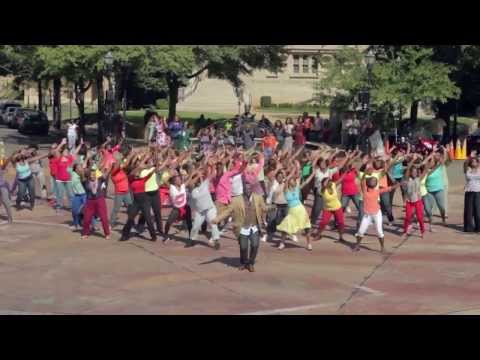 NOT A QUOTE
“Every Praise”
Hezekiah Walker
Sing it. It names no verse, and the few things it says about God are true ones. Its whole weight rests on one sentence, so it is worth knowing that sentence well.
NOT A QUOTE
“Every Praise”
Hezekiah Walker
Sing it. It names no verse, and the few things it says about God are true ones. Its whole weight rests on one sentence, so it is worth knowing that sentence well.✓ Never says it is quoting at any point: no verse cited, no scripture framing, nothing set up as the Bible's own words
⚠ No verse is cited, and the citations that do exist disagree. Worship Together lists Psalm 111:1-10, Lifeway Worship lists Psalm 86:12 and Psalm 150:6, and Walker pointed to Acts 17:28 in an interview. None is Psalm 66