Exodus 34:14 vs. “How He Loves”
John Mark McMillan · checked 2026-08-02
What we checked
Graded against the standard
Quotation criteria not graded: this song never presents its words as scripture
Applies to every song the Name held holy · God shown holy · true of God · the standard
✓ What's good
- The opening word is the text's own. Exodus 34:14 gives Jealous as God's name, and the publisher's own scripture list for this song points to Joel 2:18, "Then the LORD became jealous for His land"
- Never says it is quoting, anywhere: no chapter or verse cited, no translation named, nothing framed as the words of scripture
- Across the song the grammatical subject is mostly God, and the chorus, which is the part sung most often, is entirely about what He does
- The imagery is presented as imagery and nothing more. Weather, a tree, an ocean. None of it is offered as something the Bible says
- The writer has publicly explained, in his own words and under his own name, what the disputed image was meant to picture, so a worship leader weighing it is not guessing
⚠ Cautions
- The jealousy in Exodus 34:14 has an object, and the object is undivided worship. The verse sits inside instructions to tear down rival altars and make no treaty with the land's inhabitants. The song's jealousy has a person as its object
- The verse is spoken to a nation at covenant renewal, not long after that nation made a calf. Sung as a private reassurance, the word drops the warning it was given inside
- No reference is cited anywhere in the song, so a singer who does not know Exodus 34 will hear "jealous" as the songwriter's invention rather than as God's name
- The most-sung version is not the version McMillan recorded. One word inside the best-known image was changed for the 2009 David Crowder Band cover, with his permission and alongside his public objection to the pressure behind the request. Which words a congregation sings depends on which chart the church bought
Verse Proof
Exodus 34:14The text in BSB (Berean Standard Bible)
“For you must not worship any other god, for the LORD, whose name is Jealous, is a jealous God.”
God is speaking to Moses on Mount Sinai at the covenant renewal, after Israel made the golden calf and Moses broke the first tablets. Moses has cut two new stones and carried them up. Earlier in this same chapter the LORD passes in front of him and proclaims His own name aloud: "The LORD, the LORD God, is compassionate and gracious, slow to anger, abounding in loving devotion and faithfulness." Verses 10 to 17 are the terms that follow that proclamation. Israel is going into a land already full of altars, sacred stones and Asherah poles, and the instruction is to tear them down, make no treaty with the people living there, and take none of their daughters as brides for Israel's sons. Verse 14 gives the reason for the whole paragraph. What it gives is not an adjective a narrator picked. It is a name, stated the way the names in verse 6 are stated, and it is stated inside a command about worship.
What the song says, described not quoted
Two verses and a chorus that returns many times. The first verse opens by asserting that God is jealous, and it aims that jealousy at the singer personally. What follows is weather. A wind strong enough to bend a tree, and the tree bending under it rather than breaking. From there the verse turns to the singer's own reaction, described in bodily terms, and to a decision not to keep going over past failures. A second image measures grace as an ocean deep enough that everyone in it goes under. There is one simile in which heaven and earth converge, and it is the line the song is best known for. The chorus is a repeated statement about how He loves, in the third person, and the title comes from it.
The address moves as the song goes. The chorus speaks about God to whoever is singing along. Parts of the verse material turn and speak to God directly as "You," about His affections. Nothing anywhere is framed as a quotation, no chapter or verse is cited, no translation is named, and the song never offers itself as the words of scripture.
One word carries over from Exodus 34:14, and the song puts it in a different grammatical direction than the verse does. In the text the jealousy is absolute. "The LORD, whose name is Jealous, is a jealous God." No preposition, no object. The object comes from the paragraph around it, and the paragraph is about rival altars and a nation's exclusive worship. The song adds a preposition and a person: jealous for the singer. That construction does exist in scripture, and it is worth naming the verse that has it. Joel 2:18 in the BSB reads, "Then the LORD became jealous for His land, and He spared His people." Jealous, with a preposition and an object. This is not a guess about where the line came from. Integrity Music holds the copyright, and its own song page lists the scripture behind the song. Joel 2:18 is the first reference on that list. Exodus 34:14 is not on it at all. So the rights holder's own citation for the jealousy is Joel, and this proof was written against Exodus 34:14 because that is the verse where the word is given as a name rather than as an event. Two shifts, then. The object moves. Joel's jealousy is for a land and a people, and Exodus 34's is over a nation's undivided worship. The song's is for one person. And the function moves. In Exodus 34:14 the jealousy is the reason for a prohibition, and it arrives with instructions to smash altars. In the song it is the reason for an affection.
▸ Official upload. Now listen with the proof in mind.
Exodus 34 proclaims God's name twice: abounding in loving devotion, and Jealous. The song's first line borrows the second one.
Why it matters
The song's first word about God is the one most likely to stop a listener, and it is the one that needs the least defending. Exodus 34:14 does not describe God as jealous in passing. It hands the word over as a name, in the same chapter where He proclaims Himself abounding in loving devotion and faithfulness. A singer who hears the opening line as the songwriter's own daring loses the chapter that makes it safe to sing. A singer who reads the chapter finds the word set inside a command about worship rather than inside a sentiment about being wanted.
Is it safe to dwell on?
Sung on repeat, this song fixes your attention on God.
The repetition in this song lives in the chorus, and the chorus is about God. It is a third-person statement, which means the thing a singer rehearses dozens of times is not a statement about themselves but a report about Him, said out loud in a room full of other people. That is a particular kind of formation. It is nearer to testimony than to prayer, and it is why the dwelling tag here is God rather than mixed, even though the verses spend real time on the singer's own reaction.
The verses are also where the address turns, from talking about God to talking to Him. Sung enough, the song trains a person to move across that seam without noticing it, which is something a good many psalms do on purpose.
What the song will not plant on its own is the object of the jealousy. Exodus 34:14 is a sentence about worship, and the paragraph holding it is about altars. Sing the song and read the chapter, and the opening word stops being flattering and starts being a claim on you.
Helpful comparison
One image in this song exists in two versions, and the difference is documented by the writer himself. For the David Crowder Band's 2009 cover on *Church Music*, a single word inside the song's best-known simile was replaced. McMillan wrote about it on his own blog on 14 September 2009. He says the change was made with his permission, that Crowder asked him sincerely, and that he agreed partly because the cover would reach people his own recording never would. He also says he objected, and not to Crowder. He applauds the change and in the same breath boos "the machinery that would cause him to have to do so."
In that post, and again in a 2010 Biola Magazine interview, he says what the image was for: the kingdom of heaven and the kingdom of earth converging, in a way that is beautiful and awkwardly messy, the way birth and crucifixion are messy. He says the intimate reading people worried about was not the one he wrote.
That combination is unusual and it is why this is worth writing down. Hymn texts get altered constantly, and normally the altered line is all that survives, because the author died two centuries ago and left no note about what the original meant. Here the author was alive, was asked, said yes, and then published what he meant and what he thought of the request. The question a worship leader most wants answered about a contested lyric, what the writer actually intended, is usually unanswerable. On this song it has a dated, first-person answer, and checking it takes about two minutes.
Sources
- John Mark McMillan — "How He Loves", Live Performance Video · (the recording checked for this proof; oEmbed author_name "John Mark McMillan", channel @johnmarkofficial)
- John Mark McMillan — "How He Loves, David Crowder, and Sloppy Wet Kisses…", 14 September 2009 · (the writer's own account: he gave permission for the changed word, why he agreed, his objection to the pressure behind the request, and what the image was meant to picture)
- Biola Magazine — "Worship, Creativity and a 'Sloppy Wet Kiss'", 30 September 2010 · (McMillan interviewed on the two objections raised to the line and on what he says he did and did not intend by it)
- Integrity Music — How He Loves · (the rights holder's own song page: writer credit, CCLI 5032549, and the scripture list behind the song, headed by Joel 2:18 and not including Exodus 34:14)
- PraiseCharts — How He Loves, chord chart listing · (writer John Mark McMillan; copyright line "© 2005 Integrity's Hosanna Music (Admin. by Capitol CMG Publishing)"; CCLI 5032549)
- Word to Worship — How He Loves · (independent confirmation of the same writer, 2005 date, copyright line and CCLI number)
- Cross Rhythms — "John Mark McMillan: The 'How He Loves' man back with the Borderland album", Tony Cummings, 30 April 2014 · (McMillan's own account of writing the song after Stephen Coffey's death, and of churches not singing it for years)
- The Elijah List, 2 November 2002 — update from Robin McMillan, MorningStar Fellowship · (contemporaneous report of the 1 November 2002 multi-car accident and Steve Coffey's death, the event behind the song)
- Wikipedia — How He Loves · (original album *The Song Inside the Sounds of Breaking Down*, released 28 November 2005, and the David Crowder Band cover)
- Wikipedia — Church Music (album) · (the David Crowder Band album carrying the cover: 22 September 2009, sixstepsrecords/Sparrow, track 10)
- Revealing Scripture in Worship — Scripture in "How He Loves", 28 March 2016 · (an independent reader mapping the song's opening line to Exodus 34:14, and noting the song itself cites nothing)
- The Berean Test — Is "How He Loves" biblical? · (cited here only for two checkable observations: the same Exodus 34:14 association for the opening line, and the song's shift between speaking about God and speaking to Him)
Corrections
No corrections to this proof yet.
Think we got something wrong? Tell us what and where, and we will check it against the text. Real errors get fixed here, dated, in public. Every correction on the site →
Where the text survives the song
 ✓ VERIFIED
“Mark 10”
Streetlights
Play it freely. This is Mark 10 itself, read word for word in a named translation. The line about all things being possible arrives as the answer to a question about being saved.
✓ VERIFIED
“Mark 10”
Streetlights
Play it freely. This is Mark 10 itself, read word for word in a named translation. The line about all things being possible arrives as the answer to a question about being saved.✓ The whole chapter, in order, so verse 27 arrives after the rich man’s scene and after the disciples ask who can be saved, instead of standing on its own
⚠ “Word-for-word” here describes the reading, not the translation theory. Streetlights uses it for what is read. Tyndale uses the same phrase for a different thing
 ✓ VERIFIED
“Proverbs 4”
Streetlights
Play it freely. This is Proverbs 4 itself, read word for word in a named translation. “Guard your heart” arrives with the commands about the mouth, the eyes and the feet still attached.
✓ VERIFIED
“Proverbs 4”
Streetlights
Play it freely. This is Proverbs 4 itself, read word for word in a named translation. “Guard your heart” arrives with the commands about the mouth, the eyes and the feet still attached.✓ The whole chapter, in order, so “guard your heart” arrives with the commands about the mouth, the eyes and the feet, instead of standing alone as advice
⚠ “Word-for-word” here describes the reading, not the translation theory. Streetlights uses it for what is read. Tyndale uses the same phrase for a different thing
 ✓ VERIFIED
“Psalm 11 (English Standard Version)”
The Corner Room (Adam Wright)
Sing it straight through. It is all seven verses of Psalm 11, in order, in a version the track title names. A reviewer says one verse comes back as a refrain, and it is the psalm's own verse.
✓ VERIFIED
“Psalm 11 (English Standard Version)”
The Corner Room (Adam Wright)
Sing it straight through. It is all seven verses of Psalm 11, in order, in a version the track title names. A reviewer says one verse comes back as a refrain, and it is the psalm's own verse.✓ All seven verses, in order. We set the printed sung text beside an ESV and compared it word by word: 131 words, all matching, nothing added and nothing dropped
⚠ The printed text under the video lists each line once. It is not a map of the song. A review of the album says verse 4 comes back as a refrain
More songs like this
 NOT A QUOTE
“El Shaddai”
Amy Grant
Sing it. Nothing in it is offered as a quotation. Learn what the Hebrew names mean before you sing them, and know that one sung phrase is an altered form of Psalm 18:1.
NOT A QUOTE
“El Shaddai”
Amy Grant
Sing it. Nothing in it is offered as a quotation. Learn what the Hebrew names mean before you sing them, and know that one sung phrase is an altered form of Psalm 18:1.✓ The Hebrew titles are real Old Testament names for God, used as address and praise. God Almighty stands in Genesis 17:1 and Exodus 6:3. God Most High stands in Genesis 14
⚠ One sung Hebrew phrase is an adapted spelling. An Old Testament professor shows it does not match the Hebrew of Psalm 18:1, which is the verse behind it
 NOT A QUOTE
“Guide Me, O Thou Great Jehovah”
Jehovah Shalom Acapella
Sing it. It never says it is quoting scripture, and the pillar it borrows is used for what Exodus says the pillar was for. Just know you are praying Israel's story forward, not reciting it.
NOT A QUOTE
“Guide Me, O Thou Great Jehovah”
Jehovah Shalom Acapella
Sing it. It never says it is quoting scripture, and the pillar it borrows is used for what Exodus says the pillar was for. Just know you are praying Israel's story forward, not reciting it.✓ Never says it is quoting at any point: no verse reference in the text, and the official upload's description names only the Welsh author and cites no scripture
⚠ Nothing is cited, so the exodus arrives here as atmosphere. The pillar in Exodus 13 was given to one nation on one road, and treating it as a personal promise of visible direction is the hymn's application, not the chapter's statement
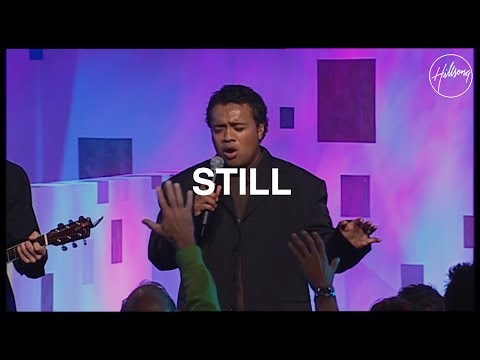 NOT A QUOTE
“Still”
Hillsong Worship
Sing it as a vow of trust, not as a quotation. It names no verse and misstates none. Its stillness is the kind Moses asked of Israel at the sea: stop panicking, God does the delivering.
NOT A QUOTE
“Still”
Hillsong Worship
Sing it as a vow of trust, not as a quotation. It names no verse and misstates none. Its stillness is the kind Moses asked of Israel at the sea: stop panicking, God does the delivering.✓ The resolve the chorus plants is a posture scripture actually commands: stillness in danger while the LORD does the delivering, which is Israel's whole assignment in Exodus 14:13-14
⚠ Nothing is cited, so the be-still line will settle into memory as the singer's sentence. In Psalm 46:10 it is God's, and He finishes it with His exaltation among the nations. Read the verse so the vow keeps the command behind it