Ephesians 2:4-6 vs. “Death Was Arrested”
North Point Worship · checked 2026-08-01
What we checked
Graded against the standard
Quotation criteria not graded: this song never presents its words as scripture
Applies to every song the Name held holy · God shown holy · true of God · the standard
✓ What's good
- Never says it is quoting, anywhere: no verse reference, no scripture framing, nothing presented as the Bible's own words
- Keeps the order Ephesians 2 gives. Dead first, then made alive, and on the ground of mercy rather than anything the singer brings
- God is the actor in nearly every clause where something changes. The singer's verbs are almost all things done to them
- The cancelled-debt line has a text under it. Colossians 2:14 says the debt that stood against us was cancelled and nailed to the cross
- The fourth verse puts the cross and the resurrection into the song, so the freedom the bridge celebrates has a stated cause rather than a mood
⚠ Cautions
- The title phrase is not in scripture. By the group's own account it came from a tombstone inscription, and a listener who assumes it is a verse will not find it
- Ephesians 2:4-6 is plural throughout. In the song, singular first-person forms outnumber plural ones by roughly nineteen to seven, and the line that closes every verse is singular
- The passage's third move, being seated with Christ in the heavenly realms, is not in the song. The song ends at freedom and new life, one step short of where the sentence goes
Verse Proof
Ephesians 2:4-6The text in BSB (Berean Standard Bible)
“But because of His great love for us, God, who is rich in mercy, made us alive with Christ even when we were dead in our trespasses. It is by grace you have been saved! And God raised us up with Christ and seated us with Him in the heavenly realms in Christ Jesus,”
Paul, writing to the church at Ephesus. Chapter 2 opens by telling the readers they were dead in trespasses and sins and lived like everyone else (2:1-3), and then verse 4 turns the whole paragraph on one conjunction: but, because of God's love. Verses 4 through 6 are a single sentence in which God is the subject of every action. He makes alive, He raises, He seats. The readers do nothing in it but receive. And the sentence is plural at every turn: His love for us, made us alive, we were dead, our trespasses, raised us up, seated us. The chapter goes on to say what that plural is for, addressing Gentile readers who were once far off and have been brought near through the blood of Christ (2:11-13), which is the argument the rest of the chapter builds out.
What the song says, described not quoted
The song runs one movement four times over: the singer's condition before God acts, then God's love as the cause of the change, then the change itself. Every verse and the closing tag land on the title line.
What varies between the four passes is the vocabulary the movement is described in. One verse works in images of reversal. One works in the language of law and debt, with imprisonment, ransom and a cancelled account. One leaves the singer's side of it entirely and narrates the crucifixion and the resurrection as events. The chorus speaks to God directly and credits the change to Him, and its second half restates the same thing in the plural. The bridge is a congregation declaring itself free and calling others to sing.
No verse is cited anywhere, no reference is given, and nothing in the song is framed as scripture.
The song's spine matches Ephesians 2's. Dead first, then made alive, and by God's mercy rather than by anything the singer brought. That much is not borrowed vocabulary; it is the same order of events. Two things in the song are not from the passage, and both are worth naming plainly. The first is the title. The account of where it came from is Seth Condrey's, the group's worship leader, who is not one of the four credited writers. In an interview reproduced by Cross Rhythms, Condrey said the group's drummer, Brandon Coker, who is one of the four writers, came across a tombstone in a south Georgia cemetery reading "death arrested his progress," kept the phrase for a few years, and later wrote a resurrection song with other worship leaders from the church at a camp. Scripture has its own images for what the resurrection did to death, including "Death has been swallowed up in victory" in 1 Corinthians 15:54 (BSB). The arrest image is not one of them. It is the songwriters' own, and its source is a grave marker. The second is grammatical number. The passage does not contain a first-person singular pronoun. The song's refrain, the line that closes all four verses and the tag, is in the first person singular.
▸ Official upload. Now listen with the proof in mind.
The hook came off a tombstone, not out of a concordance. Nothing wrong with that, as long as you know which is which.
Why it matters
This song is certified RIAA Gold, Cross Rhythms reported it being sung in thousands of churches, and Worship Together lists Easter among its themes. Its hook is a phrase that appears nowhere in scripture. That is not a fault. It is worth stating because the phrase is doing real theological work: it names what the resurrection did to death, in an image the Bible does not use.
A singer who assumes every memorable line in a worship song came from somewhere in the text will go looking for this one and come back empty. The habit that prevents that is small and cheap. Know which lines are the writers' own. It is the difference between singing a good poem and repeating it to someone as though it were a verse.
Is it safe to dwell on?
Sung on repeat, this song moves between God and the singer.
What repetition plants here is a sentence about the singer's own turning point, because the line that closes all four verses and the tag is in the first person. That is a true thing to plant, and a good one. It is also worth knowing what it leaves out.
Ephesians 2 puts the same event in the plural, and the chapter's argument runs toward a company of people who were far off and were brought near together. The song does reach for that, and reaches for it deliberately: the chorus starts singular and turns plural halfway through, the fourth verse is plural, and the bridge is a whole room declaring itself free. That is why the dwelling tag here is mixed rather than self. Sung alone in a car, this song will mostly rehearse a personal rescue. Sung in a room, the plural lines are the ones that land, and the song is built so those arrive last. If you loop it, notice which half you are in.
Helpful comparison
The pronoun count is the actual finding here, so it should be countable rather than asserted. Taking the lyric as published and reading it once through, first-person singular forms (I, me, my) appear about nineteen times: three in the first verse, four in the second, two in the chorus, six in the third, one each in the fourth verse and the bridge, and two more in the closing tag. First-person plural forms (we, us, our) appear about seven times, and they are not spread evenly through the song. They arrive in the second half of the chorus, in the fourth verse, and in the bridge.
Ephesians 2:4-6 has no singular in it at all. Nothing in the song contradicts the passage on this. The difference is who the sentence happened to. The song's most-repeated line reports a rescue that happened to one person, and the passage reports the same rescue as something that happened to a people, which is the point the rest of the chapter spends its length proving.
Sources
- Cross Rhythms — North Point InsideOut interview, Tony Cummings, 12 September 2019 · (reproduces worship leader Seth Condrey's account, given to the Hallels website, that the group's drummer Brandon Coker found a south Georgia tombstone reading "death arrested his progress", kept the phrase, and later wrote the song with other church worship leaders at a camp; also reports the song "being sung in thousands, if not tens of thousands, of churches")
- Worship Together — Death Was Arrested song page · (writer credits: Brandon Coker, Heath Balltzglier, Paul Taylor Smith, Adam Kersh; CCLI 7046448; themes include Easter; the page's own Scripture Reference field lists Galatians 5, John 8:34 and Romans 3:24, not Ephesians 2)
- Wikipedia — North Point Worship · (the group is from North Point Community Church, Alpharetta, Georgia, formerly billed as North Point InsideOut; "Death Was Arrested" released as a 2015 single featuring Seth Condrey, RIAA Gold, No. 12 Hot Christian Songs, listed in the singles table against the album Nothing Ordinary (EP); that EP was released 7 April 2017)
- North Point InsideOut ft. Seth Condrey — Death Was Arrested (Live) · (the recording checked for this proof; oEmbed reports the channel as NorthPointWrshpVEVO)
- WorshipChords — Death Was Arrested · (the published lyric with section labels, used for the pronoun count)
- Biblical Worship (Medium) — Carly Hall, 19 September 2022 · (an independent line-by-line write-up that reads the song against Ephesians 2:1-8, alongside Romans 5:15 and 2 Corinthians 5:17, and notes the title phrase is left unexplained)
Corrections
- This entry credited the tombstone story to Brandon Coker himself ("Brandon Coker, North Point's drummer and one of the four writers, has said..."). The cited Cross Rhythms interview does not put the account in Coker's mouth. It reproduces worship leader Seth Condrey saying that Coker, the group's drummer, found the tombstone. Condrey is not one of the four credited writers. The entry now names Condrey as the source of the account, and the verdict and cautions say "the group's own account" where they said "the writers' own account."
- The Worship Together citation was annotated as the source for the album title. That page carries no album field. The album now rests on the Wikipedia singles table, which lists the 2015 single against Nothing Ordinary (EP). The Worship Together annotation now records what the page does carry, including its Scripture Reference field.
- "Why it matters" said "its publisher files it under Easter". The Easter categorisation comes from the Worship Together song page, and that site describes itself as "a song discovery and resource platform for worship leaders", not as a publisher. No source cited here establishes who the song's publisher is. The sentence now says only what that page shows, which is that Worship Together lists Easter among the song's themes.
- The same sentence previously read that the song "became a standard Easter and response song in a lot of congregations". Nothing cited here supported that description of congregational practice, and the "response song" characterisation was dropped rather than sourced. It was replaced with the RIAA Gold certification and the Cross Rhythms report of the song being sung in thousands of churches. The withdrawal is logged here rather than left silent.
Think we got something wrong? Tell us what and where, and we will check it against the text. Real errors get fixed here, dated, in public. Every correction on the site →
Where the text survives the song
 ✓ VERIFIED
“Far More Abundantly (Ephesians 3:20-21)”
Seeds Kids Worship (Seeds Family Worship)
Sing it. It is Ephesians 3:20-21 whole, in the ESV, and the publisher's free chord chart names the version and its text edition. The words can be checked against the exact text.
✓ VERIFIED
“Far More Abundantly (Ephesians 3:20-21)”
Seeds Kids Worship (Seeds Family Worship)
Sing it. It is Ephesians 3:20-21 whole, in the ESV, and the publisher's free chord chart names the version and its text edition. The words can be checked against the exact text.✓ Both verses whole and in order, in the ESV's wording. Every repeated line is the passage's own words coming round again
⚠ The YouTube upload names the reference but not the version. The ESV credit sits on the chord chart, the album page and the song list, so a viewer has to go looking
 ✓ VERIFIED
“Ephesians 6”
Streetlights
Play it freely. It is Ephesians itself, read word for word in a named translation, so the armor passage arrives where Paul put it, at the end, after everything he said first.
✓ VERIFIED
“Ephesians 6”
Streetlights
Play it freely. It is Ephesians itself, read word for word in a named translation, so the armor passage arrives where Paul put it, at the end, after everything he said first.✓ The whole book, in order, so verses 10 to 13 arrive after the household instructions of 6:1-9 rather than as a passage on their own
✓ no cautions: this is the standard
 ~ FAITHFUL
“Be Kind and Compassionate”
Slugs & Bugs (Randall Goodgame)
Sing it, and teach it to your children. It is Ephesians 4:32 whole, its reason included, in the current NIV's wording. No translation is named anywhere, so check the words against an NIV once.
~ FAITHFUL
“Be Kind and Compassionate”
Slugs & Bugs (Randall Goodgame)
Sing it, and teach it to your children. It is Ephesians 4:32 whole, its reason included, in the current NIV's wording. No translation is named anywhere, so check the words against an NIV once.✓ The verse survives whole, and so does the clause that gives the command its reason. A child learns the kindness and the ground for it in a single breath
⚠ No translation is named on the album page, the audio collection page, or the official video's description. The NIV wording has to be recognised rather than checked
More songs like this
 NOT A QUOTE
“O Church, Arise”
Keith Getty & Stuart Townend
Sing it. It quotes nothing and never says it is scripture, and it gets the hardest part right: the enemy is the devil's lies, never people. Bring Ephesians 6 with it, because the hymn names a sword and never names the word.
NOT A QUOTE
“O Church, Arise”
Keith Getty & Stuart Townend
Sing it. It quotes nothing and never says it is scripture, and it gets the hardest part right: the enemy is the devil's lies, never people. Bring Ephesians 6 with it, because the hymn names a sword and never names the word.✓ The one thing a battle hymn most easily gets wrong, this one gets right. No human being, group, or institution is named as the enemy anywhere in the four stanzas. The named opponent is the devil, which is where Paul puts it in verse 12
⚠ The armour is partial. Three of Paul's six items appear, the belt of truth, the shield of faith, and a sword. The breastplate of righteousness, the feet fitted with the readiness of the gospel of peace, and the helmet of salvation are not in the hymn
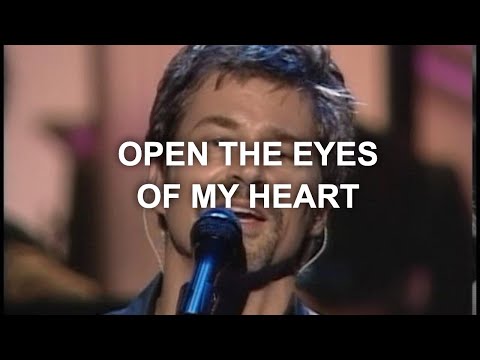 NOT A QUOTE
“Open the Eyes of My Heart”
Paul Baloche
Sing it as a prayer. Nothing here is offered as a verse. It asks for the same opened eyes Ephesians 1:18 asks for, and asks them for something else. Read the rest of the sentence.
NOT A QUOTE
“Open the Eyes of My Heart”
Paul Baloche
Sing it as a prayer. Nothing here is offered as a verse. It asks for the same opened eyes Ephesians 1:18 asks for, and asks them for something else. Read the rest of the sentence.✓ Never says it is quoting, anywhere: no reference, no translation, nothing framed as scripture, in the recording, in the label's descriptions, or on the publisher's chart pages
⚠ The verse's purpose clause is not in the song. Paul asks for opened eyes so that three named things may be known, and none of the six key words from that list appears anywhere in the lyric
 NOT A QUOTE
“Cornerstone”
Hillsong Worship
Sing it. Nothing here is offered as scripture. Just know that what the song quotes is a hymn, and that Ephesians' cornerstone holds up a building made of people rather than one person's house.
NOT A QUOTE
“Cornerstone”
Hillsong Worship
Sing it. Nothing here is offered as scripture. Just know that what the song quotes is a hymn, and that Ephesians' cornerstone holds up a building made of people rather than one person's house.✓ Never says it is quoting, anywhere: no verse cited, no scripture framing, nothing presented as the Bible's words
⚠ The title word is Ephesians' word, but the rock imagery underneath it descends from Matthew 7's parable, where the picture is one man's house. Two different buildings share one song