1 Peter 1:3-5 vs. “Living Hope”
Phil Wickham · checked 2026-07-25
What we checked
Graded against the standard
Quotation criteria not graded: this song never presents its words as scripture
Applies to every song the Name held holy · God shown holy · true of God · the standard
✓ What's good
- Uses "living hope" in the sense 1 Peter 1:3 gives it, grounded in the resurrection rather than in the singer's feelings
- Never says it is quoting: no reference, no verse framing
- Follows Peter's own order, mercy and cross and empty grave before the singer's standing, so the reason arrives before the conclusion
- Sung to and about Christ, with the singer present mainly as a recipient
⚠ Cautions
- No reference is given, so a listener may not know the title is a phrase from a specific verse
- Verses 4 and 5 point forward, to an inheritance kept in heaven and a salvation still to be revealed. The song's horizon stays largely in the present
- "Living hope" travels easily as general optimism once detached from the resurrection clause that earns it
Verse Proof
1 Peter 1:3-5The text in BSB (Berean Standard Bible)
“Blessed be the God and Father of our Lord Jesus Christ! By His great mercy He has given us new birth into a living hope through the resurrection of Jesus Christ from the dead, and into an inheritance that is imperishable, undefiled, and unfading, reserved in heaven for you, who through faith are shielded by God’s power for the salvation that is ready to be revealed in the last time.”
Peter, writing to scattered believers under pressure. The letter opens with a burst of praise, and the phrase "living hope" sits inside it as a technical claim rather than a mood: the hope is living because the resurrection happened, and it leads to an inheritance kept somewhere the reader is not. Everything in the sentence hangs off an event in the past and a possession in the future.
What the song says, described not quoted
The song tells the story in sequence: the singer's guilt and distance, the coming of Christ, the cross, the grave, and then the stone rolled away and death defeated. The chorus names Jesus as the singer's living hope, and the later lines turn to what that means now, that the singer's sin is gone and their name is written in heaven. No verse is cited anywhere.
The borrowed material is a two-word phrase, "living hope," and the song uses it the way Peter does: as a name for Jesus-based hope grounded in the resurrection, not as a description of how the singer feels. The song's structure even follows Peter's logic without quoting it, moving from mercy to the cross to the empty grave and only then to the singer's standing.
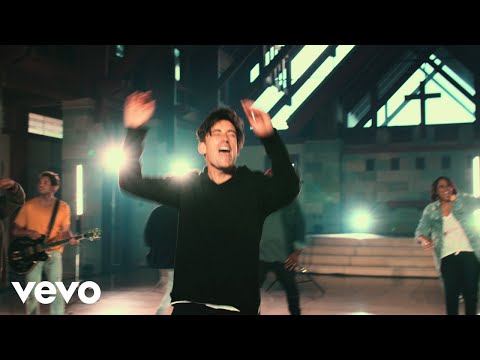
▸ Official upload. Now listen with the proof in mind.
Peter is not saying the hope feels alive. He is saying it has a pulse because a dead man does not.
Why it matters
"Living hope" is one of those phrases that sounds like general encouragement and is actually an argument. Peter is not saying the hope feels alive. He is saying it has a pulse because a dead man does not: the resurrection is the reason the noun gets that adjective. A song that keeps the causal link is doing the phrase justice.
This one keeps it, and the order is the evidence. The chorus does not arrive until after the verses have walked through the cross and the empty grave. That sequencing is not an accident of songwriting; it is the same move Peter makes in a single sentence, and it means a singer who learns the song learns the reason along with the phrase.
Is it safe to dwell on?
Sung on repeat, this song fixes your attention on God.
What repetition plants here is a name for Jesus rather than a mood, which is the healthier of the two options a song like this could take. The chorus keeps returning to a person, and the verses keep the reason attached. Sung on a loop, it rehearses the sequence: He came, He died, He rose, therefore hope. That is a good order to have automatic, because it is the order that holds up on a day when hope does not feel alive at all. If you want the passage's full reach, read verses 4 and 5 alongside it, so the hope you are rehearsing has a destination as well as a cause.
Helpful comparison
What the song does not carry is the part of Peter's sentence about the inheritance being kept in heaven for a people who are being shielded for a salvation still to be revealed. Peter's hope points forward as hard as it points back. The song's horizon is mostly the singer's present standing, sin gone, name written down, which is true and is in the passage's neighbourhood, but the future weight of verses 4 and 5 is not in the room. That is a fair thing for a four-minute song to leave out and a good reason to read to the end of the paragraph.
Sources
- Wikipedia — Living Hope (Phil Wickham song) · (written by Phil Wickham and Brian Johnson; released 2018 as the title track of *Living Hope*)
- Phil Wickham — Living Hope, official music video · (the recording checked for this proof)
- The Berean Test — Living Hope · (line-by-line comparison with the passages the song draws on)
Corrections
No corrections to this proof yet.
Think we got something wrong? Tell us what and where, and we will check it against the text. Real errors get fixed here, dated, in public. Every correction on the site →
Where the text survives the song
 ✓ VERIFIED
“Psalm 53 (English Standard Version)”
The Corner Room (Adam Wright)
Yes, you can sing it. All six verses of Psalm 53 are here, in order, from a version the release names. The words you repeat are the psalm's own.
✓ VERIFIED
“Psalm 53 (English Standard Version)”
The Corner Room (Adam Wright)
Yes, you can sing it. All six verses of Psalm 53 are here, in order, from a version the release names. The words you repeat are the psalm's own.✓ The printed sung text carries all six verses of Psalm 53, in order, and every one of its 142 words matches an ESV of the psalm
⚠ The printed text is not a transcript. A review of the album calls the psalm's opening line the song's refrain. We did not listen through to count repeats, so that rests on the review
 ✓ VERIFIED
“The Victory (1 John 5:4-5 ESV)”
Seeds Kids Worship (Seeds Family Worship)
Sing it. It is 1 John 5:4-5 word for word in the ESV, with nothing added, and the chord chart names the version, so anyone can check it.
✓ VERIFIED
“The Victory (1 John 5:4-5 ESV)”
Seeds Kids Worship (Seeds Family Worship)
Sing it. It is 1 John 5:4-5 word for word in the ESV, with nothing added, and the chord chart names the version, so anyone can check it.✓ Both verses whole and in order. Counted in the ESV, all forty-two words are there, none skipped, and the chart carries nothing from outside the passage
✓ no cautions: this is the standard
 ✓ VERIFIED
“Psalm 23”
The Corner Room (Adam Wright)
Sing it without a caveat. It is the whole psalm, in order, in a named translation, so what you memorize by repeating it is the text itself.
✓ VERIFIED
“Psalm 23”
The Corner Room (Adam Wright)
Sing it without a caveat. It is the whole psalm, in order, in a named translation, so what you memorize by repeating it is the text itself.✓ Every word of the psalm, in order: nothing added, dropped, or reordered
✓ no cautions: this is the standard
More songs like this
 NOT A QUOTE
“This Is Our God”
Phil Wickham
Sing it. It is a declaration, not a quotation, and the review that recommends against it still says the song teaches nothing false. Worth knowing first: the title sentence stands in Isaiah 25:9, on a day still ahead.
NOT A QUOTE
“This Is Our God”
Phil Wickham
Sing it. It is a declaration, not a quotation, and the review that recommends against it still says the song teaches nothing false. Worth knowing first: the title sentence stands in Isaiah 25:9, on a day still ahead.✓ The title sentence has a real home in scripture. Isaiah 25:9 carries those four words, and the rescue it celebrates is the same rescue the song sings about
⚠ The song is not written as a citation, so it does not hand you the verse behind its title
 NOT A QUOTE
“House of the Lord”
Phil Wickham
Sing it. Nothing here is quoting, and the joy it names is real. Just know that Psalm 122's house of the Lord was a place with gates at the end of a road; the song sings that gladness of the gathered church.
NOT A QUOTE
“House of the Lord”
Phil Wickham
Sing it. Nothing here is quoting, and the joy it names is real. Just know that Psalm 122's house of the Lord was a place with gates at the end of a road; the song sings that gladness of the gathered church.✓ Both verses are built from checkable acts of God: a sea parted (Exodus 14), prison doors opened (Acts 16:26), the cross and the empty tomb, and nothing sung of God here is something the text will not support
⚠ Psalm 122's house is a place: one city, real gates, tribes going up by command. The song's house is the gathered people, and the song does not mark the transfer
 NOT A QUOTE
“Hymn of Heaven”
Phil Wickham
Sing it. Nothing here is quoting, and what it borrows from Revelation 21 it keeps straight: God wipes the tears Himself. Just read verses 3 and 5 alongside it, which the song leaves out.
NOT A QUOTE
“Hymn of Heaven”
Phil Wickham
Sing it. Nothing here is quoting, and what it borrows from Revelation 21 it keeps straight: God wipes the tears Himself. Just read verses 3 and 5 alongside it, which the song leaves out.✓ Keeps the agent of Revelation 21:4. The tear-wiping stays something God performs, with He as the grammatical subject on both published lyric sheets, rather than a condition that arrives by itself
⚠ The passage leads with presence, not absence. Verse 3 says God's dwelling place is with man and that He will be with them as their God. The song's presence is a face-to-face meeting, a moment rather than a residence