2 Chronicles 20:15 vs. “Battle Belongs”
Phil Wickham · checked 2026-07-25
What we checked
Graded against the standard
Quotation criteria not graded: this song never presents its words as scripture
Applies to every song the Name held holy · God shown holy · true of God · the standard
✓ What's good
- The refrain restates 2 Chronicles 20:15 accurately: the battle is God's, not the singer's
- The link between the promise and singing comes from the same chapter, where Judah appoints singers ahead of the army
- Never says it is quoting: no reference, no verse framing
- Keeps God as the actor. The singer's role is trust and worship rather than achievement
⚠ Cautions
- The promise in the chapter is specific: one prophet, one king, one invasion, one day. The song makes it a general posture
- Jahaziel's instruction includes going out and standing firm. A song about not fighting can read as a song about not showing up
- No reference is given, so a listener will not be sent to the chapter that supplies the conditions
Verse Proof
2 Chronicles 20:15The text in BSB (Berean Standard Bible)
“And he said, “Listen, all you people of Judah and Jerusalem! Listen, King Jehoshaphat! This is what the LORD says: ‘Do not be afraid or discouraged because of this vast army, for the battle does not belong to you, but to God.”
Judah is about to be invaded by a coalition it cannot beat. Jehoshaphat calls a national fast, prays in front of everyone, and admits he has no idea what to do. The sentence in verse 15 is God's answer through a Levite named Jahaziel, and it comes with instructions: go out tomorrow, take your positions, stand firm, and watch. The army marches with singers in front. The battle belongs to God, and Judah still has to show up and stand there.
What the song says, described not quoted
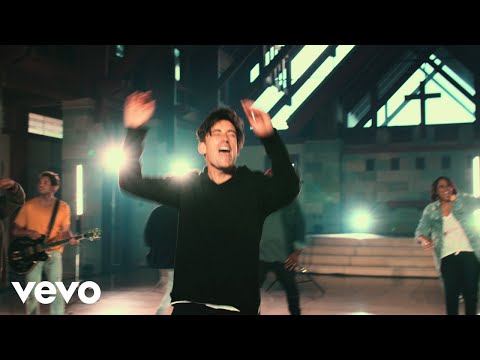
The song describes the singer's response to fear: instead of fighting, they sing, kneel, and praise, because the battle belongs to the Lord. It repeats that line as the refrain, and the verses cast worship itself as the posture of trust, with God fighting on the singer's behalf. No verse is cited.
The refrain is the sentence of 2 Chronicles 20:15 in ordinary English, and the song's instinct to attach singing to it is not invented: the chapter really does have Judah appointing singers to go out ahead of the army. What the song generalises is the scope. In the chapter this is one specific promise, given through a named prophet, about one invasion, on one day. The song makes it the standing shape of the believer's response to any fear.
▸ Official upload. Now listen with the proof in mind.
The battle belonged to God, and Judah still had to march out and stand there.
Why it matters
This is one of the most useful sentences in the Old Testament and one of the easiest to turn into a slogan. "The battle belongs to the Lord" can mean God will handle it so you can relax, or it can mean what the chapter means, which is that the outcome is God's and your job is to take your position and not run.
The difference shows up on the ground. Jahaziel tells Judah to go out, stand firm, and see the salvation of the LORD. They march. They sing on the way. Nobody stays home. A song that puts worship in the place of fighting is close to the text, and the thing worth keeping alongside it is that in the chapter worship was what they did while walking toward an army.
Is it safe to dwell on?
Sung on repeat, this song fixes your attention on God.
What repetition plants here is a reassignment: the fight is not yours. That is a genuinely good thing to have rehearsed, and it aims attention at God rather than at the singer's resources, which is why the dwelling tag is God. The watch-out is passivity, and it is worth naming without scolding. The chapter's version of trust involves getting up early, marching to a wilderness, and standing in formation while singing. If this song is on a loop, let the chapter fill in what trusting looked like that day, and the refrain gains legs.
Helpful comparison
The specificity is worth holding, because it is what makes the promise trustworthy rather than vague. This is a word through a named man, to a named king, about a named coalition, on a stated day. Scripture does not hand out that sentence as a general rule, and the honest way to sing it is the way the Psalms use history: God did this, therefore He is like this, therefore I can trust Him now. That reasoning is sound. What it does not license is a guarantee about the outcome of any particular fight, which the chapter never offers as a rule.
Sources
- Phil Wickham — Battle Belongs, official music video · (the recording checked for this proof)
- The Berean Test — Battle Belongs · (line-by-line comparison and the passages behind the refrain)
- Essential Worship — Battle Belongs · (writers Phil Wickham and Brian Johnson; release details)
Corrections
No corrections to this proof yet.
Think we got something wrong? Tell us what and where, and we will check it against the text. Real errors get fixed here, dated, in public. Every correction on the site →
Where the text survives the song
 ✓ VERIFIED
“Psalm 16”
The Corner Room (Adam Wright)
You can sing this one straight through. It is all eleven verses of Psalm 16, in order, in a named version. What you repeat is the psalm.
✓ VERIFIED
“Psalm 16”
The Corner Room (Adam Wright)
You can sing this one straight through. It is all eleven verses of Psalm 16, in order, in a named version. What you repeat is the psalm.✓ The printed sung text carries all eleven verses of Psalm 16, in order, with no line printed twice and no refrain added
⚠ The track title alone will not tell you which Bible you are singing. On Apple Music and Spotify it is just "Psalm 16". The version is named on the album page and in the video description.
 ✓ VERIFIED
“Be Strong and Courageous (Joshua 1:9)”
Seeds Kids Worship (Seeds Family Worship)
Sing it, and hand it to your kids. It is Joshua 1:9 whole, in the ESV the publisher names, and the tag sings the address, so the verse and its reference get memorized together.
✓ VERIFIED
“Be Strong and Courageous (Joshua 1:9)”
Seeds Kids Worship (Seeds Family Worship)
Sing it, and hand it to your kids. It is Joshua 1:9 whole, in the ESV the publisher names, and the tag sings the address, so the verse and its reference get memorized together.✓ The whole verse, in order, with every repeated line drawn from the verse's own words
✓ no cautions: this is the standard
 ✓ VERIFIED
“Mark 10”
Streetlights
Play it freely. This is Mark 10 itself, read word for word in a named translation. The line about all things being possible arrives as the answer to a question about being saved.
✓ VERIFIED
“Mark 10”
Streetlights
Play it freely. This is Mark 10 itself, read word for word in a named translation. The line about all things being possible arrives as the answer to a question about being saved.✓ The whole chapter, in order, so verse 27 arrives after the rich man’s scene and after the disciples ask who can be saved, instead of standing on its own
⚠ “Word-for-word” here describes the reading, not the translation theory. Streetlights uses it for what is read. Tyndale uses the same phrase for a different thing
More songs like this
 NOT A QUOTE
“House of the Lord”
Phil Wickham
Sing it. Nothing here is quoting, and the joy it names is real. Just know that Psalm 122's house of the Lord was a place with gates at the end of a road; the song sings that gladness of the gathered church.
NOT A QUOTE
“House of the Lord”
Phil Wickham
Sing it. Nothing here is quoting, and the joy it names is real. Just know that Psalm 122's house of the Lord was a place with gates at the end of a road; the song sings that gladness of the gathered church.✓ Both verses are built from checkable acts of God: a sea parted (Exodus 14), prison doors opened (Acts 16:26), the cross and the empty tomb, and nothing sung of God here is something the text will not support
⚠ Psalm 122's house is a place: one city, real gates, tribes going up by command. The song's house is the gathered people, and the song does not mark the transfer
 NOT A QUOTE
“Hymn of Heaven”
Phil Wickham
Sing it. Nothing here is quoting, and what it borrows from Revelation 21 it keeps straight: God wipes the tears Himself. Just read verses 3 and 5 alongside it, which the song leaves out.
NOT A QUOTE
“Hymn of Heaven”
Phil Wickham
Sing it. Nothing here is quoting, and what it borrows from Revelation 21 it keeps straight: God wipes the tears Himself. Just read verses 3 and 5 alongside it, which the song leaves out.✓ Keeps the agent of Revelation 21:4. The tear-wiping stays something God performs, with He as the grammatical subject on both published lyric sheets, rather than a condition that arrives by itself
⚠ The passage leads with presence, not absence. Verse 3 says God's dwelling place is with man and that He will be with them as their God. The song's presence is a face-to-face meeting, a moment rather than a residence
 NOT A QUOTE
“This Is Our God”
Phil Wickham
Sing it. It is a declaration, not a quotation, and the review that recommends against it still says the song teaches nothing false. Worth knowing first: the title sentence stands in Isaiah 25:9, on a day still ahead.
NOT A QUOTE
“This Is Our God”
Phil Wickham
Sing it. It is a declaration, not a quotation, and the review that recommends against it still says the song teaches nothing false. Worth knowing first: the title sentence stands in Isaiah 25:9, on a day still ahead.✓ The title sentence has a real home in scripture. Isaiah 25:9 carries those four words, and the rescue it celebrates is the same rescue the song sings about
⚠ The song is not written as a citation, so it does not hand you the verse behind its title