Mark 9:22-24 vs. “Believe For It”
CeCe Winans · checked 2026-08-21
What we checked
Graded against the standard
Quotation criteria not graded: this song never presents its words as scripture
Applies to every song the Name held holy · God shown holy · true of God · the standard
✓ What's good
- Never says it is quoting: no verse is cited, no words are framed as scripture, and the publisher's own chord chart lists no scripture reference field
- The chorus's subject is God's ability, not the strength of the singer's believing
- The bridge turns from the congregation to God directly, and names Jesus
- Nothing it says about God's power is denied by the passage. Jesus' own sentence here is the widest form of that idea
⚠ Cautions
- What to believe for is never named. The object is left open for the singer to fill in, and the song supplies no test for what belongs there
- Mark 9 pairs the promise with a confession of inadequate faith. Sung on a loop, the call to believe arrives without that release valve
- No source consulted names a passage behind the song: not the artist's interviews, not the publisher's chart, not the label pages. The scripture links that circulate come from reviewers, so any verse attached to this song is the listener's choice rather than the writers' citation
Verse Proof
Mark 9:22-24The text in BSB (Berean Standard Bible)
“It often throws him into the fire or into the water, trying to kill him. But if You can do anything, have compassion on us and help us.” “If You can?” echoed Jesus. “All things are possible to him who believes!” Immediately the boy’s father cried out, “I do believe; help my unbelief!”
Mark 9, just after the Transfiguration. Jesus comes down to find a crowd, an argument, and a father whose son the disciples could not help. The father describes what the spirit does to the boy, then makes his request with a condition attached: if You can do anything. Jesus hands the condition back to him. The saying about all things being possible is spoken to that one man, in that argument, about that boy. The father's answer comes immediately, and it is not a claim of strong faith. He says he believes and asks for help with the unbelief in the same breath. The boy is delivered in the verses that follow, and afterwards the disciples are told privately why they could not do it.
What the song says, described not quoted
A corporate call to keep believing. The opening speaks to the listener rather than to God, setting the discouraging things people say against what a Christian can hold on to. The chorus states what God is able to do, framed as what we believe: immovable things move, unbreakable things break, the impossible is God's ordinary work. A second verse points to the resurrection as the ground for that hope. The bridge turns and addresses God directly, and it is the one place Jesus is named. What the singer is being called to believe for is never specified. The object stays open, filled in by whoever is singing.
Nothing is cited and nothing is presented as scripture. The song's central idea, that what looks impossible is not a limit on God, belongs to a family of sayings that includes Mark 9:23 and also Matthew 19:26, Mark 10:27, and Luke 1:37. What Mark 9 attaches to the saying, and the song does not carry, is the second half of the exchange. In the passage the promise about believing is answered by a man who says his belief is real and insufficient at once, and who asks for help with the shortfall. The song has a call to believe and no room in it for that sentence.
▸ Official upload. Now listen with the proof in mind.
The man who got the miracle in Mark 9 said out loud that his faith was not enough.
Why it matters
This song won Song of the Year at the Dove Awards and a Grammy, and it is sung in a great many rooms, so the shape it gives the word "believe" travels further than most. Mark 9 is one of the places Jesus says the thing about believing, and it is also the place where the believing on show is visibly weak and the healing happens anyway. A call to believe, repeated without that half, can leave a singer taking the measure of their own faith and finding it short. The passage's answer to a short faith is to say so out loud and ask for help, and the boy is still delivered.
Is it safe to dwell on?
Sung on repeat, this song moves between God and the singer.
What a loop of this plants is expectancy toward God, in the plural, which is a good thing to have planted. The dwelling tag is mixed because a real share of the lines are about our stance rather than about God, and both get rehearsed together: God can, and we believe. The first is safe to carry anywhere. The second is the one worth watching, not because believing is a wrong thing to sing, but because a line about our own believing, sung a hundred times, can quietly turn into a measurement you take of yourself in the weeks when nothing has moved. Mark 9 is the corrective and it is a generous one, because the father in it fails that measurement out loud and is not sent away. If you sing this song often, keep his sentence next to it.
Helpful comparison
The two sayings are worth setting side by side, because they are built differently. Mark 9:23 puts the possibility next to the believer: all things are possible to him who believes. Mark 10:27, in the conversation about who can be saved, puts it next to God: all things are possible with God. Both are Jesus speaking, and neither cancels the other, but they can be sung to very different effect. On the two lyric transcriptions checked here, the song's chorus is a statement about what God is able to do rather than about what our believing makes possible. That is the safer of the two shapes, and it is nearer Mark 10:27 than Mark 9:23. The pressure in this song sits elsewhere: not in saying that belief has power, but in leaving unnamed the thing the belief is for.
Sources
- [CeCe Winans — Believe For It (Live) [Official Video]](https://www.youtube.com/watch?v=fd24fpsF1Qw) (the recording checked for this proof; YouTube oEmbed returns author_name "CeCeWinansVEVO")
- PraiseCharts — Believe For It (Radio), CeCe Winans · (rights-holder chart: writers Kyle Lee, Mitch Wong, Dwan Hill, CeCe Winans; CCLI 7169164; 2021 copyright line; themes listed; no scripture reference field)
- PraiseCharts — Believe For It (Live), CeCe Winans · (same writer and copyright data on a second chart edition, album Believe For It (Deluxe))
- Wikipedia — Believe for It (song) · (single release dates, chart runs, Grammy and Dove Song of the Year)
- Wikipedia — Believe for It (album) · (album released 12 March 2021 on Puresprings Gospel and Fair Trade Services; title track written by Winans, Lee, Hill and Wong)
- American Songwriter — CeCe Winans Returns to Gospel Music Stage with New Album 'Believe For It' · (album date confirmed independently; Winans on the song's message, no scripture named)
- K-LOVE — CeCe Winans Challenges Listeners to Believe for the Impossible · (Winans' own account of writing and intent; again no passage named)
- The Berean Test — CeCe Winans, Believe For It · (a reviewer's section-by-section scripture mapping, which reaches for Matthew 19:26, Mark 10:27 and Mark 11:23 rather than Mark 9:23; also the section-by-section account of who is addressed)
- Letras — CeCe Winans, Believe For It · (second independent transcription, consulted only to check section structure, grammatical address and whether doubt is acknowledged)
Corrections
No corrections to this proof yet.
Think we got something wrong? Tell us what and where, and we will check it against the text. Real errors get fixed here, dated, in public. Every correction on the site →
Where the text survives the song
 ✓ VERIFIED
“Mark 10”
Streetlights
Play it freely. This is Mark 10 itself, read word for word in a named translation. The line about all things being possible arrives as the answer to a question about being saved.
✓ VERIFIED
“Mark 10”
Streetlights
Play it freely. This is Mark 10 itself, read word for word in a named translation. The line about all things being possible arrives as the answer to a question about being saved.✓ The whole chapter, in order, so verse 27 arrives after the rich man’s scene and after the disciples ask who can be saved, instead of standing on its own
⚠ “Word-for-word” here describes the reading, not the translation theory. Streetlights uses it for what is read. Tyndale uses the same phrase for a different thing
 ✓ VERIFIED
“Psalm 16”
The Corner Room (Adam Wright)
You can sing this one straight through. It is all eleven verses of Psalm 16, in order, in a named version. What you repeat is the psalm.
✓ VERIFIED
“Psalm 16”
The Corner Room (Adam Wright)
You can sing this one straight through. It is all eleven verses of Psalm 16, in order, in a named version. What you repeat is the psalm.✓ The printed sung text carries all eleven verses of Psalm 16, in order, with no line printed twice and no refrain added
⚠ The track title alone will not tell you which Bible you are singing. On Apple Music and Spotify it is just "Psalm 16". The version is named on the album page and in the video description.
 ✓ VERIFIED
“Be Strong and Courageous (Joshua 1:9)”
Seeds Kids Worship (Seeds Family Worship)
Sing it, and hand it to your kids. It is Joshua 1:9 whole, in the ESV the publisher names, and the tag sings the address, so the verse and its reference get memorized together.
✓ VERIFIED
“Be Strong and Courageous (Joshua 1:9)”
Seeds Kids Worship (Seeds Family Worship)
Sing it, and hand it to your kids. It is Joshua 1:9 whole, in the ESV the publisher names, and the tag sings the address, so the verse and its reference get memorized together.✓ The whole verse, in order, with every repeated line drawn from the verse's own words
✓ no cautions: this is the standard
More songs like this
 NOT A QUOTE
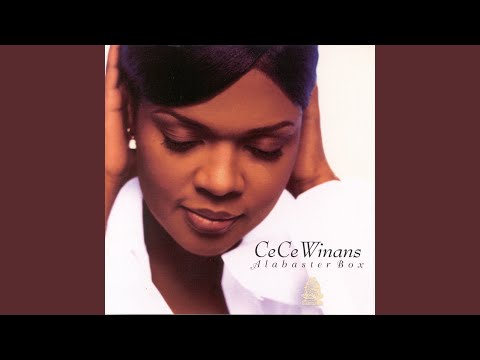
“Alabaster Box”
CeCe Winans
Sing it as testimony, not as a report. The scene is Luke 7 and the song has its details right, but Luke never names this woman, and the name the chorus gives her comes from a different anointing.
NOT A QUOTE
“Alabaster Box”
CeCe Winans
Sing it as testimony, not as a report. The scene is Luke 7 and the song has its details right, but Luke never names this woman, and the name the chorus gives her comes from a different anointing.✓ It leaves her sin unnamed, exactly as Luke does. The passage calls her a sinner and stops there, and so does the song.
⚠ The chorus names the jar Mary's. Luke does not name the woman at all, in this passage or anywhere else.
 NOT A QUOTE
“Great Is Thy Faithfulness”
CeCe Winans
Sing it. It never says it is quoting, though the refrain is verse 23's King James wording. What it does not carry is the ruin the verse is recalled from. Read Lamentations 3:17-24 alongside it.
NOT A QUOTE
“Great Is Thy Faithfulness”
CeCe Winans
Sing it. It never says it is quoting, though the refrain is verse 23's King James wording. What it does not carry is the ruin the verse is recalled from. Read Lamentations 3:17-24 alongside it.✓ Never says it is quoting: no chapter or verse cited, nothing framed as scripture, no appeal to what the Bible says
⚠ No translation is named, so a listener who recognises the phrase has nothing to check it against
 NOT A QUOTE
“Battle Hymn of the Republic”
Julia Ward Howe (recorded by David Phelps)
Sing it knowing what it adds. Nothing in it is offered as scripture, and its pictures of judgment stay God's work. The sighting, a singer seeing that judgment happening now, is the hymn's own.
NOT A QUOTE
“Battle Hymn of the Republic”
Julia Ward Howe (recorded by David Phelps)
Sing it knowing what it adds. Nothing in it is offered as scripture, and its pictures of judgment stay God's work. The sighting, a singer seeing that judgment happening now, is the hymn's own.✓ The judgment stays God's work. The hymn's “He” is God throughout and no source disputes it; Gamble's objection is to the use the hymn makes of the images, not to who does the treading
⚠ The opening line reports a present sighting of God's glory arriving. Isaiah 63 speaks of a day of vengeance but pins it to no date, so the timing is the hymn's addition