Joshua 23:14 vs. “Promises”
Maverick City Music feat. Joe L Barnes & Naomi Raine · checked 2026-08-21
This song is checked more than once. Each proof takes it against one passage, so the findings differ. Also checked against Numbers 23:19.
What we checked
Graded against the standard
Quotation criteria not graded: this song never presents its words as scripture
Applies to every song the Name held holy · God shown holy · true of God · the standard
✓ What's good
- Never says it is quoting. No chapter, no verse, no translation named, nothing framed as scripture
- Grounds its promise language in covenant history by opening with the God of Abraham, which is where scripture itself grounds God's promise-keeping. The publisher's own song page lists Hebrews 6:13-20
- What it says about God, scripture says too: that His word does what He sends it to do, that He does not change from age to age, that His word outlasts the earth
- The writing is documented and checkable. The official upload names all six writers and the camp, and two published interviews carry the writers' own account of when and why it was finished
- The chorus is addressed to God in the second person and keeps His faithfulness, not the singer's experience of it, as the subject
- The bridge names Jesus. The "You" of the rest of the song is otherwise unnamed, so this is the one place the address is anchored to a person
⚠ Cautions
- The word "promises" is never filled in, and the song's central thesis is about God's record without naming what is on it. Joshua names his: the good promises about the land
- Joshua 23:14 does not stop where the encouragement stops. Verses 15 and 16 apply the identical certainty to the covenant's threatened side, and no part of the song reaches that
- No reference is cited, so a listener will not learn where this thesis lives in scripture. The publisher's page points at Hebrews 6:13-20, which the song's bridge tracks, but the song itself points nowhere
- An independent reviewer who scored the song highly still flags that hearers can take it as a guarantee of outcomes God never named. That is a caution about the hearing, not a fault in the words
- Sources disagree about when the song was written. The official upload's description says a Maverick City camp "last year," which puts it in 2019, and Songfacts says 2020. The interviews say the verses and pre-chorus came first, years before the rest
Verse Proof
Joshua 23:14The text in BSB (Berean Standard Bible)
“Now behold, today I am going the way of all the earth, and you know with all your heart and soul that not one of the good promises the LORD your God made to you has failed. Everything was fulfilled for you; not one promise has failed.”
Joshua is old and says so. He has summoned Israel's elders, heads, judges and officers, and this is his farewell address, spoken after the land has been allotted and the fighting is over. He is not telling them something new. He asks them to certify what they already know from their own lives, that of the good promises God made about this land, not one came up short. The sentence is evidence submitted to witnesses who were there. It is also only half of his paragraph. In the next two verses he turns the same fact around: “But just as every good thing the LORD your God promised you has come to pass, likewise the LORD will bring upon you the calamity He has threatened, until He has destroyed you from this good land He has given you” (Joshua 23:15, BSB), if they transgress the covenant and serve other gods. The kept promises are the premise. The warning is the conclusion drawn from them.
What the song says, described not quoted
The first verse addresses God as the God of Abraham, of covenant and of faithful promises, and says His record shows He does what He says. A pre-chorus answers with the singer's resolve to stand through storm and wind, and to learn that God's spoken word comes about. The chorus is one affirmation of God's faithfulness toward the singer, repeated inside the chorus itself, with a line about praising His name from sunrise to sunset. A second verse says God is the same from age to age, that His word outlasts the earth, and that His track record rules out anything He cannot do. The bridge turns to the third person and names Jesus as the singer's anchor and foundation. The publisher's printed lyric, carried in the official upload's own description, runs to about a dozen distinct lines. No chapter or verse is cited anywhere in the song, and Joshua is never named.
Nothing here is offered as scripture, so nothing has shifted inside a quotation. What the song and the verse share is a thesis about God's record: He has done what He said. Joshua's version of that thesis is bounded on three sides. It names the promises it means, the ones about this land. It names the witnesses, the men standing in front of him. And it names what follows from it, which is a warning. The song keeps the thesis and releases all three bounds. Its promises are unnamed, its witness is the singer's own confidence, and what follows from God's reliability is praise. Praise is a right response to it. It is not the only one Joshua drew.
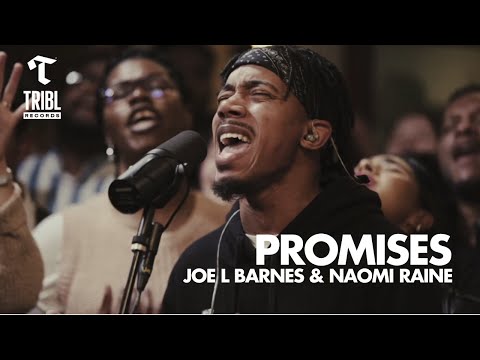
▸ Official upload. Now listen with the proof in mind.
Joshua submits the record of kept promises as evidence, and two verses later he uses that same evidence as a warning.
Why it matters
A record of kept promises is a statement about God's reliability, and reliability is not selective. Joshua 23:15 makes that explicit: the God whose good words all landed will bring the threatened calamity just as surely. That is the same attribute, read in the other direction. A singer who has only the encouraging half has half a doctrine, and the half that is missing is the one that produces the fear of God. Nothing in the song denies it. The song simply does not go there, which is why the passage is worth reading next to it rather than instead of it.
Is it safe to dwell on?
Sung on repeat, this song fixes your attention on God.
This one deserves the repeat test more than most, because repetition is the form the song is built in. The album cut runs 10:46 on a printed lyric of about a dozen distinct lines, and the recording extends it with spontaneous sections beyond what the publisher prints. So the question is not what the words say once. It is what they say the fortieth time.
What they plant is a single sentence about God's faithfulness toward the singer, held long enough to stop being an argument and start being a settled thing. That is a good sentence to have settled, and the words stay on God while they settle. The verses are about Him, the chorus is addressed to Him, and the singer's own lines are responses rather than self-description. A loop of this drills confidence in God's character, not in the singer's performance.
What a loop cannot supply is content. The song's word for what God keeps stays open, so repetition fills it with whatever the singer brought. Sung with the promises scripture actually names in mind, the covenant with Abraham, the anchor of Hebrews 6, God's presence pledged and not withdrawn, the repetition drills those into place. Sung with a particular hoped-for outcome in the blank, the same repetition drills that in with equal force, and the disappointment when it does not arrive will feel like evidence against God rather than against the assumption. Joshua's audit gives the sentence a floor that does not move with the week. It also gives it a second edge, and a person who has sung the first edge four hundred times can afford to read the second one once.
Helpful comparison
The claim in Joshua 23:14 appears three times in this stretch of scripture, and the differences between them are worth seeing. Joshua 21:45 gives it as narration, the writer's summary over the settled land. 1 Kings 8:56 gives it as Solomon's blessing at the temple, tied to what was promised through Moses. Joshua 23:14 is neither. It is sworn testimony from a man who says he is about to die, delivered to leaders he calls as witnesses, and its distinctive move is that he does not ask them to take his word for it. He tells them they know it already, with all their heart and soul. The verse's authority is the hearers' own memory.
That matters for what he does next. Because they cannot dispute the record, they cannot dispute the inference he draws from it in verses 15 and 16. Whether a third party pairing hears Joshua behind this song is a separate question, and one reviewer does: The Berean Test assigns Joshua 21:45 to the song's pre-chorus, alongside Matthew 7:24-27. None of the other pages points at Joshua either. Worship Together, the song-resource platform Capitol CMG Publishing runs, lists Hebrews 6:13-20, the interviewer's closing thoughts at NewReleaseToday pair the song with Romans 8:28, Lamentations 3:22-23, Jeremiah 29:11 and Hebrews 6:19, and the PraiseCharts chart lists themes with no scripture references. The song's own home is the Abraham covenant, not the conquest. Joshua 23:14 is set beside it here because it says the same thing, in a setting the song does not have.
Sources
- Maverick City Music, “Promises” (feat. Joe L Barnes & Naomi Raine), official video on TRIBL · (the recording checked for this proof; oEmbed returns author_name “TRIBL”, Maverick City's label channel. The description names all six writers, dates the writing to a Maverick City camp “last year”, places the recording at 1971 Sounds in Atlanta with the Maverick City Music Choir, and prints the section order used here: verse, pre-chorus, chorus, verse, pre-chorus, chorus, bridge. Uploaded 10 April 2020, running 10:49)
- Worship Together, “Promises” — Maverick City · (rights-holder side song page: writers Joe L Barnes, Carrington Gaines, Aaron Moses, Dante Bowe, Keila Marin and Lemuel Marin; CCLI 7149439; the listed Scripture Reference is Hebrews 6:13-20, with nothing in Joshua)
- PraiseCharts — Promises chord charts · (same six writers; CCLI 7149439; the 2020 copyright line naming Bethel Worship Publishing, Capitol CMG Paragon, ForTheDreamers Publishing, JDW Legacy Publishing, Maverick City Publishing, LK Collective and an Aaron Moses designee; themes listed and no scripture references at all)
- Wikipedia — Promises (Maverick City Music song) · (album debut 17 April 2020, video premiere 10 April 2020, radio single 3 May 2021, number one on Hot Christian Songs and Hot Gospel Songs, RIAA Platinum)
- Wikipedia — Maverick City Vol. 3 Part 1 · (album released 17 April 2020; the track length of 10:46 used in the repeat test)
- Songfacts — Promises by Maverick City Music · (the writing camp, the 10:46 album version against the 4:09 radio adaptation of 3 May 2021, and the chart facts. Dates the camp to 2020, against the official description's “last year”)
- NewReleaseToday — Behind the Song #1075, “Promises” · (Aaron Moses and Joe L Barnes began the verses and pre-chorus years earlier and finished the song just before the pandemic; Dante Bowe wrote the bridge; Moses on writing it while living in a trailer with no money, and his line that God has to complete what He starts because God cannot lie; the article's closing scripture pairings, Romans 8:28, Lamentations 3:22-23, Jeremiah 29:11 and Hebrews 6:19 among others, none in Joshua)
- The Promise FM — The Story Behind “Promises” · (independent corroboration of the writing timeline and the Moses quotes; pairs the song with Jeremiah 29:11)
- The Berean Test — Is “Promises” Biblical? · (a section-by-section passage list that assigns Joshua 21:45 and Matthew 7:24-27 to the pre-chorus and Hebrews 6:19-20 to the bridge; notes the recording's spontaneous sections; scores it 9.5/10 while flagging that hearers can read it as a guarantee of outcomes)
- Word to Worship — Promises · (a phrase-matched reference index for the song, listing Matthew 7:25, Lamentations 3:23, Psalm 102:27 and Hebrews 1:12 among others, and nothing in Joshua)
- pnwchords — Promises, Maverick City · (second, independent confirmation of the section structure: verse 1, pre-chorus, chorus, verse 2, bridge)
Corrections
- This entry called worshiptogether.com the rights holder, or the song's publisher. It is neither. Capitol CMG Publishing's About page calls Worship Together "Capitol CMG Publishing's outreach to the global church", and the site describes itself as a song discovery and resource platform for worship leaders. It also carries songs Capitol CMG does not publish, so a scripture list on it is the platform's, not the songwriters'. This site already corrected the same wording on the Ephesians 2:4-6 entry on 2026-08-07; these lines were missed then. The finding is unchanged — the reference is still published outside the song and still checkable — only who published it.
Think we got something wrong? Tell us what and where, and we will check it against the text. Real errors get fixed here, dated, in public. Every correction on the site →
Where the text survives the song
 ✓ VERIFIED
“Be Strong and Courageous (Joshua 1:9)”
Seeds Kids Worship (Seeds Family Worship)
Sing it, and hand it to your kids. It is Joshua 1:9 whole, in the ESV the publisher names, and the tag sings the address, so the verse and its reference get memorized together.
✓ VERIFIED
“Be Strong and Courageous (Joshua 1:9)”
Seeds Kids Worship (Seeds Family Worship)
Sing it, and hand it to your kids. It is Joshua 1:9 whole, in the ESV the publisher names, and the tag sings the address, so the verse and its reference get memorized together.✓ The whole verse, in order, with every repeated line drawn from the verse's own words
✓ no cautions: this is the standard
 ✓ VERIFIED
“Psalm 16”
The Corner Room (Adam Wright)
You can sing this one straight through. It is all eleven verses of Psalm 16, in order, in a named version. What you repeat is the psalm.
✓ VERIFIED
“Psalm 16”
The Corner Room (Adam Wright)
You can sing this one straight through. It is all eleven verses of Psalm 16, in order, in a named version. What you repeat is the psalm.✓ The printed sung text carries all eleven verses of Psalm 16, in order, with no line printed twice and no refrain added
⚠ The track title alone will not tell you which Bible you are singing. On Apple Music and Spotify it is just "Psalm 16". The version is named on the album page and in the video description.
 ✓ VERIFIED
“Mark 10”
Streetlights
Play it freely. This is Mark 10 itself, read word for word in a named translation. The line about all things being possible arrives as the answer to a question about being saved.
✓ VERIFIED
“Mark 10”
Streetlights
Play it freely. This is Mark 10 itself, read word for word in a named translation. The line about all things being possible arrives as the answer to a question about being saved.✓ The whole chapter, in order, so verse 27 arrives after the rich man’s scene and after the disciples ask who can be saved, instead of standing on its own
⚠ “Word-for-word” here describes the reading, not the translation theory. Streetlights uses it for what is read. Tyndale uses the same phrase for a different thing
More songs like this
 NOT A QUOTE
“Promises”
Maverick City Music feat. Joe L Barnes & Naomi Raine
Sing it. Nothing is presented as scripture, and what it says of God, scripture says first. Just know which promises you mean when you sing the word, because the song leaves that blank for the singer to fill.
NOT A QUOTE
“Promises”
Maverick City Music feat. Joe L Barnes & Naomi Raine
Sing it. Nothing is presented as scripture, and what it says of God, scripture says first. Just know which promises you mean when you sing the word, because the song leaves that blank for the singer to fill.✓ Anchors its promise language in covenant history, opening with the God of Abraham, which is where scripture itself grounds God's promise-keeping (the publisher's catalog lists Hebrews 6:13-20)
⚠ The word "promises" is never filled in. The verse's confidence is tied to what God actually said, and the song leaves that content to the singer
 NOT A QUOTE
“Do It Again”
Elevation Worship
Sing it. It quotes nothing and presents nothing as scripture, and its testimony is true. Just know that what it says about God's record is personal and still running, where Joshua 21:45 states a corporate one and closes it.
NOT A QUOTE
“Do It Again”
Elevation Worship
Sing it. It quotes nothing and presents nothing as scripture, and its testimony is true. Just know that what it says about God's record is personal and still running, where Joshua 21:45 states a corporate one and closes it.✓ Never says it is quoting: no reference, no verse framing, nothing presented as scripture
⚠ The song's opening image comes from Jericho, but it never names Joshua, Jericho, or a verse. A hearer who does not already know the sermon behind it will not find the story
 NOT A QUOTE
“Raise a Hallelujah”
Bethel Music, Jonathan David & Melissa Helser
Sing it. It quotes nothing and never says it is scripture, and its own chorus rests on a victory already finished. Just don't hear the singing as the thing that wins. In Joshua 6 the city was given before anyone shouted.
NOT A QUOTE
“Raise a Hallelujah”
Bethel Music, Jonathan David & Melissa Helser
Sing it. It quotes nothing and never says it is scripture, and its own chorus rests on a victory already finished. Just don't hear the singing as the thing that wins. In Joshua 6 the city was given before anyone shouted.✓ Never says it is quoting: no reference, no verse framing, nothing offered as scripture
⚠ The song never mentions Jericho or walls, but the idea of a shout that brings them down gets attached to it in devotional writing. That reading is worth checking against the passage rather than assumed from the song