Revelation 5:9-10 vs. “Is He Worthy?”
Andrew Peterson · checked 2026-08-01
What we checked
Graded against the standard
Quotation criteria this song presents words as scripture, so these apply
Applies to every song the Name held holy · God shown holy · true of God · the standard
✓ What's good
- Keeps the reason: the Lamb is worthy because he was slain and his blood paid a price, not worthy as a free-floating compliment
- Keeps the result: every tribe and tongue and people and nation, a kingdom and priests, a reign. These are the clauses of verses 9-10 that most songs about worthiness leave out
- Keeps the chapter's shape: Revelation 5 opens with a question nobody can answer, and the song sings the question before the answer. Peterson has described the call-and-response design as deliberate
- The congregational answers put the church where the text puts it, among the purchased, saying so together
⚠ Cautions
- No translation is named and no verse is cited. Reworked into question and answer, the wording matches no translation word for word, so there is no stated text to check it against
- The text's new song is addressed to the Lamb. The song's answers are about him, reported in the third person rather than sung to his face
- Verse 10 says the purchased "will reign upon the earth." The chorus keeps the reign but drops the earth; the bridge's question about God dwelling with us again carries the idea, but the clause itself is gone
- The text's "them," people the elders sing about, becomes the song's "us." Fair for a congregation to claim, but the step inside the verse is silent
Verse Proof
Revelation 5:9-10The text in BSB (Berean Standard Bible)
“And they sang a new song: “Worthy are You to take the scroll and open its seals, because You were slain, and by Your blood You purchased for God those from every tribe and tongue and people and nation. You have made them to be a kingdom and priests to serve our God, and they will reign upon the earth.”
This is the first "new song" in Revelation, sung by the four living creatures and the twenty-four elders the moment the Lamb takes the scroll. It answers the question that opened the scene, an angel asking who is worthy to break the seals, a question that stood unanswered long enough for John to weep. The song they sing gives the verdict a reason and a result: worthy because slain, because his blood purchased people from every tribe and tongue and people and nation, and those purchased are made a kingdom and priests who will reign upon the earth.
What the song says, described not quoted
The whole song is built as call and response. A leader sings questions and the congregation sings the answers back. The first verse asks whether the singers feel the world's brokenness and the deepening shadows, whether they know the dark cannot put out the light, whether they long to see everything made new; each question is answered yes, together. The second verse asks whether creation is groaning and a new creation coming. The chorus then asks the chapter's own question three ways, whether anyone is worthy, whether anyone is whole, whether anyone can break the seal and open the scroll, and answers it with the passage's answer: the Lion of Judah who has triumphed over death, the root of David, the Lamb whose death was the price that freed slaves. A bridge asks whether the Father loves us, the Spirit moves among us, and God intends to dwell with us again. The final chorus carries verse 9 and 10's content: people from every tribe and tongue and nation made a kingdom and priests to God, reigning with the Son. No verse is cited and no translation is named.
What survives is unusual: the reason and the result, the two clauses worthiness songs most often drop. Worthy because slain and because blood paid a purchase price; the purchased made a kingdom and priests who reign. The four-fold roll of verse 9 keeps all four nouns, reordered. What shifts: the text's song is sung to the Lamb, "Worthy are You," while this song asks about him and answers about him in the third person. The text's purchased people are "them," sung about by the elders; the song makes them "us." And verse 10's "they will reign upon the earth" becomes reigning with the Son, which Revelation 20:6 supports, but the earth clause itself does not survive into the chorus. Peterson has said plainly that the chorus is taken from Revelation 5.
▸ Official upload. Now listen with the proof in mind.
Most worship songs keep the answer. This one makes the room sing the question first.
Why it matters
"Worthy" may be the most-sung word in modern worship, and it usually arrives as a bare adjective. Revelation 5:9 refuses to leave it bare: worthy *because* you were slain, *because* your blood purchased people, and the purchase has a stated result, a multinational kingdom of priests. A song that keeps the because and the therefore trains a congregation to hear worthiness as a verdict with evidence rather than a mood. And the chapter's drama is a question held open, long enough for John to weep. A song that makes the room sing the asking before the answer walks singers through the scene in the text's own order.
Is it safe to dwell on?
Sung on repeat, this song fixes your attention on God.
What repetition plants here is a catechism: questions with their answers attached. The congregation's lines are short confessions, and looping them rehearses the habit of answering rather than only listening. The centre of attention is Christ almost throughout; the singers appear as people who feel the world's weight and say yes together, which is assent, not self-description. One thing this loop holds that few worship loops do is a named grief. The first questions plant the admission that the world is broken, and the song never leaves you there; the sequence always moves from the brokenness to the Lamb. Read the two verses once alongside it and notice the one thing the chorus cannot fit, that the reign is upon the earth. That clause is worth planting by hand.
Helpful comparison
The song's fidelity is structural before it is verbal. The chapter runs question, silence, weeping, answer; the song runs question, answer, in the same voice-against-voice pattern, a leader asking and a room replying. Peterson has said he sings the question and the congregation sings the answer back, and that the chorus is taken from the moment in Revelation 5 when the question is asked. That is a different kind of borrowing from quoting a line, and this site has few examples of it done this thoroughly.
One documented episode shows the every-tribe clause is content, not decoration. The original one-take video was filmed with a nearly all-white group of participants, and Peterson publicly apologised, naming the mismatch with the song's own line about every people and tribe, every nation and tongue. Whatever one makes of the episode, it shows the songwriter treating verse 9's list as something the song is accountable to. The song has since spread well beyond its writer; Chris Tomlin recorded it in the same year, and the call-and-response form has survived the handoff.
Sources
- Andrew Peterson — Is He Worthy?, official video · (the recording checked for this proof; AndrewPetersonVEVO upload, filmed in one take at Wightman Chapel)
- The Gospel Coalition — Andrew Peterson's New Song for the People · (Peterson's own account: the chorus "taken from that staggering moment in Revelation 5," the sung question-and-answer design, the 2018 release produced by Ben Shive, and the video premiere)
- Andrew Peterson — Waking Up to "Is He Worthy?": An Apology · (Peterson's public apology over the video's casting, in his own words, citing the song's every-people-and-tribe line)
- The Berean Test — Is He Worthy? · (line-by-line mapping of the lyric to Revelation 5 and related passages)
- Song Scoops — Is He Worthy? · (writers Andrew Peterson and Ben Shive; the song's origin in the question of Revelation 5:2)
- Chris Tomlin — Is He Worthy? (Acoustic) ft. Andrew Peterson · (the Tomlin recording; ChrisTomlinVEVO upload)
Corrections
No corrections to this proof yet.
Think we got something wrong? Tell us what and where, and we will check it against the text. Real errors get fixed here, dated, in public. Every correction on the site →
Where the text survives the song
 ~ FAITHFUL
“Agnus Dei”
Michael W. Smith
Sing it. Every sung phrase traces to a Revelation acclamation, and the small shifts are moves the book itself makes. Just know the title names a Mass prayer with different words: the liturgy asks the Lamb for mercy, this song acclaims him.
~ FAITHFUL
“Agnus Dei”
Michael W. Smith
Sing it. Every sung phrase traces to a Revelation acclamation, and the small shifts are moves the book itself makes. Just know the title names a Mass prayer with different words: the liturgy asks the Lamb for mercy, this song acclaims him.✓ Every sung phrase has a checkable Revelation address: the reigning in 19:6, the holy in 4:8, the worthy in 5:12, the amen in 19:4 and 5:14
⚠ The wording is a blend no single Bible prints: the KJV's Alleluia spelling and our-less frame with the modern translations' Almighty. Each piece is a real rendering of 19:6, but no one translation can verify the whole clause, and none is named
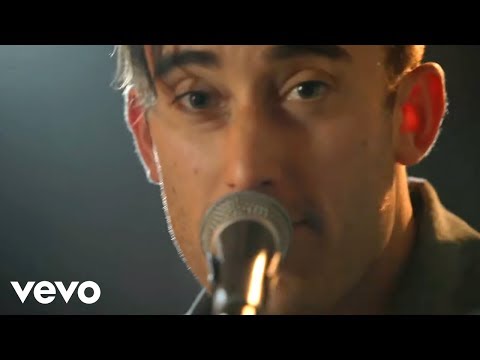 ~ FAITHFUL
“This Is Amazing Grace”
Phil Wickham
Sing it. The bridge's first line is Revelation 5:12 as far as it goes, and what the song adds is true from other texts. Know that the verse itself keeps going, into seven things the Lamb is worthy to receive.
~ FAITHFUL
“This Is Amazing Grace”
Phil Wickham
Sing it. The bridge's first line is Revelation 5:12 as far as it goes, and what the song adds is true from other texts. Know that the verse itself keeps going, into seven things the Lamb is worthy to receive.✓ The bridge's first line carries the acclamation of Revelation 5:12 unaltered as far as it goes, in the wording most modern translations share
⚠ The verse's own ending never appears. Revelation 5:12 gives the Lamb seven things, power, riches, wisdom, strength, honor, glory, blessing, and the song keeps none of them
 ~ FAITHFUL
“Revelation Song”
Jennie Lee Riddle (recorded by Kari Jobe)
Sing it. The chorus is the creatures' song, kept intact, and the images around it come from the same chapter. It just never names a translation, so there is nothing to check the wording against.
~ FAITHFUL
“Revelation Song”
Jennie Lee Riddle (recorded by Kari Jobe)
Sing it. The chorus is the creatures' song, kept intact, and the images around it come from the same chapter. It just never names a translation, so there is nothing to check the wording against.✓ The chorus follows Revelation 4:8 without altering what it says about God
⚠ No translation is named, so the near-verbatim chorus cannot be checked against a stated text. That is the only thing separating this from Word-for-Word Verified
More songs like this
 ~ FAITHFUL
“Behold the Lamb of God”
Andrew Peterson
Sing it. The summons is the Baptist's own sentence, narrowed from the world's sin to ours and joined to other true titles of Christ. Read John 1 once, so you know the pointing began at the Jordan, not the manger.
~ FAITHFUL
“Behold the Lamb of God”
Andrew Peterson
Sing it. The summons is the Baptist's own sentence, narrowed from the world's sin to ours and joined to other true titles of Christ. Read John 1 once, so you know the pointing began at the Jordan, not the manger.✓ The refrain's summons is the Baptist's sentence in recognizable King James wording, and every stacked title is scripture's own: life and light of men, Son of God, Son of Man, Emmanuel
⚠ The world's sin becomes our sin. Nothing false enters, but the Baptist's clause is wider, and the width is the startling part of verse 29
~ FAITHFUL
“Agnus Dei”
Michael W. Smith
Sing it. Every sung phrase traces to a Revelation acclamation, and the small shifts are moves the book itself makes. Just know the title names a Mass prayer with different words: the liturgy asks the Lamb for mercy, this song acclaims him.✓ Every sung phrase has a checkable Revelation address: the reigning in 19:6, the holy in 4:8, the worthy in 5:12, the amen in 19:4 and 5:14
⚠ The wording is a blend no single Bible prints: the KJV's Alleluia spelling and our-less frame with the modern translations' Almighty. Each piece is a real rendering of 19:6, but no one translation can verify the whole clause, and none is named
~ FAITHFUL
“This Is Amazing Grace”
Phil Wickham
Sing it. The bridge's first line is Revelation 5:12 as far as it goes, and what the song adds is true from other texts. Know that the verse itself keeps going, into seven things the Lamb is worthy to receive.✓ The bridge's first line carries the acclamation of Revelation 5:12 unaltered as far as it goes, in the wording most modern translations share
⚠ The verse's own ending never appears. Revelation 5:12 gives the Lamb seven things, power, riches, wisdom, strength, honor, glory, blessing, and the song keeps none of them