Psalm 96:7-8 vs. “You Deserve It”
JJ Hairston & Youthful Praise · checked 2026-08-22
What we checked
Graded against the standard
Quotation criteria not graded: this song never presents its words as scripture
Applies to every song the Name held holy · God shown holy · true of God · the standard
✓ What's good
- The act the song performs is the act Psalm 96:7-8 commands, ascribing glory to God rather than describing the singer's experience of it
- No statement that it is quoting of any kind: no chapter and verse, no scripture framing, nothing presented as the Bible's own words
- Every distinct line is about God rather than about the singer, which is rarer in the genre than it sounds
- Both independent transcriptions checked agree that the glory is treated as God's own and being handed over, not as something the congregation confers
- Nothing said of God in the lyric is anything the passage denies
⚠ Cautions
- No reason is given inside the song for why the deserving holds. Psalm 96 gives one in verses 4 and 5, and a singer who does not know it is carrying a verdict without the evidence
- Psalm 96:8 pairs the ascribing with bringing an offering and entering God's courts. The song keeps the words and not the second half of the instruction
- God is addressed only generically, so the lyric will take whatever the singer already believes about who is being addressed
- The chord chart that does cite scripture for this song cites Revelation 4:11 and 5:12, not Psalm 96, so nobody involved has pointed at this passage. It is the checker's comparison, not the writers' own
- A 2023 re-recording of the same song with a different featured vocalist is in circulation, so a listener searching by title may land on a version other than the one checked here
Verse Proof
Psalm 96:7-8The text in BSB (Berean Standard Bible)
“Ascribe to the LORD, O families of the nations, ascribe to the LORD glory and strength. Ascribe to the LORD the glory due His name; bring an offering and enter His courts.”
Psalm 96 is a summons, not a report. It opens by telling all the earth to sing a new song and to declare God's glory among the nations, and then it says why: the LORD is great and to be feared above all gods, because the gods of the nations are idols and the LORD is the one who made the heavens. Verses 7 and 8 are the instruction that follows from that reason. The families of the nations are told to ascribe glory and strength to the LORD, to ascribe Him the glory that is already due to His name, and to bring an offering into His courts. The psalm gives the grounds in verses 4 and 5, and gives the command in verses 7 and 8. Both halves are in the same chapter, two verses apart.
What the song says, described not quoted
The song is one sustained address to God saying that the praise being offered belongs to Him and that He is the one who deserves it. Both published transcriptions checked for this proof agree on the shape: a small number of distinct lines, all in the second person, carried through a chorus and a vamp and returned to repeatedly. God is named only in the general way, as God or Lord, with no name or title that identifies a specific person of the Trinity, and no name of Jesus. Nothing is quoted, no chapter and verse is given anywhere in the song, and no reason is stated inside the lyric for why the deserving holds. There is no because clause. What the words do is hand the glory over and say whose it is.
Nothing is taken from Psalm 96's wording, and nothing is presented as coming from it. What the song shares with verses 7 and 8 is the act itself. Ascribing is the psalm's verb, and ascribing is what the song does for its whole length. The difference is direction and completeness. Psalm 96:7-8 is spoken sideways, to the families of the nations, telling them to ascribe. The song is spoken upward, to God, telling Him that the glory is His. And the psalm's ascription arrives with the reason already established two verses earlier and with an offering in hand. The song's arrives on its own.
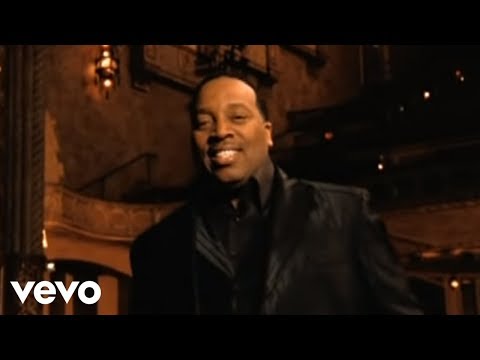
▸ Official upload. Now listen with the proof in mind.
Psalm 96 tells the nations to ascribe glory, and puts the reason two verses up.
Why it matters
A song that says God deserves praise is saying something you can check. This one turns out to say what the psalm says, which is worth establishing rather than assuming, because the words are so plain that it is easy to wave them through without checking anything at all.
The part worth noticing is where the warrant lives. Psalm 96 does not ask the nations to work out for themselves why the LORD should be given glory. It tells them in verse 5, that the other gods are idols and this one made the heavens, and only then issues the command. A song can do the second half without the first and be perfectly honest. But somebody has to be holding the first half, or the congregation is left supplying its own reasons, and the reasons people reach for on their own are usually about the week they have had.
Is it safe to dwell on?
Sung on repeat, this song fixes your attention on God.
What this one plants is a single outward-facing sentence: the glory is God's and He is the one it is owed to. There is no clause in it about the singer's circumstances, nothing about a hard week or a coming breakthrough, nothing to measure yourself against later. The dwelling tag is God without qualification, and that is unusual enough to say plainly. Sung on a loop, it trains the mouth to say whose the glory is, which is exactly what Psalm 96:8 asks the nations to learn to say. The one thing repetition cannot supply is the reason, because the reason is not in the words. So the sentence a person carries out of this song is a true one with an empty slot behind it, and over months the slot gets filled by whatever that person happens to believe about why God is owed anything. Psalm 96:4-5 is the intended filler. Read it once and the song is doing its whole job.
Helpful comparison
The publisher-side paperwork is the interesting part. The chord chart for this song lists two scripture references, Revelation 4:11 and Revelation 5:12, and lists no others. Both of those verses do the thing the song does, declaring that God is worthy to receive glory and honour. Both of them also do the thing the song does not do. Revelation 4:11 attaches its worthiness to a stated cause, that God created all things and they exist by His will. Revelation 5:12 attaches its worthiness to the Lamb who was slain. Psalm 96 works the same way in verses 4 and 5. Three separate texts that a person might reach for to back this song all give a ground for the deserving, and the song itself gives none. That is not a fault in the song. It is a description of the division of labour: the lyric holds the verdict, and the texts behind it hold the case.
Sources
- JJ Hairston, Youthful Praise — You Deserve It (official video, JJHairstonVEVO) · (the recording checked for this proof; the description credits 2016 JamesTown Music, uploaded 18 November 2016)
- Apple Music — You Deserve It (Deluxe Edition) · (album billed to J.J. Hairston & Youthful Praise, released 10 March 2017, JamesTown Music distributed by Entertainment One; the title track features Bishop Cortez Vaughn)
- WorshipReady — You Deserve It chord chart page · (CCLI song number 7080601, the 2016 copyright line and publishers, the four writers, and the chart's own scripture references: Revelation 4:11 and Revelation 5:12)
- MultiTracks — You Deserve It, song overview · (independent confirmation of the same four writers, and a listing that gives no scripture reference at all; also documents the 2023 re-recording on TRIBL Music)
- JJ Hairston — official bio · (the artist's own account: four Billboard gospel number ones in 2017, six Stellar Gospel Music Awards, and a Grammy nomination for Best Gospel Performance/Song)
- Bishop Cortez Vaughn — official bio · (Vaughn as co-writer and featured vocalist on the single, and the churches he pastors)
- Get Up! Mornings with Erica Campbell — interview item · (Hairston's account that a pastor he knew inspired the song and then recorded it with him)
- NewReleaseToday — lyric page for the single · (first of two independent transcriptions, read only to count structure, address and the absence of any stated reason)
- PsalmNote — You Deserve It chords and lyrics · (second, independent transcription; agrees on the section structure, the second-person address and the absence of a because clause)
Corrections
No corrections to this proof yet.
Think we got something wrong? Tell us what and where, and we will check it against the text. Real errors get fixed here, dated, in public. Every correction on the site →
Where the text survives the song
 ✓ VERIFIED
“Psalm 11 (English Standard Version)”
The Corner Room (Adam Wright)
Sing it straight through. It is all seven verses of Psalm 11, in order, in a version the track title names. A reviewer says one verse comes back as a refrain, and it is the psalm's own verse.
✓ VERIFIED
“Psalm 11 (English Standard Version)”
The Corner Room (Adam Wright)
Sing it straight through. It is all seven verses of Psalm 11, in order, in a version the track title names. A reviewer says one verse comes back as a refrain, and it is the psalm's own verse.✓ All seven verses, in order. We set the printed sung text beside an ESV and compared it word by word: 131 words, all matching, nothing added and nothing dropped
⚠ The printed text under the video lists each line once. It is not a map of the song. A review of the album says verse 4 comes back as a refrain
 ✓ VERIFIED
“We Hope In You (Psalm 33:20-22 ESV)”
Seeds Kids Worship (Seeds Family Worship)
Sing it, and teach it. All three verses arrive whole, in the version Seeds names. Read verses 16 to 19 first, so a child knows what the waiting is for.
✓ VERIFIED
“We Hope In You (Psalm 33:20-22 ESV)”
Seeds Kids Worship (Seeds Family Worship)
Sing it, and teach it. All three verses arrive whole, in the version Seeds names. Read verses 16 to 19 first, so a child knows what the waiting is for.✓ All three verses, in order, in the ESV. Every repeated line is built from words the passage already supplied, and nothing is added between them.
✓ no cautions: this is the standard
 ✓ VERIFIED
“Psalm 4 (English Standard Version)”
The Corner Room (Adam Wright)
Sing it without a caveat. It is the whole of Psalm 4, in order, in a version named on the track itself, so what you repeat by singing it is the psalm.
✓ VERIFIED
“Psalm 4 (English Standard Version)”
The Corner Room (Adam Wright)
Sing it without a caveat. It is the whole of Psalm 4, in order, in a version named on the track itself, so what you repeat by singing it is the psalm.✓ All eight verses of Psalm 4, in order, with nothing added and nothing repeated that the psalm does not repeat
✓ no cautions: this is the standard
More songs like this
 NOT A QUOTE
“Never Would Have Made It”
Marvin Sapp
Sing it. It quotes no verse and never says it is scripture, and every rescue in it is credited to God. Psalm 30 has the same shape and then goes further, into a vow of thanks that does not go quiet.
NOT A QUOTE
“Never Would Have Made It”
Marvin Sapp
Sing it. It quotes no verse and never says it is scripture, and every rescue in it is credited to God. Psalm 30 has the same shape and then goes further, into a vow of thanks that does not go quiet.✓ Every act of rescue in the song belongs to God. The singer's survival is never credited to his own strength, which is exactly the grammar of Psalm 30:1-3
⚠ No scripture is cited anywhere. Psalm 30 is our comparison, not the song's source, and Sapp's own account points to a different psalm
 NOT A QUOTE
“Nobody Greater”
VaShawn Mitchell
Sing it. It quotes nothing and says nothing untrue about God. Just know its ground: one person's search came up empty. Psalm 86 argues the same point from God's works and the nations.
NOT A QUOTE
“Nobody Greater”
VaShawn Mitchell
Sing it. It quotes nothing and says nothing untrue about God. Just know its ground: one person's search came up empty. Psalm 86 argues the same point from God's works and the nations.✓ The song's point is exactly the psalm's point. Psalm 86:8 says there is none like God among the gods, and the song says nothing larger than that
⚠ The song's warrant is a personal search. Psalm 86 grounds the same point in God's works and in every nation coming to bow, which reaches further than one person's looking
 NOT A QUOTE
“My Tribute (To God Be the Glory)”
Andraé Crouch & The Disciples
Sing it. It quotes nothing and never says it is scripture it does not deliver. Just know the refrain is not Psalm 115:1. The psalm refuses glory before it gives it, and the song only gives it.
NOT A QUOTE
“My Tribute (To God Be the Glory)”
Andraé Crouch & The Disciples
Sing it. It quotes nothing and never says it is scripture it does not deliver. Just know the refrain is not Psalm 115:1. The psalm refuses glory before it gives it, and the song only gives it.✓ The refrain sends the credit away from the singer and toward God, and it is the part of the song that gets repeated most, so it is what a congregation actually carries out of the room
⚠ Psalm 115:1 says "not to us" twice before it says "to Your name." A refrain built on the affirmative half alone leaves out the move that makes the verse what it is