Luke 10:20 vs. “New Name Written Down in Glory”
Charity Gayle · checked 2026-08-21
What we checked
Graded against the standard
Quotation criteria not graded: this song never presents its words as scripture
Applies to every song the Name held holy · God shown holy · true of God · the standard
✓ What's good
- Never says it is quoting at any point: no reference in the song, none printed on the official chart, none in the publisher's song metadata
- The writers name their texts in public, John 1:12 and Revelation 2:17, which is more than most songs offer and lets the claim be checked
- The pre-chorus follows 2 Corinthians 5:17 and 5:7 and keeps both the reversal and the order the passage puts them in
- The bridge grounds identity outside the singer. What settles the question is what God says, not what the singer feels
- Every change described in the verses has God or Jesus as the one who acts
⚠ Cautions
- The title line is a hymn phrase, not a Bible phrase. No translation renders Luke 10:20, or Revelation 2:17, in those words
- Luke 10:20 speaks of names already written. A new name is a separate promise from Revelation 2:17 and 3:12, and the song joins the two into one line
- Luke's sentence is a correction in two halves, and only the half about the name survives here. The joy it was ranked above is not in view
- Luke puts this joy in the plural, said to a group. The song holds it as one person's possession, which Revelation supports but Luke's wording does not
- Calling God the author of the singer's story is the song's own image. Hebrews 12:2 calls Jesus the author of faith, which is a wider claim than one life's narrative
Verse Proof
Luke 10:20The text in BSB (Berean Standard Bible)
“Nevertheless, do not rejoice that the spirits submit to you, but rejoice that your names are written in heaven.”
Jesus had sent out seventy-two workers ahead of him, and they come back delighted that even demons submitted to them in his name. He answers them in three moves. He says he watched Satan fall like lightning, he confirms the authority he gave them, and then he turns their joy around: not that, but this. The sentence is spoken to people who have just succeeded at the job they were given, and it is a correction of where their gladness should rest. The names in view are theirs already, on record in heaven. Nothing in the verse says a name is newly issued.
What the song says, described not quoted
The first verse describes being lost in shame, unable to get past guilt, held down by darkness, until God calls the singer by name and Jesus pulls them out. A short line about being glad to have been changed closes each verse. The pre-chorus works in new-creation language taken from 2 Corinthians 5: the old life gone, new life begun, walking by faith rather than sight. The chorus says a name has been written down in glory and that it belongs to the singer, calls God the author of the singer's story, and says he belongs to the singer too. The second verse follows the same shape: blindness from sin, eyes opened by Jesus, freedom and victory after. The bridge, repeated at length, says the singer's identity is settled because the I Am is the one who tells them who they are. No chapter and verse appears anywhere in the song, and God is spoken about in the third person throughout rather than addressed.
Three things sit between Luke 10:20 and this song, and none of them is a misquotation, because nothing here is offered as a quotation. The first is the title. The phrase is not from Luke and not from any Bible. It is the opening of the refrain of "A New Name in Glory," a gospel hymn C. Austin Miles wrote in 1910, long out of copyright and printed in dozens of hymnals. The 2021 song keeps that opening line and the possessive wording that follows it, puts a new tune under it, and writes its own verses around it. Hymnary lists Luke 10:20 among the texts hymnals attach to the Miles hymn. Blue Letter Bible prints Revelation 2:17 over it instead. So the verse most people reach for when they hear this line arrived through a hymnal cross-reference, not through the song. The second is the word new. Luke 10:20 says the workers' names are written in heaven. It does not say a new name is given. A new name is a different promise, made in Revelation 2:17 and 3:12 and behind them Isaiah 62:2. The song joins the two ideas, and the writers say plainly which one they were working from: their stated texts are John 1:12 and Revelation 2:17. The third is the shape of Luke's sentence. It is a comparison with two halves. The song has the half about a name on record and nothing of the half it was measured against.
▸ Official upload. Now listen with the proof in mind.
Jesus did not say a name in heaven is a good joy. He said it is the better one.
Why it matters
Luke 10:20 is the verse people assume is underneath this song, and it is not the verse the writers used. That is worth saying because the two say different things about the same joy. Revelation 2:17 promises a name you do not have yet. Luke 10:20 reports a name already on file and then ranks the joy of it above something else.
The ranking is the part that goes missing. Jesus was not comforting people who felt small. He was answering people who had just watched demons obey them, and he told them to move their joy off that and onto the register in heaven. Sung on its own, a recorded name is reassurance. In Luke it is a redirection, and what it redirects you away from is your own effectiveness.
Is it safe to dwell on?
Sung on repeat, this song moves between God and the singer.
The chorus comes around eight times in the published arrangement and the bridge line more often than that, so what this song plants is the bridge: a settled answer to the question of who you are, with the answer located in God rather than in yourself. That is a good thing to have drilled in, and it is the reason the dwelling tag is mixed rather than self. Nearly every line has the singer as its grammatical subject, and nearly every line has God as the one doing the work. Sung on a loop it will rehearse both at once: a story about you, told with God as the actor. If you want Luke 10:20 in the mix, the thing to bring with you is the half the song does not carry. Your name is on the list, and that is worth more than anything you managed this week.
Helpful comparison
Set the two promises next to each other and the difference is easy to see. Revelation 2:17 gives a white stone with a name on it that only the one who receives it knows. It is private, it is given at the end, and it is for the one who overcomes. Luke 10:20 gives no stone and no new name. It says the names the seventy-two already have are on a heavenly list, and it says so in the plural, to a group that had just come back from the road together.
The song sits closer to Revelation, and its writers say so. Where Luke still matters is the framing. This is a song of personal identity, and the recorded name is held as a personal possession throughout. That is fair and Revelation supports it. But a listener who reaches for Luke 10:20 as the proof text should notice that Luke's version of this joy is corporate and comparative, and that neither of those features made it into a four-minute song about one person being changed.
Sources
- [Charity Gayle, New Name Written Down In Glory (feat. David Gentiles) [Live]](https://www.youtube.com/watch?v=P7GP7aUg3Nk) (the recording checked for this proof; oEmbed returns author_name "Charity Gayle", the artist's own channel)
- People & Songs, "New Name Written Down In Glory" · (the publisher's own page: writers David Gentiles, Charity Gayle and Denita Gibbs; the song's origin at an Emerging Sound writing session; the texts cited are John 1:12 and Revelation 2:17)
- Lead Worship Well, Behind The Song · (the writers' own account of the session, and the same two texts, John 1:12 and Revelation 2:17)
- MultiTracks.com, New Name Written Down In Glory · (album Endless Praise, 2021, publisher New Nation Music, writers Charity Gayle / David Gentiles / Denita Gibbs / The Emerging Sound; no scripture reference listed)
- Official chord chart, key of D (MultiTracks, via Clover Sites) · (the writer line and 2021 copyright; the section order used for the repetition counts; no Bible reference printed anywhere on the chart)
- Hymnary.org, "A New Name in Glory" (C. Austin Miles, 1910) · (the hymn whose refrain opens with the title phrase, in 77 hymnals; Hymnary attaches Matthew 10:20, Luke 10:20, Ephesians 2:5-8 and Revelation 13:8 to it)
- Blue Letter Bible, "A New Name In Glory" · (the same Miles hymn, with Revelation 2:17 printed as its scripture reference rather than Luke 10:20)
- The Berean Test, "Is 'New Name Written Down in Glory' Biblical?" · (an independent section-by-section scripture mapping of the song; it reaches Revelation 2:17, 2 Corinthians 5, and Exodus 3:14, and never Luke 10:20; also gives the 2021 Endless Praise release)
Corrections
No corrections to this proof yet.
Think we got something wrong? Tell us what and where, and we will check it against the text. Real errors get fixed here, dated, in public. Every correction on the site →
Where the text survives the song
 ✓ VERIFIED
“Proverbs 4”
Streetlights
Play it freely. This is Proverbs 4 itself, read word for word in a named translation. “Guard your heart” arrives with the commands about the mouth, the eyes and the feet still attached.
✓ VERIFIED
“Proverbs 4”
Streetlights
Play it freely. This is Proverbs 4 itself, read word for word in a named translation. “Guard your heart” arrives with the commands about the mouth, the eyes and the feet still attached.✓ The whole chapter, in order, so “guard your heart” arrives with the commands about the mouth, the eyes and the feet, instead of standing alone as advice
⚠ “Word-for-word” here describes the reading, not the translation theory. Streetlights uses it for what is read. Tyndale uses the same phrase for a different thing
 ✓ VERIFIED
“Psalm 11 (English Standard Version)”
The Corner Room (Adam Wright)
Sing it straight through. It is all seven verses of Psalm 11, in order, in a version the track title names. A reviewer says one verse comes back as a refrain, and it is the psalm's own verse.
✓ VERIFIED
“Psalm 11 (English Standard Version)”
The Corner Room (Adam Wright)
Sing it straight through. It is all seven verses of Psalm 11, in order, in a version the track title names. A reviewer says one verse comes back as a refrain, and it is the psalm's own verse.✓ All seven verses, in order. We set the printed sung text beside an ESV and compared it word by word: 131 words, all matching, nothing added and nothing dropped
⚠ The printed text under the video lists each line once. It is not a map of the song. A review of the album says verse 4 comes back as a refrain
 ✓ VERIFIED
“Walk In Him (Colossians 2:6-7)”
Seeds Kids Worship (Seeds Family Worship)
Sing it, and teach it. The whole sentence arrives, in order, in the version Seeds names. Read verse 8 afterward, so a child knows what the walking is set against.
✓ VERIFIED
“Walk In Him (Colossians 2:6-7)”
Seeds Kids Worship (Seeds Family Worship)
Sing it, and teach it. The whole sentence arrives, in order, in the version Seeds names. Read verse 8 afterward, so a child knows what the walking is set against.✓ Every word the chord chart prints as lyric is a word of Colossians 2:6-7, in the passage's order, and no word of the passage is left out.
✓ no cautions: this is the standard
More songs like this
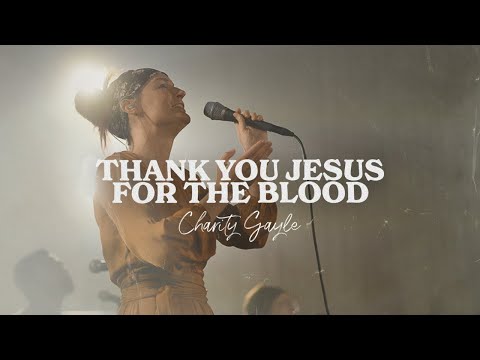 NOT A QUOTE
“Thank You Jesus for the Blood”
Charity Gayle
Sing it. Nothing in it is quoting scripture. It thanks Christ for a ransom, which is 1 Peter's picture too. The verse adds what you were ransomed from: an inherited empty way of life.
NOT A QUOTE
“Thank You Jesus for the Blood”
Charity Gayle
Sing it. Nothing in it is quoting scripture. It thanks Christ for a ransom, which is 1 Peter's picture too. The verse adds what you were ransomed from: an inherited empty way of life.✓ The blood in the song is a lamb's, and the writers have said the Passover was in mind. That is the same image 1 Peter 1:19 uses
⚠ Peter's verse works by saying what the ransom was not paid with, perishable things, silver or gold. The song has nothing that does that job, so the negation that drives the verse is not in the song
 NOT A QUOTE
“Silent Night”
Joseph Mohr, tr. John Freeman Young (recorded live by The Petersens)
Sing it. The carol quotes nothing and never says it is scripture. Just know that the quiet, the calm and the light around the child are the carol's own. Luke reports an angel, a sign and a praising host.
NOT A QUOTE
“Silent Night”
Joseph Mohr, tr. John Freeman Young (recorded live by The Petersens)
Sing it. The carol quotes nothing and never says it is scripture. Just know that the quiet, the calm and the light around the child are the carol's own. Luke reports an angel, a sign and a praising host.✓ The carol presents nothing as scripture. It names no book, chapter or verse, and no line in it is offered as the words of Luke.
⚠ The quiet and the calm are the carol's own. Luke 2:8-14 says nothing about how the night sounded. What he reports is an angel, then a multitude.
 NOT A QUOTE
“Abide With Me”
Reawaken Hymns
Sing it. Nothing here is offered as a quotation. Just know that Luke 24:29 asks for one evening and the hymn asks for a lifetime. Other texts underwrite the larger request. This verse does not make it.
NOT A QUOTE
“Abide With Me”
Reawaken Hymns
Sing it. Nothing here is offered as a quotation. Just know that Luke 24:29 asks for one evening and the hymn asks for a lifetime. Other texts underwrite the larger request. This verse does not make it.✓ Never says it is quoting, anywhere: no verse number, no scripture framing, nothing presented as the Bible's own words
⚠ Luke 24:29 is a request for one night's lodging with a practical reason attached. The hymn's evening is a figure for the end of a life, which is Lyte's reading and not the verse's statement