Ephesians 1:18 vs. “Open the Eyes of My Heart”
Paul Baloche · checked 2026-08-21
What we checked
Graded against the standard
Quotation criteria not graded: this song never presents its words as scripture
Applies to every song the Name held holy · God shown holy · true of God · the standard
✓ What's good
- Never says it is quoting, anywhere: no reference, no translation, nothing framed as scripture, in the recording, in the label's descriptions, or on the publisher's chart pages
- The image it borrows is precise. Ephesians 1:18 locates the eyes in the heart, and the song keeps that compound rather than flattening it into a general request for sight
- Every line is a request. The song never says the seeing has happened, which keeps the singer in the posture of the people Paul was praying for
- The second unit puts the largest share of the song's repetition on God's holiness rather than on the singer's asking
- Everything it asks God for is something scripture holds out somewhere: enlightened heart-eyes in Ephesians 1:18, seeing God in Matthew 5:8
- Published under CCLI 2298355 with a printed copyright line, so the words, the writer and the year are easy for anyone to check
⚠ Cautions
- The verse's purpose clause is not in the song. Paul asks for opened eyes so that three named things may be known, and none of the six key words from that list appears anywhere in the lyric
- The song's halves come from two different books. A singer who assumes the whole thing is Ephesians 1 is holding Isaiah 6 for the second half without being told
- The phrase describing God as high and lifted up is the King James wording of Isaiah 6:1. The BSB reads "high and exalted" there. No translation is named, so the King James has to be recognised rather than verified
- Isaiah's own response to seeing the Lord high and lifted up was to say he was ruined, a man of unclean lips (Isaiah 6:5). The song asks for the sight and does not go on to what the sight produced in the one person the Bible reports having it
- The request for an outpouring of power reads differently beside Ephesians 1:19. There the power is one God has already exerted, in raising Christ, and the prayer is to know how great it is rather than to receive more of it
- No passage is cited by the artist, the label, or either chord edition. Hymnary supplies twenty references. The rights holder supplies none
Verse Proof
Ephesians 1:18The text in BSB (Berean Standard Bible)
“I ask that the eyes of your heart may be enlightened, so that you may know the hope of His calling, the riches of His glorious inheritance in the saints,”
This is not a statement. It is a line from the middle of a prayer, and the prayer runs without a break from Ephesians 1:15 to 1:23. Paul has heard of the readers' faith in the Lord Jesus and their love for all the saints, and he says he has not stopped giving thanks for them. What he asks God for is a spirit of wisdom and revelation in their knowledge of Him. Verse 18 is the next clause, and it is built in two halves. The first half is the request: enlightened eyes, and the eyes belong to the heart. The second half is what the request is for. The word is "know," and three things are named as its objects. Two of them are in verse 18, the hope of His calling and the riches of His glorious inheritance in the saints. The third arrives in verse 19, the surpassing greatness of His power to us who believe, and Paul immediately says how that power is measured: it is the strength God exerted in Christ when He raised Him from the dead and seated Him at His right hand. So the enlightening is a means. Knowledge of three named things is the end, and the third of the three is measured by the resurrection.
What the song says, described not quoted
A short congregational prayer in two units. The first unit is a petition asking God to open the eyes of the singer's heart, paired with a line stating that the singer wants to see Him, and the pair repeats. The second unit says how the seeing is imagined, God enthroned above and radiant in His own glory, asks for an outpouring of His power and His love, and then turns into a threefold acclamation of holiness before closing on the same desire to see.
The counts come from the lyric text the label published in full with its official lyric video. Twenty printed lines. The petition appears six times, the desire-to-see line five times, and the word for holiness twelve times. The only divine title anywhere in the song is "Lord," used twice, both times as a vocative in the petition. No other name or title appears: not Jesus, not Christ, not God, not Father, not Spirit. The words "hope," "calling," "inheritance," "riches," "saints" and "know" appear nowhere. An independent transcription of the same recording, written with a repeat marker rather than in full, agrees on the twelve occurrences of the holiness word, on the single occurrence of each element of the second unit, and on the same absence list. Nothing is cited anywhere. No reference, no translation, and nothing framed as a quotation, in the recording or in the label's description or on either of the publisher's chord pages.
Three dates are in play and they do not conflict. The copyright line on the official uploads and on both chart editions reads 1997. Sonicflood's self-titled debut carried the first released recording in 1999. Baloche's own recording, the one checked here, is track 7 of his 2000 album of the same name, with a reprise at track 9. The year in the fact box is the year of the recording checked.
The borrowing in the title is unusually exact. Ephesians 1:18 does not say eyes and then say heart nearby. It puts the eyes inside the heart, and that compound image is the one the song keeps. Almost nothing in the modern repertoire sits this close to its verse without quoting it. What the song does not keep is the second half of the sentence. In the passage the enlightening is not the thing asked for, it is the thing asked for on the way to something else, and Paul says what that something else is: so that you may know. Then he lists. The song replaces the list with a single different object, seeing God Himself. That is not a request the Bible refuses. Matthew 5:8 says the pure in heart will see God, and Matthew 5:8 is on Hymnary's own reference list for this text. But it is a different request from the one in verse 18, and the difference is checkable rather than a matter of taste, because Paul's version has three named items in it and the song's has none. Then the second unit leaves Ephesians altogether. An enthroned God, high and lifted up, surrounded by His glory, and the threefold holy, are Isaiah's throne vision, not Paul's prayer. Hymnary's reference list names both passages, Ephesians 1:17-23 and Isaiah 6:1-8, along with Revelation 4:1-8. The rights holder names neither. Neither PraiseCharts edition lists a scripture reference, and the label's video descriptions carry the writer, the copyright and the CCLI number but no passage.
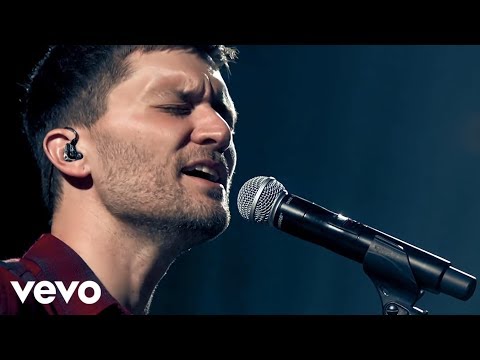
▸ Official upload. Now listen with the proof in mind.
Paul prays for opened eyes and then says what for. The song keeps the eyes and leaves the list.
Why it matters
For a generation of English-speaking congregations this song is how Ephesians 1:18 is met, and often the only way it is met. Songfacts records an August 2008 CCLI survey putting it fourth among the songs most performed in church services, and Hymnary counts twenty-seven hymnals carrying it.
That gives the verse a very large second life in a shortened form. The shortening is not an error, because the song never says it is the verse. It is worth naming anyway, because what got left behind is the part with content in it. A singer who has only the song has been taught to ask for opened eyes. A reader who has the sentence has been told what the opened eyes are for, and it turns out to be three specific things, one of which is measured by the resurrection.
Is it safe to dwell on?
Sung on repeat, this song moves between God and the singer.
Count what repetition puts in you here and the answer is mostly one word. The holiness word lands twelve times in twenty printed lines, more than any other thing the song says, and it lands last. That is the largest single deposit this song makes, and it is a true one.
The dwelling tag is mixed rather than God, and the count is why. Roughly thirteen of the twenty printed lines have the singer's own eyes or the singer's own wanting as their subject, and the remaining lines are about God. The object of every one of those first-person lines is God, so the song never turns inward, but the grammar is honest about where the attention sits. What that plants is a hunger, held in the asking voice rather than the claiming voice. The song never once reports that the seeing has arrived, and a prayer that stays a prayer is a good thing to have worn into memory.
What repetition will not plant is the content. Sung a thousand times, this song teaches a person to want opened eyes and never tells them what opened eyes are for. Ephesians 1:18 tells them in one sentence. Sing the song and read the sentence, and the hunger the song plants has somewhere to go.
Helpful comparison
The two-book structure is worth laying out, because it is the thing a reference list makes visible and a listener usually does not.
Unit one is Ephesians 1:18 without its purpose clause. Unit two is Isaiah 6 without its aftermath. Isaiah 6:1 in the King James has the Lord sitting on a throne, high and lifted up, and the song uses that exact phrase; the BSB renders the same words "high and exalted," which is why the King James is audible here even though nobody names it. Isaiah 6:3 is the seraphim calling the threefold holy to one another, which is the acclamation the song's second half becomes.
Read side by side, the two texts do something the song does not quite do. Paul asks for enlightened eyes and then names the content: hope, inheritance, power. Isaiah gets the vision without asking for it and is undone by it two verses later. The song sits between them, asking for Isaiah's sight using Paul's image, and stopping before either passage's second half. None of that makes it a false song. It makes it a song with two open ends, and both ends are in the Bible where anyone can go and close them.
The purpose the verse states is knowledge, of three named things, and the song swaps that for sight. Its second half then moves to the throne vision of Isaiah 6, a different book and a different scene.
Sources
- Paul Baloche — Open The Eyes Of My Heart (Official Live Video) · (the recording checked for this proof; oEmbed reports the channel as Integrity Music, the label's own channel, and the description gives the album Open The Eyes Of My Heart, writer Paul Baloche, © 1997 Integrity Hosanna! Music and CCLI 2298355)
- Paul Baloche — Open the Eyes of My Heart (Official Lyric Video) · (same channel; its description publishes the lyric written out in full, which is the text used for the counts, and repeats the writer credit, the 1997 copyright line and CCLI 2298355)
- Open The Eyes Of My Heart — Paul Baloche (independent upload with the lyric in its description) · (the second, independent transcription used only to corroborate the counts: it agrees on twelve occurrences of the holiness word, one occurrence of each element of the second unit, and no divine title but "Lord")
- Hymnary.org — Open the eyes of my heart, Lord · (author Paul Baloche, © 1997 Integrity's Hosanna! Music admin. Hal Leonard, twenty-seven hymnals, and the twenty-entry scripture reference list including Ephesians 1:17-23, Isaiah 6:1-8, Revelation 4:1-8, Matthew 5:8, 2 Kings 6:17 and Psalm 119:18)
- PraiseCharts — Open The Eyes Of My Heart chords (arr. David Shipps) · (independent confirmation of the writer, the © 1997 Integrity's Hosanna Music line and CCLI 2298355; theme tags only, no scripture reference listed)
- PraiseCharts — Open The Eyes Of My Heart chords (arr. Billy Payne) · (a second chart edition with the same writer, copyright and CCLI number, and again no scripture reference listed)
- Leadworship — Open The Eyes Of My Heart (2000) · (Baloche's own site: album year 2000, the song at track 7 with a reprise at track 9)
- Wikipedia — Open the Eyes of My Heart · (Sonicflood's 1999 self-titled debut carried the first released recording, Baloche's own followed the next year, and the article names Ephesians 1:18 as the song's basis)
- Songfacts — Open The Eyes Of My Heart (SONICFLOOd) · (Jeff Deyo's account of why the band covered it, and the August 2008 CCLI survey placing it fourth among songs most performed in church services)
- Integrity Music — Paul Baloche, Open The Eyes Of My Heart (Song Story) · (establishes that Baloche discusses this song on camera for the label, from The Writer's Collection; the account is audio only and no transcript could be retrieved, so nothing from it is used in this proof)
Corrections
No corrections to this proof yet.
Think we got something wrong? Tell us what and where, and we will check it against the text. Real errors get fixed here, dated, in public. Every correction on the site →
Where the text survives the song
 ✓ VERIFIED
“Far More Abundantly (Ephesians 3:20-21)”
Seeds Kids Worship (Seeds Family Worship)
Sing it. It is Ephesians 3:20-21 whole, in the ESV, and the publisher's free chord chart names the version and its text edition. The words can be checked against the exact text.
✓ VERIFIED
“Far More Abundantly (Ephesians 3:20-21)”
Seeds Kids Worship (Seeds Family Worship)
Sing it. It is Ephesians 3:20-21 whole, in the ESV, and the publisher's free chord chart names the version and its text edition. The words can be checked against the exact text.✓ Both verses whole and in order, in the ESV's wording. Every repeated line is the passage's own words coming round again
⚠ The YouTube upload names the reference but not the version. The ESV credit sits on the chord chart, the album page and the song list, so a viewer has to go looking
 ✓ VERIFIED
“Ephesians 6”
Streetlights
Play it freely. It is Ephesians itself, read word for word in a named translation, so the armor passage arrives where Paul put it, at the end, after everything he said first.
✓ VERIFIED
“Ephesians 6”
Streetlights
Play it freely. It is Ephesians itself, read word for word in a named translation, so the armor passage arrives where Paul put it, at the end, after everything he said first.✓ The whole book, in order, so verses 10 to 13 arrive after the household instructions of 6:1-9 rather than as a passage on their own
✓ no cautions: this is the standard
 ~ FAITHFUL
“Be Kind and Compassionate”
Slugs & Bugs (Randall Goodgame)
Sing it, and teach it to your children. It is Ephesians 4:32 whole, its reason included, in the current NIV's wording. No translation is named anywhere, so check the words against an NIV once.
~ FAITHFUL
“Be Kind and Compassionate”
Slugs & Bugs (Randall Goodgame)
Sing it, and teach it to your children. It is Ephesians 4:32 whole, its reason included, in the current NIV's wording. No translation is named anywhere, so check the words against an NIV once.✓ The verse survives whole, and so does the clause that gives the command its reason. A child learns the kindness and the ground for it in a single breath
⚠ No translation is named on the album page, the audio collection page, or the official video's description. The NIV wording has to be recognised rather than checked
More songs like this
 NOT A QUOTE
“O Church, Arise”
Keith Getty & Stuart Townend
Sing it. It quotes nothing and never says it is scripture, and it gets the hardest part right: the enemy is the devil's lies, never people. Bring Ephesians 6 with it, because the hymn names a sword and never names the word.
NOT A QUOTE
“O Church, Arise”
Keith Getty & Stuart Townend
Sing it. It quotes nothing and never says it is scripture, and it gets the hardest part right: the enemy is the devil's lies, never people. Bring Ephesians 6 with it, because the hymn names a sword and never names the word.✓ The one thing a battle hymn most easily gets wrong, this one gets right. No human being, group, or institution is named as the enemy anywhere in the four stanzas. The named opponent is the devil, which is where Paul puts it in verse 12
⚠ The armour is partial. Three of Paul's six items appear, the belt of truth, the shield of faith, and a sword. The breastplate of righteousness, the feet fitted with the readiness of the gospel of peace, and the helmet of salvation are not in the hymn
 NOT A QUOTE
“Cornerstone”
Hillsong Worship
Sing it. Nothing here is offered as scripture. Just know that what the song quotes is a hymn, and that Ephesians' cornerstone holds up a building made of people rather than one person's house.
NOT A QUOTE
“Cornerstone”
Hillsong Worship
Sing it. Nothing here is offered as scripture. Just know that what the song quotes is a hymn, and that Ephesians' cornerstone holds up a building made of people rather than one person's house.✓ Never says it is quoting, anywhere: no verse cited, no scripture framing, nothing presented as the Bible's words
⚠ The title word is Ephesians' word, but the rock imagery underneath it descends from Matthew 7's parable, where the picture is one man's house. Two different buildings share one song
 NOT A QUOTE
“Death Was Arrested”
North Point Worship
Sing it. Nothing here is offered as a verse, and the movement it describes, dead and then made alive by mercy, is the movement Ephesians 2 describes. The title phrase is the writers' image, not the Bible's.
NOT A QUOTE
“Death Was Arrested”
North Point Worship
Sing it. Nothing here is offered as a verse, and the movement it describes, dead and then made alive by mercy, is the movement Ephesians 2 describes. The title phrase is the writers' image, not the Bible's.✓ Never says it is quoting, anywhere: no verse reference, no scripture framing, nothing presented as the Bible's own words
⚠ The title phrase is not in scripture. By the group's own account it came from a tombstone inscription, and a listener who assumes it is a verse will not find it