John 4:13-14 vs. “Holy Water”
We The Kingdom · checked 2026-08-22
What we checked
Graded against the standard
Quotation criteria not graded: this song never presents its words as scripture
Applies to every song the Name held holy · God shown holy · true of God · the standard
✓ What's good
- Never says it is quoting at all: no verse in the lyric, none in the official upload's description, and no scripture framing anywhere in the song
- The publisher's own song page lists three named texts, Isaiah 1:18, Ephesians 4:31-32 and Micah 7:18-19, so what the song says about forgiveness can be checked against scripture the rights holder itself points at
- The bridge's concern is a question Paul actually asks in Romans 6:1-2, and the songwriter has said in an interview that this is where it came from
- The picture in the second verse, going under at the river, is the New Testament's own picture for what the same verse asks about, being born again (Romans 6:3-4)
- It is a request throughout, addressed to God, and never a statement about what the singer has achieved
⚠ Cautions
- Nothing in the song points at John 4. The pairing is made by readers on the strength of one shared word, and the two waters do different things
- The passage's water is drunk and becomes a fount inside the person. Sung as this verse, a song about daily asking can make Jesus' promise sound like a supply that runs low
- The song's own two water images are not the same image. Verse one is thirsty and asking for a drink, and the chorus answers with water felt on the body, which is washing rather than drinking
- The one scriptural phrase the song does carry, being born again, belongs to John 3:3-7. The passage that fits this song's language is one chapter before the one it gets paired with
Verse Proof
John 4:13-14The text in BSB (Berean Standard Bible)
“Jesus said to her, “Everyone who drinks this water will be thirsty again. But whoever drinks the water I give him will never thirst. Indeed, the water I give him will become in him a fount of water springing up to eternal life.”
Jesus is sitting at Jacob's well outside the Samaritan town of Sychar at midday, and he has asked a woman who came to draw water for a drink. She has just pointed out that he has nothing to draw with and the well is deep. These two verses are his answer to that objection. He sets the well's water against the water he gives: the first leaves a person thirsty again, and the second ends thirst and turns into a spring inside the one who drinks it. She asks for that water in the next verse, still thinking about the walk to the well. The conversation then turns to her husbands, to worship, and finally to who he is.
What the song says, described not quoted
A prayer of need, sung to God, in four movements. In the first the singer is kneeling and asking again, then walking through dry country and asking for water because he is thirsty, with a short repeated line saying he needs God. The chorus describes what God's forgiveness is like using three senses at once: a sweetness tasted, a sound like an orchestra heard, and a wash of consecrated water felt on the body, which is where the title comes from. The second verse describes the singer as spiritually dead and enslaved by sin, says he wants to know about being born again, and asks to be brought to the river and taken under in baptism. The bridge refuses to presume on God's grace, states a daily need for it, and credits it as the one thing that produces any real change in him. The closing repeats the title image. No verse is cited anywhere in the song, and none appears in the official upload's description.
Nothing here is presented as scripture, so what follows is a comparison rather than a check of a quotation. The song and the passage share the word water and almost nothing else about it. In John 4 the water is drunk, once, and its result is permanent: no more thirst, and a fount inside the person. In the song the water arrives on the outside. It is poured, felt on the body, and asked for again every day. The one thing the singer explicitly asks to be put into is a river, at baptism, which is a different rite and a different picture. The song's own scriptural markers point elsewhere too. Being born again is John 3:3-7, one chapter earlier, and being taken under at the river is the picture Romans 6:3-4 uses for it. Ed Cash has said publicly that the bridge came out of reading Romans, where Paul asks whether grace should be presumed on. And the publisher's own listing for the song names Isaiah 1:18, Ephesians 4:31-32 and Micah 7:18-19, three texts about being washed and forgiven. Not one source connected to this song names John 4.
▸ Official upload. Now listen with the proof in mind.
John 4's water is drunk once and becomes a spring inside. This song's water is felt on the outside.
Why it matters
Water is the most reused image in the Bible, and it does a different job in almost every place it appears. It is drunk in John 4, poured out in Ezekiel 36:25, crossed in Exodus 14, and gone under in Romans 6. A song and a verse can share the word and be about two unrelated things.
The stakes here are small but real. A singer who files this song under John 4:13-14 has quietly turned a promise about a permanent gift into a description of a supply that has to be requested again each morning. The passage says the opposite about its own water. Keeping the two apart costs nothing and keeps both intact.
Is it safe to dwell on?
Sung on repeat, this song moves between God and the singer.
The dwelling tag is mixed, and the count leans toward the singer. Most lines are about his condition: his kneeling, his thirst, his sin, his need. The lines about God are the chorus similes, and even those describe forgiveness by what it feels like to receive it. What that plants by repetition is a posture of dependence, which is a good thing to have worn into you, and a habit of noticing your own need, which is a heavier thing to rehearse daily.
The bridge plants something sturdier. Not wanting to presume on grace is a guardrail Paul builds in Romans 6, and a song that puts it in the most repeated part of the arrangement is putting a real safeguard into a lot of memories. If you loop this one, read John 4:13-14 alongside it, and then John 7:37-38. The song gives you the asking. Those two verses give you what the asking is answered with, and that it does not run out.
Helpful comparison
It is worth testing the apparent tension rather than asserting it, because the answer is not the obvious one.
Read flatly, John 4:14 and this song look like they disagree. Jesus says the water he gives ends thirst permanently. The song's singer is thirsty on the first line and still asking on the bridge. But two later texts in the same Bible settle it. In John 7:37-38, well after this conversation, Jesus stands up at the feast and calls anyone who is thirsty to come to him and drink, and the streams of living water are said to flow from within the one who believes. And Revelation 22:17 closes the Bible with the Spirit and the bride saying come, and the thirsty invited to drink freely. Scripture keeps issuing the invitation after making the promise, so a Christian who keeps coming is not contradicting John 4:14.
So the tension dissolves, and what is left is the real difference, which is not about frequency at all. It is about direction. John 4's water goes in and becomes a source the person carries. The song's water stays on the surface, felt and welcomed and asked for again. Both are scriptural pictures. They are simply not the same picture, and the song is standing in the washing tradition of Isaiah 1:18 and Micah 7:19, which is exactly where its publisher files it.
Sources
- We The Kingdom, "Holy Water" official live video · (the recording checked for this proof, published 1 October 2019 on the band's own channel, oEmbed author_name "We The Kingdom". The description carries the full lyric and links to the release, and cites no scripture anywhere)
- Worship Together song page, Holy Water · (the platform-side listing: writers Ed Cash, Scott Cash, Franni Cash, Martin Cash and Andrew Bergthold, CCLI 7136448, and its scripture references, Isaiah 1:18, Ephesians 4:31-32 and Micah 7:18-19)
- Wikipedia, Holy Water (We the Kingdom song) · (released 13 September 2019 as a single from the EP Live at the Wheelhouse, later on the 2020 album Holy Water; writers, label, chart placings, and Ed Cash on the song being about forgiveness)
- Songfacts, Holy Water by We The Kingdom · (the five writers, the sensory description of forgiveness, and the bridge coming from Romans and its warning against presuming on grace)
- FreeCCM, Behind The Song: We The Kingdom on "Holy Water" · (Ed Cash on reading Romans and on the bridge; the riverside and baptism imagery described as cleansing and rebirth)
- American Songwriter, We The Kingdom break free from demons on debut album Holy Water · (album context; the track described in the piece as a baptismal soul soaker, which is the washing reading of the song, not a drinking one)
Corrections
No corrections to this proof yet.
Think we got something wrong? Tell us what and where, and we will check it against the text. Real errors get fixed here, dated, in public. Every correction on the site →
Where the text survives the song
 ~ FAITHFUL
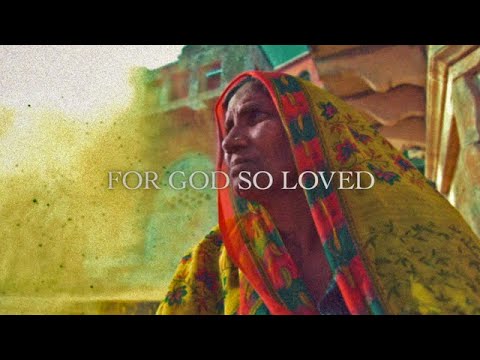
“God So Loved”
We The Kingdom
Sing it. The chorus walks through John 3:16 clause by clause, lightly reworded and never labeled. The verse's own alternative, shall not perish, stays unsung, so read the whole sentence once for yourself.
~ FAITHFUL
“God So Loved”
We The Kingdom
Sing it. The chorus walks through John 3:16 clause by clause, lightly reworded and never labeled. The verse's own alternative, shall not perish, stays unsung, so read the whole sentence once for yourself.✓ The chorus keeps John 3:16's clauses in the verse's own order: love, gift, belief, life
⚠ No translation is named, so the near-quotation has to be recognized rather than checked
 ~ FAITHFUL
“Just As I Am”
Charlotte Elliott (recorded by Reawaken Hymns)
Sing it. The clause it was printed under is quoted accurately, and the hymn answers that clause honestly. Read the whole verse once. The half the hymn leaves out is the half that makes the half it sings hold.
~ FAITHFUL
“Just As I Am”
Charlotte Elliott (recorded by Reawaken Hymns)
Sing it. The clause it was printed under is quoted accurately, and the hymn answers that clause honestly. Read the whole verse once. The half the hymn leaves out is the half that makes the half it sings hold.✓ The epigraph is a real citation, printed with the hymn at its first confirmed publication, and its clause is quoted word for word.
⚠ The epigraph names the address and not the version. Its wording is King James (KJV); a singer who looks the verse up in a modern Bible will find different words for the same clause.
 ~ FAITHFUL
“Behold the Lamb of God”
Andrew Peterson
Sing it. The summons is the Baptist's own sentence, narrowed from the world's sin to ours and joined to other true titles of Christ. Read John 1 once, so you know the pointing began at the Jordan, not the manger.
~ FAITHFUL
“Behold the Lamb of God”
Andrew Peterson
Sing it. The summons is the Baptist's own sentence, narrowed from the world's sin to ours and joined to other true titles of Christ. Read John 1 once, so you know the pointing began at the Jordan, not the manger.✓ The refrain's summons is the Baptist's sentence in recognizable King James wording, and every stacked title is scripture's own: life and light of men, Son of God, Son of Man, Emmanuel
⚠ The world's sin becomes our sin. Nothing false enters, but the Baptist's clause is wider, and the width is the startling part of verse 29
More songs like this
~ FAITHFUL
“God So Loved”
We The Kingdom
Sing it. The chorus walks through John 3:16 clause by clause, lightly reworded and never labeled. The verse's own alternative, shall not perish, stays unsung, so read the whole sentence once for yourself.✓ The chorus keeps John 3:16's clauses in the verse's own order: love, gift, belief, life
⚠ No translation is named, so the near-quotation has to be recognized rather than checked
 NOT A QUOTE
“I Need Thee Every Hour”
Reawaken Hymns
Sing it. Nothing here is offered as a verse, and what it says at its centre is the verse's own. Just know that John 15:5 states that dependence as a fact about branches, not as a feeling you have to keep producing.
NOT A QUOTE
“I Need Thee Every Hour”
Reawaken Hymns
Sing it. Nothing here is offered as a verse, and what it says at its centre is the verse's own. Just know that John 15:5 states that dependence as a fact about branches, not as a feeling you have to keep producing.✓ Never says it is quoting at all: no verse number, no scripture framing, nothing offered as the Bible's own words, and the publisher's resource page for this recording cites no passage either
⚠ None of the verse's vocabulary is sung. Vine, branches, fruit and remain are all absent, so a singer looking for John 15 in the words will not find it there
 NOT A QUOTE
“He Will Hold Me Fast”
Keith & Kristyn Getty
Sing it. It quotes nothing and never says it is scripture. It says what John 10:28 says, that the grip is His and not yours. Read verse 29 alongside it for the reason that grip holds.
NOT A QUOTE
“He Will Hold Me Fast”
Keith & Kristyn Getty
Sing it. It quotes nothing and never says it is scripture. It says what John 10:28 says, that the grip is His and not yours. Read verse 29 alongside it for the reason that grip holds.✓ Never says it is quoting. No verse is cited in the sung text, and nothing is presented as the words of scripture
⚠ The Father is not named in the song. John 10:29 supplies the reason the promise holds, that the Father who gave them is greater than all, and that clause has no counterpart in either version of the hymn