John 11:33-35 vs. “Held”
Natalie Grant · checked 2026-08-22
What we checked
Graded against the standard
Quotation criteria not graded: this song never presents its words as scripture
Applies to every song the Name held holy · God shown holy · true of God · the standard
✓ What's good
- The song's central statement is one scripture makes in as many words. Isaiah 43:2 promises company through the water and the fire, not a detour around them, and John 16:33 says the trouble is coming
- The passage checked here shows the same thing as a scene rather than a statement. Jesus weeps at the tomb of a man He is about to raise, so the grief is not skipped even when the ending is certain
- It quotes no verse and cites none, so there is no borrowed authority and no quotation to misread
- The verses narrate other people's losses rather than handing the listener a script for their own, which is uncommon in a comfort song
- The writing has a public, checkable origin. The songwriter has named the losses behind it, and one of the women involved has published her own account under her own name
⚠ Cautions
- The statement arrives with no address. Nothing in the song points at a verse, so a listener who wants to check it has to be told where to look
- The promise in Isaiah 43:2 is spoken to a named people in Isaiah 43:1, Jacob and Israel, redeemed and called by name. A song that states the promise in general terms leaves the reader to work out on what grounds it reaches them
- Held is the song's word, not the wording of these texts. Deuteronomy 33:27 says the everlasting arms are underneath, and John 10:28 says no one can snatch them out of My hand. The image is fair as a summary, and a summary is what it is
- John 11 does not stop at verse 35. The chapter's comfort is a weeping Jesus and then an emptied tomb, and the tears are the first half of an answer rather than the whole of it
Verse Proof
John 11:33-35The text in BSB (Berean Standard Bible)
“When Jesus saw her weeping, and the Jews who had come with her also weeping, He was deeply moved in spirit and troubled. “Where have you put him?” He asked. “Come and see, Lord,” they answered. Jesus wept.”
Lazarus of Bethany is sick, his sisters send for Jesus, and Jesus stays where He is for two days. John gives the reason in the same breath as the delay: Jesus loved Martha and her sister and Lazarus, and so He stayed (11:5-6). By the time He arrives Lazarus has been in the tomb four days, and both sisters greet Him with the same sentence, that their brother would not have died if He had been there (11:21, 11:32). Verses 33-35 record what He does next, before He does anything about it. He is deeply moved and troubled, He asks where they have laid the body, and He weeps. Then He calls Lazarus out (11:43-44). The tears are not uncertainty about the outcome. He knows the outcome. He weeps anyway, standing with the people who are weeping.
What the song says, described not quoted
The song narrates other people's losses rather than the singer's. It describes a mother whose infant dies, and it describes the moment a grieving person weighs bitterness against trust. Then it states its argument: that no one was ever promised exemption from that kind of loss, and that what was promised instead was to be held through it. God is spoken about rather than spoken to. There are no second-person pronouns aimed at Him anywhere in the song, and no chapter or verse is cited at any point. The writer, Christa Wells, has given a public account of the writing: three women she knew described devastating losses to her within a short span, and what struck her was their shared testimony of God's nearness at the worst moment. One of those women, Vaneetha Risner, has written her own account of the infant son whose story opens the first verse.
Nothing is presented as scripture, so no wording shifted. What the song does instead is make a flat proposition in plain English: it says what the promise was not, and then what it was. That is a statement about the Bible even though no reference to the Bible appears in it. The thing to check here is therefore not a quotation but a sentence, and a sentence can be checked. Two halves, both of them findable. Scripture says trouble is coming, in John 16:33 and Acts 14:22. Scripture says God will be in it, in Isaiah 43:2 and Deuteronomy 33:27. And John 11:33-35 puts both halves in one scene.
▸ Official upload. Now listen with the proof in mind.
Isaiah 43:2 says when you pass through the waters, not if. What is promised is company, not exemption.
Why it matters
Most of the checking on this site is subtraction: a song points at a verse and the verse does not say that. This one runs the other way. The song makes a doctrinal statement with no address attached, and that statement turns out to be one the Bible makes in as many words. That is worth publishing, because a reader who only ever sees corrections will start to assume that anything unfootnoted is suspect. It is not. Unfootnoted statements are unchecked, which is a different thing, and the remedy is to go and check them.
Is it safe to dwell on?
Sung on repeat, this song moves between God and the singer.
The centre of attention moves as the song goes, which is why the tag is mixed rather than God. The verses are about people and what happened to them. The chorus is about what God does and does not undertake to do. Sung on repeat, what this plants is a single proposition, and it is a load-bearing one: that loss is not evidence of having been abandoned. That sentence gets used on the worst day of a life, and it is true, and it is in the Bible. What repetition here does not plant is any way to find it there. The song hands over the conclusion without the address, so the useful thing to loop alongside it is the address itself. Read John 11:33-35 and then read to the end of the chapter, and read Isaiah 43:1-2 whole. Then the comfort has somewhere to stand when someone asks how you know.
Helpful comparison
Isaiah 43:2 is the cleanest test of the song's argument, because the whole finding turns on one word. The verse reads when you pass through the waters, not if. The same construction runs through the rest of it: when you go through the rivers, when you walk through the fire. The waters and the fire are assumed. What is promised is company in them, and the flames not consuming. That is the song's sentence, in a prophet's words, six centuries earlier.
The rights holder cites nothing. The label-delivered upload on the artist's YouTube catalogue channel carries the writer, producer, album and copyright line, and no scripture reference. CCLI's public SongSelect page for the song is gated, so whatever scripture field it may hold could not be read for this proof. No publisher citation was found, which means the song's biblical grounding is real but is not something the song or its rights holder ever points you to.
Sources
- Natalie Grant — Held (label-delivered upload, Curb Records) · (the recording checked for this proof; the description carries "Provided to YouTube by Curb Records", album Awaken, released 2005-03-22, "Composer Lyricist: Christa Wells", and no scripture reference)
- Wikipedia — Awaken (Natalie Grant album) · (album released 22 March 2005 on Curb Records; "Held" written by Christa Wells and released as a single; Song of the Year nomination)
- Christa Wells — official site, About · (the writer's own page: she is best known for writing "Held" for Natalie Grant)
- Vaneetha Risner — This is What it Means to be Held · (first-person account by the woman whose son's death opens the song: "my dear friend Christa penned the song")
- Tending the Home Fires — The Meaning Behind "Held" · (carries Christa Wells' own statement about the three women's losses behind the song, and her point that followers of Jesus were told to expect suffering; she names no chapter or verse)
- Wikipedia — Christa Wells · (Wells wrote "Held" on her own and was named Dove Award Songwriter of the Year in 2006)
Corrections
No corrections to this proof yet.
Think we got something wrong? Tell us what and where, and we will check it against the text. Real errors get fixed here, dated, in public. Every correction on the site →
Where the text survives the song
 ~ FAITHFUL
“Just As I Am”
Charlotte Elliott (recorded by Reawaken Hymns)
Sing it. The clause it was printed under is quoted accurately, and the hymn answers that clause honestly. Read the whole verse once. The half the hymn leaves out is the half that makes the half it sings hold.
~ FAITHFUL
“Just As I Am”
Charlotte Elliott (recorded by Reawaken Hymns)
Sing it. The clause it was printed under is quoted accurately, and the hymn answers that clause honestly. Read the whole verse once. The half the hymn leaves out is the half that makes the half it sings hold.✓ The epigraph is a real citation, printed with the hymn at its first confirmed publication, and its clause is quoted word for word.
⚠ The epigraph names the address and not the version. Its wording is King James (KJV); a singer who looks the verse up in a modern Bible will find different words for the same clause.
 ~ FAITHFUL
“Behold the Lamb of God”
Andrew Peterson
Sing it. The summons is the Baptist's own sentence, narrowed from the world's sin to ours and joined to other true titles of Christ. Read John 1 once, so you know the pointing began at the Jordan, not the manger.
~ FAITHFUL
“Behold the Lamb of God”
Andrew Peterson
Sing it. The summons is the Baptist's own sentence, narrowed from the world's sin to ours and joined to other true titles of Christ. Read John 1 once, so you know the pointing began at the Jordan, not the manger.✓ The refrain's summons is the Baptist's sentence in recognizable King James wording, and every stacked title is scripture's own: life and light of men, Son of God, Son of Man, Emmanuel
⚠ The world's sin becomes our sin. Nothing false enters, but the Baptist's clause is wider, and the width is the startling part of verse 29
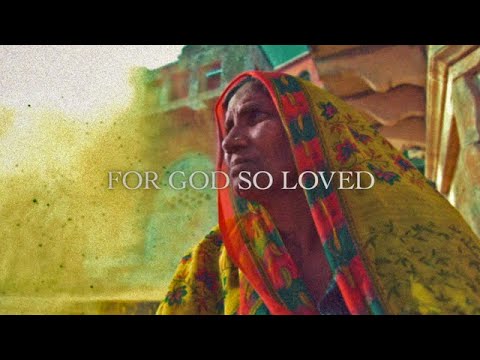 ~ FAITHFUL
“God So Loved”
We The Kingdom
Sing it. The chorus walks through John 3:16 clause by clause, lightly reworded and never labeled. The verse's own alternative, shall not perish, stays unsung, so read the whole sentence once for yourself.
~ FAITHFUL
“God So Loved”
We The Kingdom
Sing it. The chorus walks through John 3:16 clause by clause, lightly reworded and never labeled. The verse's own alternative, shall not perish, stays unsung, so read the whole sentence once for yourself.✓ The chorus keeps John 3:16's clauses in the verse's own order: love, gift, belief, life
⚠ No translation is named, so the near-quotation has to be recognized rather than checked
More songs like this
 NOT A QUOTE
“Rise Up (Lazarus)”
CAIN
Sing it as a picture, not a quotation. The song never presents itself as quoting John 11. In the passage the command is to come out, and Jesus says it to a man dead four days.
NOT A QUOTE
“Rise Up (Lazarus)”
CAIN
Sing it as a picture, not a quotation. The song never presents itself as quoting John 11. In the passage the command is to come out, and Jesus says it to a man dead four days.✓ The song never presents its words as scripture. There is no chapter and verse and no quotation framing, so nothing in it is passed off as the text of John 11
⚠ The phrase the song repeats is not the command at the tomb. There Jesus says come out, or come forth in the KJV. He does say earlier that Lazarus will rise again (11:23)
 NOT A QUOTE
“To God Be the Glory”
Fanny Crosby (recorded by Reawaken Hymns)
Sing it. Nothing in it is offered as scripture. Stanza one restates John 3:16 in Crosby's own words, and the tie to that verse was made by hymn scholars, not by the song.
NOT A QUOTE
“To God Be the Glory”
Fanny Crosby (recorded by Reawaken Hymns)
Sing it. Nothing in it is offered as scripture. Stanza one restates John 3:16 in Crosby's own words, and the tie to that verse was made by hymn scholars, not by the song.✓ Nothing in the sung words is offered as a quotation. No verse is named, and no line is framed as scripture, so nobody is asked to take a paraphrase for the text
⚠ Stanza one restates John 3:16 without the two outcomes the verse ends on. Crosby's text never uses perish, eternal or everlasting, in the two sung stanzas or in the third
 NOT A QUOTE
“I Need Thee Every Hour”
Reawaken Hymns
Sing it. Nothing here is offered as a verse, and what it says at its centre is the verse's own. Just know that John 15:5 states that dependence as a fact about branches, not as a feeling you have to keep producing.
NOT A QUOTE
“I Need Thee Every Hour”
Reawaken Hymns
Sing it. Nothing here is offered as a verse, and what it says at its centre is the verse's own. Just know that John 15:5 states that dependence as a fact about branches, not as a feeling you have to keep producing.✓ Never says it is quoting at all: no verse number, no scripture framing, nothing offered as the Bible's own words, and the publisher's resource page for this recording cites no passage either
⚠ None of the verse's vocabulary is sung. Vine, branches, fruit and remain are all absent, so a singer looking for John 15 in the words will not find it there