Acts 2:24 vs. “O Praise the Name (Anástasis)”
Hillsong Worship · checked 2026-08-21
This song is checked more than once. Each proof takes it against one passage, so the findings differ. Also checked against 1 Corinthians 15:3-4.
What we checked
Graded against the standard
Quotation criteria not graded: this song never presents its words as scripture
Applies to every song the Name held holy · God shown holy · true of God · the standard
✓ What's good
- Gives the burial a full verse. Acts 2:31 says the point at issue was that His body did not see decay, and a song that stays in the tomb keeps that in view
- Shows death beaten rather than merely escaped, which is the direction verse 24 travels
- Christ is the subject of nearly every line in the verses, and the singer appears as witness and beneficiary rather than as the subject
- Carries the story past the resurrection to the return, so what gets sung is a whole arc and not one scene
- Says it is nothing but a song. There is no citation to check and no translation to verify, so no part of it can be misheard as a quotation
⚠ Cautions
- Verse 24's reason, that death could not have kept Him, is not in the song. Repetition will plant the resurrection as a victory won, not as an outcome that was never in doubt
- Acts 2:24 makes God the one who raises. The song's grammar has the Son rising, which scripture also says elsewhere, but the Father's part in the resurrection is not what this song will plant
- The publisher's own page lists a single scripture reference for the song, Romans 5:8, which is a verse about the cross. Nothing in the rights holder's material connects the song to Acts 2:24, so any resemblance is the shared story rather than the song pointing at the verse
Verse Proof
Acts 2:24The text in BSB (Berean Standard Bible)
“But God raised Him from the dead, releasing Him from the agony of death, because it was impossible for death to keep Him in its grip.”
Peter is preaching in Jerusalem on the day of Pentecost, to a crowd of Jews and God-fearers who have just heard the disciples speaking in their own languages. Verse 24 is the turn in his sermon. He has said that Jesus was handed over by God's set plan and put to death by the hands of the lawless, and this is what God did next. Peter does not leave the reason standing as an assertion. In the verses that follow he quotes Psalm 16, points out that David died and was buried and that David's tomb was still in the city, and concludes that David was speaking as a prophet about the Messiah's rising. The impossibility in verse 24 is the claim. Psalm 16 is the evidence Peter offers for it.
What the song says, described not quoted
Four verses and a repeated chorus. The first turns the singer's mind to the cross and to the wounds Christ bore for him. The second stays inside the burial: the body laid in Joseph's tomb, the stone, the stillness. The third is the third day at dawn, the Son rising and death beaten. The fourth looks ahead to His return in glory and to the singer rising among the saints to see His face. The chorus is direct praise of the name of the Lord. Who the words speak to shifts across the song: the verses narrate about Christ in the third person, and the chorus turns and addresses God. No chapter or verse is cited anywhere, and nothing is offered as a quotation.
Nothing is attributed, because nothing is quoted and the song does not present itself as a setting of this verse or any other. What can be measured is how much of Acts 2:24 the song's resurrection verse carries. The verse has three parts: God raised Him, He was released from the agony of death, and the reason, that death could not have kept Him. The song has the event, and it has the release, since death is shown beaten rather than merely survived. It does not have the reason. It also does not have the agency. In the song's grammar the Son rises; in Acts 2:24 God raises Him. Both ways of saying it are scriptural, and the active voice is not an error. It is simply not this verse's voice.
▸ Official upload. Now listen with the proof in mind.
The song sings a victory. Acts 2:24 says something stronger, that death never had a hold it could keep.
Why it matters
Peter is not narrating at Pentecost. He is arguing, in the city where the crucifixion had happened weeks before, in front of people who had watched it. An empty tomb on its own can be heard as a wonder, a thing that happened once and might not have. Verse 24 refuses that hearing. It says death had no hold that could be kept, and Peter turns to Psalm 16 to show the claim was made in advance. A song can carry the whole event and still leave a singer with a rescue where the text gives a certainty.
Is it safe to dwell on?
Sung on repeat, this song fixes your attention on God.
What repetition plants here is the gospel in scenes: cross, tomb, dawn, return. That is a good thing to carry, and the dwelling tag is God because the singer spends the song looking at Christ rather than at himself. Notice what a year of singing it will not plant. It will not plant a reason. The resurrection will settle in memory as the morning the story turned, which it is, and not as the morning when something always impossible became visible. If you want the reason too, read Peter's sermon through to verse 32. The song hands you the scene, and Acts 2 hands you why the scene could not have gone the other way.
Helpful comparison
The finding does not depend on which Bible is open. The BSB says it was impossible for death to keep Him in its grip. The KJV says it was not possible that he should be holden of it. The WEB says it was not possible that he should be held by it. The wording differs and the claim does not: all three name God as the one who raised Him, and all three give a reason. The translation toggle on this page can be moved without changing what the song leaves out. This site also checks the same song against 1 Corinthians 15:3-4, where the missing element is different again.
Sources
- Hillsong Worship — O Praise The Name (Anástasis) Lyric Video · (the recording checked for this proof; oEmbed returns author_name "Hillsong Worship", the artist's own channel)
- Worship Together — O Praise The Name (Anástasis) · (publisher distribution page: writers Dean Ussher, Marty Sampson, Benjamin Hastings; CCLI 7037787; the one scripture reference listed for the song is Romans 5:8)
- PraiseCharts — O Praise The Name (Anastasis) · (same three writers; album Open Heaven / River Wild, 2015; copyright 2015 Hillsong Music Publishing / Small City Music; no scripture references listed)
- Hillsong — O Praise The Name (Anástasis) lyrics page · (the rights holder's own page: writer credits, four verses and one chorus, no citation in the song, and the third-day verse in the active voice with the Son as subject)
- GodSongs.net — O Praise The Name (Anástasis) · (verse-by-verse content; the song narrates the resurrection without stating a reason for it; the Son as grammatical subject of the rising)
- The Berean Test — O Praise the Name (Anástasis) · (line-by-line mapping of the song to more than forty passages; Acts 2:24 is not among them; confirms the song cites no reference of its own)
- Song Scoops — O Praise the Name (Anastasis) · (the writers' own account of the writing sessions, and the subtitle as the Greek word for resurrection)
Corrections
No corrections to this proof yet.
Think we got something wrong? Tell us what and where, and we will check it against the text. Real errors get fixed here, dated, in public. Every correction on the site →
Where the text survives the song
 ✓ VERIFIED
“Psalm 53 (English Standard Version)”
The Corner Room (Adam Wright)
Yes, you can sing it. All six verses of Psalm 53 are here, in order, from a version the release names. The words you repeat are the psalm's own.
✓ VERIFIED
“Psalm 53 (English Standard Version)”
The Corner Room (Adam Wright)
Yes, you can sing it. All six verses of Psalm 53 are here, in order, from a version the release names. The words you repeat are the psalm's own.✓ The printed sung text carries all six verses of Psalm 53, in order, and every one of its 142 words matches an ESV of the psalm
⚠ The printed text is not a transcript. A review of the album calls the psalm's opening line the song's refrain. We did not listen through to count repeats, so that rests on the review
 ✓ VERIFIED
“The Victory (1 John 5:4-5 ESV)”
Seeds Kids Worship (Seeds Family Worship)
Sing it. It is 1 John 5:4-5 word for word in the ESV, with nothing added, and the chord chart names the version, so anyone can check it.
✓ VERIFIED
“The Victory (1 John 5:4-5 ESV)”
Seeds Kids Worship (Seeds Family Worship)
Sing it. It is 1 John 5:4-5 word for word in the ESV, with nothing added, and the chord chart names the version, so anyone can check it.✓ Both verses whole and in order. Counted in the ESV, all forty-two words are there, none skipped, and the chart carries nothing from outside the passage
✓ no cautions: this is the standard
 ✓ VERIFIED
“Psalm 23”
The Corner Room (Adam Wright)
Sing it without a caveat. It is the whole psalm, in order, in a named translation, so what you memorize by repeating it is the text itself.
✓ VERIFIED
“Psalm 23”
The Corner Room (Adam Wright)
Sing it without a caveat. It is the whole psalm, in order, in a named translation, so what you memorize by repeating it is the text itself.✓ Every word of the psalm, in order: nothing added, dropped, or reordered
✓ no cautions: this is the standard
More songs like this
 NOT A QUOTE
“Man of Sorrows”
Hillsong Worship
Sing it. Nothing here is quoting. Know that it carries the second half of Isaiah 53:6, where sin is laid on him, and not the first half, where we admit we strayed.
NOT A QUOTE
“Man of Sorrows”
Hillsong Worship
Sing it. Nothing here is quoting. Know that it carries the second half of Isaiah 53:6, where sin is laid on him, and not the first half, where we admit we strayed.✓ Carries the verse's actual construction, not just its subject: the sin is laid on him, which is what Isaiah 53:6 says the LORD did, rather than something the servant merely suffered
⚠ The first verse puts two things on Jesus. Isaiah 53:6 puts one. The wrath language comes from a reading of the chapter and of the New Testament, not from this verse, so sing it knowing which of the two words is Isaiah's
 NOT A QUOTE
“What A Beautiful Name”
Hillsong Worship
Sing it. Nothing here is quoting scripture. The first section tracks what John 1 says at its opening about the Word, and the line people argue over is ambiguous rather than provably wrong.
NOT A QUOTE
“What A Beautiful Name”
Hillsong Worship
Sing it. Nothing here is quoting scripture. The first section tracks what John 1 says at its opening about the Word, and the line people argue over is ambiguous rather than provably wrong.✓ The first section carries the two hardest things John 1:1 says, in the right order, that the Word was with God and that the Word was God, and it does so before any mention of what He did for us
⚠ The second section contains a line that has been publicly disputed for years. Read John 1:1-3 and John 17:24 before you decide how you are singing it, rather than deciding from the tune
 NOT A QUOTE
“Still”
Hillsong Worship
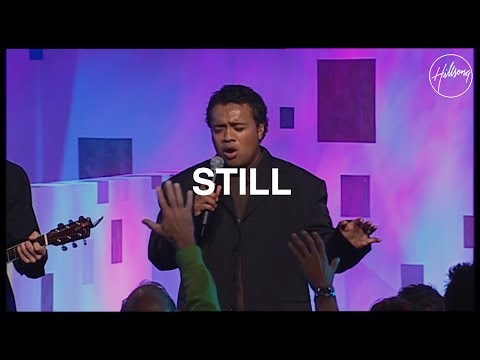
Sing it as a vow of trust, not as a quotation. It names no verse and misstates none. Its stillness is the kind Moses asked of Israel at the sea: stop panicking, God does the delivering.
NOT A QUOTE
“Still”
Hillsong Worship
Sing it as a vow of trust, not as a quotation. It names no verse and misstates none. Its stillness is the kind Moses asked of Israel at the sea: stop panicking, God does the delivering.✓ The resolve the chorus plants is a posture scripture actually commands: stillness in danger while the LORD does the delivering, which is Israel's whole assignment in Exodus 14:13-14
⚠ Nothing is cited, so the be-still line will settle into memory as the singer's sentence. In Psalm 46:10 it is God's, and He finishes it with His exaltation among the nations. Read the verse so the vow keeps the command behind it