1 John 3:2 vs. “I Can Only Imagine”
MercyMe · checked 2026-08-21
What we checked
Graded against the standard
Quotation criteria not graded: this song never presents its words as scripture
Applies to every song the Name held holy · God shown holy · true of God · the standard
✓ What's good
- It announces its own uncertainty. The lines about the future are predominantly questions, and the repeated title phrase keeps saying that the answer is not known
- Never says it is quoting, anywhere: no verse cited, no translation named, and the publisher's listing carries themes with no scripture reference
- What it does state rather than ask, God's glory and being before His face and worship without end, is the disclosed part, matching 1 John 3:2 and Revelation 22:4
- It fixes attention on Christ's appearing, which is the event 1 John 3:2 and 3:3 hang everything on
⚠ Cautions
- The verse's two revealed facts are that we will see Him as He is and that we will be like Him. Singing this song teaches neither. The change in the singer is the part the song does not wonder about
- The imagined details, including dancing in that moment, are not stated in the text. Hold them as wondering rather than as information
- It is framed as one person's imagining throughout, and reviewers have divided over whether that suits corporate worship. That is a judgment for the room, not a fault in the words
- Its reach is unusual: most-played song in Christian radio history and the first Christian single certified platinum. Many people's picture of that day now comes from it. Read 1 John 3:1-3 and let the text set what is settled
Verse Proof
1 John 3:2The text in BSB (Berean Standard Bible)
“Beloved, we are now children of God, and what we will be has not yet been revealed. We know that when Christ appears, we will be like Him, for we will see Him as He is.”
John writes to churches he addresses as "little children" and "Beloved," reassuring them of what they already have and giving them tests for what they are being told. Chapter 3 opens with the Father's love in calling them children of God, which is why the world does not recognise them. Verse 2 then sets a present fact beside a future one. The present fact is that they are children of God now. The future is divided in two: one part is withheld ("what we will be has not yet been revealed") and one part is stated as known ("we know that when Christ appears, we will be like Him, for we will see Him as He is"). Verse 3 draws the consequence, that everyone who has this hope in Him purifies himself. So the verse is not a general reflection on mystery. It marks a specific line between what has been disclosed about that day and what has not.
What the song says, described not quoted
A first-person song about standing in God's presence after death. Its structure is two verses, two choruses and a tag, and the lines about the future are predominantly interrogative rather than declarative: the singer asks whether he will move or be still, whether he will kneel or stay on his feet, whether he will sing or find he cannot speak at all. The title phrase recurs as the frame and as an admission that he does not know the answers. What the song states rather than asks is the setting: God's glory around him, being before God's face, and worship that does not end. Bart Millard wrote it after his father's death from cancer, from a phrase his grandmother used at the funeral that he then wrote down repeatedly for years, and he has said he finished it in roughly ten minutes. It was recorded first for the independent album The Worship Project in 1999 and then for Almost There in 2001. No verse is cited on the recording, and the publisher's own listing gives eighteen themes for the song and no scripture reference.
1 John 3:2 is the checking text here, not a source the song names. Nothing in Millard's documented accounts of writing it points at this verse or at any verse, and the publisher's page lists themes with no scripture reference beside them. The two are set side by side because they are about the same moment. What differs is the subject of the sentence. The verse's future-tense clauses are about what we will be and what we will see. The song's future-tense lines are about what the singer will do.
▸ Official upload. Now listen with the proof in mind.
The text itself says what we will be has not yet been revealed, which is exactly the space this song is standing in.
Why it matters
1 John 3:2 does something a discernment reader should notice: it marks its own limit. It says outright that what we will be has not yet been revealed, and then states two things that have been. That makes the usual question about speculation easy to answer here. A song that says it is imagining is not competing with revelation. It is standing in the space the verse leaves open, and the verse leaves it open on purpose. The risk that remains is a different one. A song sung this widely can become the whole picture of that day, and the two facts the verse does supply are not the two the song wonders about.
Is it safe to dwell on?
Sung on repeat, this song moves between God and the singer.
What repetition plants here is the appearing. Christ appears, the singer is in His presence, and the song holds that in front of you without adding to it. That is a true thing to have running in your head. What repetition also plants is a direction of attention. The song's questions circle back to the singer's own reaction, while the verse answers a different question: not how you will respond, but what you will be. Counting the lines, the song is neither purely about God nor purely about the singer. Its object is God's glory and God's face; its grammatical subject is almost always the singer. Colossians 3:16 asks that the word dwell in you richly as you sing. If this song is on your loop, put verses 2 and 3 on it too, so the wondering has the revealed part beside it. Then the song's honest "I do not know" sits next to the text's "we know," which is the phrase the verse actually uses.
Helpful comparison
The verse has three clauses and the song touches one of them.
"What we will be has not yet been revealed" is the clause the song lives in. Every question it asks is about an unrevealed thing, and it says so in its own title. On this clause the song and the text agree, including in tone: the text withholds, and the song admits it cannot supply what was withheld.
"We will see Him as He is" is the clause the song shares. Being before God's face is what the song is about, and it is also stated in Revelation 22:4. Reviewers who map the lyric verse by verse land there.
"We will be like Him" is the clause the song does not reach. The text's one stated fact about the singer is a change in the singer. The song's attention is on his reaction. That is not an error and it is not a contradiction; it is a gap, and a listener should know which side of the line each part sits on.
Sources
- PraiseCharts cover sheet for "I Can Only Imagine" · (rights holder listing: writer Bart Millard, publisher Essential Music Publishing, CCLI 2978857, album Almost There, © 2001 Simpleville Music, eighteen themes and no scripture reference)
- PraiseCharts song analysis page · (structure of two verses, two choruses and a tag; lines predominantly interrogative)
- Wikipedia — "I Can Only Imagine" (MercyMe song) · (The Worship Project 1999 and Almost There 2001, INO/Curb, radio release 12 October 2001, 5× platinum, no passage named as source)
- Songfacts — I Can Only Imagine · (Millard's own account of the phrase and the ten-minute writing, and no scripture cited by him)
- Lifeway — the story behind the song · (memoir excerpt on his father's transformation; names no passage)
- The Berean Test — MercyMe, "I Can Only Imagine" · (verse-by-verse mapping reaching Revelation 22:4 and not 1 John 3:2; raises the speculation and corporate-worship concerns)
- Tim Challies — I Can Only Imagine · (a positive reading grounded in 2 Corinthians 5:8, and on what is and is not disclosed about that day)
Corrections
No corrections to this proof yet.
Think we got something wrong? Tell us what and where, and we will check it against the text. Real errors get fixed here, dated, in public. Every correction on the site →
Where the text survives the song
 ✓ VERIFIED
“The Victory (1 John 5:4-5 ESV)”
Seeds Kids Worship (Seeds Family Worship)
Sing it. It is 1 John 5:4-5 word for word in the ESV, with nothing added, and the chord chart names the version, so anyone can check it.
✓ VERIFIED
“The Victory (1 John 5:4-5 ESV)”
Seeds Kids Worship (Seeds Family Worship)
Sing it. It is 1 John 5:4-5 word for word in the ESV, with nothing added, and the chord chart names the version, so anyone can check it.✓ Both verses whole and in order. Counted in the ESV, all forty-two words are there, none skipped, and the chart carries nothing from outside the passage
✓ no cautions: this is the standard
 ✓ VERIFIED
“Psalm 16”
The Corner Room (Adam Wright)
You can sing this one straight through. It is all eleven verses of Psalm 16, in order, in a named version. What you repeat is the psalm.
✓ VERIFIED
“Psalm 16”
The Corner Room (Adam Wright)
You can sing this one straight through. It is all eleven verses of Psalm 16, in order, in a named version. What you repeat is the psalm.✓ The printed sung text carries all eleven verses of Psalm 16, in order, with no line printed twice and no refrain added
⚠ The track title alone will not tell you which Bible you are singing. On Apple Music and Spotify it is just "Psalm 16". The version is named on the album page and in the video description.
 ✓ VERIFIED
“Be Strong and Courageous (Joshua 1:9)”
Seeds Kids Worship (Seeds Family Worship)
Sing it, and hand it to your kids. It is Joshua 1:9 whole, in the ESV the publisher names, and the tag sings the address, so the verse and its reference get memorized together.
✓ VERIFIED
“Be Strong and Courageous (Joshua 1:9)”
Seeds Kids Worship (Seeds Family Worship)
Sing it, and hand it to your kids. It is Joshua 1:9 whole, in the ESV the publisher names, and the tag sings the address, so the verse and its reference get memorized together.✓ The whole verse, in order, with every repeated line drawn from the verse's own words
✓ no cautions: this is the standard
More songs like this
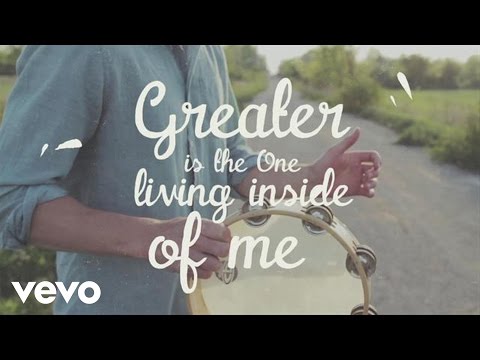 NOT A QUOTE
“Greater”
MercyMe
Sing it. The comparison is the verse's own, both halves intact. Just remember the letter says it to a church that has already overcome false teachers, not only to one person under discouragement.
NOT A QUOTE
“Greater”
MercyMe
Sing it. The comparison is the verse's own, both halves intact. Just remember the letter says it to a church that has already overcome false teachers, not only to one person under discouragement.✓ Both terms of the comparison survive. The One inside and the one in the world are each named, and neither is softened
⚠ No translation is named, and the sung wording matches none of them word for word, so the line has to be recognised rather than verified
 NOT A QUOTE
“Word of God Speak”
MercyMe
Sing it as a prayer for God to speak. It quotes nothing and never says it is scripture. Hebrews 4:12 describes the word as something that exposes a hearer, which is not what this chorus asks for.
NOT A QUOTE
“Word of God Speak”
MercyMe
Sing it as a prayer for God to speak. It quotes nothing and never says it is scripture. Hebrews 4:12 describes the word as something that exposes a hearer, which is not what this chorus asks for.✓ Never says it is quoting: no verse cited, no translation named, nothing framed as scripture
⚠ The title makes "word of God" someone to speak to. Hebrews 4:12 makes it the subject of a description. The two are not interchangeable, and only one of them is the verse
 NOT A QUOTE
“Even If”
MercyMe
Sing it. It quotes nothing, but it keeps the hard half of Daniel 3:18, the half that says trust holds even if the rescue does not come. That is the part most songs drop.
NOT A QUOTE
“Even If”
MercyMe
Sing it. It quotes nothing, but it keeps the hard half of Daniel 3:18, the half that says trust holds even if the rescue does not come. That is the part most songs drop.✓ Keeps the hard half of Daniel 3:18, that trust does not depend on the rescue arriving
⚠ No reference is given, so a listener may not know the sentence has a source at all