Psalm 144:3-4 vs. “Who Am I”
Casting Crowns · checked 2026-08-02
What we checked
Graded against the standard
Quotation criteria not graded: this song never presents its words as scripture
Applies to every song the Name held holy · God shown holy · true of God · the standard
✓ What's good
- Asks the question Psalm 144:3 asks and grounds the answer where verses 1-2 ground the psalm: in who God is and what he has done, not in the singer
- The smallness images have real addresses. The fading flower is Isaiah 40:7-8, and the vapor is James 4:14, and both carry their source's sense of a short life
- The star title the first verse reaches for is one Jesus gives himself in Revelation 22:16, and the stilled sea is his scene in Mark 4:39. The song's pictures of God are scripture's pictures
- The pre-chorus logic, standing on what God has done rather than what the singer has done, is the logic of Ephesians 2:8-9, and Ephesians 2 is on the band's own scripture note for the song
- Mark Hall's documented account of writing it holds two true things together, the conqueror of Romans 8:37 and the vapor of James 4:14, instead of picking the flattering one
⚠ Cautions
- No verse is cited anywhere, so nobody learns Psalm 144 or any of the source texts by singing it. The allusions arrive unlabeled and have to be traced
- The tossed wave's nearest biblical wording is James 1:6, where the wave is the doubter who asks without faith, not the brevity of a life. The song files it with its transience images, so the image arrives without its address
- The band's own scripture note for the song names Psalm 139, Psalm 52, and Ephesians 2. Neither Psalm 144 nor Psalm 8 is on it. The psalm pairing on this page is ours, made because the title question is the psalmist's
- Psalm 144's question sits inside a battle prayer, between hands trained for war in verse 1 and a plea for God to come down in verse 5. The song keeps the question and its grounding, not the occasion
Verse Proof
Psalm 144:3-4The text in BSB (Berean Standard Bible)
“O LORD, what is man, that You regard him, the son of man that You think of him? Man is like a breath; his days are like a passing shadow.”
Psalm 144 is a psalm of David, and it is a soldier's prayer. It opens by blessing the LORD as the rock who trains David's hands for war, and verse 2 names what God is to him: steadfast love, fortress, stronghold, deliverer, shield. Only then comes the question of verses 3 and 4, a near-twin of Psalm 8:4, asking why God regards something as brief as a man, a breath, a passing shadow. The question does not loosen the psalm's grip. Verse 5 goes straight back to petition, asking God to part the heavens and come down. The order matters: David names who God is to him before he asks what man is, so the smallness of the man never threatens the prayer. The prayer was never resting on the man.
What the song says, described not quoted
Two verses ask, in the third person, who the singer is that beings described by scriptural titles would bother with him. The ruler of all the earth would care to know his name and feel his hurt. A morning-star figure would light the way for his wandering heart. The eyes that see his sin would look at him with love. The voice that once stilled a sea would speak into his own storm. A pre-chorus then turns and speaks to God directly, and gives the ground: not who the singer is or what he has done, but what God has done and who God is. The chorus stacks three images of the singer's smallness, a flower quickly fading, a wave tossed about in the ocean, a vapor in the wind, and sets against them what God does anyway: hears him when he calls, catches him when he falls, and has already told him whose he is. The address genuinely shifts between sections, which is why the tag above reads varies: the verses speak about God through his titles, and the pre-chorus and chorus speak to him. No verse is cited anywhere, no translation is named, and nothing is framed as a quotation.
Nothing shifted at the level of wording, because no wording is presented as scripture. What the song borrows is a question and a set of images, and each has a checkable address. The title question is the psalmist's: Psalm 144:3 and Psalm 8:4 both ask what man is that God should regard him, and Psalm 144:4 supplies the breath and the passing shadow. The fading flower is Isaiah 40:7-8, where the grass withers, the flowers fall, and the people are grass. The vapor is James 4:14, where a life is a mist that appears for a little while and vanishes, printed as “vapour” in the KJV. The tossed wave sits nearest to James 1:6, and that one is worth a second look, because James's wave pictures the doubter who asks without faith, not the shortness of a life. One more borrowing runs the other way: the morning-star title the first verse reaches for is one Jesus claims for himself in Revelation 22:16, and the stilled sea in the second verse is his scene in Mark 4:39.
▸ Official upload. Now listen with the proof in mind.
Plenty of songs ask the psalmist's question. This one keeps his answer.
Why it matters
The what-is-man question appears in scripture more than once, and it goes different places. Psalm 8 answers with the honour God crowned man with. Psalm 144 answers by returning to the God already named in verses 1 and 2 and asking him to act. A song that borrows the question could carry the answer anywhere, and plenty of songs carry it toward reassurance about the self. This one carries it where Psalm 144 carries it, which is a thing you can check, and checking it is the point of this site.
Is it safe to dwell on?
Sung on repeat, this song moves between God and the singer.
The part that loops is the chorus, and the chorus plants two things at once. The first is a low estimate of your own permanence, in scripture's own images: flower, wave, vapor. That estimate is Isaiah 40's and James 4's before it is the song's, and rehearsing it is not self-hatred, it is accuracy. The second is a fixed point outside yourself. In the chorus the singer's verbs are small ones, calling and falling, and the verbs that settle anything belong to God: he hears, he catches, he has already said whose you are. Loop it for a season and what gets drilled in is the pairing, never one half alone. You end up practised at saying you are brief and practised at saying whose you are in the same breath, which is the exact posture Psalm 144 prays from. The grammar tag above says mixed because the singer is in nearly every line, but he is there the way the psalmist is there in verse 4, as the small thing being regarded.
Helpful comparison
The song's texture is a stack of accurate, unlabeled allusions, and the stack can be laid out address by address. The question: Psalm 144:3-4, near-twin to Psalm 8:4, with the breath and the passing shadow coming from Psalm 144's version. The flower: Isaiah 40:7-8, where the flowers fall and the people are grass. The vapor: James 4:14, the mist that appears for a little while and then vanishes. The wave: nearest to James 1:6, blown and tossed by the wind, though James is describing a doubter's prayer and the song is describing a small life. Three images, two carrying their source's sense, one repurposed.
The deeper match is structural. Psalm 144 does not ask its question into the open. Verse 2 has already said what God is to David, steadfast love and fortress, before verse 3 asks why God regards a breath. The question lands as wonder, not as doubt, because the ground of the prayer was never the man. The song's pre-chorus rebuilds that order in modern grammar: the ground is not who the singer is or what he has done, but what God has done and who God is. Hall's own account of the writing runs the same way. He has said the idea came while wondering who he was to call on God from the middle of nowhere and expect to be heard, and that being a conqueror is true while life stays a vapor, with even the ability to pray resting on what God has done. That is verses 1-2, verse 3-4, and verse 5 of Psalm 144, lived in a car.
Sources
- Casting Crowns — Who Am I (Official Lyric Video) · (the recording checked for this proof; oEmbed reports the channel as Casting Crowns, youtube.com/@CastingCrownsOfficial)
- Wikipedia — Who Am I (Casting Crowns song) · (written by Mark Hall, produced by Mark A. Miller and Steven Curtis Chapman, released 22 February 2004 as the second single from the 2003 self-titled debut; six weeks at number one on Hot Christian Songs; Song of the Year and Pop/Contemporary Recorded Song of the Year at the 36th GMA Dove Awards; Hall's account of the idea arriving while driving, and his conqueror-and-vapor framing of the song's meaning)
- Wikipedia — Casting Crowns (album) · (the self-titled debut, released 7 October 2003 on Beach Street Records, with Who Am I as track 4)
- Jesusfreakhideout — Who Am I lyrics · (the published lyric checked for this proof, and Mark Hall's printed Behind the Song note, which carries the scripture references Psalm 139, Psalm 52, and Ephesians 2)
Corrections
No corrections to this proof yet.
Think we got something wrong? Tell us what and where, and we will check it against the text. Real errors get fixed here, dated, in public. Every correction on the site →
Where the text survives the song
 ✓ VERIFIED
“Psalm 11 (English Standard Version)”
The Corner Room (Adam Wright)
Sing it straight through. It is all seven verses of Psalm 11, in order, in a version the track title names. A reviewer says one verse comes back as a refrain, and it is the psalm's own verse.
✓ VERIFIED
“Psalm 11 (English Standard Version)”
The Corner Room (Adam Wright)
Sing it straight through. It is all seven verses of Psalm 11, in order, in a version the track title names. A reviewer says one verse comes back as a refrain, and it is the psalm's own verse.✓ All seven verses, in order. We set the printed sung text beside an ESV and compared it word by word: 131 words, all matching, nothing added and nothing dropped
⚠ The printed text under the video lists each line once. It is not a map of the song. A review of the album says verse 4 comes back as a refrain
 ✓ VERIFIED
“We Hope In You (Psalm 33:20-22 ESV)”
Seeds Kids Worship (Seeds Family Worship)
Sing it, and teach it. All three verses arrive whole, in the version Seeds names. Read verses 16 to 19 first, so a child knows what the waiting is for.
✓ VERIFIED
“We Hope In You (Psalm 33:20-22 ESV)”
Seeds Kids Worship (Seeds Family Worship)
Sing it, and teach it. All three verses arrive whole, in the version Seeds names. Read verses 16 to 19 first, so a child knows what the waiting is for.✓ All three verses, in order, in the ESV. Every repeated line is built from words the passage already supplied, and nothing is added between them.
✓ no cautions: this is the standard
 ✓ VERIFIED
“Psalm 4 (English Standard Version)”
The Corner Room (Adam Wright)
Sing it without a caveat. It is the whole of Psalm 4, in order, in a version named on the track itself, so what you repeat by singing it is the psalm.
✓ VERIFIED
“Psalm 4 (English Standard Version)”
The Corner Room (Adam Wright)
Sing it without a caveat. It is the whole of Psalm 4, in order, in a version named on the track itself, so what you repeat by singing it is the psalm.✓ All eight verses of Psalm 4, in order, with nothing added and nothing repeated that the psalm does not repeat
✓ no cautions: this is the standard
More songs like this
 NOT A QUOTE
“East to West”
Casting Crowns
Sing it as the struggle it is honest about. Nothing here is quoting. The psalm states the removal as fact; the song asks Jesus to make that fact felt, and it lands where the psalm lands.
NOT A QUOTE
“East to West”
Casting Crowns
Sing it as the struggle it is honest about. Nothing here is quoting. The psalm states the removal as fact; the song asks Jesus to make that fact felt, and it lands where the psalm lands.✓ Never says it is quoting: nothing in the lyric is framed as a verse, and the liner notes present Psalm 103 in a list of source passages, plainly labelled as sources
⚠ The chorus asks what the psalm declares. Psalm 103:12 is not a plea for reassurance; it is a settled report the psalmist tells his own soul not to forget. Sing the question knowing the answer is already on the page
 NOT A QUOTE
“Scars in Heaven”
Casting Crowns
Sing it, at the funeral too. Nothing here is quoting. Just know that Paul's comfort in these two verses is the resurrection and the reunion at Christ's coming. The song reaches for a different comfort, also true.
NOT A QUOTE
“Scars in Heaven”
Casting Crowns
Sing it, at the funeral too. Nothing here is quoting. Just know that Paul's comfort in these two verses is the resurrection and the reunion at Christ's coming. The song reaches for a different comfort, also true.✓ The song grieves out loud. Paul does not forbid grief, he forbids grieving like people without hope, and a song that names the absence honestly is doing the first half of that
⚠ The song's comfort and this passage's comfort are not the same comfort. The song rests on a present condition, that the one who died is past pain and with Christ. Paul rests on a coming event, and verses 15 to 18 date the reunion to the Lord's descent
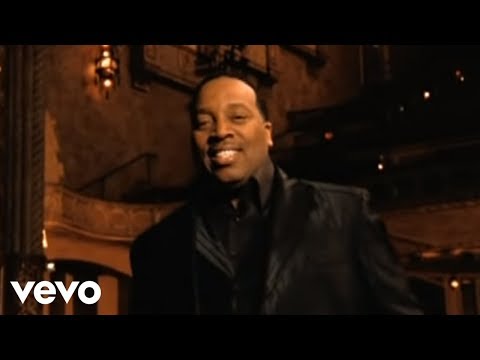 NOT A QUOTE
“Never Would Have Made It”
Marvin Sapp
Sing it. It quotes no verse and never says it is scripture, and every rescue in it is credited to God. Psalm 30 has the same shape and then goes further, into a vow of thanks that does not go quiet.
NOT A QUOTE
“Never Would Have Made It”
Marvin Sapp
Sing it. It quotes no verse and never says it is scripture, and every rescue in it is credited to God. Psalm 30 has the same shape and then goes further, into a vow of thanks that does not go quiet.✓ Every act of rescue in the song belongs to God. The singer's survival is never credited to his own strength, which is exactly the grammar of Psalm 30:1-3
⚠ No scripture is cited anywhere. Psalm 30 is our comparison, not the song's source, and Sapp's own account points to a different psalm