John 3:16-17 vs. “God So Loved”
We The Kingdom · checked 2026-08-02
What we checked
Graded against the standard
Quotation criteria this song presents words as scripture, so these apply
Applies to every song the Name held holy · God shown holy · true of God · the standard
✓ What's good
- The chorus keeps John 3:16's clauses in the verse's own order: love, gift, belief, life
- The wording is consistent with the modern translation family; one and only is the BSB's and WEB's own rendering
- The invitations in the verses aim at exactly the audience the verse names, everyone who believes, and the added to-save clause runs the same direction as verse 17
- The bridge borrows a proven public-domain doxology rather than inventing praise language
- The words are about God throughout; the hearer appears only as the one invited
⚠ Cautions
- No translation is named, so the near-quotation has to be recognized rather than checked
- Shall not perish is gone. The song keeps the bright half of a sentence that states both halves, and verse 17's not-to-condemn clause is likewise unsung
- The back half of the chorus, hell's power defeated and the believer living free, is defensible from other texts (Hebrews 2:14, Galatians 5:1) but is not John 3
- The verse invitations echo Matthew 11:28 and John 7:37, where the inviter is Jesus and the destination is himself; here the singers issue the invitation
Verse Proof
John 3:16-17The text in BSB (Berean Standard Bible)
“For God so loved the world that He gave His one and only Son, that everyone who believes in Him shall not perish but have eternal life. For God did not send His Son into the world to condemn the world, but to save the world through Him.”
Jesus is speaking with Nicodemus, a Pharisee and ruler of the Jews who came to him at night (John 3:1-2). The famous sentence is not a standalone motto but the middle of an argument that starts two verses earlier: just as Moses lifted up the snake in the wilderness so that the bitten could look and live (Numbers 21:8-9), the Son of Man must be lifted up, that everyone who believes may have eternal life. Verse 16 restates that comparison as a cause, God's love is why the giving happened, and verse 17 finishes the thought by ruling out the obvious misreading: the Son was not sent to condemn the world but to save it. The paragraph holds both an offer and an alternative, perishing, in the same breath.
What the song says, described not quoted
Three verses of invitation, sung outward to the hearer rather than to God: the weary and thirsty are called to come to living water that does not run dry, sinners are called to a table of grace and mercy, and the ashamed and burdened are told to lay what they carry down at the cross. The chorus is the John 3:16 material: God's love for the world, the giving of his one and only Son to save, and unending life for whoever believes; its back half adds that hell's power is defeated and the forgiven believer lives free. The bridge turns to exhortation, taking up the opening movement of Thomas Ken's 1674 doxology, God praised as the source of every blessing.
The chorus keeps the verse's clauses in the verse's own order: love, gift, belief, life. Three things shift. The closing pair, shall not perish but have eternal life, is compressed into a single promise of living forever, so the verse's stated alternative goes unsung. A purpose clause about saving is added right after the gift, which is verse 17's verb aimed at us rather than at the world, while verse 17's other half, not sent to condemn, does not appear. And the wording sits in the modern translation family, one and only rather than the King James only begotten, with no translation named anywhere in the song.
▸ Official upload. Now listen with the proof in mind.
A famous verse gets recognized, not read. Recognition cannot catch a missing clause.
Why it matters
This is the most famous verse in the Bible, which means it is the verse most likely to be recognized rather than read. A congregation hears the opening four words and supplies the rest from memory, so a compressed or reworded version passes as the real thing without anyone deciding to let it. The verse itself is an argument with a dark clause in the middle: the life offered has perishing as its alternative, and verse 17 exists to say what the sending was not for. A singer who can start the sentence but not finish it has the melody's version, not John's.
Is it safe to dwell on?
Sung on repeat, this song fixes your attention on God.
What repetition plants here is the clause-chain of John 3:16 in singable form, love, gift, belief, life, wrapped in a standing invitation to come. That is a good chain to have installed, and the attention stays on God from the first invitation to the doxology, which is why the dwelling tag is God. What the loop will not plant is the verse's own alternative. Perishing is the word John's sentence hangs its offer against, and condemnation is the word verse 17 refuses, and neither is in the song. Sing it freely, and read John 3:14-21 once so the sentence in your memory has its whole argument: the serpent lifted up, the love that gave, the perishing declined, the condemnation not sent.
Helpful comparison
Set the chorus against three translations and the family resemblance is plain. The King James reads only begotten Son, whosoever believeth, should not perish, but have everlasting life. The WEB and BSB both read one and only Son, and the BSB has everyone who believes in Him shall not perish but have eternal life. The chorus's gift clause matches the modern family word for word, which is why it lands as quotation, and then the ending compresses two clauses into one forever. Compare the site's entry on O Come to the Altar for the address question the verses raise: in Matthew 11:28 the invitation to the weary is issued by Jesus, to himself. This song's verses make the same offer in the church's voice, which scripture also does, but the two acts are worth telling apart.
Sources
- We The Kingdom – God So Loved (Lyric Video) · (the recording checked for this proof; oEmbed confirms the We The Kingdom channel)
- Wikipedia — God So Loved · (writers Ed Cash, Scott Cash, Franni Cash, Martin Cash, Andrew Bergthold; single released May 29, 2020 from *Holy Water*; No. 1 on US Christian Airplay; 2021 Dove nomination)
- The Berean Test — We The Kingdom, God So Loved · (section-by-section scripture mapping; chorus tied to John 3:16, verse invitations to Matthew 11:28, bridge from Thomas Ken's doxology)
- Worship Together — God So Loved · (Worship Together's song page)
Corrections
No corrections to this proof yet.
Think we got something wrong? Tell us what and where, and we will check it against the text. Real errors get fixed here, dated, in public. Every correction on the site →
Where the text survives the song
 ~ FAITHFUL
“Just As I Am”
Charlotte Elliott (recorded by Reawaken Hymns)
Sing it. The clause it was printed under is quoted accurately, and the hymn answers that clause honestly. Read the whole verse once. The half the hymn leaves out is the half that makes the half it sings hold.
~ FAITHFUL
“Just As I Am”
Charlotte Elliott (recorded by Reawaken Hymns)
Sing it. The clause it was printed under is quoted accurately, and the hymn answers that clause honestly. Read the whole verse once. The half the hymn leaves out is the half that makes the half it sings hold.✓ The epigraph is a real citation, printed with the hymn at its first confirmed publication, and its clause is quoted word for word.
⚠ The epigraph names the address and not the version. Its wording is King James (KJV); a singer who looks the verse up in a modern Bible will find different words for the same clause.
 ~ FAITHFUL
“Behold the Lamb of God”
Andrew Peterson
Sing it. The summons is the Baptist's own sentence, narrowed from the world's sin to ours and joined to other true titles of Christ. Read John 1 once, so you know the pointing began at the Jordan, not the manger.
~ FAITHFUL
“Behold the Lamb of God”
Andrew Peterson
Sing it. The summons is the Baptist's own sentence, narrowed from the world's sin to ours and joined to other true titles of Christ. Read John 1 once, so you know the pointing began at the Jordan, not the manger.✓ The refrain's summons is the Baptist's sentence in recognizable King James wording, and every stacked title is scripture's own: life and light of men, Son of God, Son of Man, Emmanuel
⚠ The world's sin becomes our sin. Nothing false enters, but the Baptist's clause is wider, and the width is the startling part of verse 29
 ✓ VERIFIED
“Psalm 53 (English Standard Version)”
The Corner Room (Adam Wright)
Yes, you can sing it. All six verses of Psalm 53 are here, in order, from a version the release names. The words you repeat are the psalm's own.
✓ VERIFIED
“Psalm 53 (English Standard Version)”
The Corner Room (Adam Wright)
Yes, you can sing it. All six verses of Psalm 53 are here, in order, from a version the release names. The words you repeat are the psalm's own.✓ The printed sung text carries all six verses of Psalm 53, in order, and every one of its 142 words matches an ESV of the psalm
⚠ The printed text is not a transcript. A review of the album calls the psalm's opening line the song's refrain. We did not listen through to count repeats, so that rests on the review
More songs like this
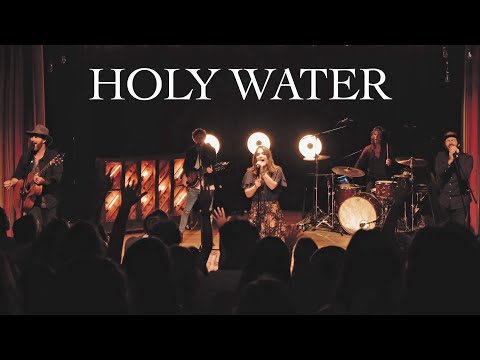 NOT A QUOTE
“Holy Water”
We The Kingdom
Sing it. It is a prayer for forgiveness and it names no verse. Just do not read it as John 4:13-14. That water is drunk once and never runs out. This water washes.
NOT A QUOTE
“Holy Water”
We The Kingdom
Sing it. It is a prayer for forgiveness and it names no verse. Just do not read it as John 4:13-14. That water is drunk once and never runs out. This water washes.✓ Never says it is quoting at all: no verse in the lyric, none in the official upload's description, and no scripture framing anywhere in the song
⚠ Nothing in the song points at John 4. The pairing is made by readers on the strength of one shared word, and the two waters do different things
~ FAITHFUL
“Just As I Am”
Charlotte Elliott (recorded by Reawaken Hymns)
Sing it. The clause it was printed under is quoted accurately, and the hymn answers that clause honestly. Read the whole verse once. The half the hymn leaves out is the half that makes the half it sings hold.✓ The epigraph is a real citation, printed with the hymn at its first confirmed publication, and its clause is quoted word for word.
⚠ The epigraph names the address and not the version. Its wording is King James (KJV); a singer who looks the verse up in a modern Bible will find different words for the same clause.
~ FAITHFUL
“Behold the Lamb of God”
Andrew Peterson
Sing it. The summons is the Baptist's own sentence, narrowed from the world's sin to ours and joined to other true titles of Christ. Read John 1 once, so you know the pointing began at the Jordan, not the manger.✓ The refrain's summons is the Baptist's sentence in recognizable King James wording, and every stacked title is scripture's own: life and light of men, Son of God, Son of Man, Emmanuel
⚠ The world's sin becomes our sin. Nothing false enters, but the Baptist's clause is wider, and the width is the startling part of verse 29