John 1:29-31 vs. “Behold the Lamb of God”
Andrew Peterson · checked 2026-08-02
What we checked
Graded against the standard
Quotation criteria this song presents words as scripture, so these apply
Applies to every song the Name held holy · God shown holy · true of God · the standard
✓ What's good
- The refrain's summons is the Baptist's sentence in recognizable King James wording, and every stacked title is scripture's own: life and light of men, Son of God, Son of Man, Emmanuel
- The album placement earns the title honestly. Eleven songs trace the story from the Passover forward before this one asks the listener to look, which is the same backward gathering the Baptist's sentence performs
- The refrain keeps the Lamb's work attached to his death and resurrection rather than leaving the title as decoration
- Attention stays on Christ throughout. The singers appear only long enough to say what they need
⚠ Cautions
- The world's sin becomes our sin. Nothing false enters, but the Baptist's clause is wider, and the width is the startling part of verse 29
- No translation or verse is named, so the King James wording has to be recognized rather than checked
- The Baptist's announcement belongs to the Jordan, not to Bethlehem. Singing it over a nativity story is a sound theological reading, but the song performs the move without marking it, and a listener could file the sentence under Christmas
Verse Proof
John 1:29-31The text in BSB (Berean Standard Bible)
“The next day John saw Jesus coming toward him and said, “Look, the Lamb of God, who takes away the sin of the world! This is He of whom I said, ‘A man who comes after me has surpassed me because He was before me.’ I myself did not know Him, but the reason I came baptizing with water was that He might be revealed to Israel.”
John the Baptist is speaking at Bethany beyond the Jordan, the day after priests and Levites came out to question him. He sees Jesus, a grown man at the start of his public ministry, walking toward him, and announces him to the crowd: the Lamb of God, who takes away the sin of the world. John adds that he did not know him, and that his whole baptizing ministry existed for this moment, so that this man might be revealed to Israel. The announcement is a pointing. In verse 36 he says the short form again, and two of his own disciples leave him and follow Jesus.
What the song says, described not quoted
The title track and climax of a narrative Christmas album, and mostly a single summons said four ways. The refrain calls the hearer to behold the Lamb of God, naming him each time: the one who takes away sin (sung of "our" sin, not the world's), the life and light of men, the one who died and rose, and the one who is coming to take sin away. A responsive passage lets the singers describe their own condition, hearts broken, fallen far, in need of him, and stacks further titles: Son of God, Emmanuel, Son of Man, hope of man. The address shifts across the song: the beholding lines summon the hearers, and the need-lines turn briefly to speak to Christ directly. On the album it closes eleven songs that trace the story from the Passover forward, and it returns in a reprise with every voice on the record.
The refrain's first summons is the Baptist's own sentence, and in its King James form: the BSB says "Look," the KJV says "Behold," and the song's word is the KJV's. One word-level change is real: the world's sin becomes our sin. The other beholding lines are not John 1:29. One is built from John 1:4's life-and-light language, one is a death-and-resurrection confession, and one turns the announcement into an expectation, a Lamb who is still coming. The larger shift is the scene. The Baptist said this at the Jordan, pointing at the adult Jesus. The album sings it as the destination of a nativity story. The sentence survives the move because it names who the Lamb is and what he does, not when or where he stood.
▸ Official upload. Now listen with the proof in mind.
The Baptist said it pointing at a man, not a manger. It was true in both places.
Why it matters
John 1:29 is not a nativity text. The Baptist says it about the grown man walking toward him, some thirty years after Bethlehem, and a Christmas album makes it the last word anyway. The move is worth examining rather than assuming. It works because the title was already a backward look: no lamb in Israel's long history of lambs had ever taken sin away for good, and the Baptist's sentence gathers that whole story and points it at a person. Peterson's album spends eleven songs rebuilding exactly that history, from the Passover forward, before it hands the listener the sentence. A reviewer called the record as much an Easter meditation as a Christmas one, and the title track is where that shows.
Is it safe to dwell on?
Sung on repeat, this song fixes your attention on God.
What repetition plants here is an imperative to look, with a list of who you are looking at. Beholding is an outward habit, and a loop of this song rehearses turning attention away from the self toward Christ, which is the healthiest direction a refrain can run. The need-lines plant an honest self-description, broken and fallen and in need, and the song never leaves the singer there; every admission is answered by a title. The one clause worth planting by hand is the one the song trades away. Read verse 29 once and keep the world's sin in the sentence, because the scope is part of what is being said. Then read verse 36, where the Baptist says only the short form, and two disciples get up and follow. The bare summons the song repeats is that verse's sentence, and in the text its fruit is following.
Helpful comparison
The tense of the refrain rewards a second look. Within the same four summonses the Lamb has already died and risen and is still coming to take away sin. That is not carelessness; it is the posture of Advent, which remembers a past arrival while waiting for a future one, and it quietly imports the whole of the gospel into a Christmas song. This site's proof of "Is He Worthy?" found the same writer carrying a chapter's question into a room. Here the borrowing runs the other way: not a passage's structure but a single sentence, moved to a new place in the story and asked to hold. It holds because the Baptist built it to hold, out of every lamb that came before.
Sources
- Andrew Peterson — Behold The Lamb of God, official lyric video · (the recording checked for this proof; Peterson's own channel, from the 2019 re-recording of the album)
- Wikipedia — Behold the Lamb of God · (2004 concept album on Fervent Records tracing the biblical story of the advent of Jesus; the title track is track 11, written by Andrew Peterson and Laura Story; re-recorded in 2019)
- The Gospel Coalition — Andrew Peterson's "Behold the Lamb" · (the album's arc from the Passover through the prophets to the nativity; Peterson's account that the story of Christmas does not begin with the birth of Jesus)
- The Rabbit Room — Behold the Lamb of God, 2004 · (the title track as the album's culmination, a montage of everything before it; the record read as an Easter meditation as much as a Christmas one)
- Word & Wonder — Behold the Lamb of God, Christmas Hymn of the Week · (writers Andrew Peterson and Laura Story; John 1:29 as the text behind the title; the song's hymn-like meter and refrain)
Corrections
No corrections to this proof yet.
Think we got something wrong? Tell us what and where, and we will check it against the text. Real errors get fixed here, dated, in public. Every correction on the site →
Where the text survives the song
 ~ FAITHFUL
“Just As I Am”
Charlotte Elliott (recorded by Reawaken Hymns)
Sing it. The clause it was printed under is quoted accurately, and the hymn answers that clause honestly. Read the whole verse once. The half the hymn leaves out is the half that makes the half it sings hold.
~ FAITHFUL
“Just As I Am”
Charlotte Elliott (recorded by Reawaken Hymns)
Sing it. The clause it was printed under is quoted accurately, and the hymn answers that clause honestly. Read the whole verse once. The half the hymn leaves out is the half that makes the half it sings hold.✓ The epigraph is a real citation, printed with the hymn at its first confirmed publication, and its clause is quoted word for word.
⚠ The epigraph names the address and not the version. Its wording is King James (KJV); a singer who looks the verse up in a modern Bible will find different words for the same clause.
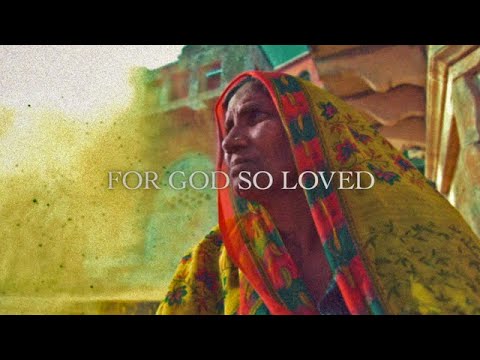 ~ FAITHFUL
“God So Loved”
We The Kingdom
Sing it. The chorus walks through John 3:16 clause by clause, lightly reworded and never labeled. The verse's own alternative, shall not perish, stays unsung, so read the whole sentence once for yourself.
~ FAITHFUL
“God So Loved”
We The Kingdom
Sing it. The chorus walks through John 3:16 clause by clause, lightly reworded and never labeled. The verse's own alternative, shall not perish, stays unsung, so read the whole sentence once for yourself.✓ The chorus keeps John 3:16's clauses in the verse's own order: love, gift, belief, life
⚠ No translation is named, so the near-quotation has to be recognized rather than checked
 ✓ VERIFIED
“Psalm 16”
The Corner Room (Adam Wright)
You can sing this one straight through. It is all eleven verses of Psalm 16, in order, in a named version. What you repeat is the psalm.
✓ VERIFIED
“Psalm 16”
The Corner Room (Adam Wright)
You can sing this one straight through. It is all eleven verses of Psalm 16, in order, in a named version. What you repeat is the psalm.✓ The printed sung text carries all eleven verses of Psalm 16, in order, with no line printed twice and no refrain added
⚠ The track title alone will not tell you which Bible you are singing. On Apple Music and Spotify it is just "Psalm 16". The version is named on the album page and in the video description.
More songs like this
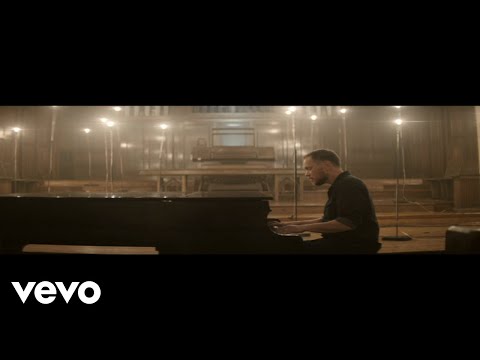 ~ FAITHFUL
“Is He Worthy?”
Andrew Peterson
Sing it. The questions are the chapter's own, and the answer keeps what worthiness songs usually drop: why the Lamb is worthy and what his blood bought. It names no translation, so check the two verses yourself.
~ FAITHFUL
“Is He Worthy?”
Andrew Peterson
Sing it. The questions are the chapter's own, and the answer keeps what worthiness songs usually drop: why the Lamb is worthy and what his blood bought. It names no translation, so check the two verses yourself.✓ Keeps the reason: the Lamb is worthy because he was slain and his blood paid a price, not worthy as a free-floating compliment
⚠ No translation is named and no verse is cited. Reworked into question and answer, the wording matches no translation word for word, so there is no stated text to check it against
~ FAITHFUL
“Just As I Am”
Charlotte Elliott (recorded by Reawaken Hymns)
Sing it. The clause it was printed under is quoted accurately, and the hymn answers that clause honestly. Read the whole verse once. The half the hymn leaves out is the half that makes the half it sings hold.✓ The epigraph is a real citation, printed with the hymn at its first confirmed publication, and its clause is quoted word for word.
⚠ The epigraph names the address and not the version. Its wording is King James (KJV); a singer who looks the verse up in a modern Bible will find different words for the same clause.
~ FAITHFUL
“God So Loved”
We The Kingdom
Sing it. The chorus walks through John 3:16 clause by clause, lightly reworded and never labeled. The verse's own alternative, shall not perish, stays unsung, so read the whole sentence once for yourself.✓ The chorus keeps John 3:16's clauses in the verse's own order: love, gift, belief, life
⚠ No translation is named, so the near-quotation has to be recognized rather than checked